

Screen stretching for steady print results
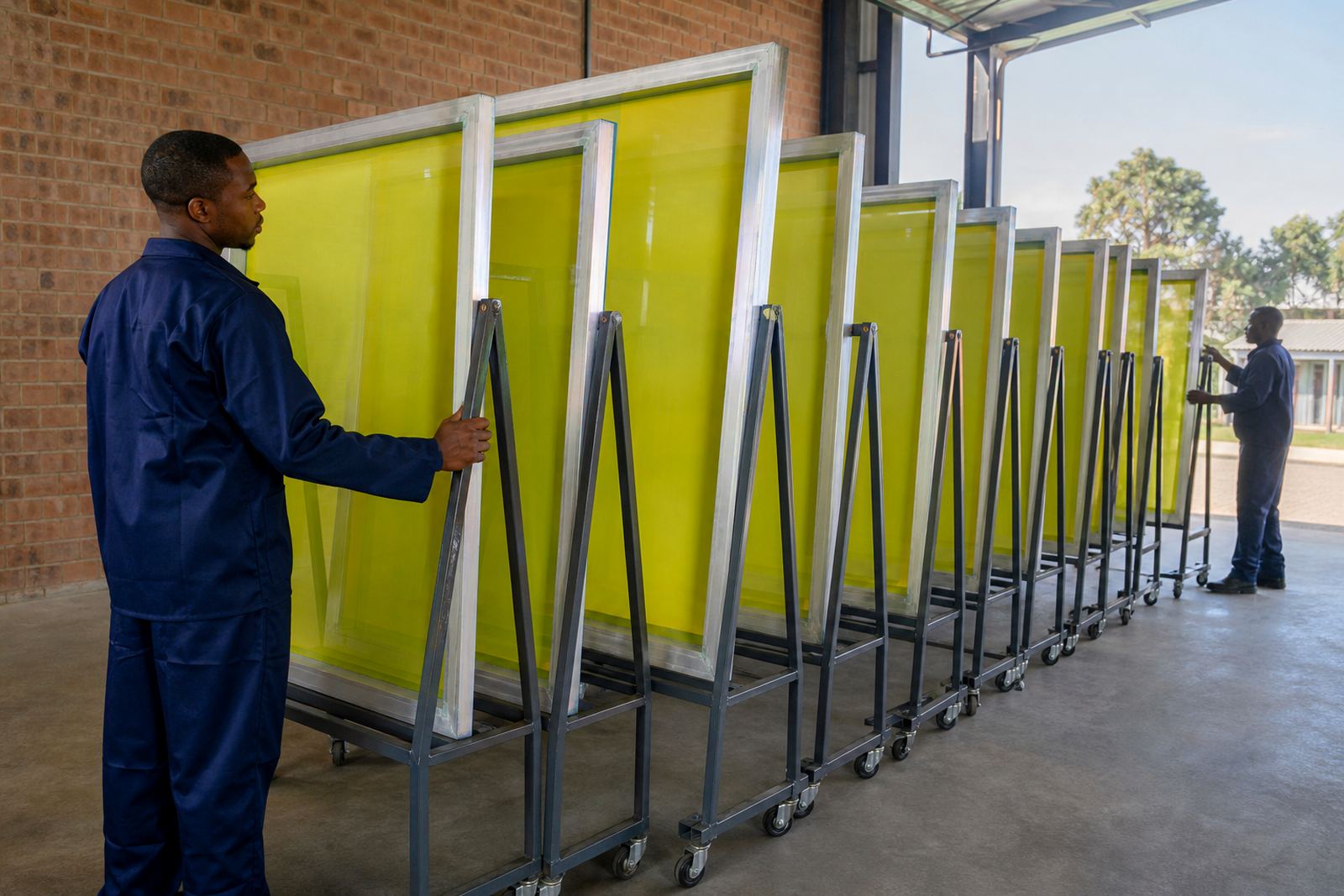
Good screen stretching starts with the right mesh for the job and a frame that can hold tension evenly. For textile work, finer detail and high mesh counts are often used for cleaner image edges, while lower counts suit heavier ink deposits and bold print areas. We help shops choose the mesh and stretch method that match the print process, substrate and artwork requirements.
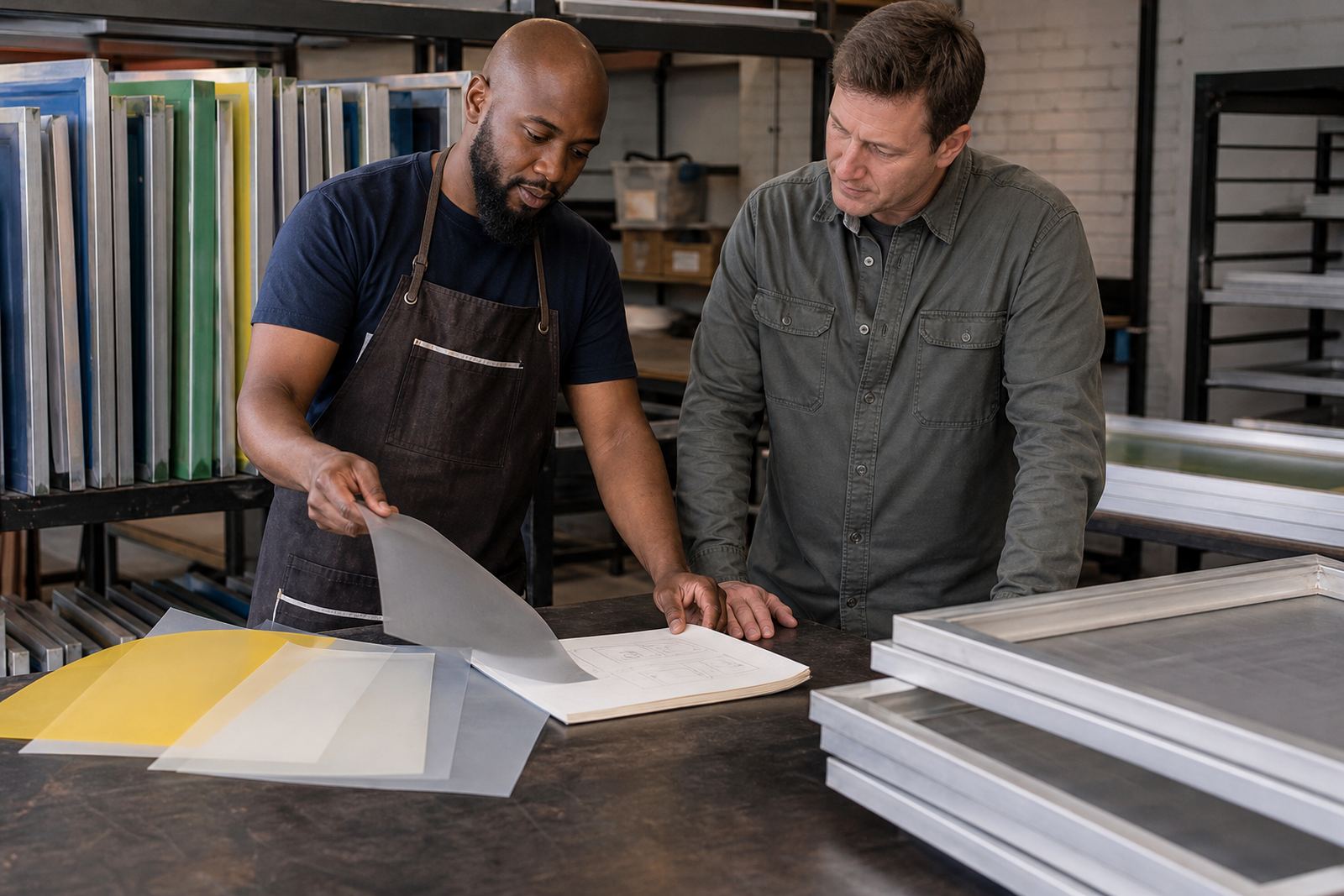
In practice, that means looking at how the screen will be used before we stretch it. A screen for fine halftones needs different handling from one used for thicker inks or spot colour jobs. We also check that the frame size and mesh count work together, so the finished screen is practical on press and ready for repeated use.
New frame stretching and re-stretching
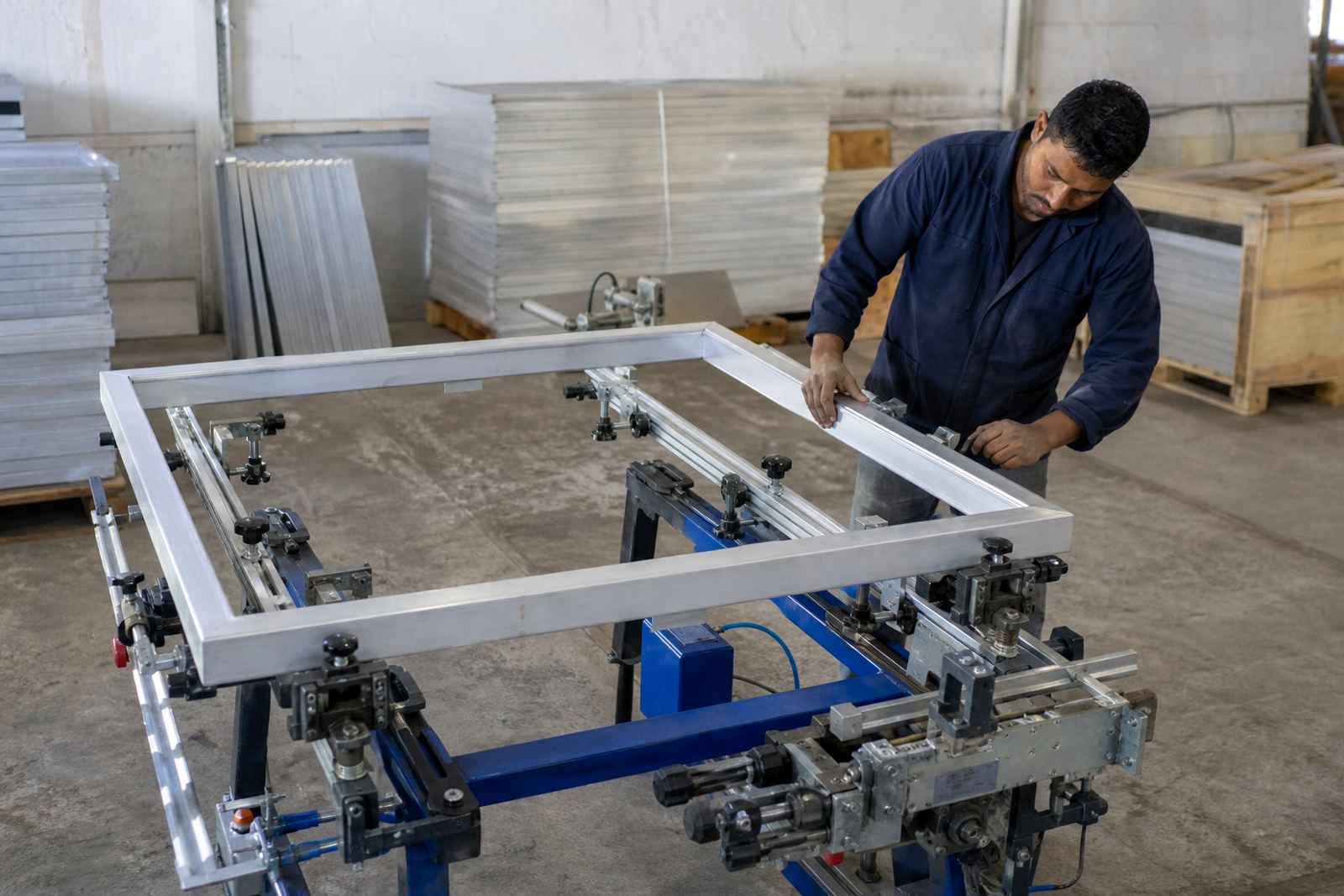
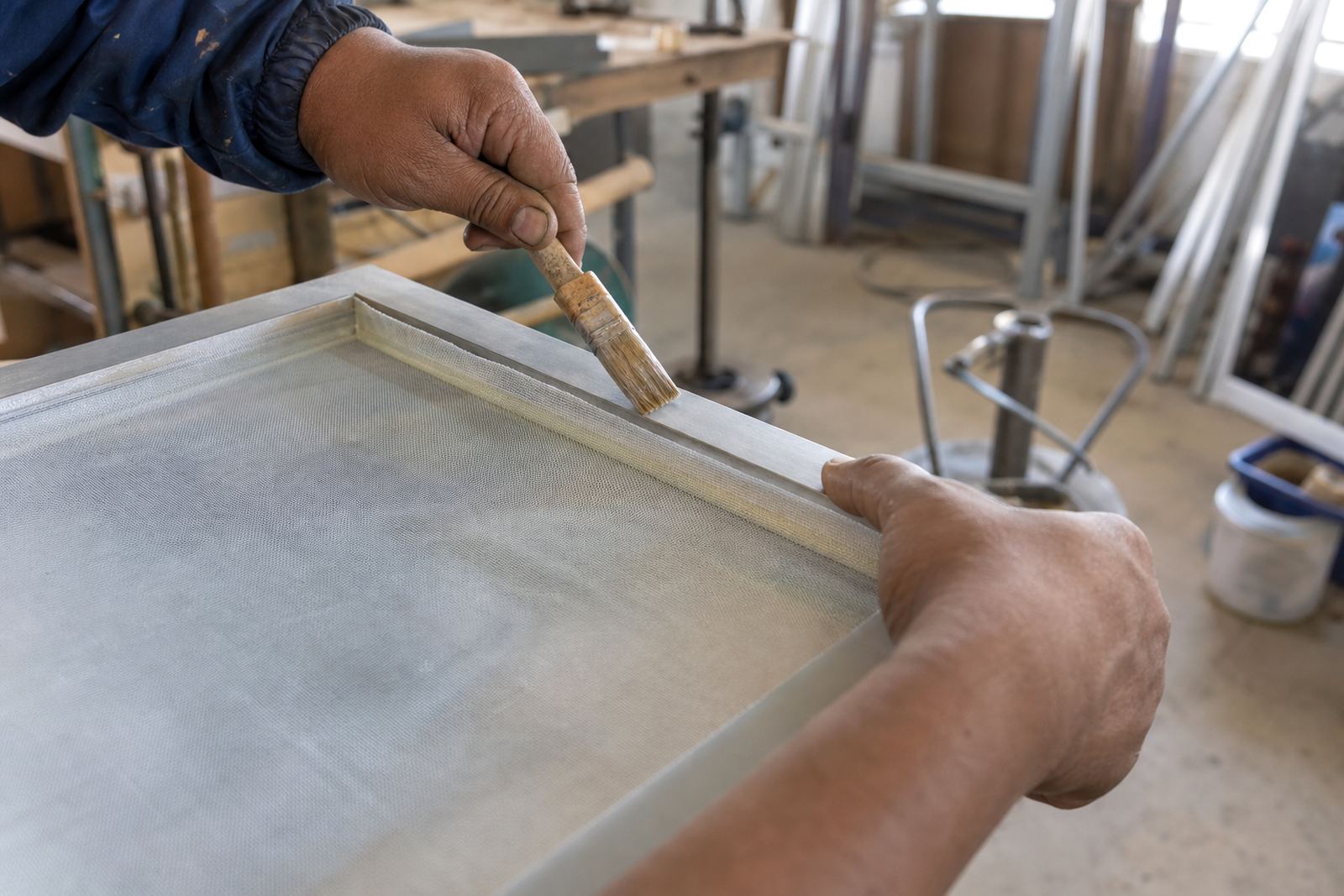
We handle new frame stretching for fresh production screens and re-stretching for frames that still have life in them. Re-stretching is often the right choice when the frame is sound but the mesh has lost tension, been damaged or is no longer cleanly usable. This helps print shops keep usable frames in circulation instead of replacing everything at once.
- New frame stretching for standard and custom frame sizes
- Frame re-stretching when mesh has slackened or damaged
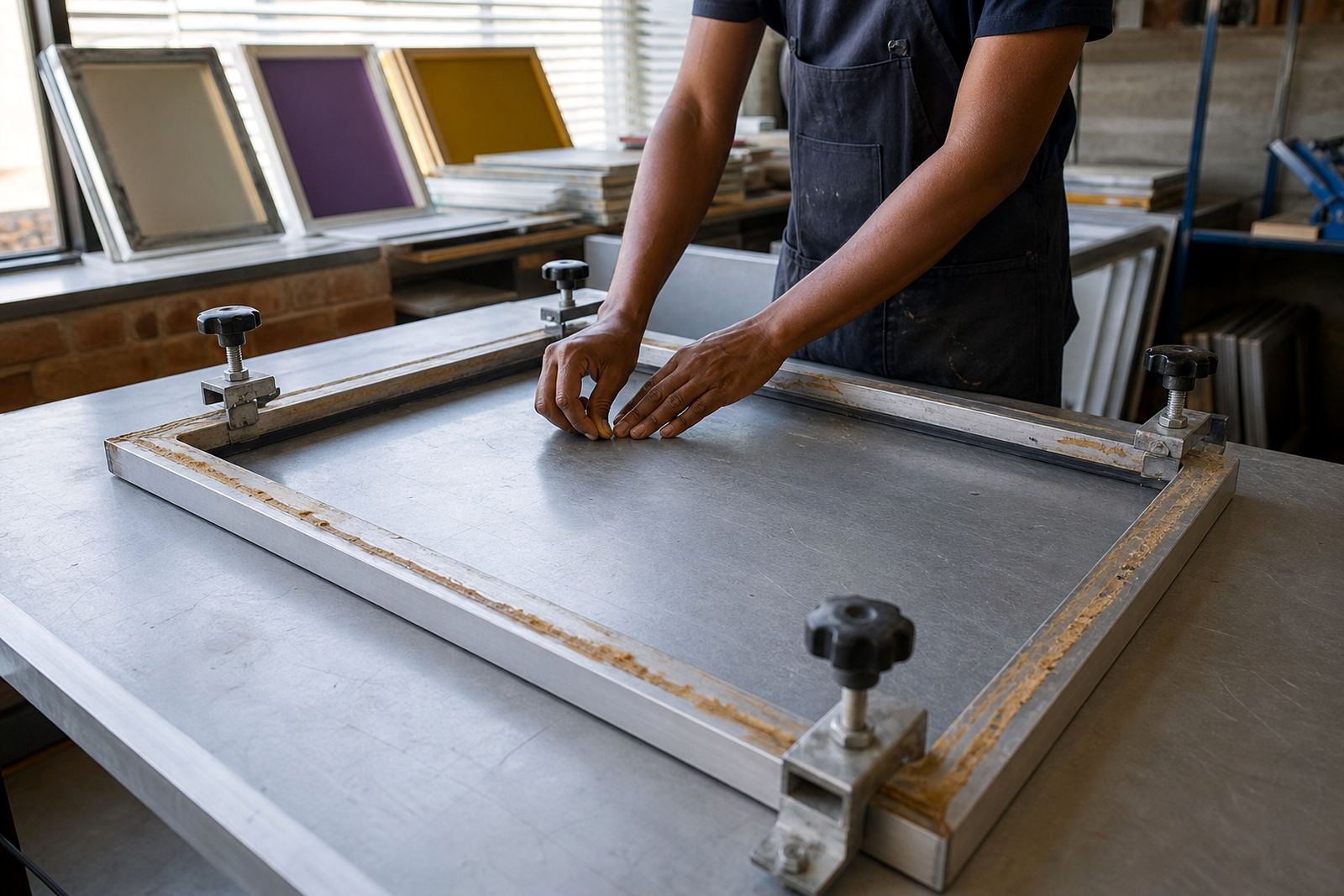
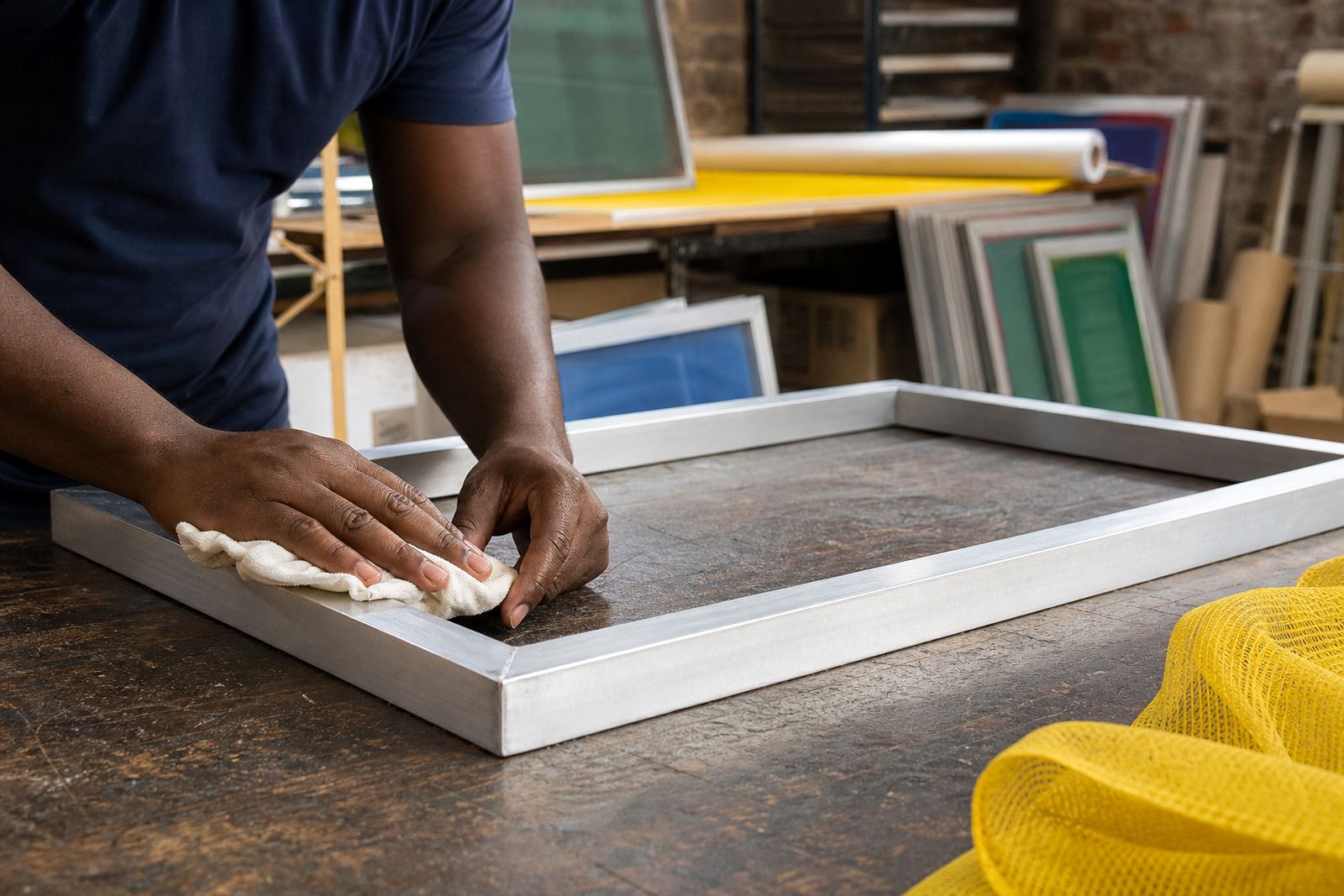
- Mesh removal and clean prep before bonding
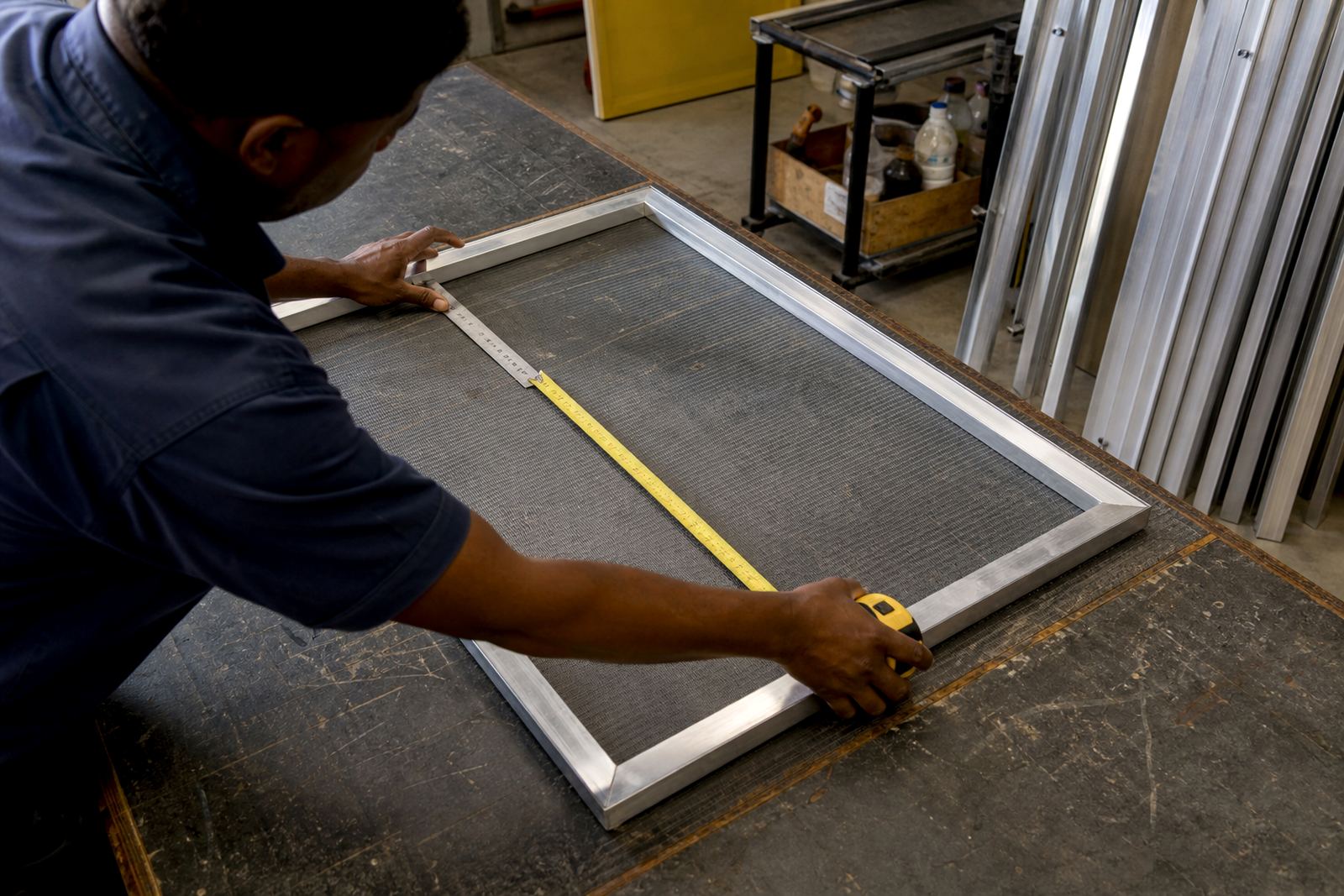
- Attention to corner alignment and even mesh seating
- Suitable for recurring production work and repeat orders
We work with production realities in mind. If a shop is dealing with tight turnaround times, machine down time or late art changes, it helps to have frames that return ready for setup without extra sorting.
Matching mesh count to the print job
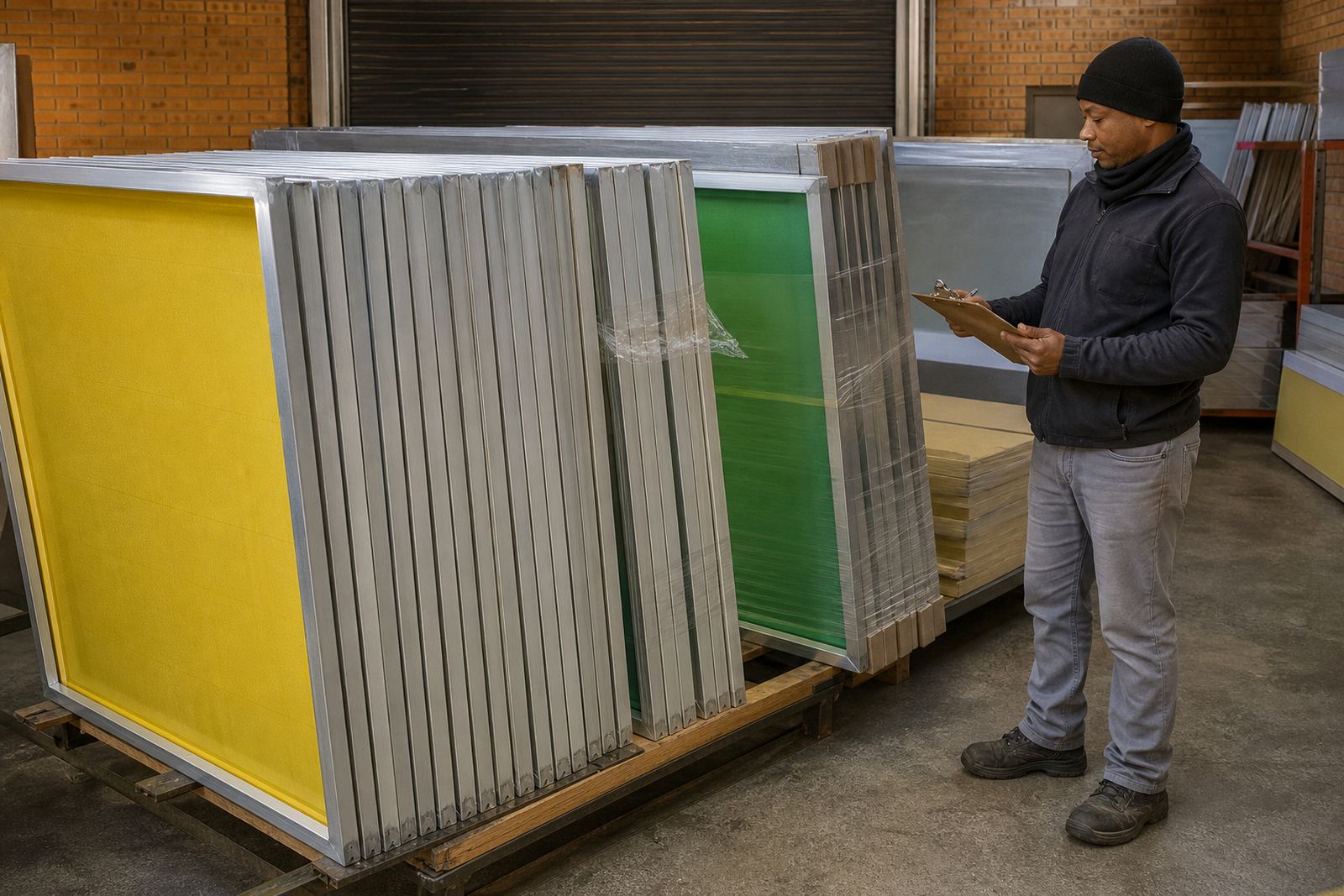
Mesh count matching is one of the most important parts of screen preparation. Lower mesh counts generally allow more ink through and are useful for bold graphics, heavier deposits and some specialty inks. Higher mesh counts are chosen when finer detail, smoother edges or thinner ink deposits are needed. The right choice depends on the job, not just the artwork.
We advise on mesh selection for common production needs, including:
- Textile printing where ink release and coverage matter
- Fine detail work that needs cleaner image definition
- Spot colour jobs where consistency between screens matters
- Repeat runs where the same tension and mesh count must be kept
If the count is off, the print can look heavy, soft or uneven. Matching the mesh correctly at the start saves time at press and reduces unnecessary rework later.
Tension checking and screen inspection
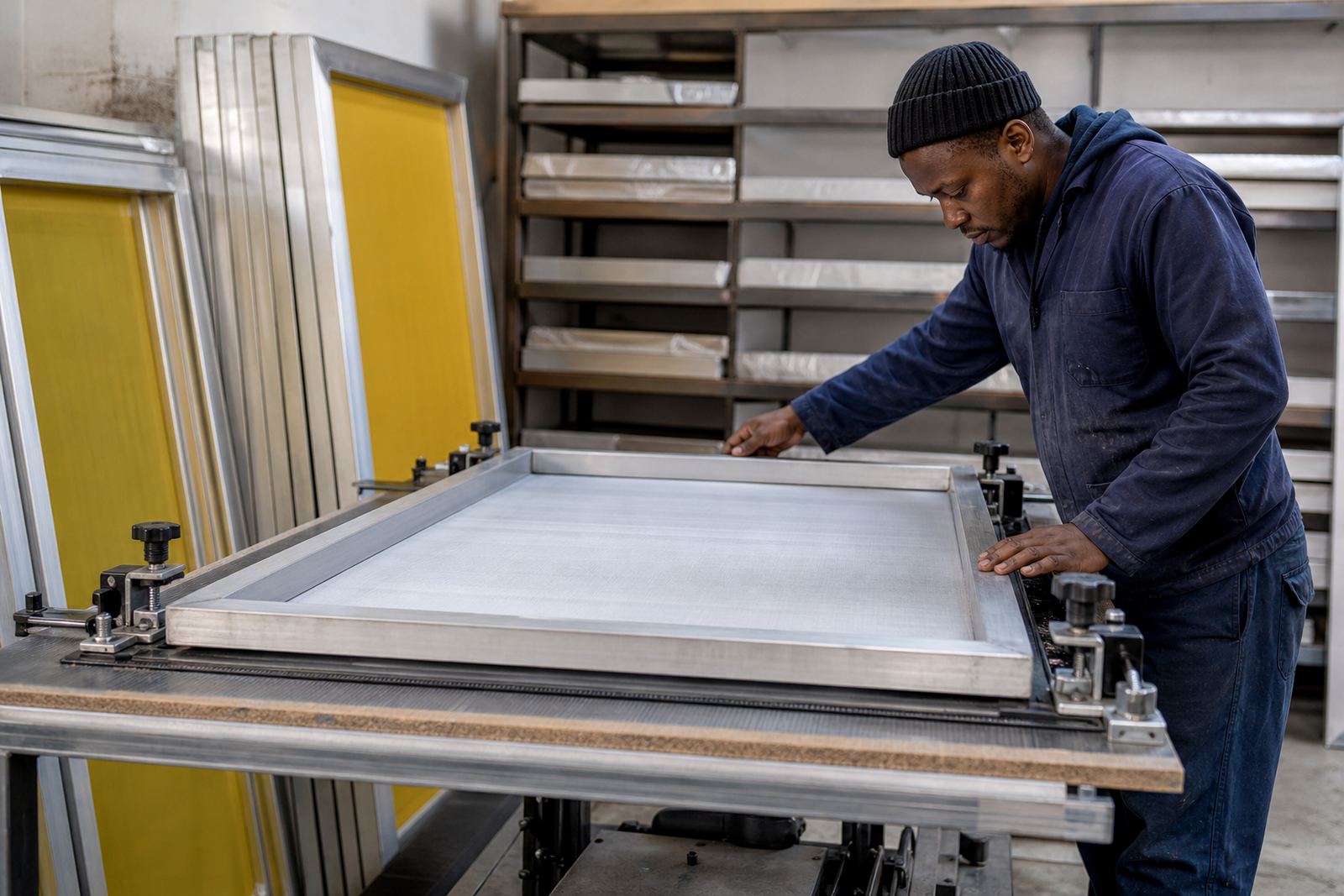
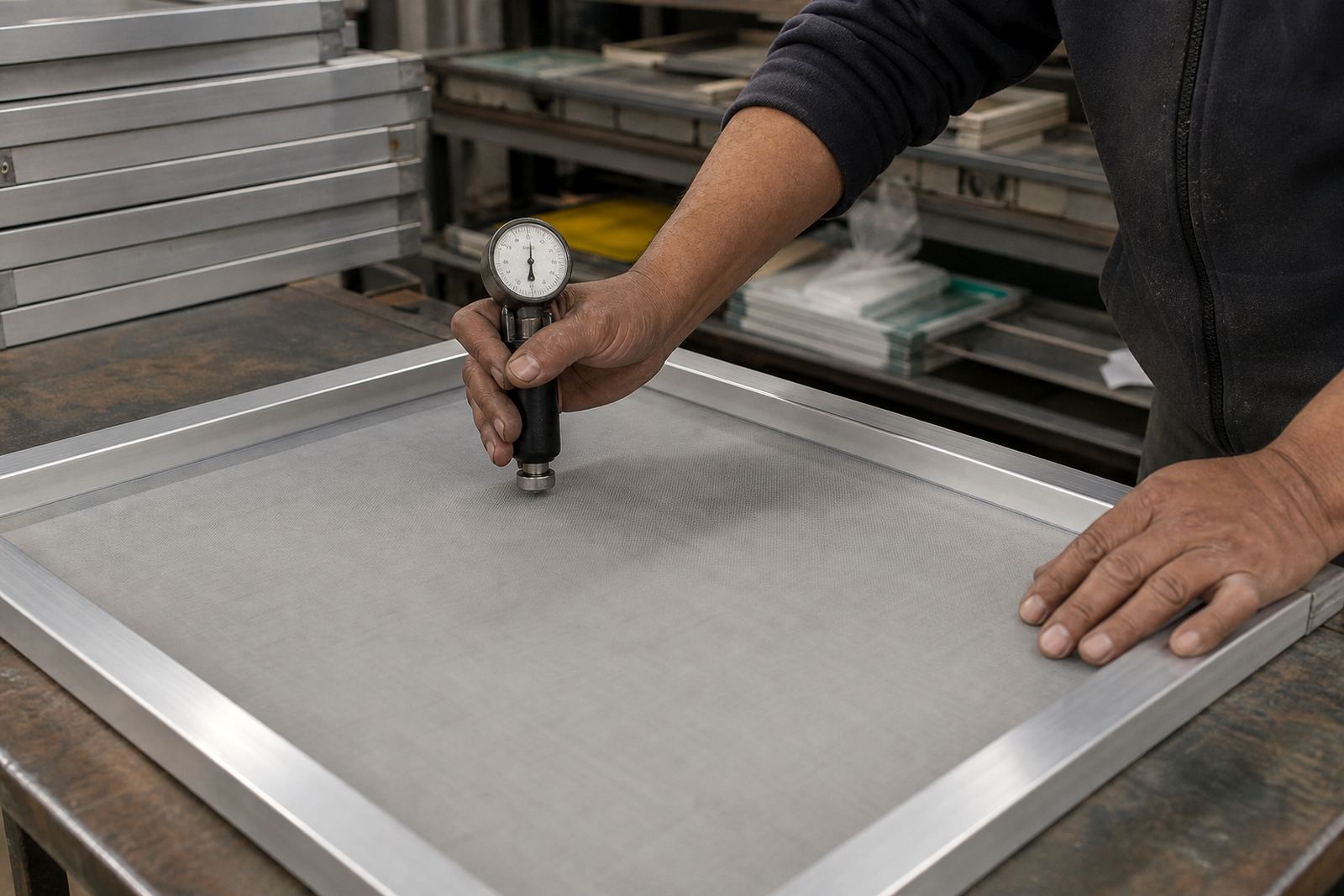
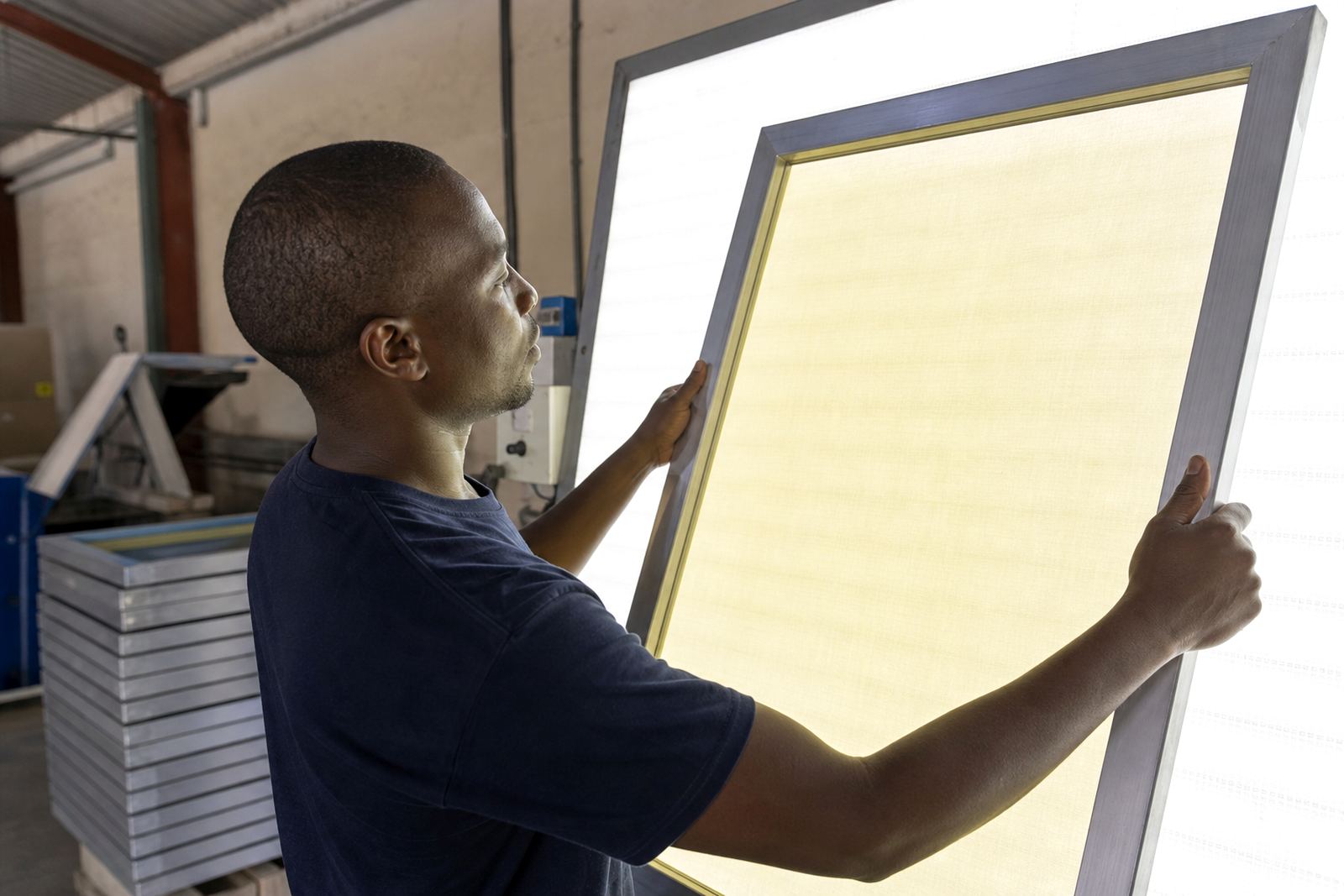
Tension affects how the stencil holds under squeegee pressure and how repeatable the print stays across a run. A screen that is too loose can blur detail, while uneven tension can cause changes from one side of the frame to the other. We check screens for tension consistency and basic usability before they are sent out for production.
Screen inspection also helps identify small issues early, such as poor mesh adhesion, frame contamination or signs of wear around the edges. In humid coastal conditions, screens can shift if they are not stored and handled properly. In Gauteng, dust and shop conditions can also affect a clean print surface. Practical inspection helps keep these issues under control.
Frame sizes, clean prep and batch screen support
Many print shops need more than a stretched frame. That is why we also offer frame clean prep, custom sizing and batch screen prep for repeat production. When screens are prepared in batches, it becomes easier to keep multiple jobs aligned, especially when the same artwork or mesh count is used across several frames.
- Custom frame sizing for different press setups
- Frame clean prep before mesh bonding
- Batch screen prep for repeat production runs
- Screen setup advice for shops refining their workflow
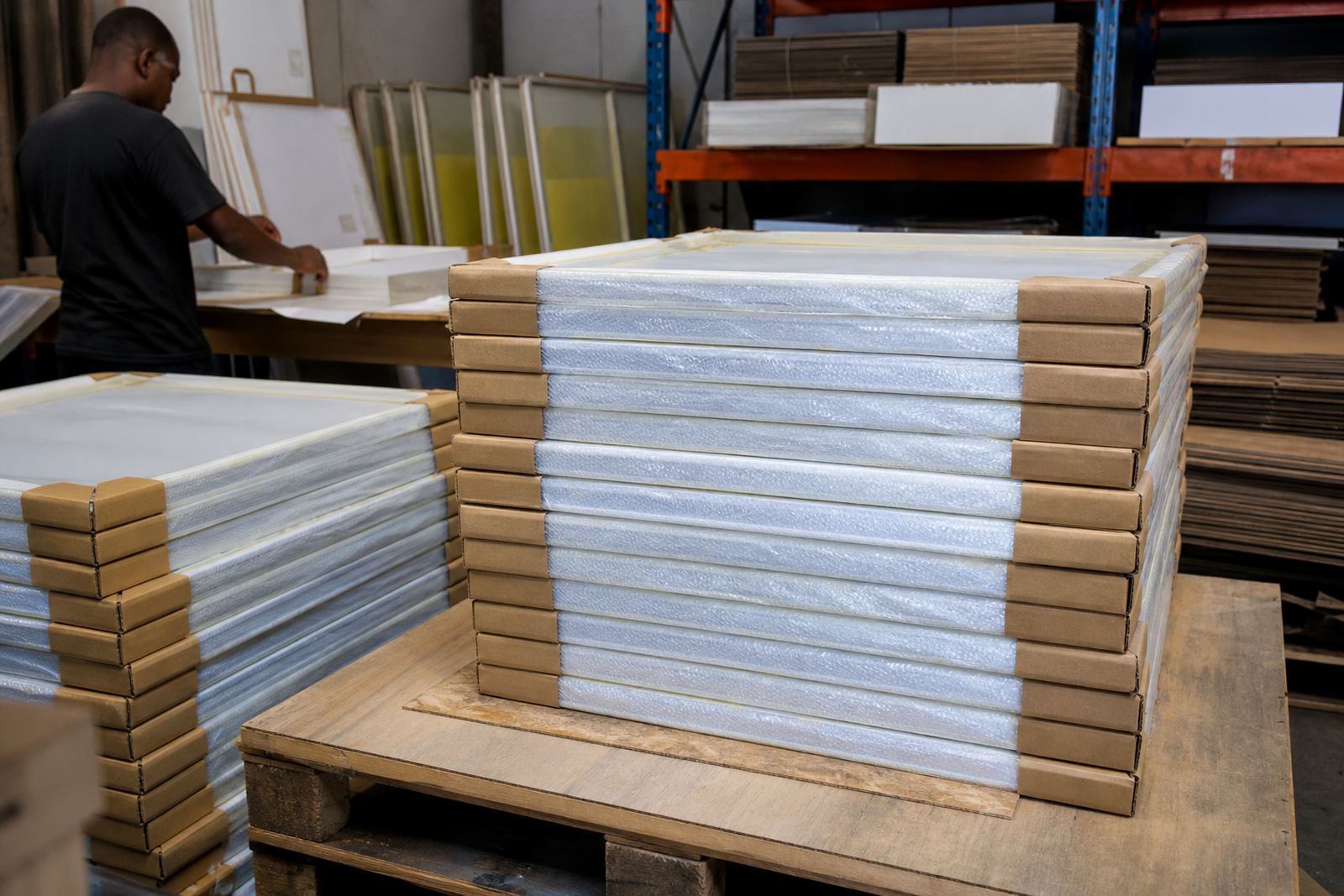
- Dispatch packing for screens heading to other provinces
Whether the order is for Germiston, Johannesburg, Pretoria, Durban, Cape Town or Gqeberha, the aim is the same: send out frames that are ready to use and properly protected in transit.
Who this service suits
Our stretching services suit print shops that want dependable screens without the hassle of doing every step in-house. They are also useful for smaller operations that need help with tension, mesh selection or frame preparation before a busy production week. From East Rand supply jobs to Midrand delivery orders, we work with the realities of local print schedules.
If you are setting up a new run, replacing worn mesh or checking whether a frame can be saved, our team can help you choose the right route. Enquiries come through the contact page form, and we use the details provided there to guide the next step. That keeps the process simple and practical for shops that need clear answers, not guesswork.