

How to choose the right mesh count for the job
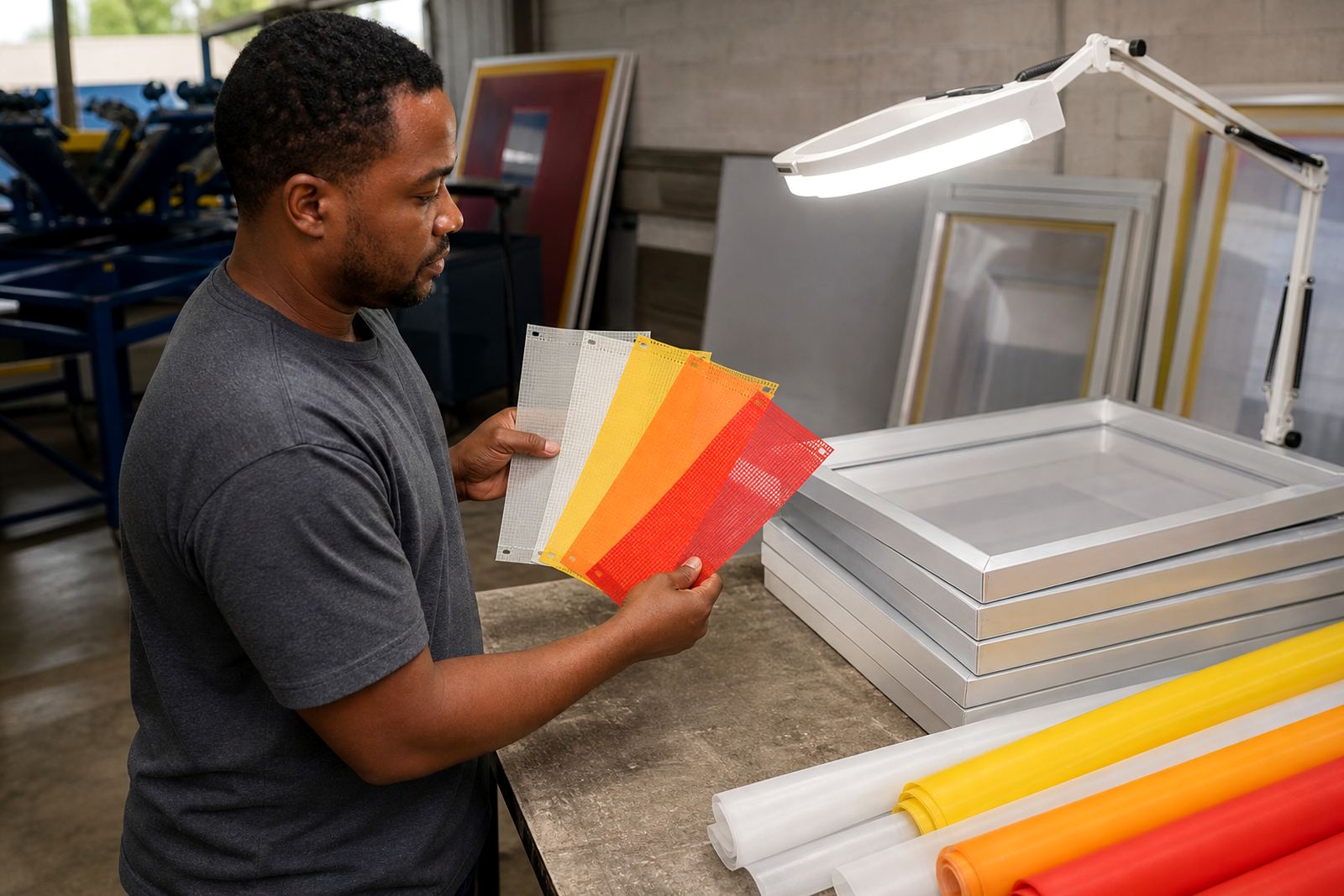
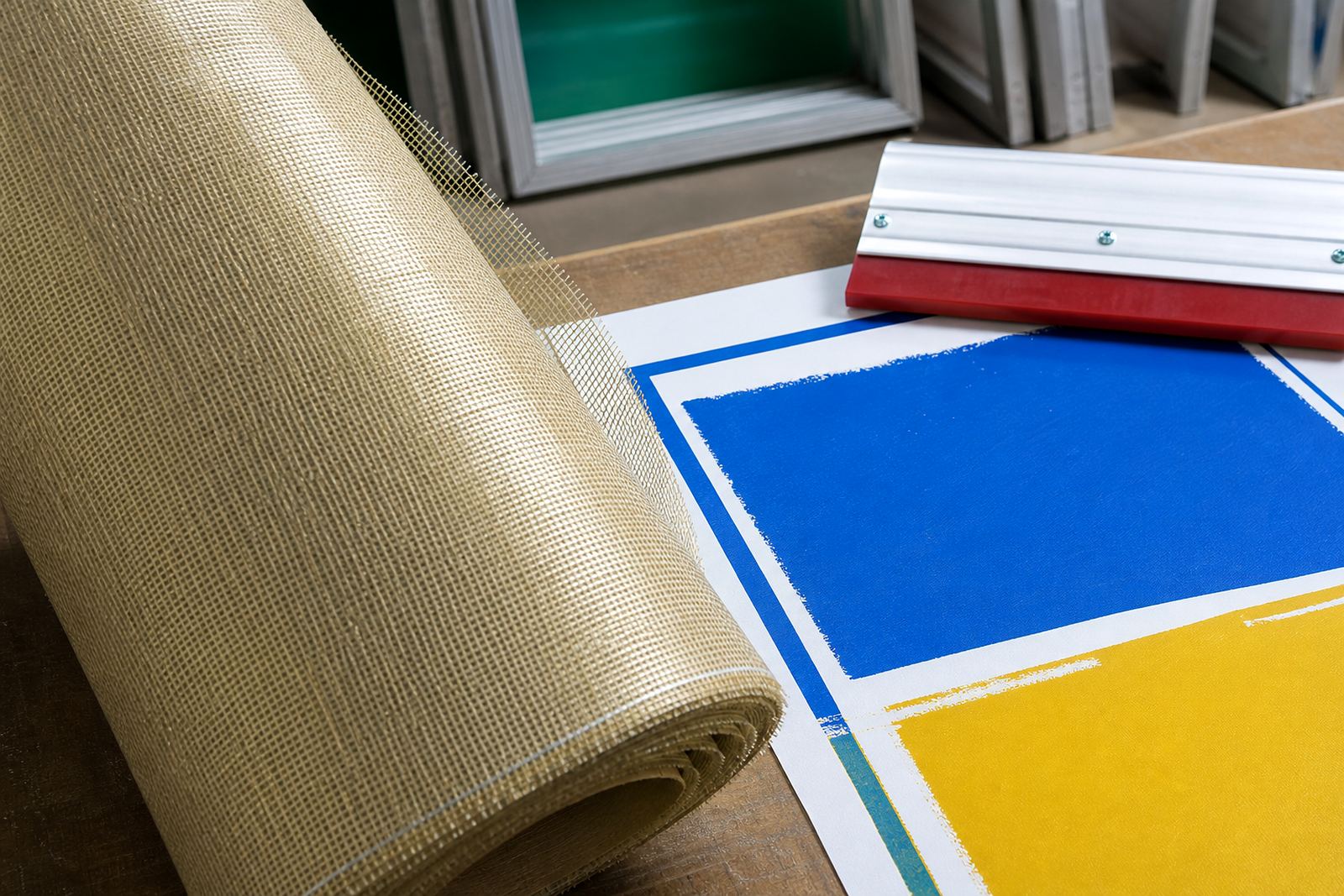
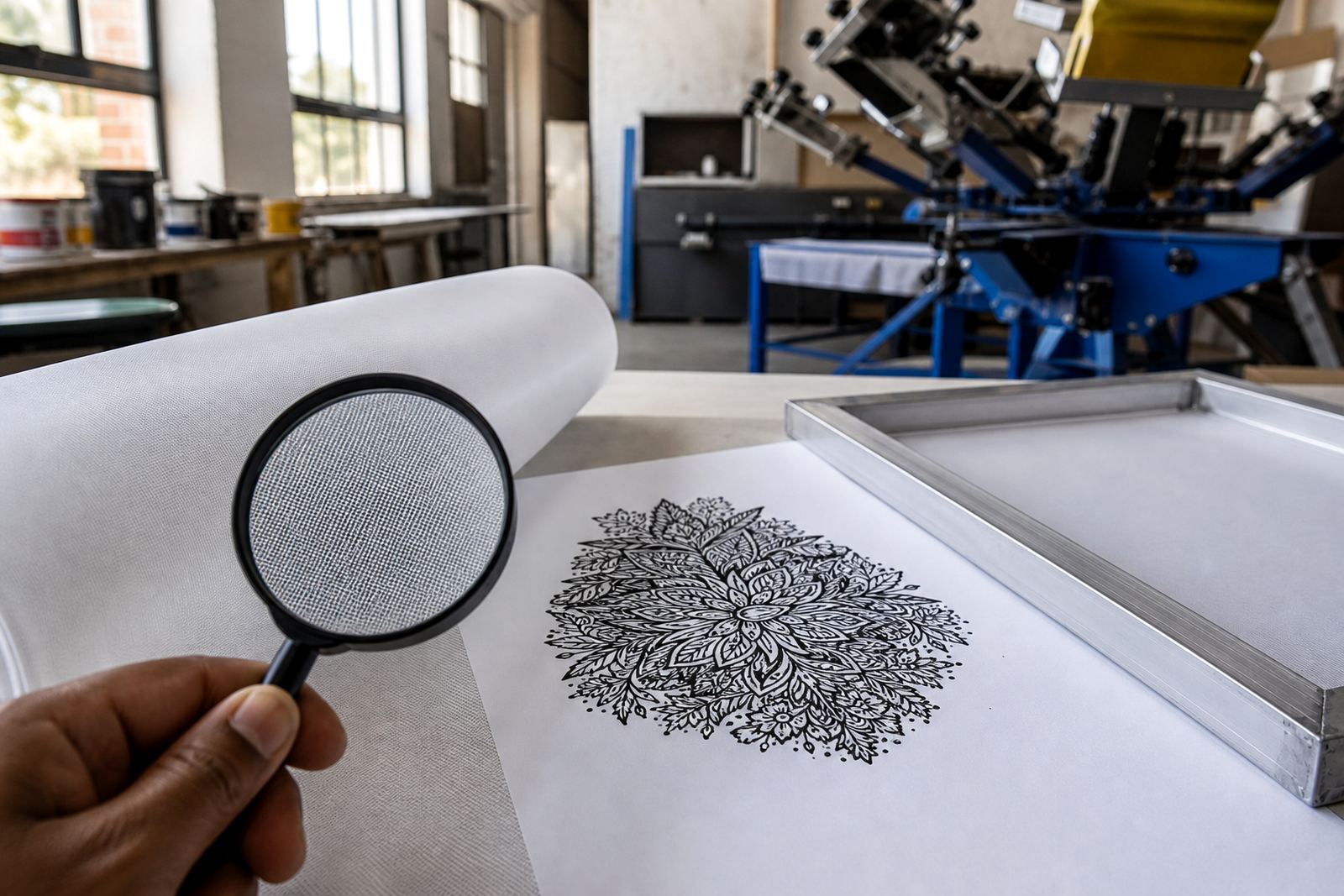
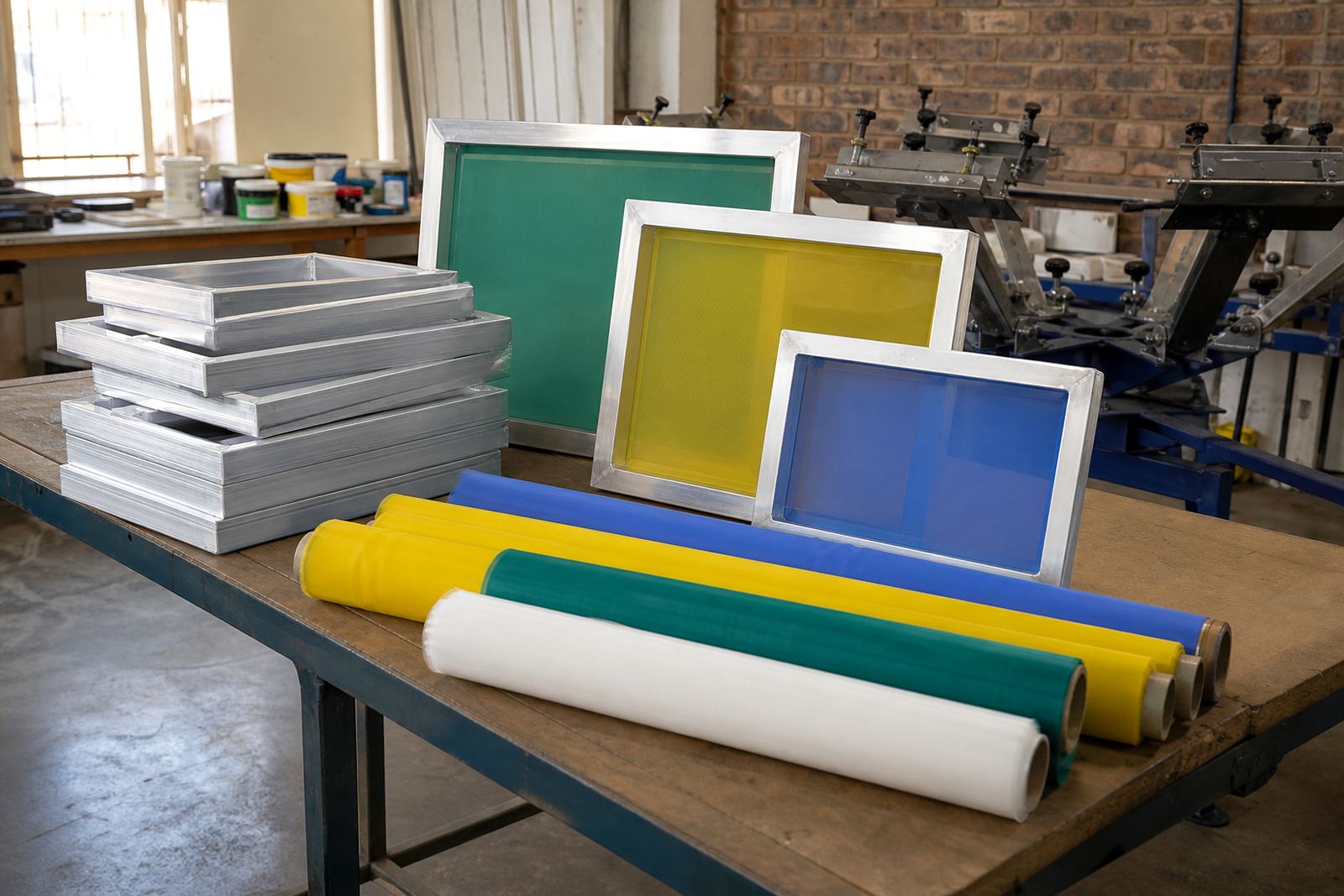
Mesh count affects how much ink passes through the screen and how much detail the stencil can hold. Lower counts are usually chosen for heavier deposits, such as bold solids and specialty inks, while higher counts suit finer detail, small type and smoother print edges. If a job needs both coverage and detail, the mesh choice has to match the artwork, ink body and fabric or substrate being printed on.
For shops handling a mix of garment work, signage and smaller repeat orders, the safest approach is to match mesh to the most demanding part of the job rather than only the easiest one. That is where a proper count guide helps. It saves time on test prints and reduces the risk of underfilling or flooding the image area. In humid coastal conditions and during load-shedding stop start production, a sensible mesh choice also helps keep screens predictable from one run to the next.
When a pre-stretched aluminium frame makes sense
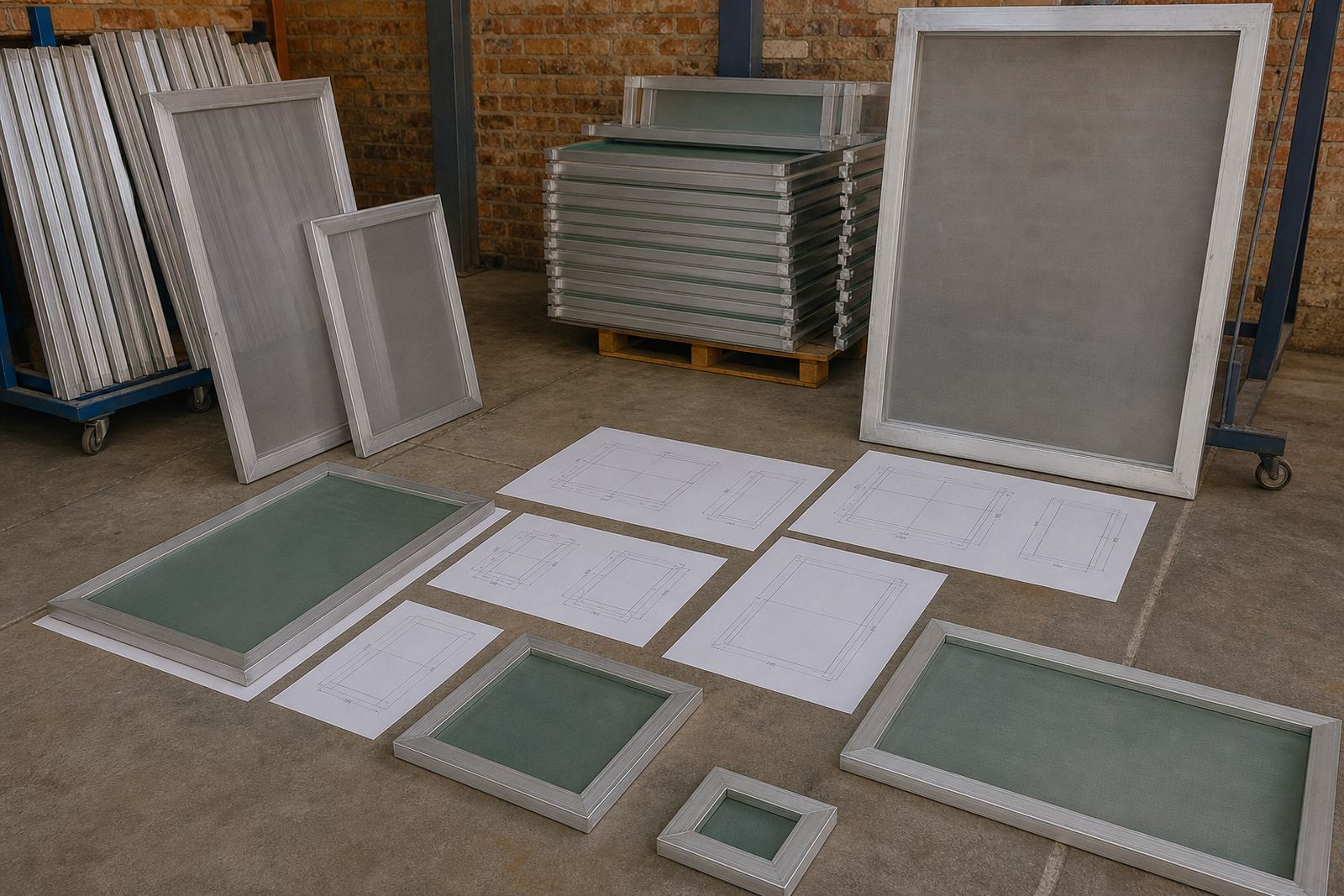
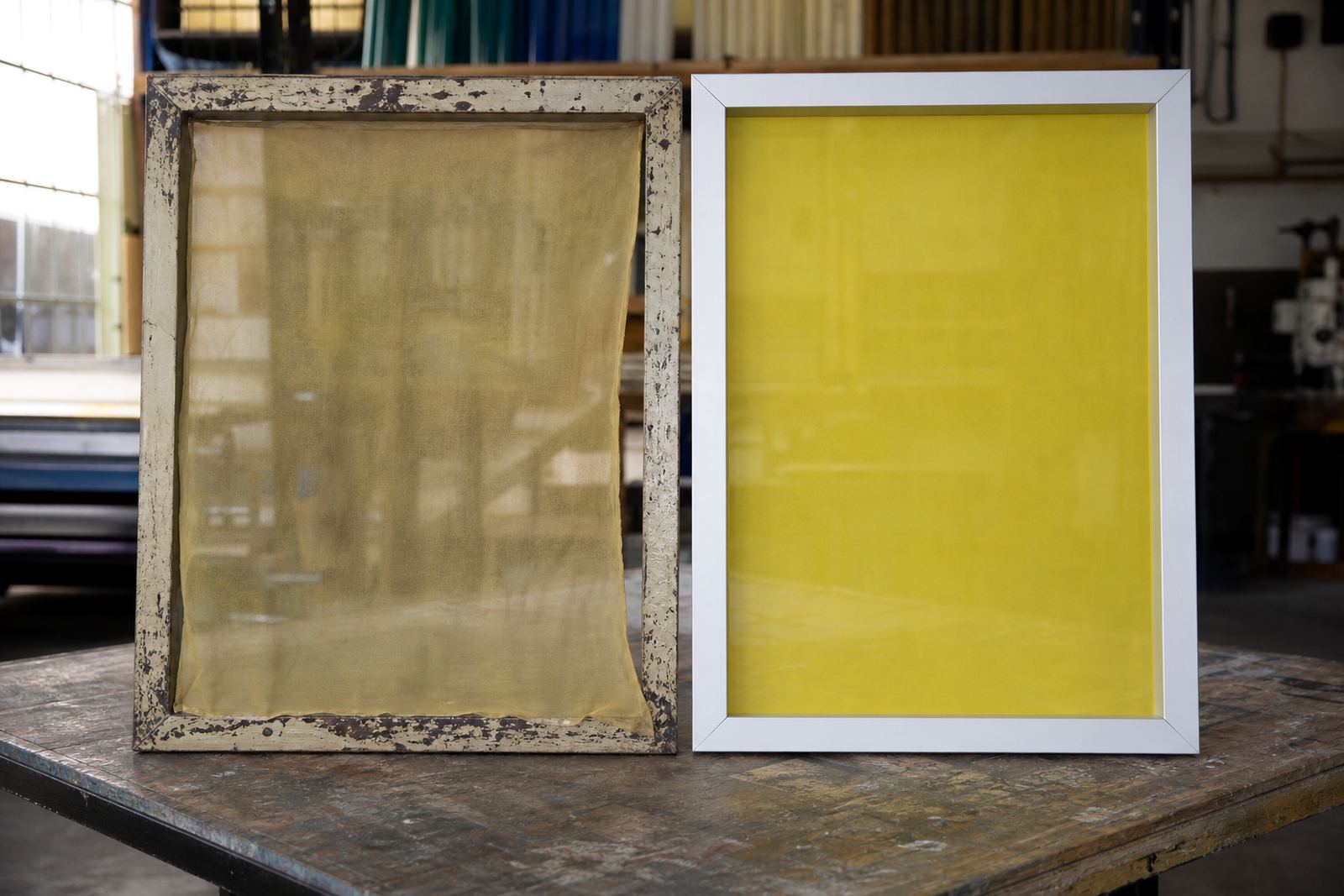
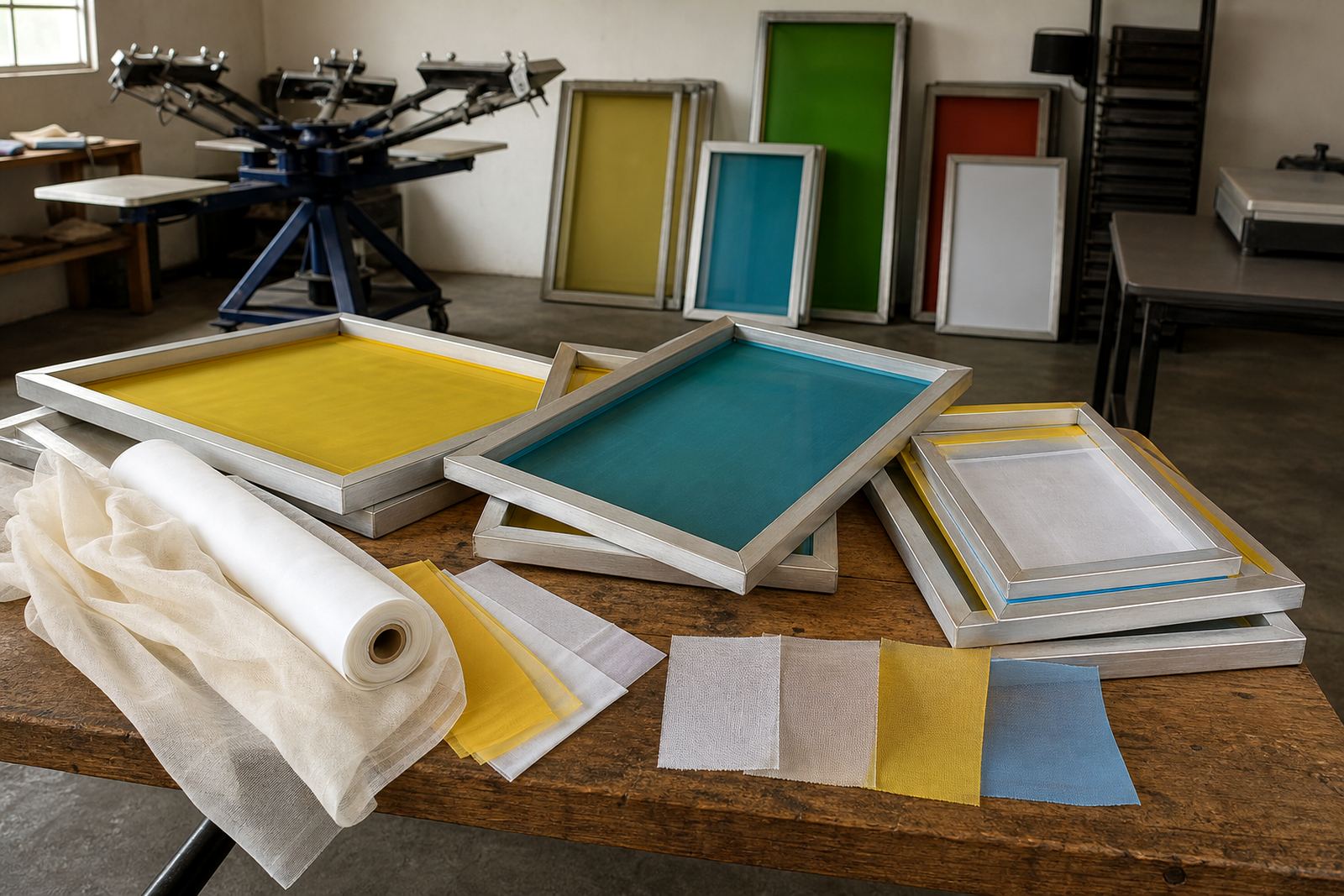
Pre-stretched aluminium frames are often chosen when a shop wants consistent tension and less time spent on manual stretching. Aluminium is light, resists warping better than timber in many workshop conditions and holds up well where screens are washed down often. For production teams that need repeatability, the main value is a frame that arrives ready for use with the mesh tension already set.
- Good for repeat artwork where the same screen setup is used often
- Useful when replacement screens must fit a standard print process
- Helps reduce variation across multiple frames in the same batch
- Works well in hot workshops where timber can move with moisture and heat
Tension, stretch quality and print consistency
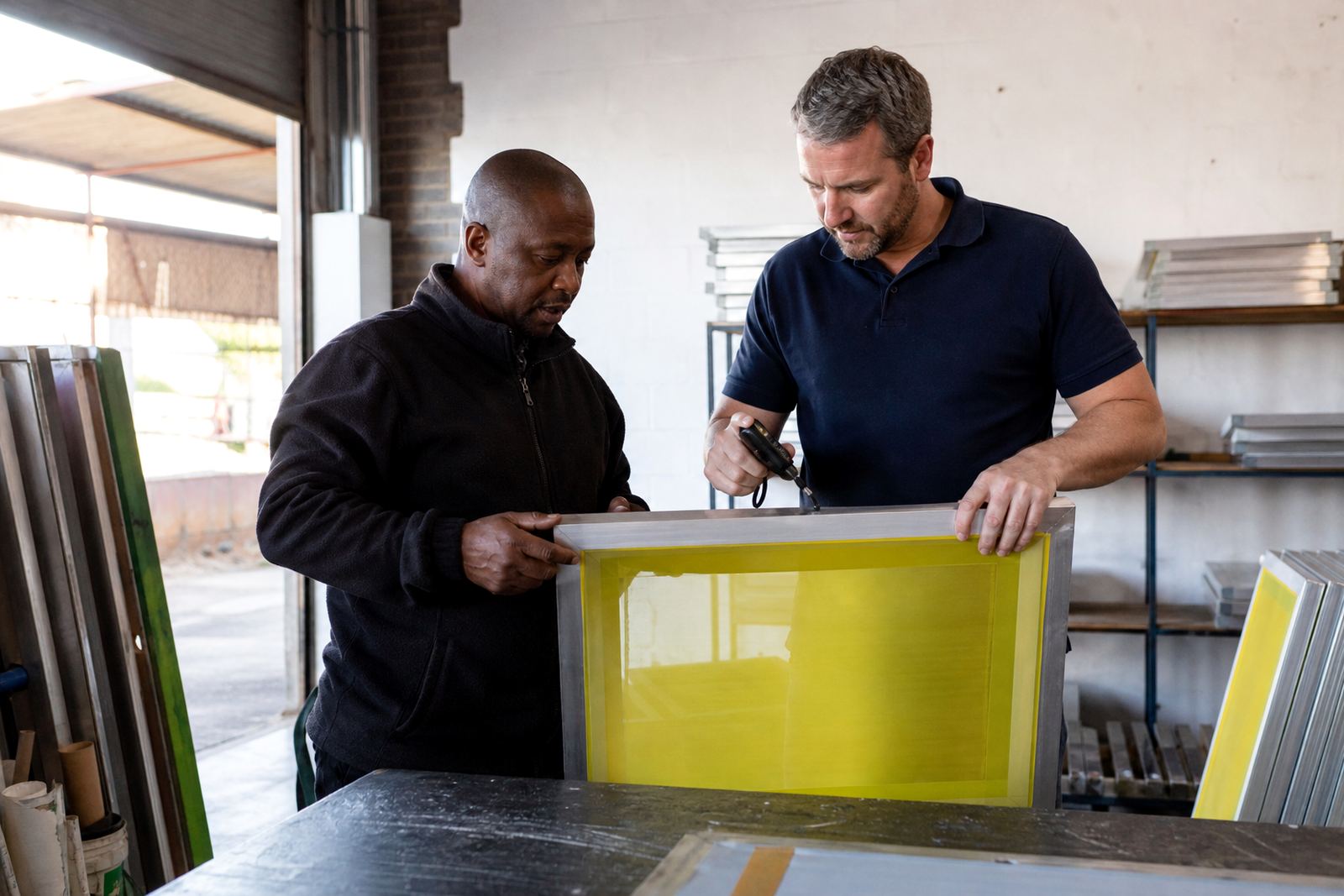
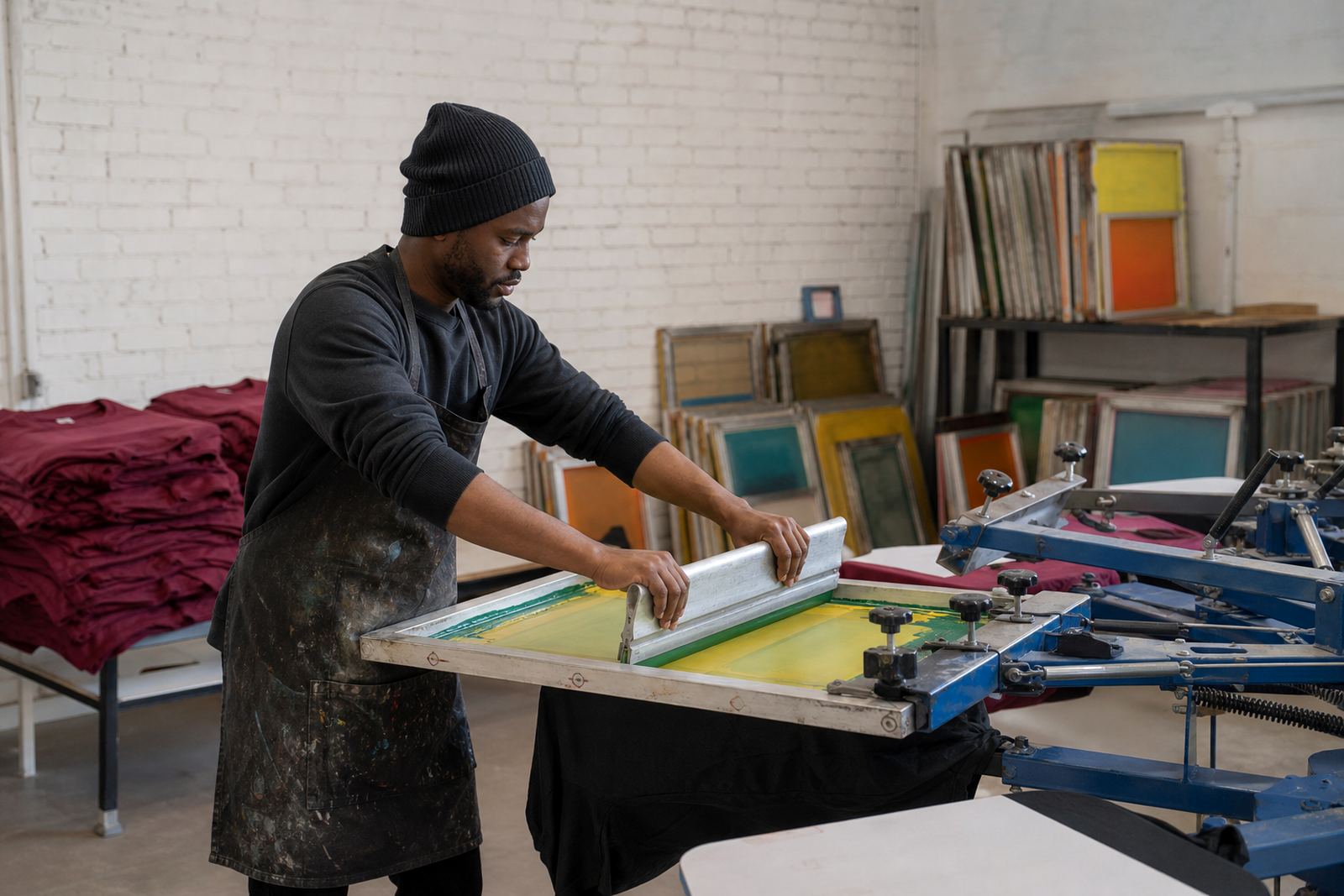
Tension is one of the biggest factors in how a screen prints. If tension is uneven, the print can show blur at the edges, poor registration or patchy ink release. A properly stretched frame keeps the mesh stable, so the squeegee action stays even across the full image area. That matters whether you are printing a few replacement jobs or running a full shift with multiple colours.
Good stretching is not only about pulling the mesh tight. The bond between mesh and frame has to stay firm, especially if the screen will be cleaned regularly or used with stronger wash-up methods. For Durban humidity, Gauteng dust and the temperature shifts common in back rooms and garage workshops, the frame should keep its shape and tension without constant adjustment.
Mesh count matching for first orders and replacements
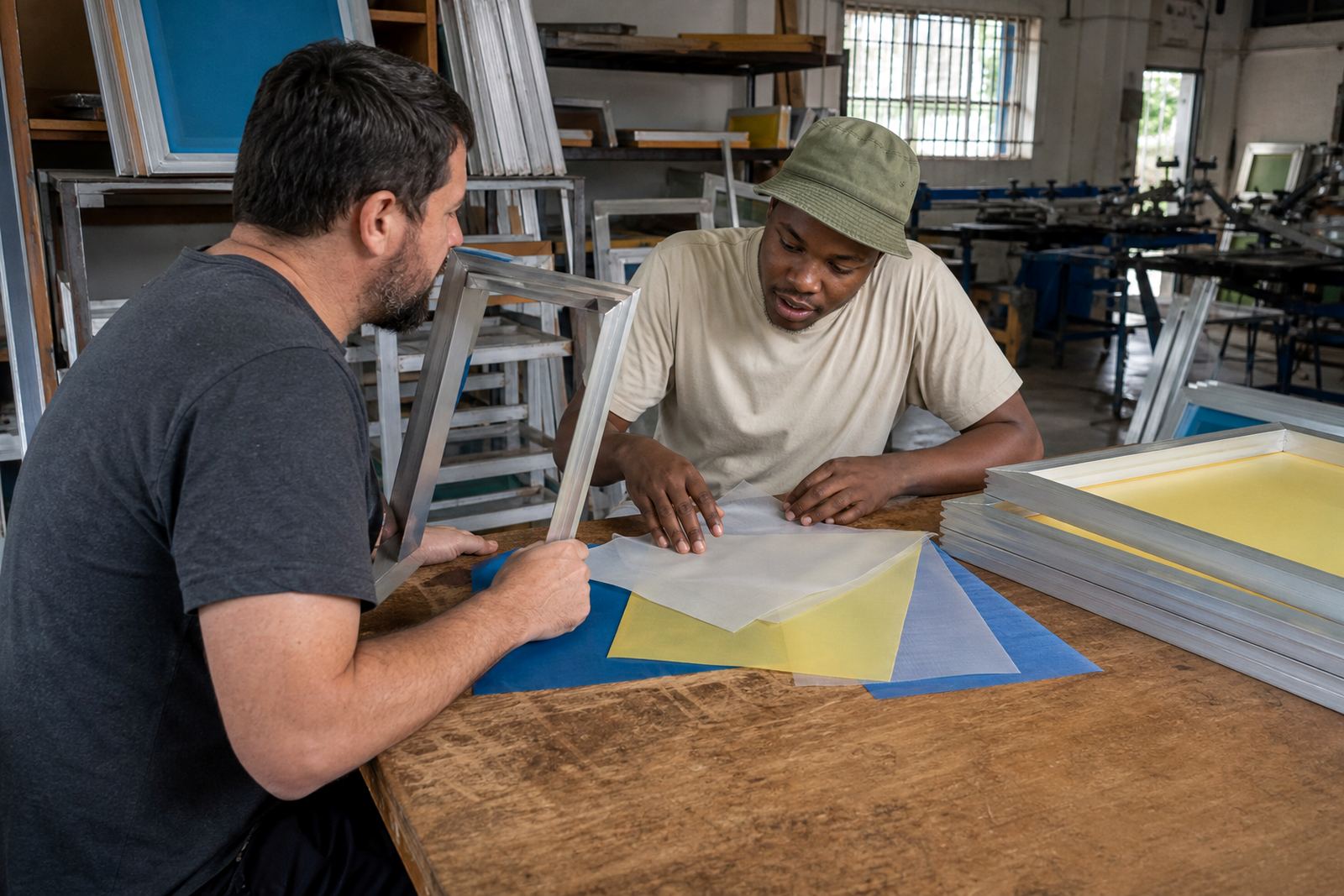
When a shop replaces an old screen, it is worth checking the original mesh count instead of guessing. Matching the count helps keep print results close to the original job and avoids unnecessary changes to ink flow. This is especially useful for repeat orders, contract work and shops that keep archived screens for ongoing production.
Mesh count matching can also help when different operators have handled the same job over time. One screen may have stretched, another may have been re-coated too many times, and both can print differently. A proper check looks at the intended use, the detail in the artwork and the print surface so the replacement screen fits the task rather than just the old frame size.
Choosing between new stretching and re-stretching
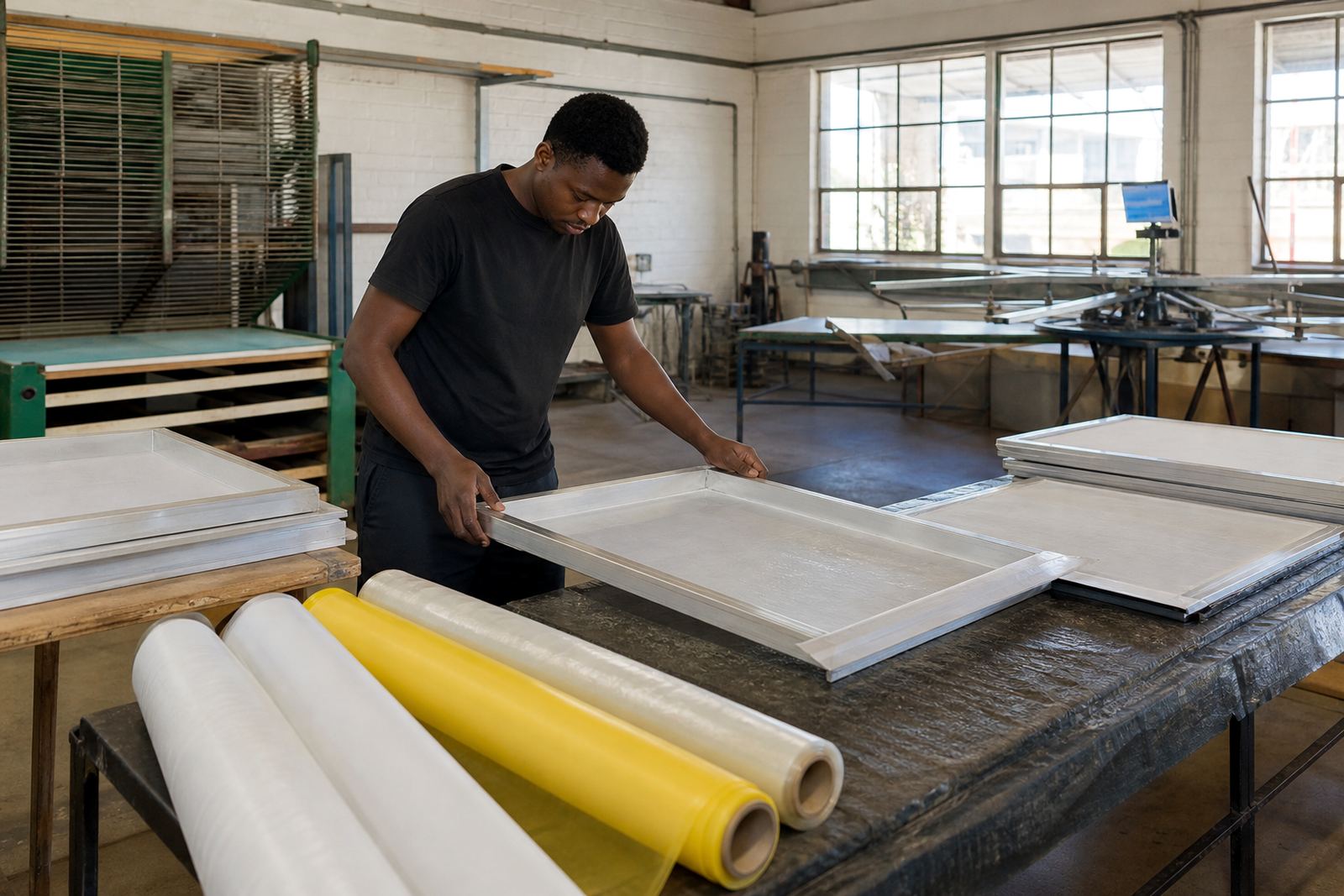
New frame stretching is usually the right call when the frame is sound but the mesh is worn, damaged or no longer suitable for the job. Re-stretching is useful when the frame still has service life and only the mesh needs replacing. The choice depends on the condition of the frame corners, the cleanability of the surface and whether the existing tension can still be trusted.
- Choose new stretching when the current mesh is torn, slack or repeatedly failing
- Choose re-stretching when the frame is still straight and the bond area is clean
- Check for residue, old adhesive or damage before committing to another build
- Ask for screen inspection if there is any doubt about frame condition
Screen prep steps that save time in production
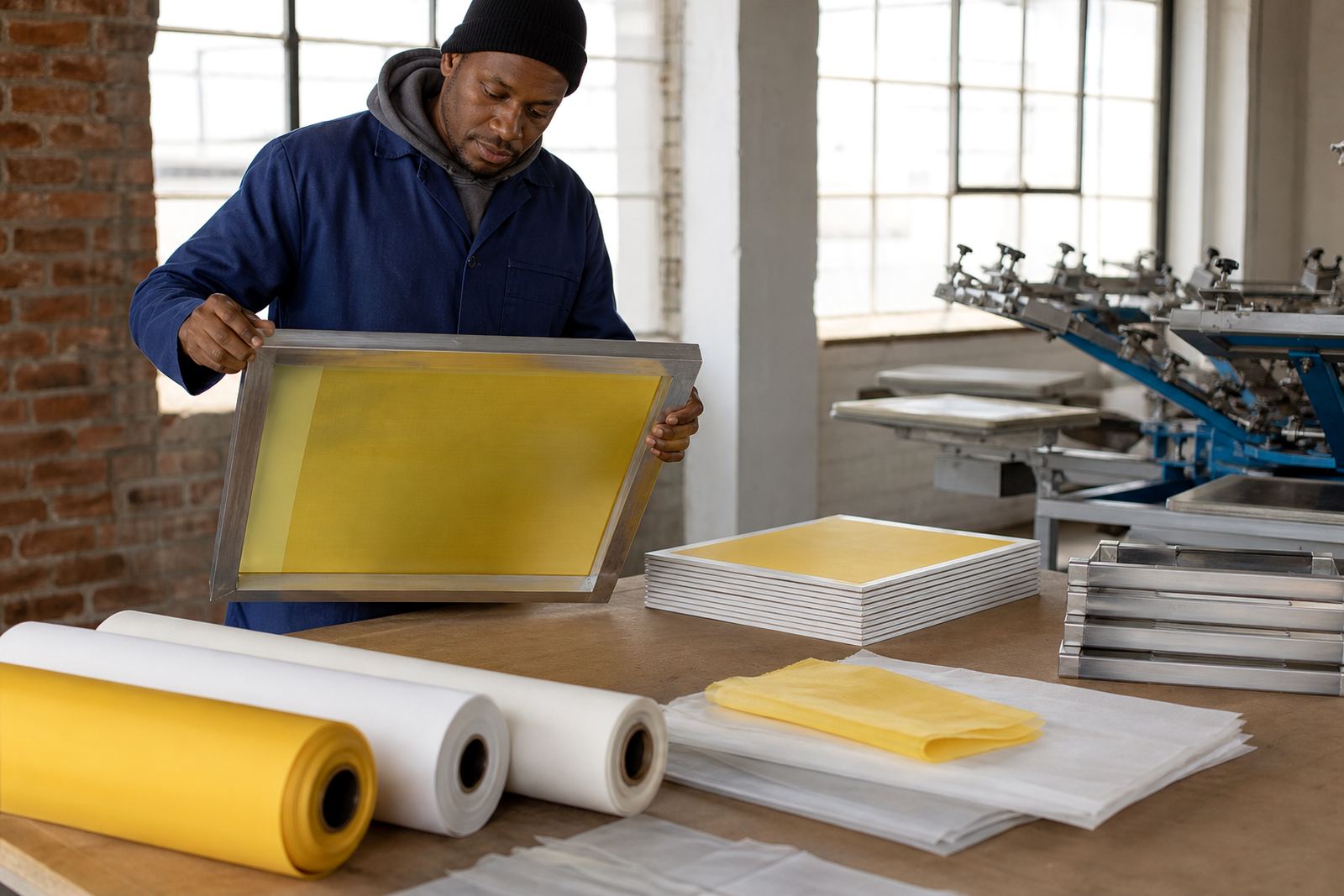
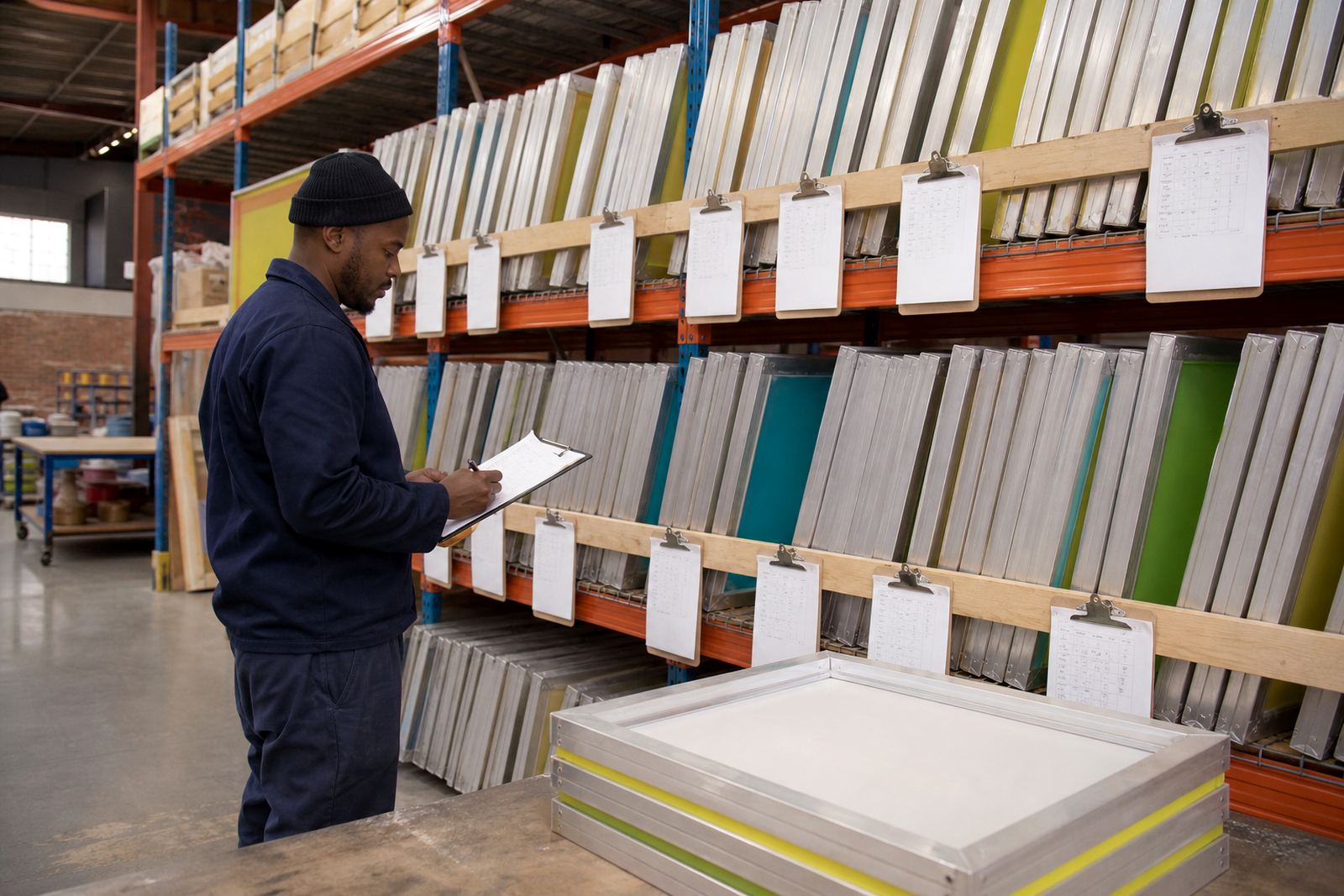
Before a screen goes into print, the prep work matters. Clean frame surfaces, proper mesh bonding, tension checking and batch screen prep all help the screen arrive ready for use. A screen that is well prepared usually needs less correction on the press and gives the operator a better starting point for alignment and ink control.
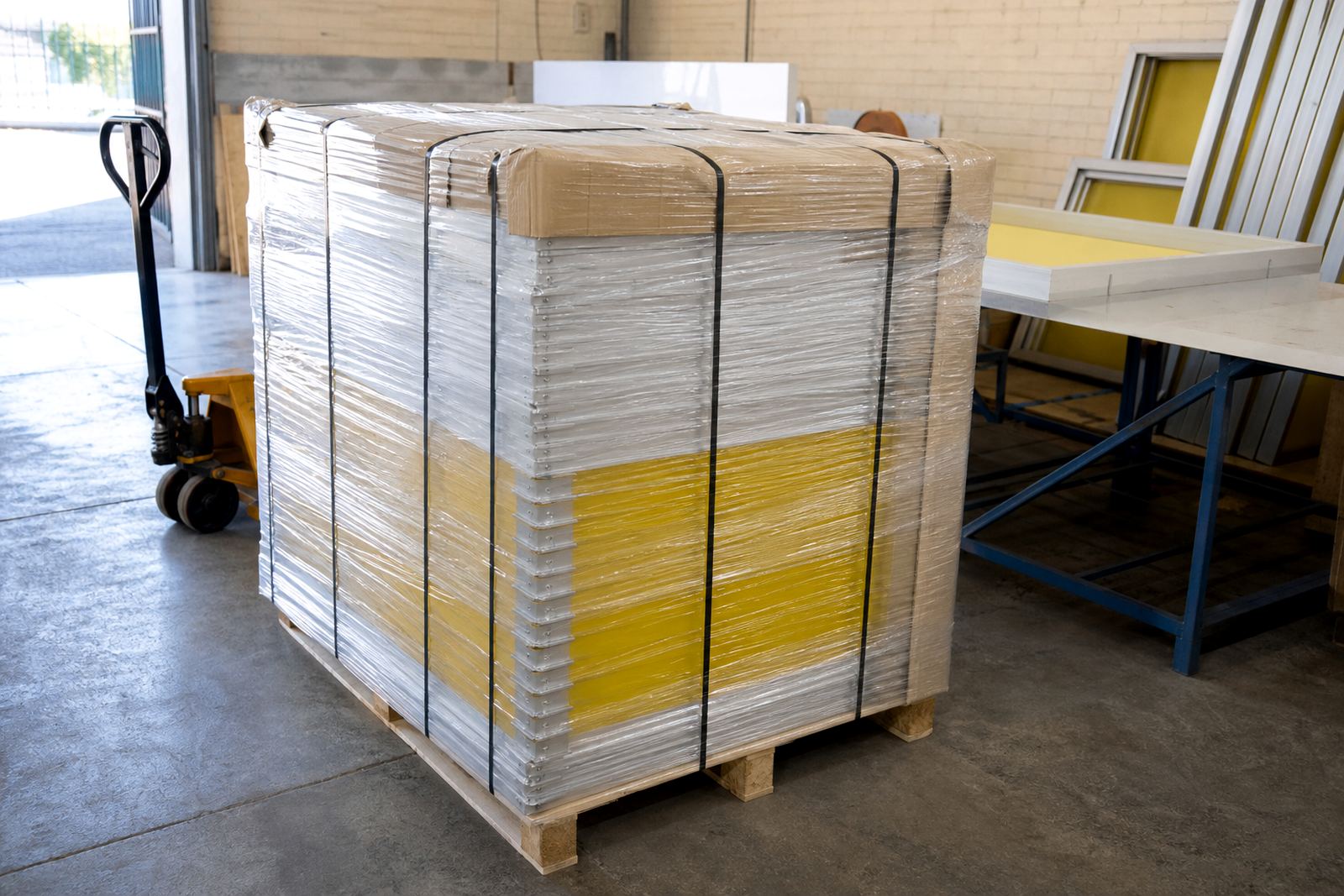
For shops across Johannesburg, Pretoria, Midrand and the East Rand, practical prep support is often the difference between a quick changeover and an unplanned delay. It is also worth keeping the next replacement in mind when ordering, so you can plan for dispatch packing and repeat order service without interrupting production.
Using these guides to plan your next order
These guides are meant to help buyers compare mesh counts, frame types and service options before placing an order. If you are starting with a first purchase, focus on the kind of printing you do most often. If you are replacing old stock, check what has been working on press and what has been causing problems, then choose the closest fit.
MeshMaster supplies screen-printing mesh and pre-stretched aluminium frames from Germiston to print shops in Johannesburg, Pretoria, Durban, Cape Town and Gqeberha. The team in sales, frame stretching, technical advice and logistics works with customers who need practical answers, not guesswork, so the enquiry form on the contact page can be used to ask about the right screen for the next run.