Packing That Protects Screen Tension In Transit
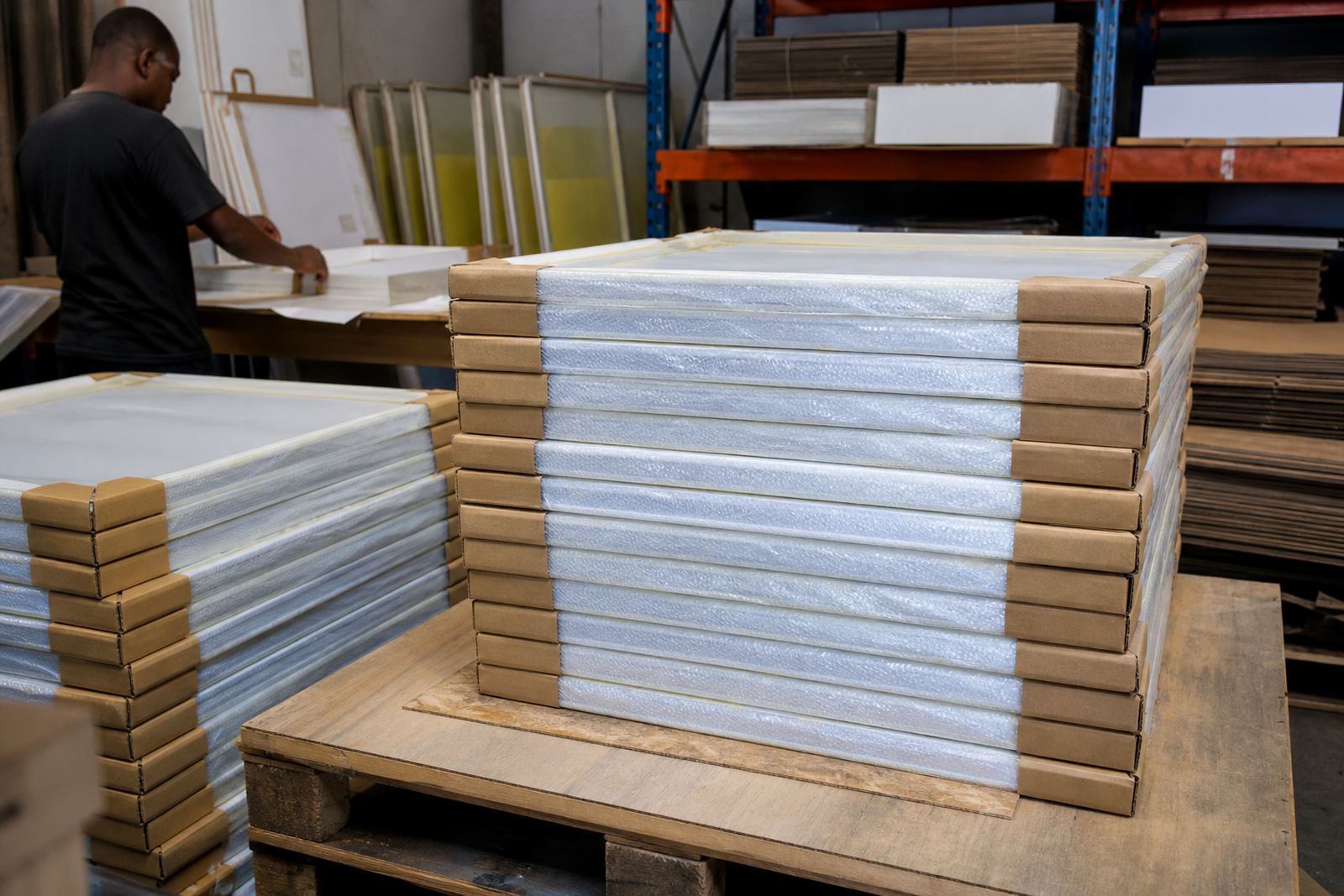
When screens leave the workshop, the main risk is not the road alone, but knock damage, mesh scuffing and pressure on the frame corners. Our dispatch packing is set up for stretched aluminium screens, wooden frames and repeat jobs that must arrive ready to print. Each pack is prepared to keep the mesh face clear of dust and rubbing, while the frame sits snug so it does not twist during loading or offloading.
We handle screens for small job lots and larger batches headed to print shops across Germiston, Johannesburg, Pretoria, Midrand and the East Rand. For coastal routes such as Durban, Cape Town and Gqeberha, we allow for extra protection against humidity and salt air, because stored screens can pick up moisture if they are packed too loosely or left open to the weather.
What Goes Into A Proper Dispatch Pack
Our packing is practical and tied to the size, mesh count and condition of the screen. A finer mesh count needs more careful face protection than a coarse mesh, while a high-tension screen needs support so the frame does not flex under pressure. We pack to suit the work, whether it is textile printing, solvent work, water-based inks or general shop use.
- Corner protection for aluminium and timber frames
- Mesh face separation to prevent rubbing and sticking
- Outer wrap or carton support for dust and handling control
- Labelling for repeat orders and screen count matching
- Bundling by customer, job type or delivery route
Where needed, we also include simple handling notes so the receiving team knows which screens are for immediate use and which should stay in storage until the next run.
How We Prepare Screens Before Packing
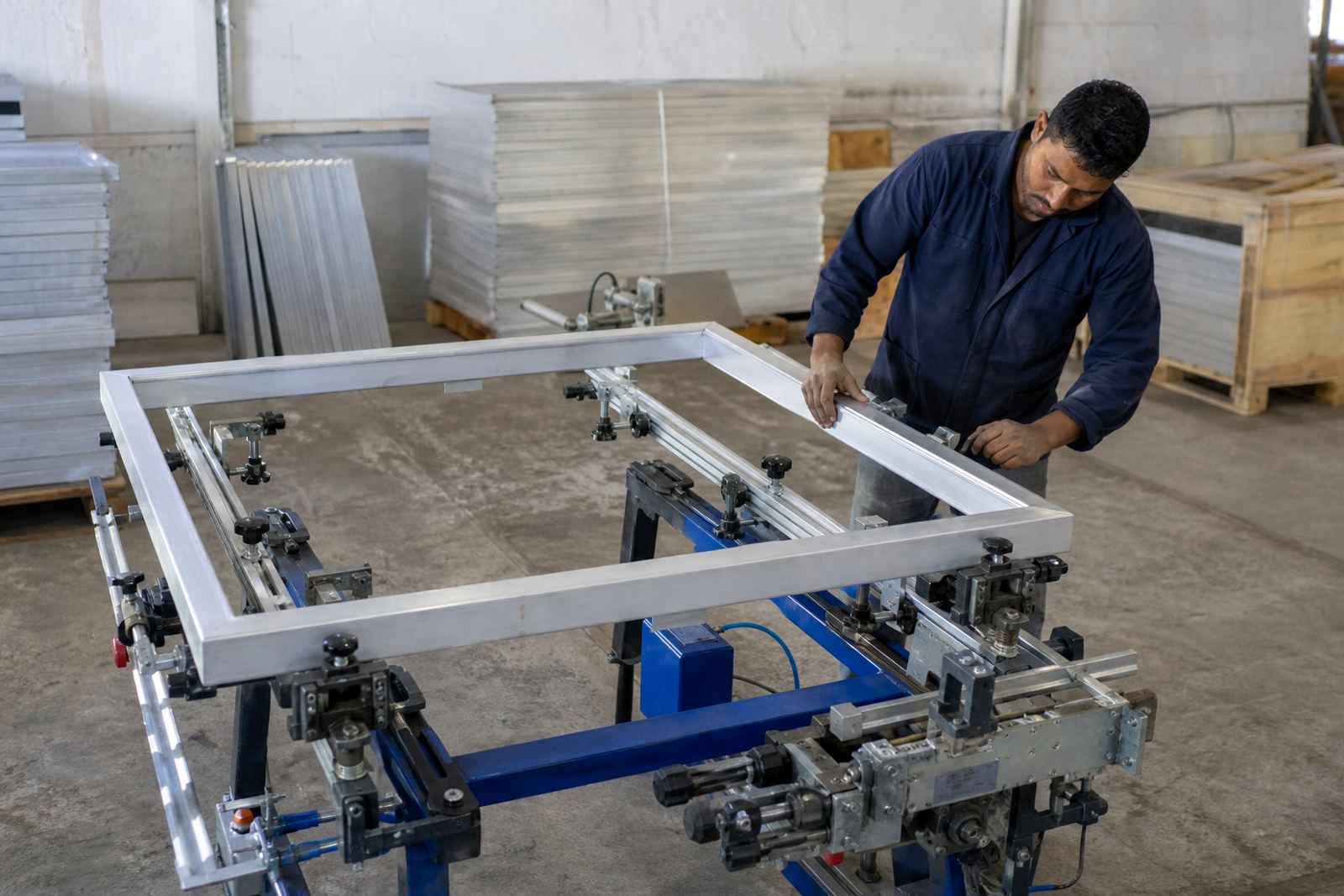
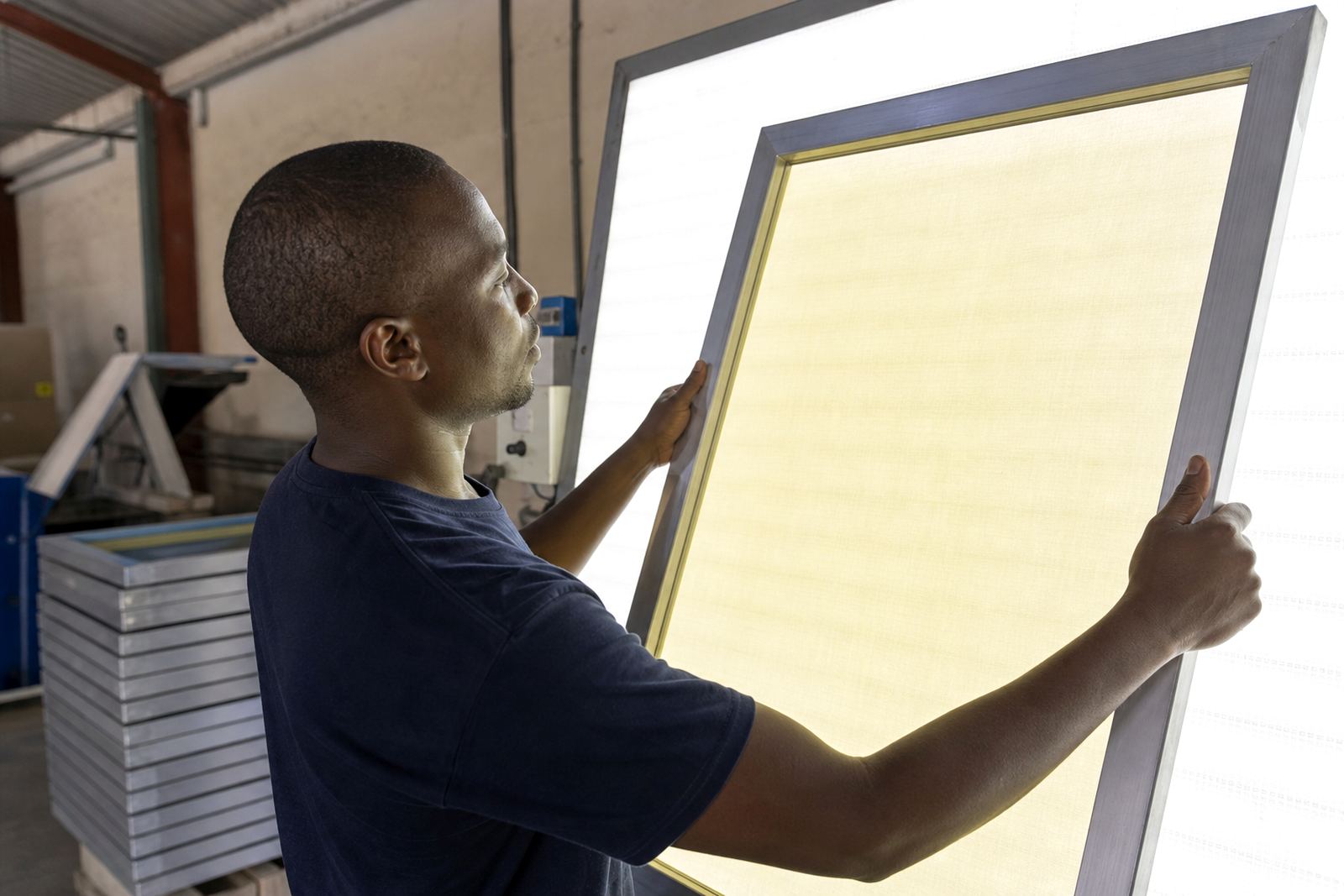
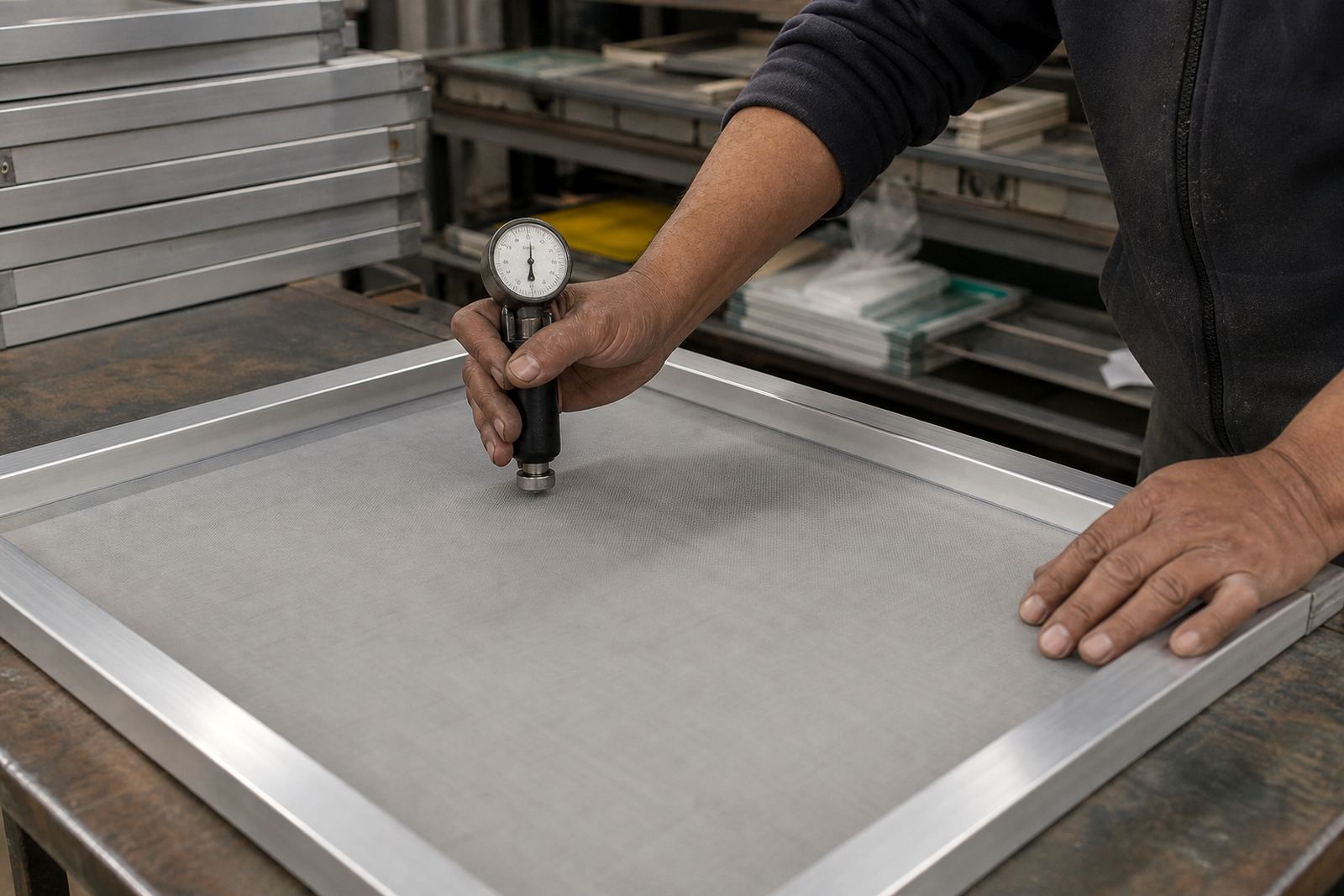
Every dispatch starts with a quick inspection. We check the mesh for pinholes, loose edges, tape lift and any frame distortion that may affect print registration. If the screen has just been re-stretched, we confirm that tension is still even across the mesh face before it is wrapped. Clean prep matters here too, because dust or ink residue can mark the mesh during transport.
- Inspect the screen and confirm it is dry
- Check corners, glue lines and frame squareness
- Separate screens so mesh faces do not touch
- Apply packing material based on size and route
- Label for dispatch, delivery area and repeat order records
This process suits both one-off screens and regular batches from print shops that need reliable turnaround. It also helps reduce waste, since a damaged screen often costs more in time than in materials.
Turnaround For Gauteng And Long-Distance Delivery
Turnaround depends on the job size, the number of screens and whether the pack is going out with new stretching, re-stretching or a repeat order. Local Gauteng dispatches are usually handled faster because they move on short routes from Germiston to Johannesburg, Pretoria, Midrand and the East Rand. Longer deliveries to Durban, Cape Town and Gqeberha are planned for collection and route timing, especially when several screens are going out together.
For shops that work around load-shedding or shift-based production, we can schedule packing so screens are ready for the next available transport window. That helps avoid delays when a machine line is waiting on a specific mesh count or a set of matched screens for a same-day or next-day print run.
Pricing Based On Size, Quantity And Protection Needed
Dispatch packing is priced according to what is being packed, how many screens are going out and the level of protection required. A standard pack for a small local delivery will differ from a batch of large-format screens travelling long distance. We also factor in whether the screens are newly stretched, re-stretched, or part of a repeat order that needs matching labels and grouped packing.
We keep the pricing approach clear and practical. If a job needs extra corner protection, extra separation between screens, or custom bundling for a specific delivery route, that is reflected in the packing requirement. Quotes are handled through the enquiry form on our contact page, with the details of the screen size, mesh count and destination town.
Storage And Maintenance Between Dispatches
Good dispatch packing helps, but screen life also depends on how the receiving shop stores it. Screens should be kept flat or racked upright with space between mesh faces, away from direct sun, standing water and sharp edges. In coastal areas, it is best to avoid leaving packed screens in damp rooms or closed vehicles for too long, because moisture can affect adhesives and tape.
- Inspect packed screens every few weeks if they are in storage
- Check tension before the next print run
- Keep screens off the floor and away from solvent splash
- Repack if outer wrapping has split or become damp
- Plan re-stretching or replacement when mesh starts to sag
As a general guide, shops that print regularly should review screen condition before each batch run, and give packed screens a closer check after transport, especially if they travelled far or sat in hot conditions during the day.
Who Handles Your Dispatch Packing
Dispatch packing is managed by our Germiston team with support from our logistics and technical staff. Mandla Ndlovu oversees the operation, while Thabo Mokoena leads the frame stretching side, Johan van der Merwe handles route-ready dispatch, and Nokuthula Khumalo checks technical details where mesh count or tension needs confirmation. Ayesha Patel and Lerato Maseko coordinate the order side and customer communication so the right screens go to the right place.
That structure matters when print shops need a repeat order packed the same way every time. Whether the job is going to Johannesburg, Pretoria, Durban, Cape Town or Gqeberha, the aim is simple: clean packing, correct labelling and screens that arrive in the same condition they left.
Key facts
| Packing scope | Stretched screens, pre-stretched frames and repeat orders |
|---|---|
| Protection method | Corner support, face separation and outer wrapping or carton support |
| Mesh handling | Suitable for coarse to fine mesh counts, packed to prevent rubbing |
| Tension control | Packed after tension check so frames are not stressed in transit |
| Dispatch areas | Germiston, Johannesburg, Pretoria, Durban, Cape Town, Gqeberha, East Rand, Midrand |
| Maintenance interval | Inspect after delivery and before each new print run; check stored screens every few weeks |