Preparing multiple screens for repeat work
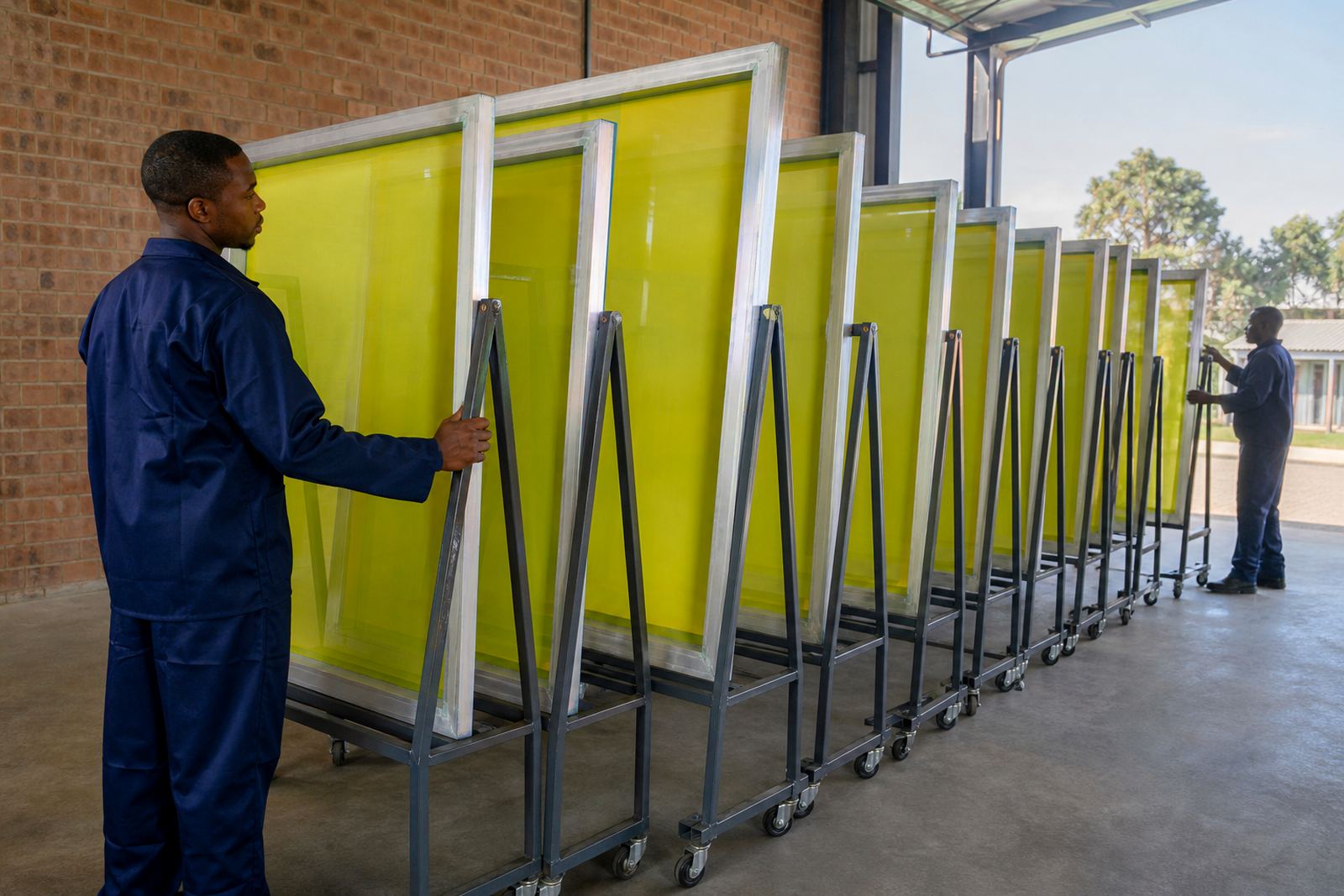
When a shop runs the same artwork, the same substrate and the same ink set week after week, the screens need to behave the same way every time. Batch Screen Prep is set up for that kind of work. We prepare multiple matching screens so your production line can move with less stop-start checking, fewer registration problems and a steadier print result from the first sheet to the last.
This service suits businesses standardising around repeat jobs such as packaging overprints, garment runs, promotional orders and regular industrial marking. We work with common mesh counts used in South African screen printing, from lower counts for heavier deposit work to finer mesh for detail, halftones and cleaner ink release. The aim is simple: matching screens that are ready for proper production, not mixed frames that need extra adjustment on site.
- Matching mesh count across the full batch
- Consistent frame size and print area
- Set tension targets for even ink release
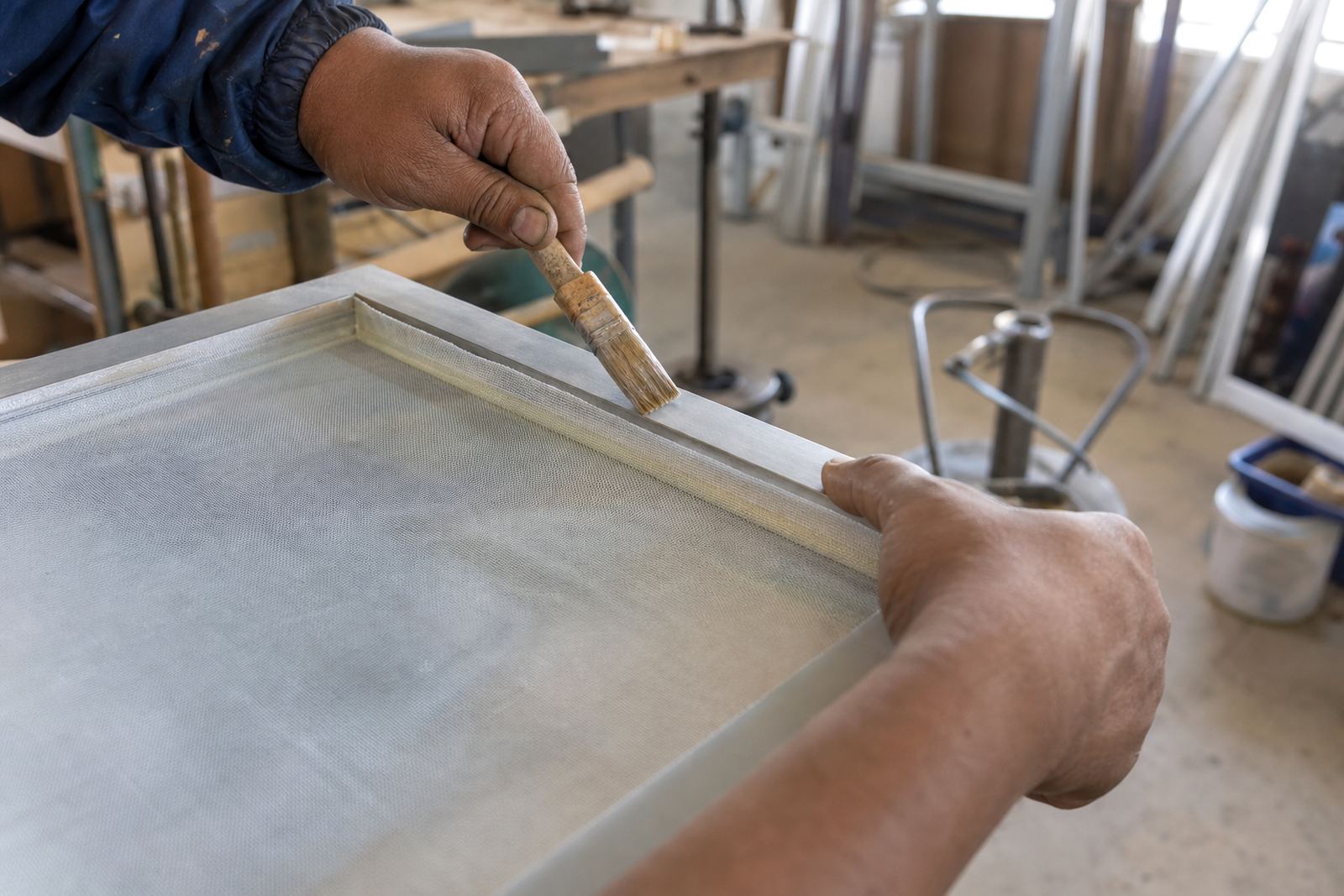
- Clean prep before bonding and dispatch
What Batch Screen Prep includes
Every batch starts with a clear brief on the job size, mesh count and the way the screens will be used. If you already have a standard for a repeat job, we work to that. If not, we help you choose a sensible mesh count based on the artwork, ink type and substrate. Coarser mesh is often used where heavier ink deposit is needed, while finer mesh is better for detail and controlled release. That kind of matching matters when a client expects each reprint to look the same.
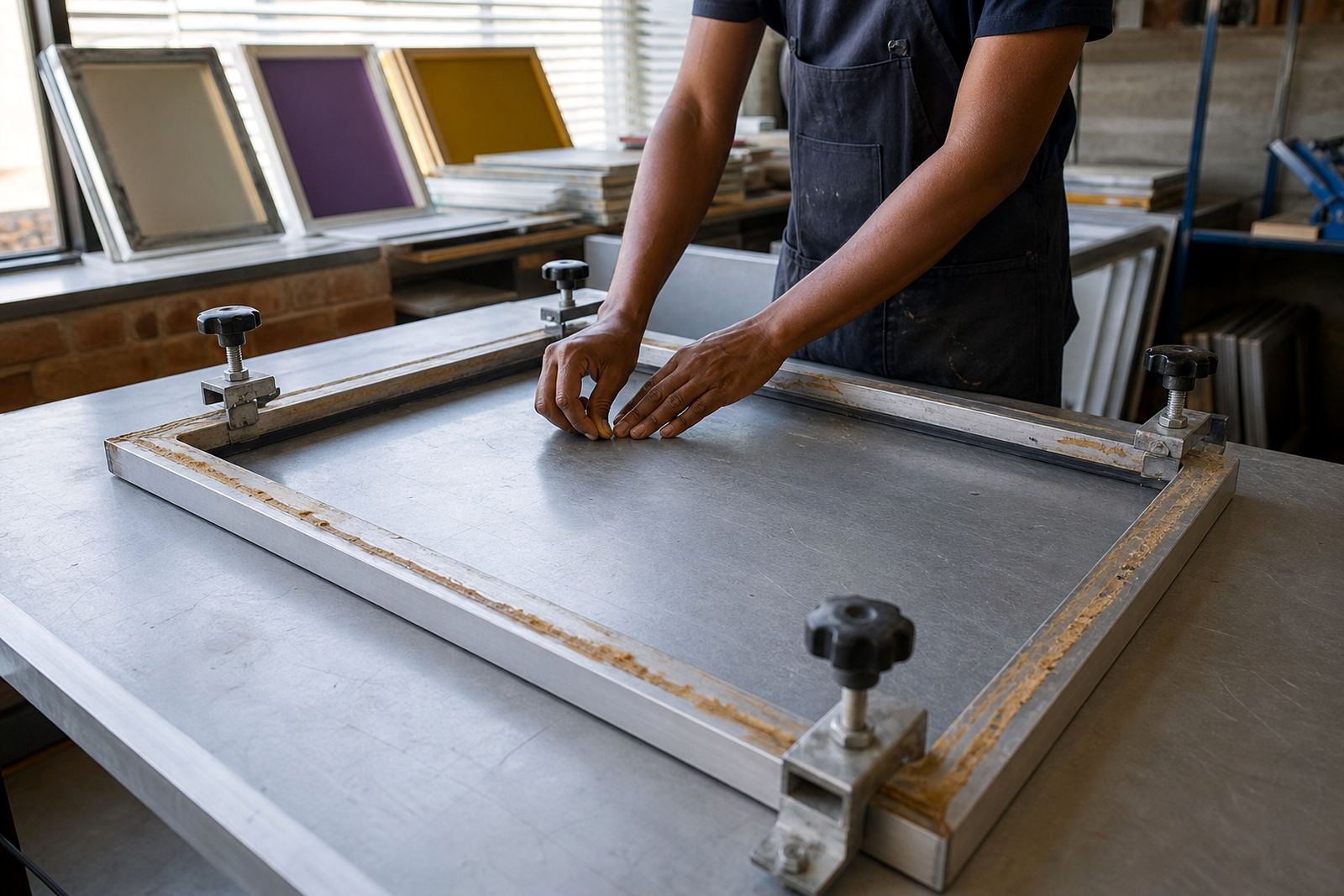
We include frame clean prep, mesh bonding, tension checking and screen inspection as part of the prep flow. Frames are checked for straightness and usable print area before stretching. Mesh is set and checked so the screens are aligned as a set, with no odd loose corners or uneven pull that can cause the squeegee to behave differently from screen to screen. For shops that need multiple screens ready for a standard repeat, this saves a lot of sorting later.
- Mesh count matching for the full batch
- New frame stretching or re-stretching where needed
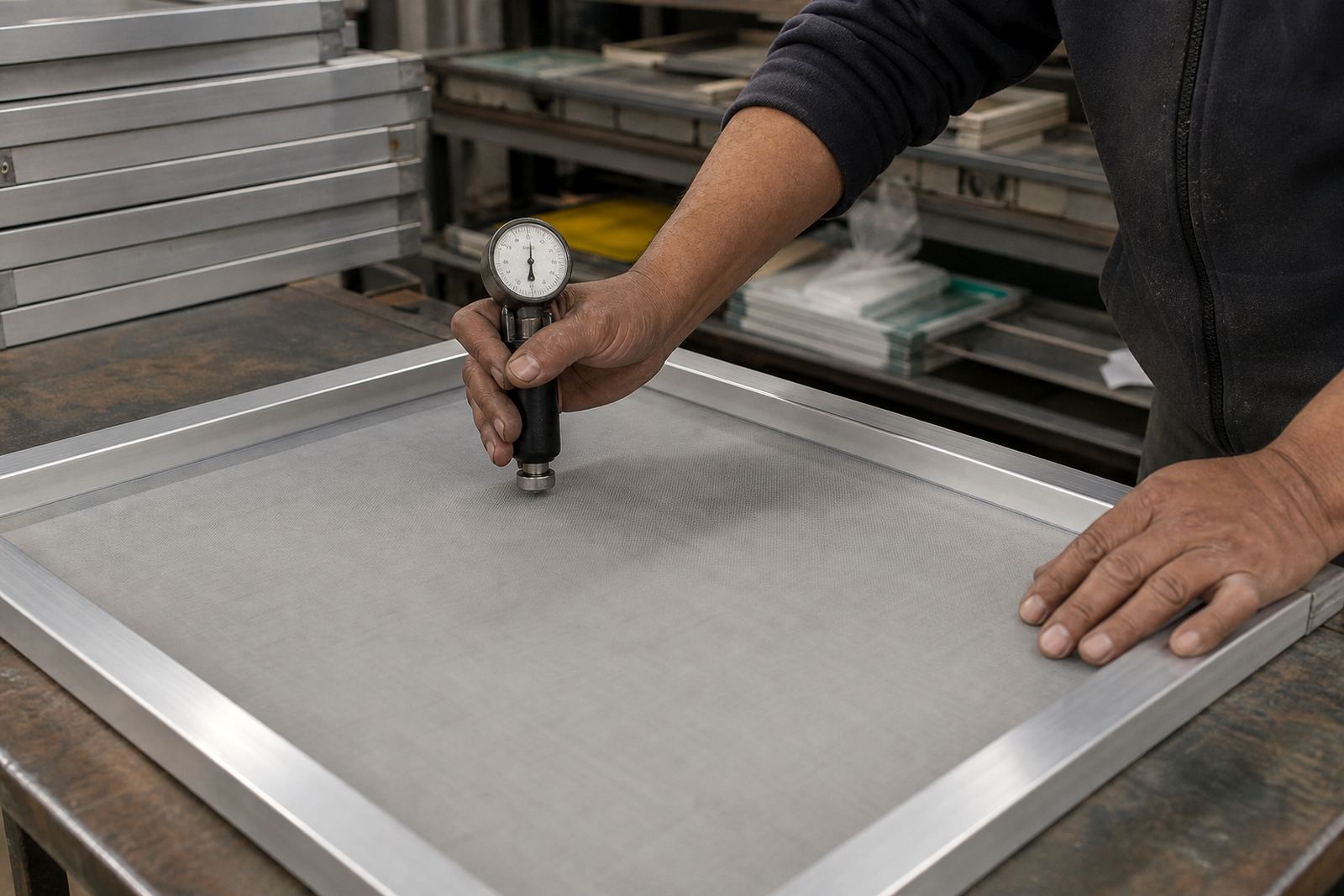
- Tension checking before release
- Screen inspection for cleanliness and alignment
- Dispatch packing for safe transport
How the batch prep process runs
The process begins with a simple confirmation of job requirements, including the number of screens, frame sizing, mesh count and whether the screens are for textile, packaging or general print work. Once the brief is clear, we prepare the batch in stages so each screen is set to the same standard. That usually means frame prep, mesh selection, stretching, bonding, curing where required and final inspection.
For repeat jobs, we also look at how the screens are stored and used between runs. If your shop runs on a tight schedule or works around load-shedding, it helps to have screens that hold tension and remain usable after standing for a while. In humid coastal areas like Durban or Gqeberha, storage and handling matter even more. Good prep reduces the chance of screens drifting out of spec before the next run.
- Confirm the repeat job details and screen count
- Select the correct mesh count for the application
- Prepare frames and stretch the mesh evenly
- Check tension and screen alignment
- Pack for collection or delivery
Turnaround planning for print shops
Batch Screen Prep is best planned ahead, especially when a shop needs several matching screens for a job that must go straight into production. Turnaround depends on the size of the batch, the frame dimensions, the mesh count requested and whether any re-stretching is required. For busy shops in Johannesburg, Pretoria and the East Rand, advance notice helps us slot the work into the production flow and keep the batch together from start to finish.
If your order is for a repeat job and you need the same screen setup as before, share those details early. That makes it easier to keep the batch consistent and avoid delays caused by changing specs mid-stream. We also handle dispatch packing carefully so screens arrive ready for use and without avoidable knocks in transit. If the job is going to a coastal branch, packing and handling are given extra care because humidity and travel can affect the screen if it is left exposed too long.
Pricing approach for batch jobs
Pricing is based on the actual work involved in the batch rather than a one-size-fits-all rate. The main factors are the number of screens, the frame size, the mesh count, whether the frames are new or need re-stretching and the amount of prep needed before bonding. A small set of screens for a repeat label job is priced differently from a larger batch for garment or packaging work. That keeps the quote tied to the real job, not to guesswork.
We prefer to quote from the job requirements first so you know what is included in the prep. If the batch needs extra screen inspection, custom frame sizing or repeat order handling, that is worked into the scope from the start. There are no surprises when the screens arrive. For regular customers, keeping to the same spec from one order to the next usually makes the process faster and more predictable.
Keeping screens ready between repeat runs
Once your batch is in production, proper handling helps preserve the tension and print consistency you paid for. Screens should be stored flat or in a rack that keeps them from twisting. Avoid leaving them in damp areas, direct sun or near heat sources. In South Africa, temperature changes and humidity can affect the way a screen behaves between runs, especially in summer or in coastal towns. Even a small change can show up in registration or ink deposit if the screen is not handled well.
Maintenance intervals depend on how often the screens are used and how they are cleaned after printing. For high-use repeat jobs, a quick tension check before the next run is sensible. If the screen has been stored for a while or had a hard production shift, it may need a fresh inspection before use. That is especially important where the same artwork must stay consistent across several orders and the customer expects the next batch to match the last one.
- Store screens dry and flat where possible
- Check tension before returning to a repeat job
- Inspect mesh for wear after heavy runs
- Re-stretch when pull or print quality starts drifting
Key facts
| Mesh counts supported | Common screen-printing counts for coarse to fine work, including lower and finer meshes for detail and ink control |
|---|---|
| Frame options | Pre-stretched aluminium frames and custom frame sizing for matching batches |
| Tension checks | Measured and inspected for even pull across each screen in the set |
| Prep steps | Frame clean prep, mesh bonding, screen inspection and dispatch packing |
| Best use cases | Repeat jobs, standardised production runs, packaging, textile and general screen work |
| Service coverage | Germiston base with supply and delivery support to Johannesburg, Pretoria, Durban, Cape Town, Gqeberha, East Rand and Midrand |