
What frame re-stretching covers
Frame re-stretching is the process of removing worn mesh from a reusable aluminium frame and fitting fresh mesh to the same frame. It is used when the frame is straight, clean and worth keeping, but the mesh has lost tension, started to fray, or no longer gives clean detail on press. For print shops working with spot colours, halftones or fine line work, the mesh condition matters just as much as the frame itself.
We handle re-stretching for a range of screen-printing needs, from standard garment work to finer mesh counts used for detail and lighter ink deposits. The aim is simple: keep the frame in practical service, reduce waste, and give you a screen that prints evenly again.
- Old mesh removal from reusable aluminium frames
- Frame clean prep before the new mesh is applied
- Mesh count matching to suit the job
- Tension checking before dispatch
Mesh counts and tension for practical printing
Different jobs call for different mesh counts. Lower counts are generally used for heavier ink deposits and bolder artwork, while higher counts suit finer detail, smoother print edges and thinner ink laydown. We work with mesh selection in a practical way, based on how the screen will be used and what ink system it needs to carry. A correct mesh count helps the stencil hold detail and can reduce unnecessary flooding or ink buildup.
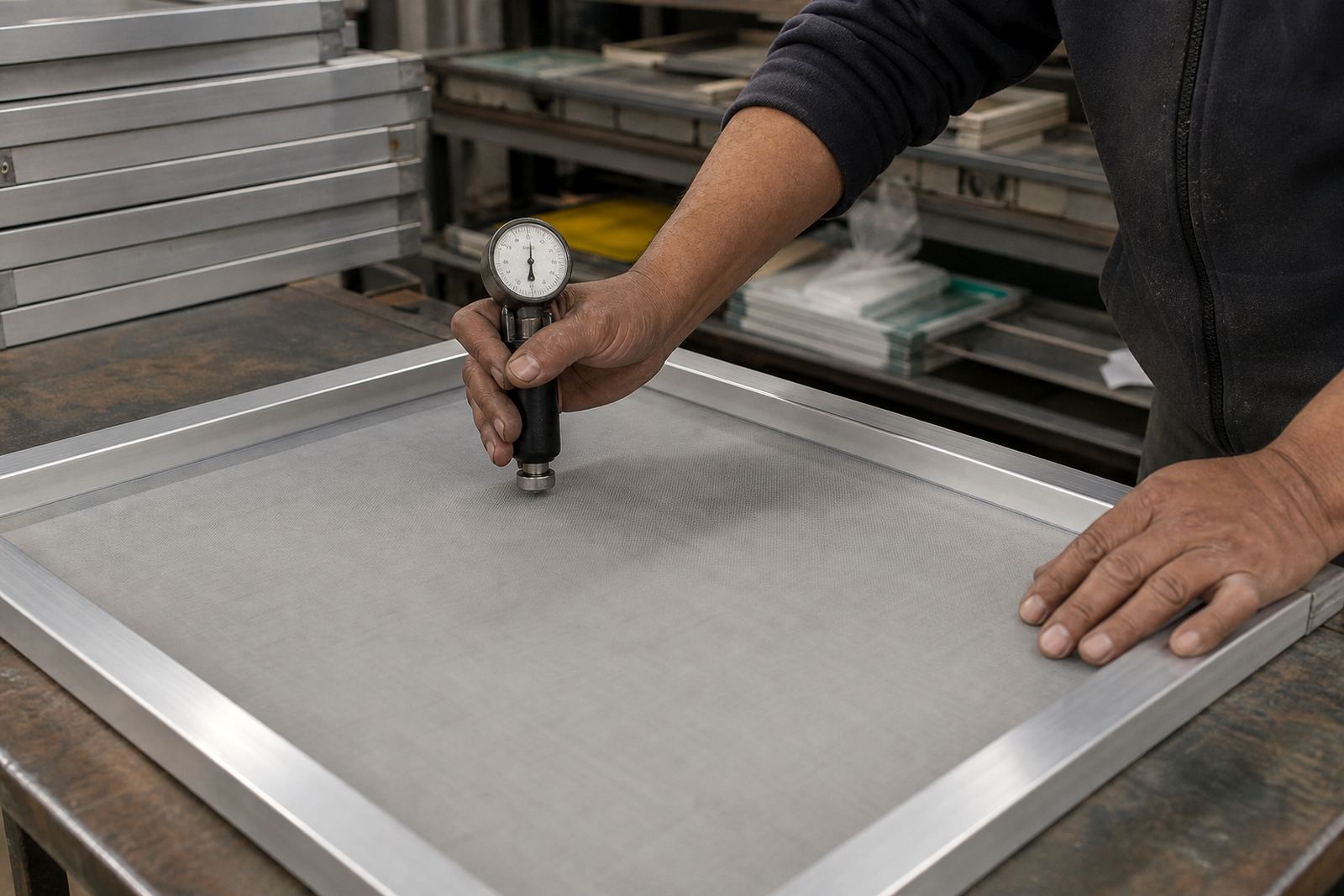
Tension is just as important. A screen that is too loose can give poor registration, soft edges and uneven print pressure. Too tight can put stress on the frame and shorten the useful life of the screen if the frame is not suitable. We check the feel of the stretch and the condition of the frame before fitting new mesh, because a re-stretched screen should work properly from the first pull, not after a few test sheets.
- Low mesh counts for thicker ink deposits and bold print areas
- Mid-range counts for general garment printing and standard artwork
- Higher counts for fine detail, halftones and cleaner edge definition
- Tension matched to the frame condition and intended print use
How we re-stretch aluminium frames
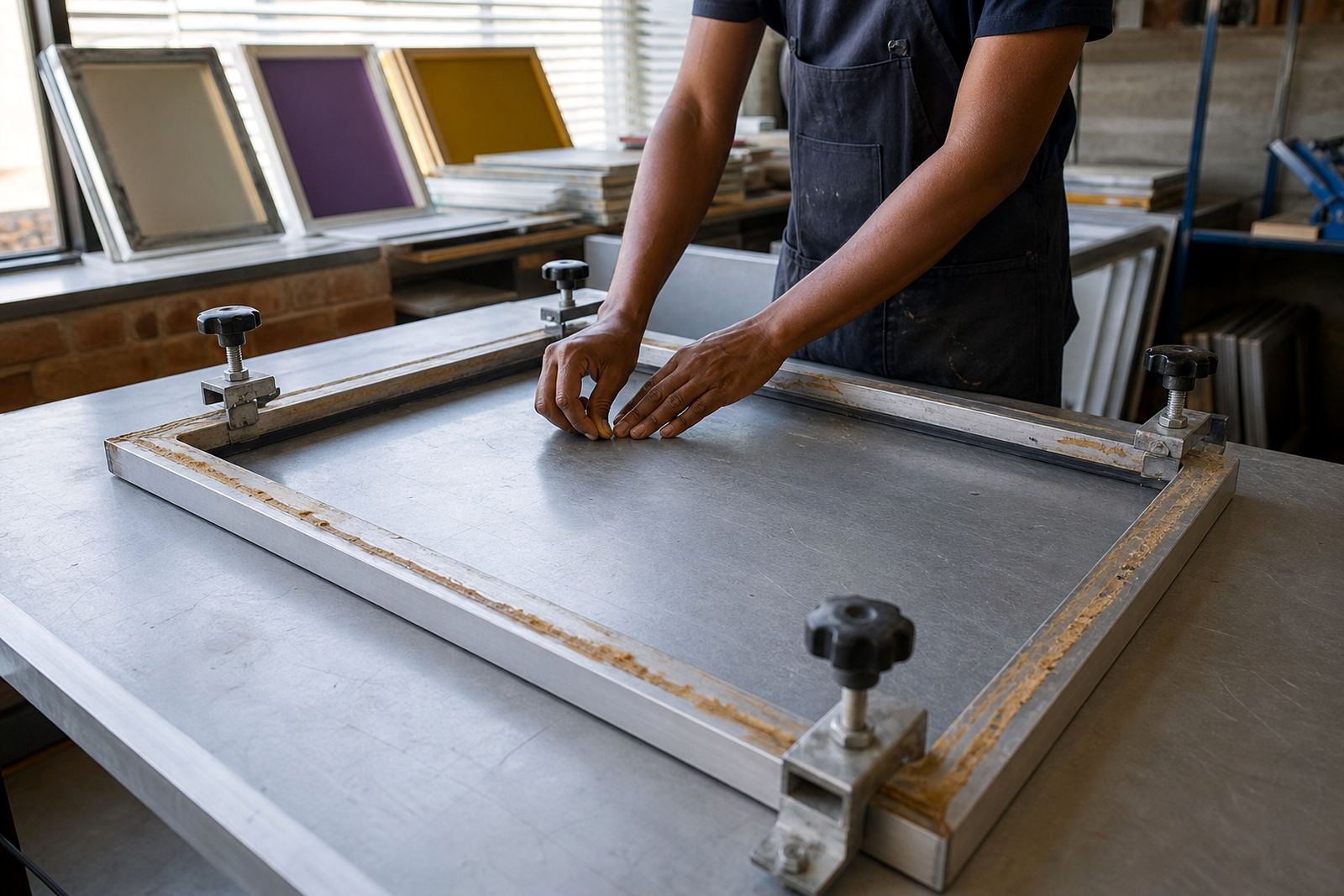
We begin by inspecting the frame and checking whether it is suitable for re-use. If the aluminium is bent, badly damaged or no longer square, re-stretching may not be the right option. When the frame is still serviceable, the old mesh is stripped off, the frame is cleaned, and the surface is prepared for bonding. This prep matters more than many people think, especially on older screens where glue residue or ink build-up can affect the new bond.
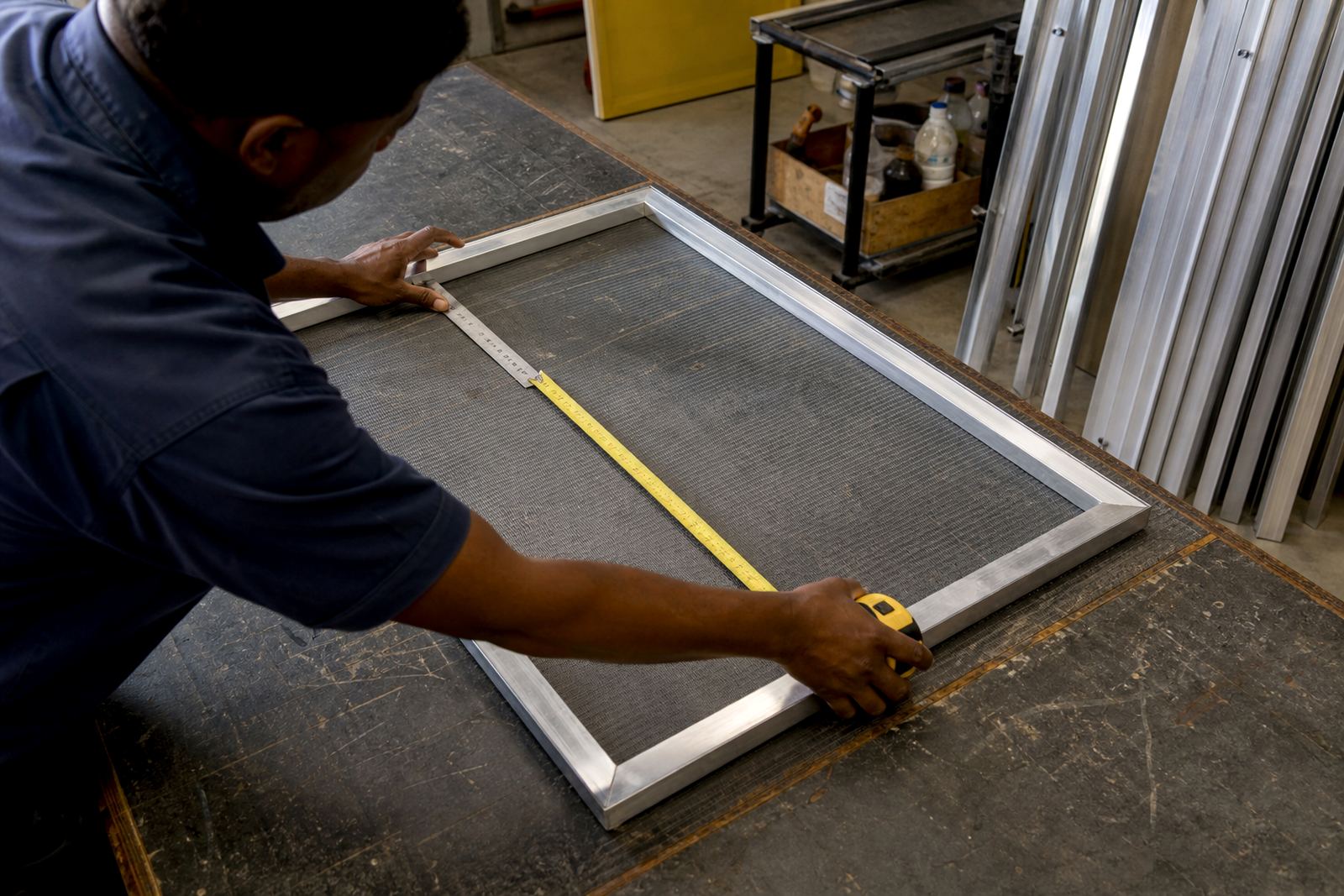
Once the frame is ready, the selected mesh is aligned and stretched evenly. The bond has to hold across the full frame so the mesh stays stable during printing and cleaning. After that, we check the finish and make sure the screen is ready for practical use. If needed, we can also assist with batch screen prep so multiple frames are matched and ready for the same job. It saves time and keeps the set consistent, which is handy when you are pushing orders through during a busy week.
- Inspect the frame for straightness, wear and cleanability
- Remove the old mesh and prepare the aluminium surface
- Select the correct mesh count for the intended print work
- Stretch and bond the new mesh to the frame
- Check the finished screen for usable tension and alignment
What is included in the service
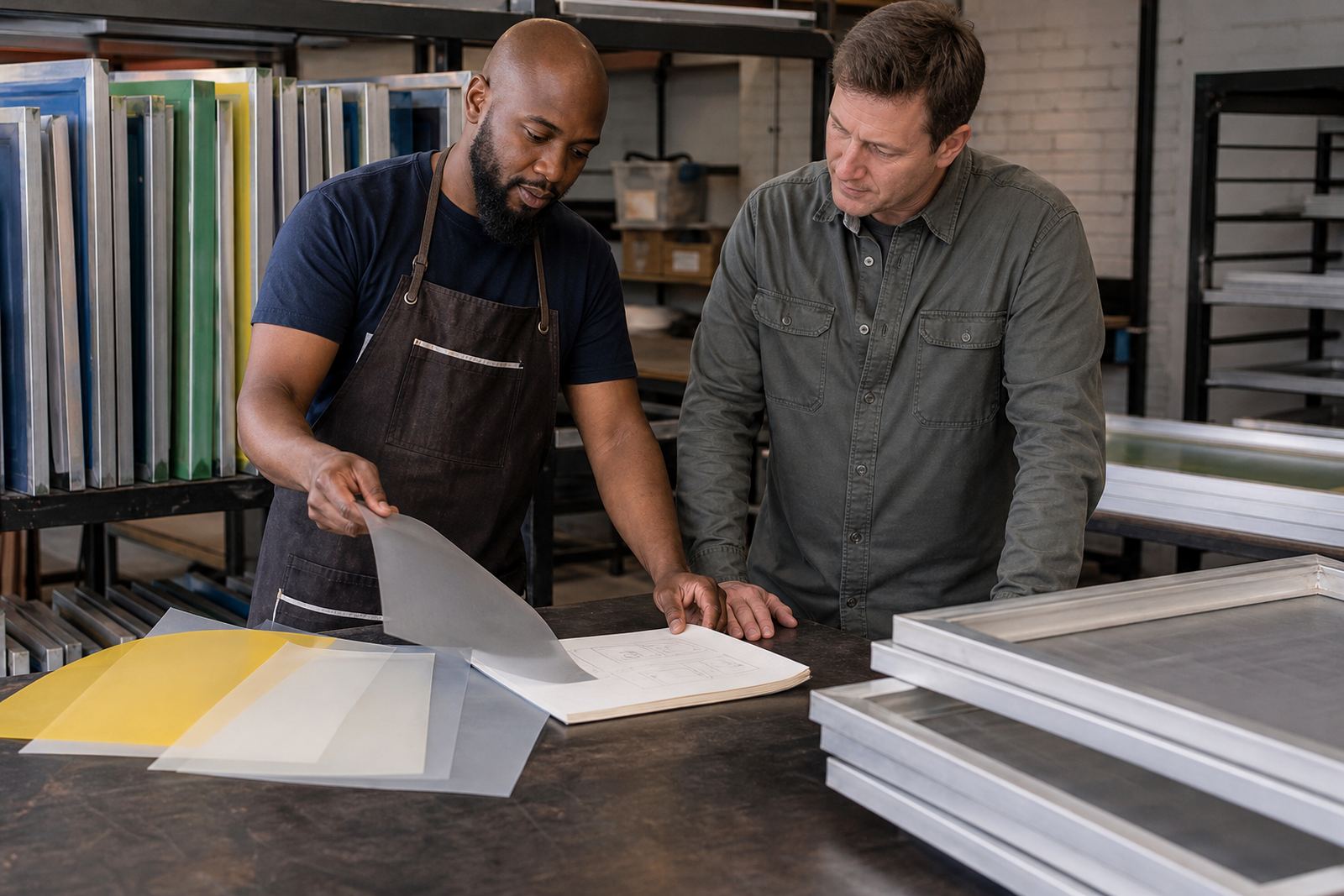
Our re-stretching service is set up for printers who need a straightforward, usable result. We can help with one-off screens, repeat work and regular replacement cycles for shops that keep reusable frames in rotation. For customers in coastal areas like Durban and Gqeberha, we also look at the condition of the frame carefully because humidity and frequent wash-downs can affect how long a screen stays in service.
What is included will depend on the condition of the frame and the mesh count needed, but the service normally centres on clean prep, mesh replacement and tension checking. If a frame needs special sizing or close matching to existing screens, we can work from the dimensions you supply through the enquiry form on our contact page. We have been handling screen prep from Germiston since 2008, and the small details make a difference in the end result.
- Reusable aluminium frame assessment
- Old mesh removal and frame surface prep
- New mesh fitting and bonding
- Tension check before release
- Advice on use, cleaning and replacement intervals
Turnaround and pricing approach
Turnaround depends on the size of the frame, the mesh count required, and the condition of the frame when it arrives. Simple jobs can move quickly, while larger batches or frames needing extra prep will take longer. If you are running a busy workshop in Johannesburg, Pretoria or the East Rand, it helps to send screens in batches so the work can be scheduled properly and you are not left short during a rush order.
Pricing is handled according to the work involved rather than a one-size-fits-all rate. That means the frame size, mesh type, prep needed and quantity all affect the final quote. We keep it practical and clear, with no unnecessary add-ons. If a frame is not worth re-stretching, we will say so rather than waste your money on a screen that will not hold up. That honesty matters in a trade environment where every rand counts.
How to keep re-stretched screens in good condition
Good maintenance starts with cleaning the screen properly after use and storing it somewhere dry and flat. Excess ink left on the mesh can harden and affect the next print run, while rough handling can damage the bond or pull the mesh out of true. In Gauteng, dust and temperature swings can also take a toll if screens are left open on racking for too long.
As a general guide, screens should be checked regularly for loss of tension, frayed edges and frame wear. Heavily used screens may need attention more often, especially if they are part of daily production. A re-stretched frame that is looked after well can stay useful for a long time, but once the mesh starts to relax or the bond weakens, it is better to renew it before print quality starts slipping. That way you avoid wasted substrate and repeat setup time.
- Wash screens thoroughly after printing
- Store flat or in a proper rack, away from moisture
- Avoid sharp knocks on corners and edges
- Check tension regularly on high-use screens
Key facts
| Service type | Frame re-stretching for reusable aluminium screen-printing frames |
|---|---|
| Mesh options | Selected to suit general printing, detail work and heavier ink deposits |
| Frame condition | Suitable only when the aluminium frame is straight and serviceable |
| Process | Old mesh removal, frame clean prep, new mesh fitting, tension check |
| Typical use | Garment printing, detail work, repeat production and batch screen prep |
| Service area | Germiston, Johannesburg, Pretoria, Durban, Cape Town, Gqeberha and surrounding areas |