
What tension checking tells you
Tension checking is the first step when a screen starts giving mixed results. If the mesh has dropped unevenly, stretched at the corners or become weak from repeated use, you can see it in print quality before you always see it on the frame. We assess the screen to establish whether it can still handle the job, or whether it should move on to re-stretching or a new frame.
For print shops working with spot colours, fine halftones, line work or repeat production, tension matters because the mesh must return consistently after each pass. Low or uneven tension can cause image distortion, poor edge sharpness, ink flooding and slower setup on press. In humid coastal areas, and in hot inland conditions around Gauteng, mesh can also shift with changes in storage and handling, so regular checking saves time later.
- Checks whether the mesh is still even across the frame
- Identifies weak points, corner pull and localised slackness
- Supports decisions for further use, cleaning, re-stretching or replacement
How we assess the screen
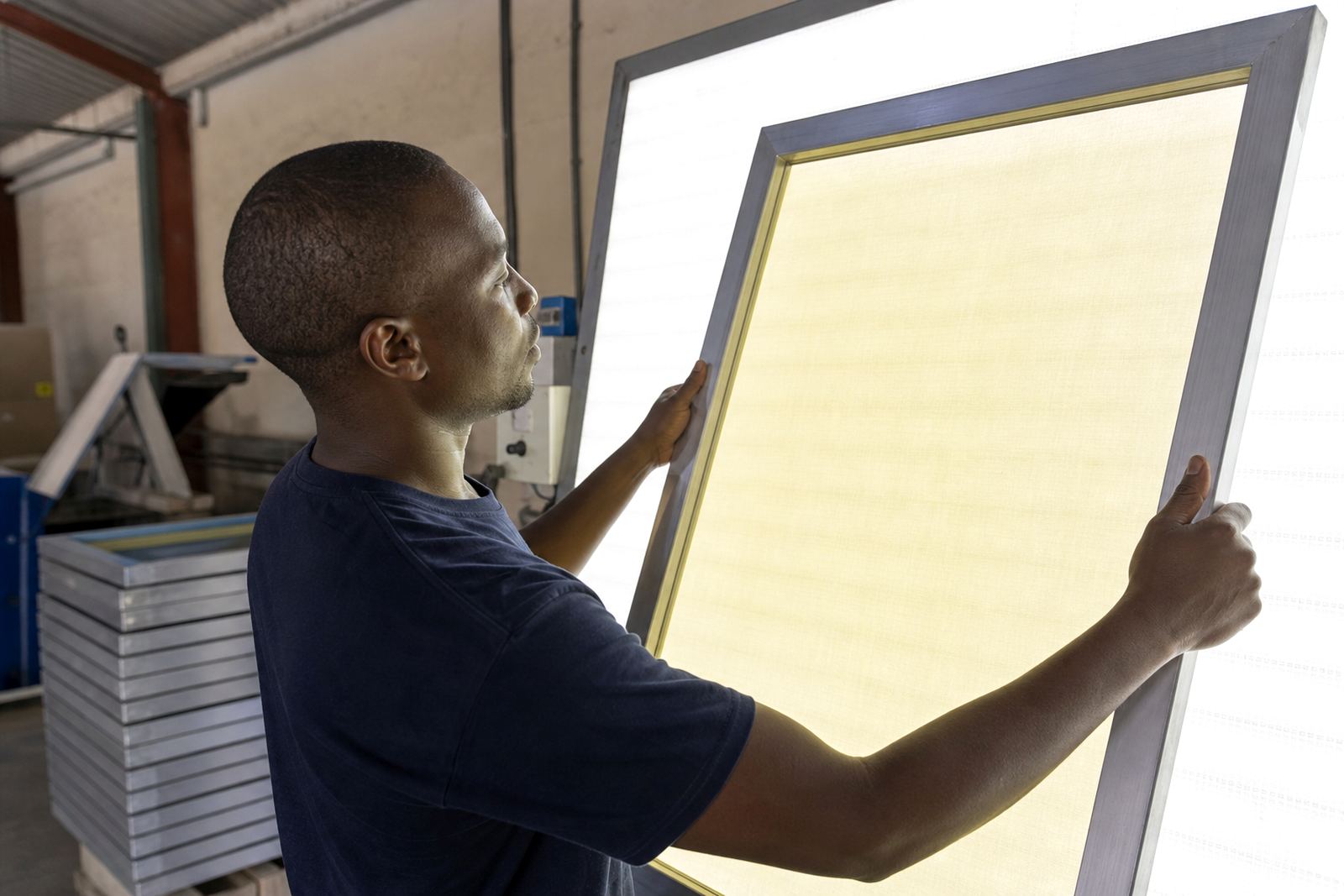
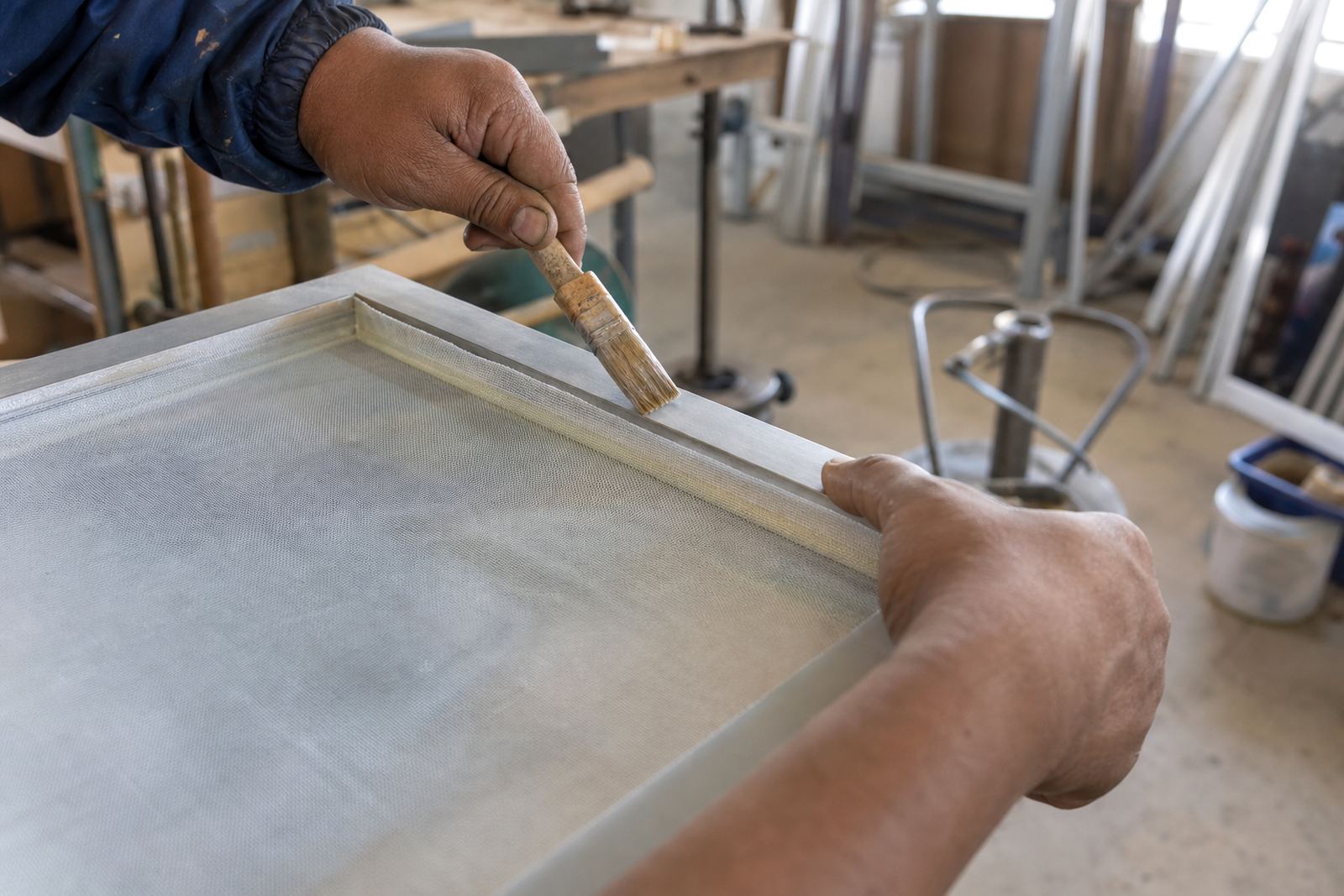
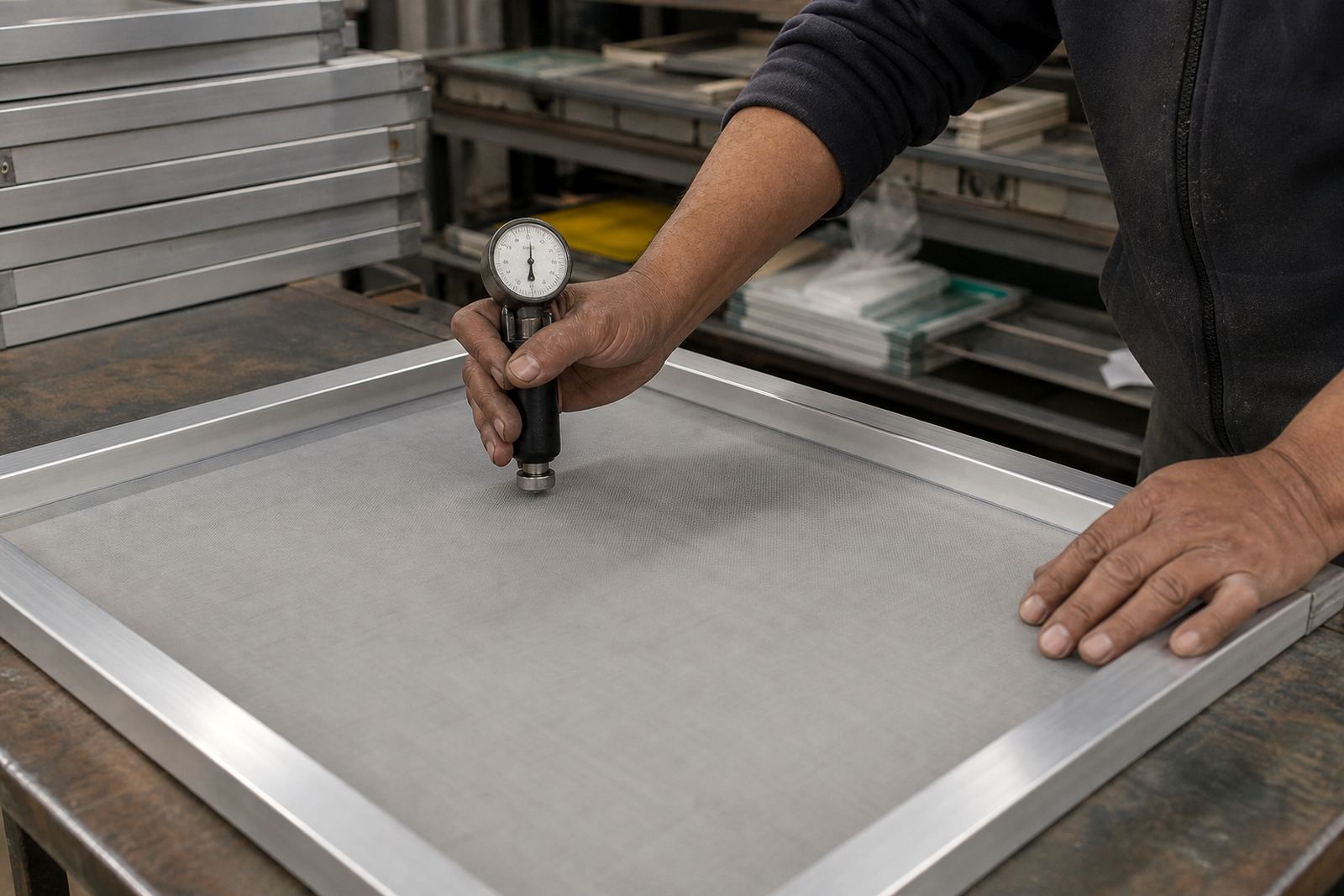
We start with a visual inspection of the mesh, glue line and frame condition. The screen is checked for signs of damage, residue, frame twist and any areas where the cloth no longer sits correctly. Then we measure tension across the print area and compare readings from different points on the same screen, because a screen can look fine at a glance yet still be uneven where it matters.
We also look at the mesh count and the intended use. A finer mesh for detail work will usually need a tighter, more even tension profile than a coarser mesh used for heavier ink deposits. For most shops, the goal is not just high tension, but steady tension that matches the job. A screen that is over-tensioned can become unstable or short-lived, while one that is too loose gives poor print control.
- Visual inspection of mesh condition, glue line and frame integrity
- Tension readings taken across multiple points on the screen
- Review of mesh count against the intended print application
- Advice on whether the screen is suitable for continued use
What is included in the service
The service is straightforward and practical. We check the screen, record the condition and explain what the results mean in plain terms. If the screen is still usable, we will say so. If the mesh has lost even tension or the frame needs more than a simple check, we will advise on the next step. That can include re-stretching, batch screen prep or replacing the frame altogether, depending on how the screen is used in your shop.
This is useful for print shops that keep multiple screens in rotation. It helps you sort the good screens from the ones that need attention before they cause problems on press. It also supports planning around load-shedding and production delays, because you can decide earlier which screens are ready and which need workshop time.
- Screen condition assessment
- Tension check across the mesh area
- Fit-for-use guidance
- Recommendation for re-stretching or replacement where needed
- Advice on storage and handling between runs
Turnaround and collection planning
Turnaround depends on the number of screens and the condition of each one. Simple checks are usually quicker than screens that need closer inspection or follow-up work. Because we are based in Germiston and supply Johannesburg, Pretoria, Durban, Cape Town and Gqeberha, collection and dispatch can be arranged around your production schedule. Where screens are coming in batches, we recommend grouping them by job type, mesh count or press line so the results are easier to act on.
For shops with repeat work, it helps to build tension checking into your maintenance cycle instead of waiting for print faults to show up. Screens used daily may need more frequent checking than screens kept for short runs. If you store screens for long periods, it is worth inspecting them before the next production batch, especially after transport, high humidity or long pauses between jobs.
- Small batches can be assessed more quickly than mixed, problem screens
- Screen grouping helps speed up feedback and next steps
- Stored screens should be checked before returning to press
Pricing approach and cost control
Our pricing approach is based on what needs to be checked and how much follow-up work is required. A screen that only needs a basic tension assessment is treated differently from one that needs detailed fault finding, re-stretching advice or prep for further work. We keep the process clear so you know what is being done before you commit to the next step.
For print shops, the real saving is often not in the check itself but in avoiding wasted ink, off-register prints and rushed reworks. One screen that slips in tension can affect a whole batch. That is why tension checking is often best viewed as part of routine production control, not as a once-off fix. If your team handles the same mesh counts regularly, you can also set a practical checking rhythm around your own print mix.
We will never push a screen through just to keep it moving. If the mesh is no longer fit for the job, we say so directly.
Maintenance intervals for working screens
How often you should check tension depends on use, storage and the type of work being printed. Screens that see heavy production, frequent cleaning or regular handling should be checked more often than screens that are used occasionally. If a screen is stored in a warm room, near sunlight or in a place with variable moisture, the mesh can change over time and should be reviewed before use.
A practical routine for many shops is to check screens after stretching, before first use, after a major production run and again before any repeat order. If the screen is tied to fine detail work, the tolerances are tighter and the checking cycle should be shorter. The same applies where a shop switches between different mesh counts on a single press. Good records help here, especially when different staff members handle setup, washing and dispatch.
- Check after stretching and before first print use
- Check again after heavy production runs
- Review stored screens before repeat orders
- Shorten the interval for fine detail or high-volume work
Who uses this service most often
Most shops that ask for tension checking are trying to solve one of three problems: the screen is not printing cleanly, the mesh is ageing faster than expected, or they want to know whether an older frame can still be used for a coming job. That makes the service useful for busy print rooms, small operations building up their screen stock and teams that need a dependable view before committing to production.
MeshMaster supports screen-printing customers across Germiston Supply, Johannesburg Delivery, Pretoria Delivery, Durban Delivery, Cape Town Delivery, Gqeberha Delivery, East Rand Supply and Midrand Delivery. Clients reach us through the enquiry form on our contact page, and we can talk through the screen condition, mesh count and intended use before anything moves forward. If a screen has passed the point of useful service, we will tell you plainly. If it can still do the work, we will say that too.
Key facts
| Mesh counts assessed | Common screen-printing mesh counts from coarse garment work through to finer detail mesh, matched to the job |
|---|---|
| Tension focus | Evenness across the full print area, including corners, centre and edge zones |
| Frame types | Pre-stretched aluminium frames and existing framed screens |
| Checks included | Visual inspection, tension reading, mesh condition review and fit-for-use advice |
| Use cases | Spot colour work, line art, halftones, repeat runs and general screen production |
| Service area | Germiston, Johannesburg, Pretoria, Durban, Cape Town, Gqeberha, East Rand and Midrand |