Matching the Right Mesh Count to the Job
Mesh count matching starts with what the screen is meant to do, not just what the old frame happened to use. A lower mesh count allows more ink through and is often chosen for thicker inks, bold spot colours, and rougher substrates. Higher mesh counts suit finer detail, smaller text, halftones, and cleaner print edges where less ink deposit is needed.
We compare the replacement mesh to the print work you already run, then help you choose the closest practical match. That includes common screen-printing counts in the range used across textile, signage and general printing work, from open meshes for heavy deposits to finer meshes for detail and underbase control. If your existing screen is still in use we can work from the current mesh count, tension condition, and the result you are getting on press.
What We Check Before Recommending a Replacement
Mesh count is only one part of the picture. The same count can behave differently depending on thread diameter, thread shape, tension, frame size, and how much the mesh has relaxed over time. A screen that was once tensioned well can drift after repeated washes, exposure cycles and daily handling, so the print result may change even if the count on paper looks right.
- Current mesh count and approximate thread opening
- Frame type and size, including aluminium frame condition
- Ink type and deposit requirement
- Artwork detail level, including halftones or fine type
- Current tension reading and visible slack areas
- History of the screen, including re-use and cleaning cycles
We also look at the practical side, because a screen that performs well in Johannesburg may behave differently in a coastal shop in Durban or Gqeberha if humidity and storage conditions are not controlled. Small changes in mesh behaviour can affect registration and edge definition, so it pays to match carefully.
How the Matching Process Works
Once you send through your enquiry, we discuss what the screen is printing now and what needs to stay the same. If you are replacing a worn screen, we try to replicate the working characteristics closely. If you are changing the artwork or substrate, we can suggest a more suitable count and explain what will change on press. For example, moving to a finer mesh may improve detail but reduce ink flow, which may mean slower print speed or a different squeegee setup.
- Confirm the existing print application and substrate
- Identify the target mesh count and expected ink deposit
- Check frame size, tension target and mounting method
- Prepare the replacement screen or re-stretch the frame
- Inspect the finished screen before dispatch
Where needed, we also provide screen setup advice so the replacement mesh works properly with your reclaiming, coating and exposure routine. A good match saves time at the press, and helps reduce rework from pinholing, smearing or poor edge hold.
Frame Stretching, Re-Stretching and Tension Control
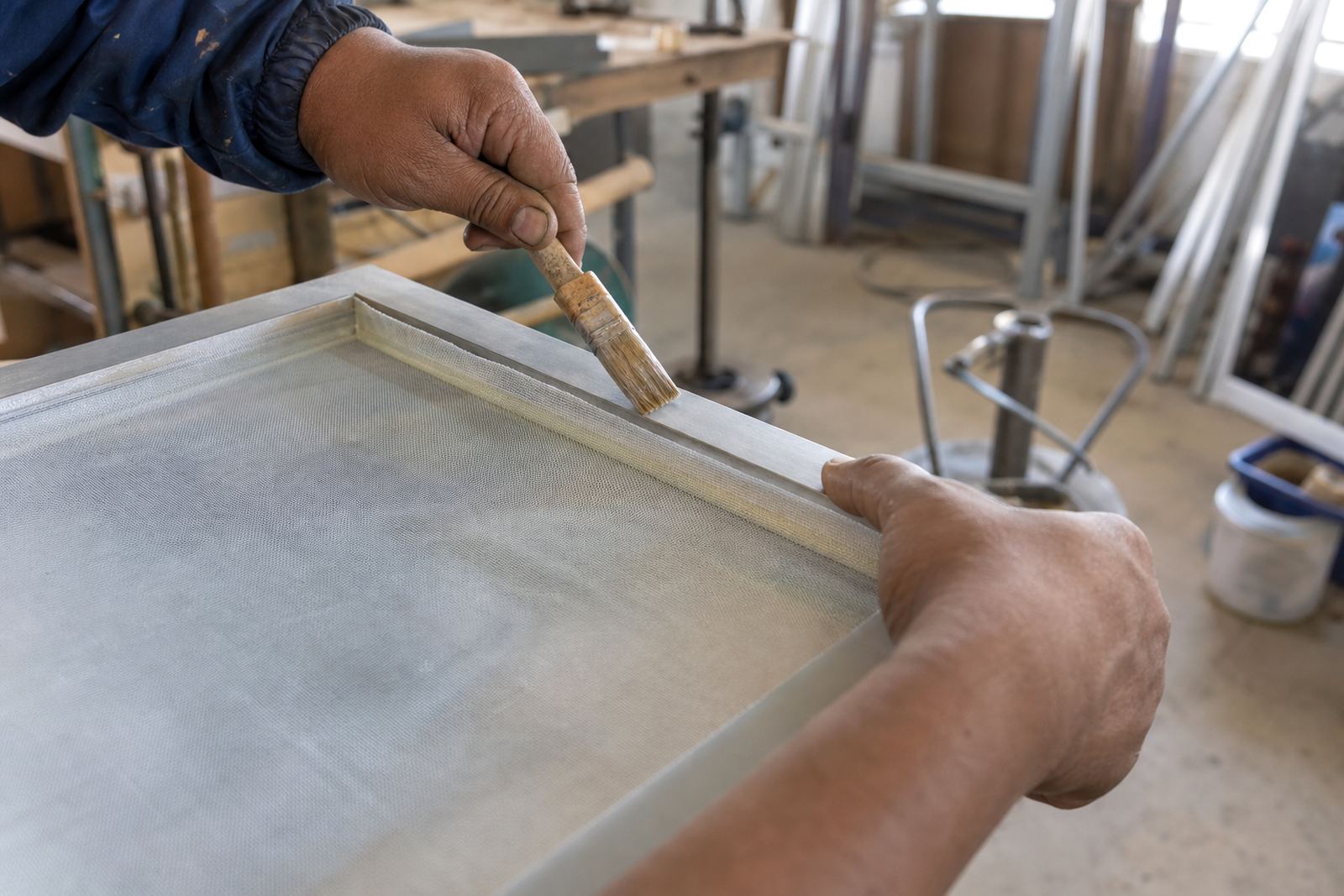
Mesh count matching is strongest when the frame is also in good condition. If the aluminium frame is sound, we can re-stretch it with a mesh suited to the work. If the original mesh has lost tension or become damaged, re-stretching often gives you a better result than trying to keep printing on a tired screen. Tension matters because it affects snap-off, stencil stability, and how cleanly the squeegee releases the mesh after each stroke.
We aim for practical working tension, not just a number on a gauge. That means matching the mesh to the print method and the way your shop runs. A tighter mesh can improve print consistency but it must still be safe for the frame and suitable for the artwork. Over-tensioning can shorten frame life, while under-tensioning can cause poor detail and inconsistent deposits.
Turnaround and Order Planning for Busy Print Shops
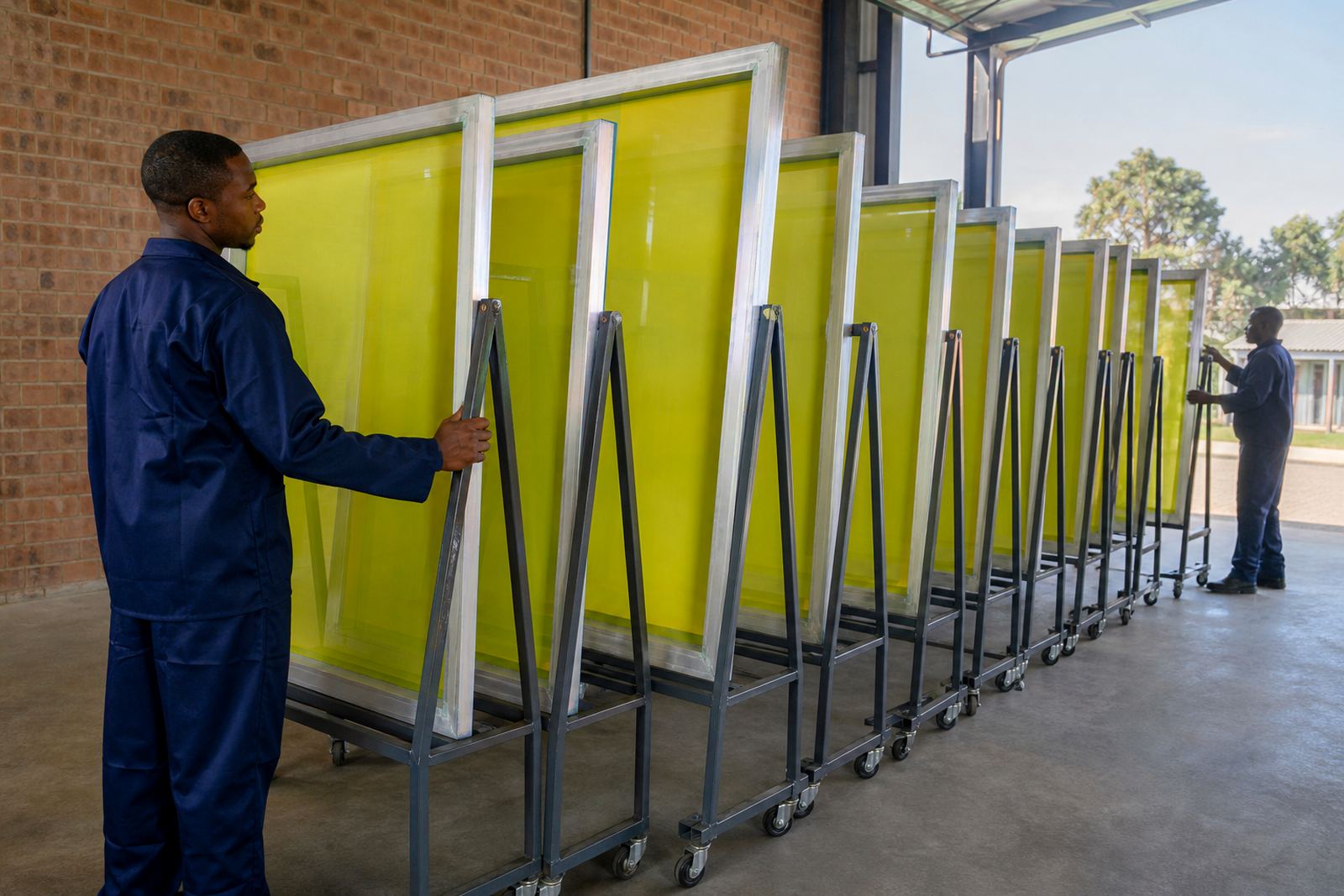
Turnaround depends on the number of frames, the mesh type required, and whether the job is a fresh stretch or a re-stretch. Smaller matching jobs can often be handled quickly, while batch screen prep may need more planning if you are building stock for repeat work. We work with print shops across Germiston, Johannesburg, Pretoria, Durban, Cape Town and Gqeberha, so transport timing and dispatch packing are part of the service.
- Single replacements for urgent press work
- Batch matching for repeat orders and scheduled runs
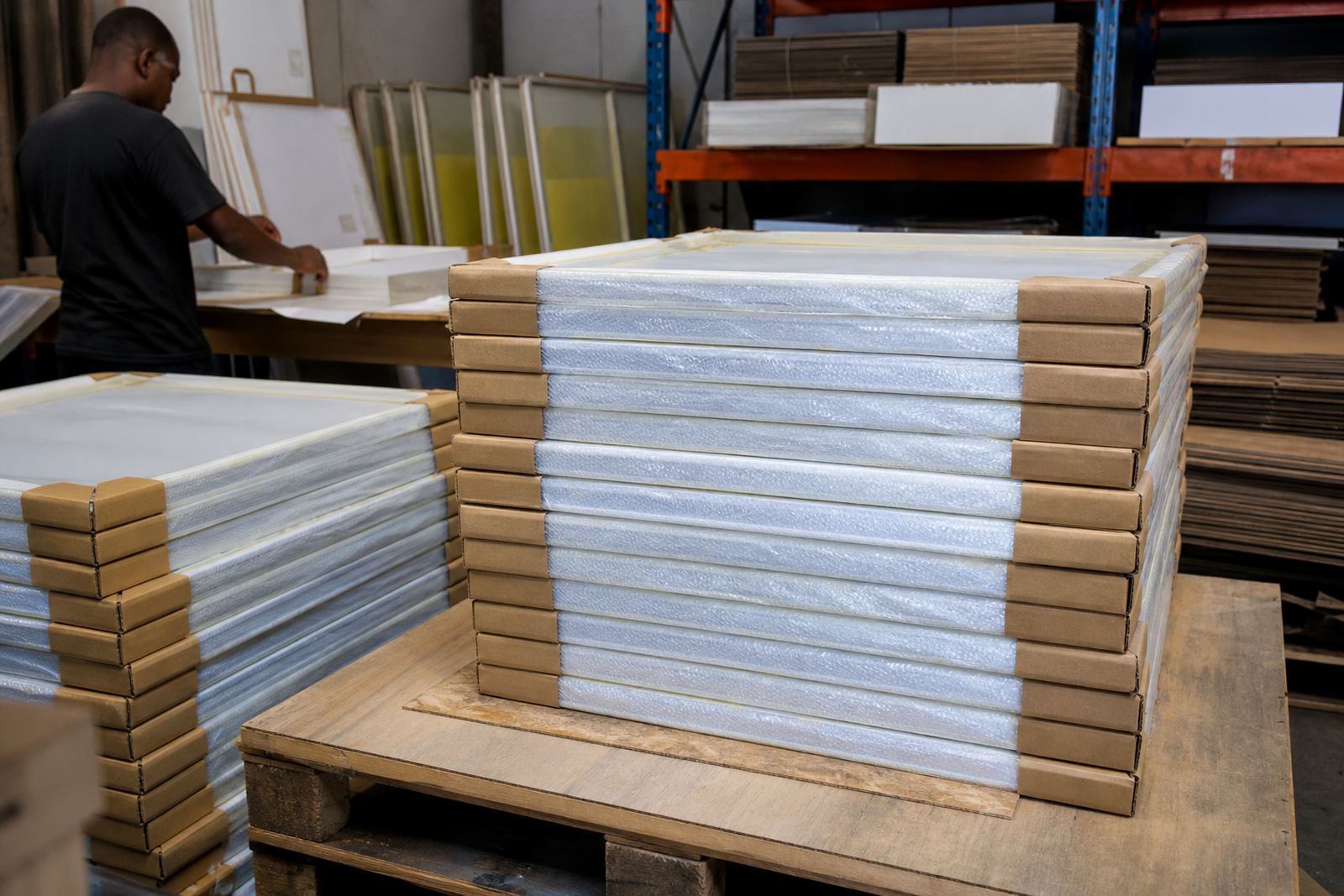
- Dispatch packing to protect stretched mesh in transit
- Collection or delivery arranged through the enquiry process
We always recommend building a small buffer of ready screens for high-use jobs. That helps during load-shedding, breakdowns, or when an old screen fails during a run and you need a replacement without stopping the line for long.
Pricing Approach and Ongoing Maintenance Intervals
Pricing is based on the mesh type, frame size, stretch condition, and whether the screen needs new stretching, re-stretching, or inspection only. The enquiry process lets us quote against the actual job rather than guessing from a single line item. If you need several screens matched to the same count, we can look at the batch together so the work is consistent across the set.
For maintenance, most shops benefit from checking screen tension regularly, especially when screens are used daily or stored in warm, humid areas. A practical approach is to inspect before every repeat run, then recheck after a set number of washes or once the print quality starts drifting. If you notice stencil wear, poor release, or signs of mesh fatigue, it may be time for a re-stretch rather than another short-term fix.
Mesh count matching is not just about keeping the same number on the frame. It is about keeping your print work predictable, your screens usable, and your setup ready for the next job without unnecessary trial and error.
Key facts
| Mesh counts covered | Common screen-printing counts used for coarse, medium and fine work |
|---|---|
| Frame type | Pre-stretched aluminium frames and re-stretched customer frames |
| Matching basis | Existing print result, substrate, ink type, artwork detail and tension |
| Tension focus | Working tension matched for stable print release and clean detail |
| Turnaround | Dependent on job size, mesh type and whether stretching or re-stretching is required |
| Areas supplied | Germiston, Johannesburg, Pretoria, Durban, Cape Town, Gqeberha and the East Rand |