What Mesh Bonding Covers On A Working Screen
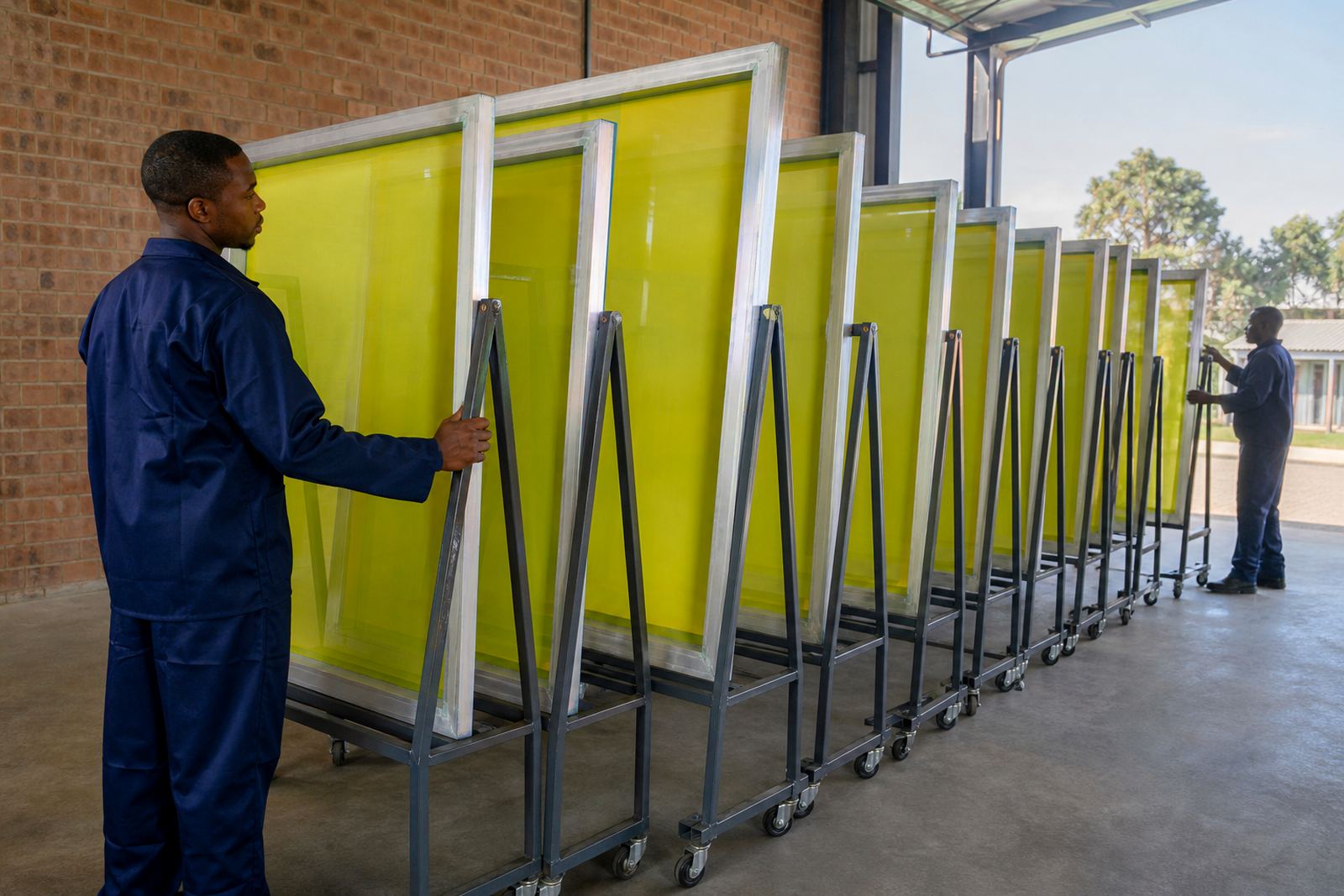
Mesh bonding is the finishing step that locks the stretched mesh to the frame so the screen can handle daily print use without the edges lifting or shifting. It matters on new frames and on re-stretched frames, especially where screens are used for repeated runs, frequent wash-downs and long shifts on press. In practical terms, the bond must hold the mesh edge evenly all around the frame, with no soft spots that can affect registration or ink deposit.
We work with screen-printing mesh counts commonly used in textile, poster and general print work, from lower counts for heavier ink laydown to finer counts for detail work. The right bond supports the tension that was set during stretching, so the screen behaves the same from one job to the next. That consistency helps reduce image bounce, edge lift and premature frame failure.
- Suitable for new aluminium frames and re-stretched screens
- Supports even tension across the full print area
- Helps keep mesh edges stable during cleaning and reclaiming
- Useful for shops handling repeat orders and mixed mesh counts
How We Prepare The Frame Before Bonding
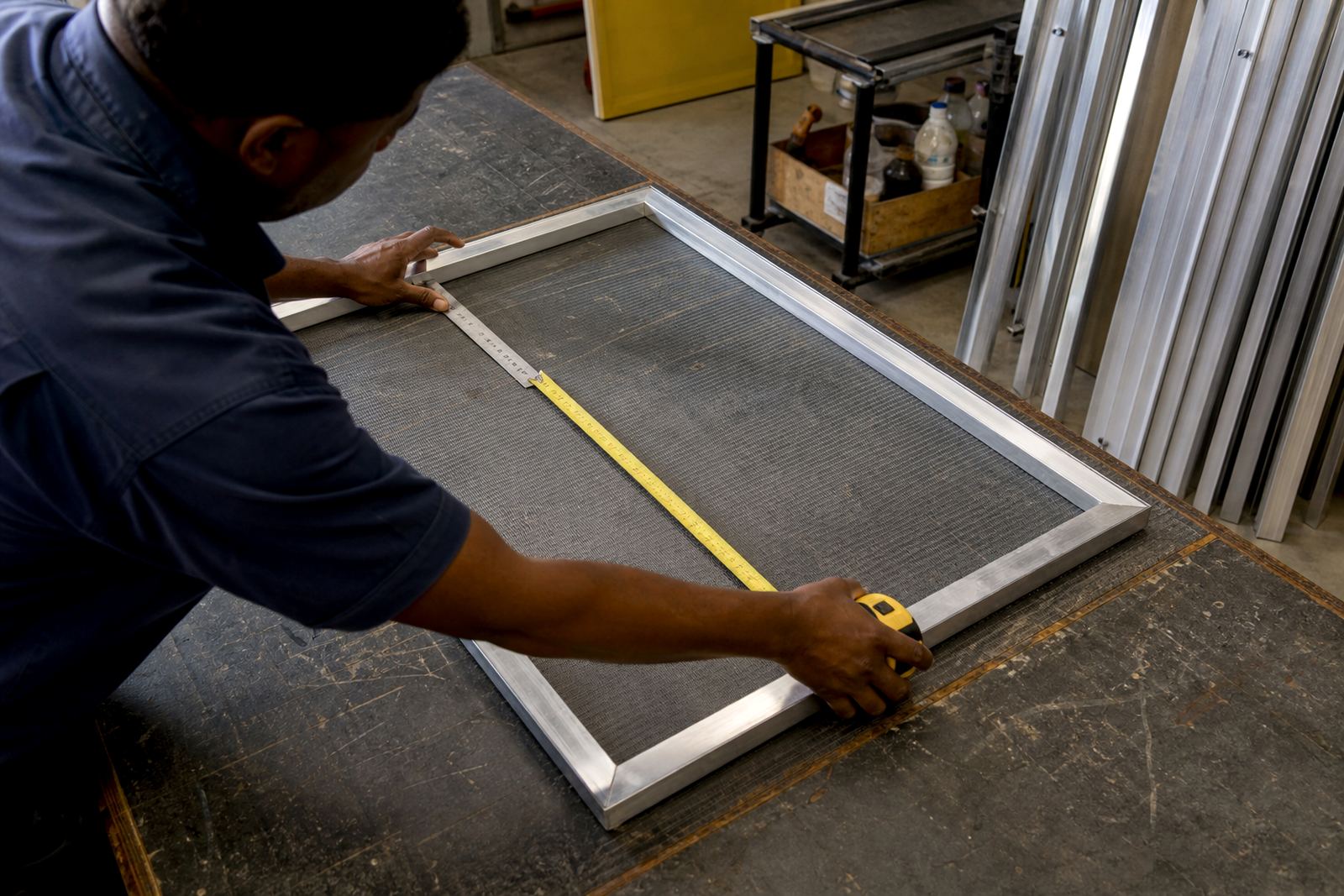
Good bonding starts before the adhesive is applied. The frame edges are checked for old adhesive, dust, oxidisation and any rough spots that could weaken adhesion. If needed, the frame is cleaned and prepared so the bond sits on a sound surface. Meshmaster treats this as part of the screen build, not as an afterthought, because a clean edge gives a better working screen.
We also confirm the mesh count, the frame size and the intended use of the screen before the final bond is applied. A coarse mesh and a fine mesh do not behave the same way, and the frame needs to suit the job. For screens used in humid coastal conditions, careful prep matters even more, since moisture and repeated washing can work against poor edge prep. The aim is a firm edge, straight corners and a screen that stays usable for the long haul.
- Edge cleaning and surface preparation
- Mesh count and frame size check
- Inspection for straight corners and even stretch
- Final review before the screen leaves the workshop
Bonding Process For Durable Day-To-Day Use
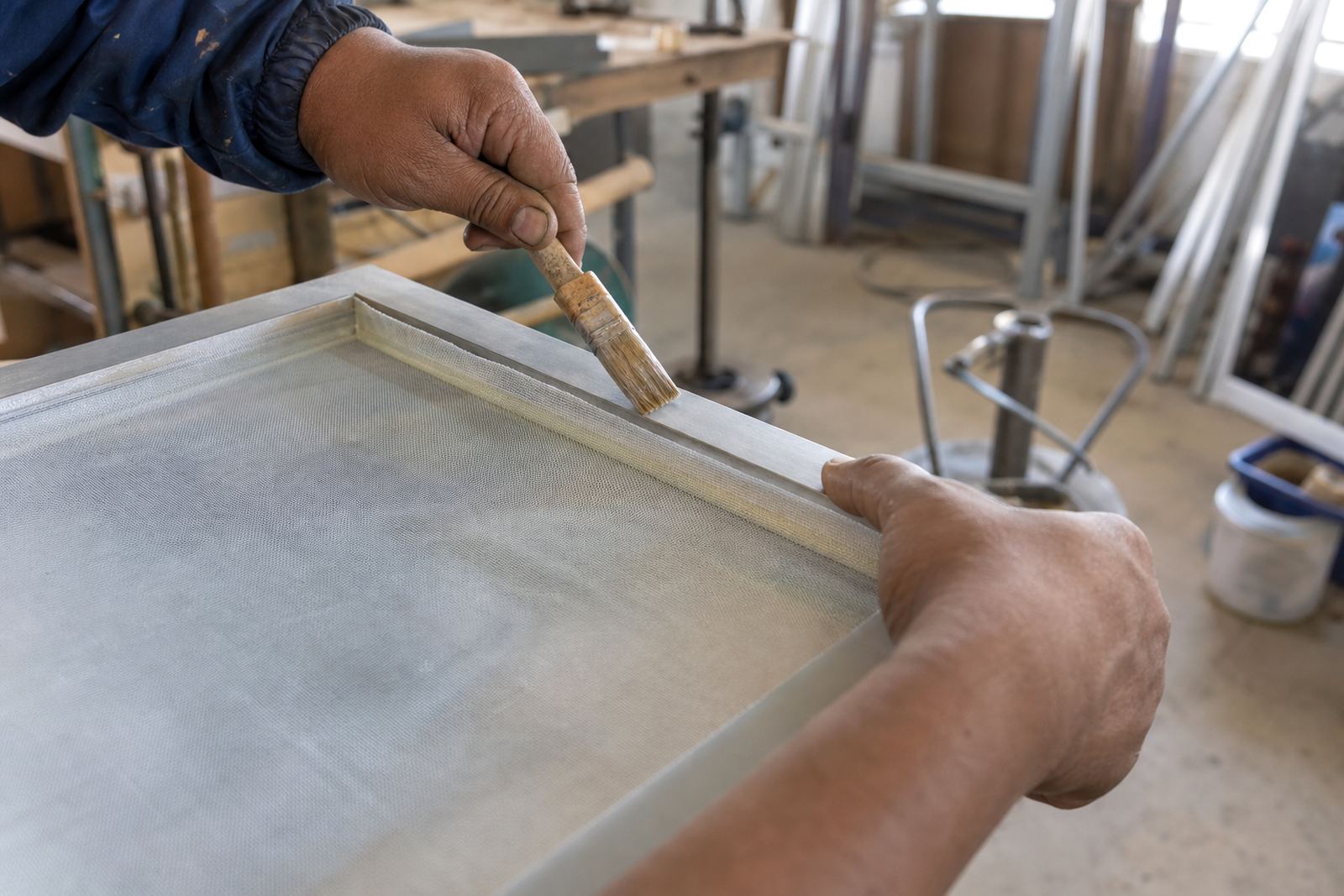
Once the screen is prepared, the mesh is secured to the frame edge in a controlled process that supports the existing tension. The bond must be even and neat all the way around, with attention to corners and any high-stress points. We do not rely on guesswork. Each screen is handled with the same approach so the bond is consistent from one frame to the next.
For print shops that run the same artwork again and again, a clean bond makes handling easier too. The mesh sits properly in the frame and is less likely to move when the screen is clamped, washed or stored between jobs. That saves time on setup and helps the operator keep the screen under control, especially when the shop is busy and load-shedding or rushed dispatch can throw the day off.
- Even bond around the full frame edge
- Corner reinforcement where needed
- Careful handling to avoid tension loss
- Screen ready for normal print shop washing and storage
Mesh Counts, Tension And Use Cases
Mesh bonding is only as good as the mesh and tension behind it. Lower mesh counts are often chosen where heavier ink needs to pass through more freely, while finer counts are used where detail and cleaner deposit control matter. The bond has to support that choice without changing the working characteristics of the screen. If the mesh is too loose or uneven, the print can suffer no matter how good the artwork is.
We help match the bonding work to the screen's intended task, whether it is for large solid areas, finer halftone work or general shop production. Tension checking is part of that picture. A screen with correct tension should feel firm and responsive under squeegee pressure, not soft or baggy. If a frame is being re-used, we can also advise whether re-stretching first is the better route before bonding the mesh to the frame edge.
- Lower counts for heavier deposit work
- Finer counts for detail and tighter control
- Tension support for repeatable print results
- Advice on whether to bond, re-stretch or rebuild
Turnaround, Pricing Approach And Ordering
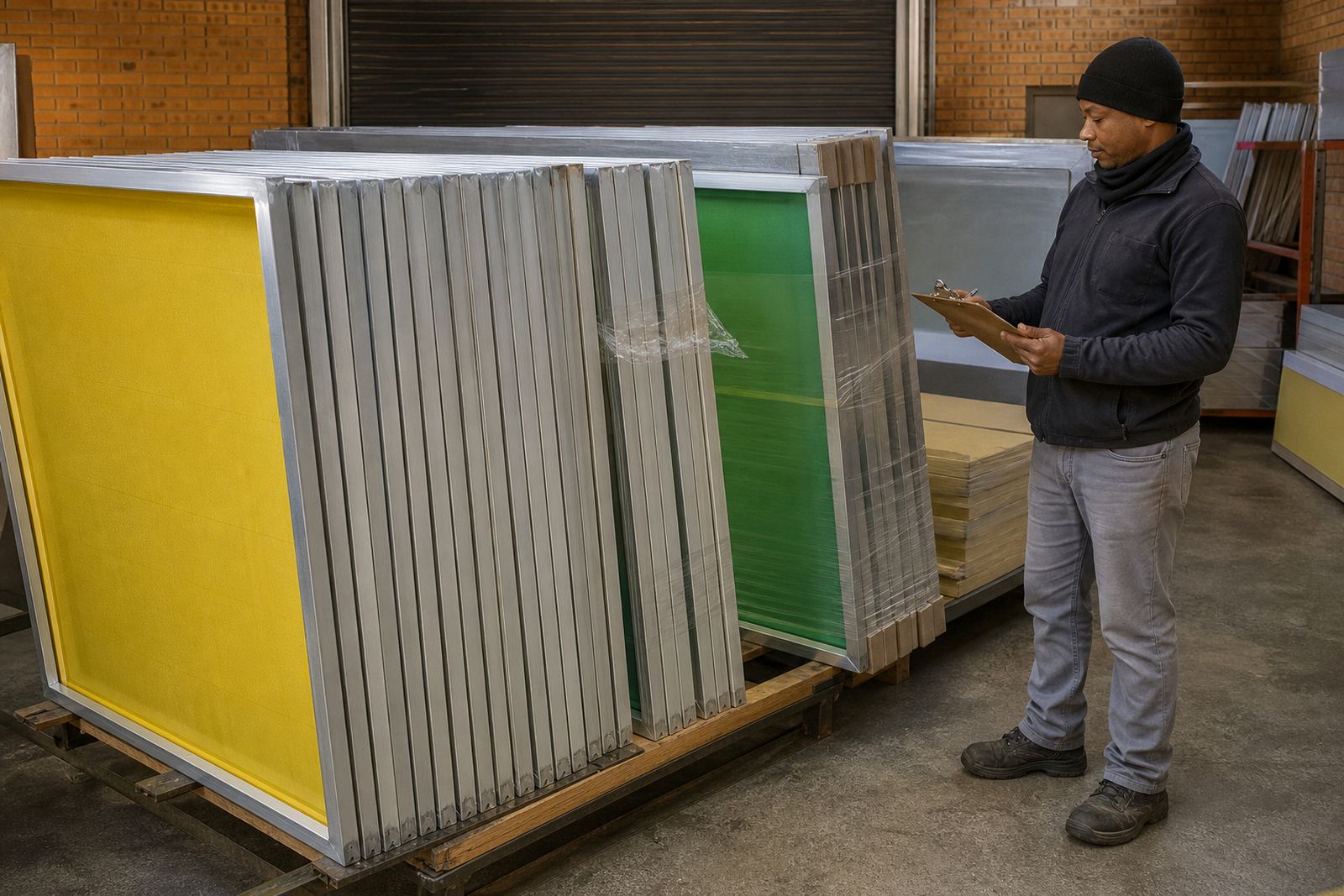
Turnaround depends on the size of the frame, the quantity in the batch and the condition of the screens when they arrive in Germiston. Small, straightforward jobs move faster than large batch work, and damaged frames may need extra prep before bonding can begin. We always aim to keep the process practical for print shops that need screens back in use without unnecessary delay.
Pricing is handled according to the frame size, the amount of prep required, the mesh count involved and whether the job is a new stretch or a re-bond on an existing screen. We quote on the actual work needed, not on a one-size-fits-all assumption. If you are sending screens from Johannesburg, Pretoria, Durban, Cape Town or Gqeberha, our logistics team can help plan the dispatch so the screens arrive together and are packed safely for return. Clients reach us through the enquiry form on the contact page, which keeps ordering simple for both single screens and repeat runs.
- Quoted according to size, quantity and prep required
- Suitable for one-off screens and batch work
- Careful dispatch packing for transport around South Africa
- Clear coordination through the enquiry form
Aftercare And Maintenance Between Reclaims
Even a well-bonded screen benefits from sensible maintenance. Screens should be rinsed properly after use, dried before stacking and stored flat where possible. If a shop works through humid weather or near the coast, extra drying time can help prevent unnecessary strain on the edge bond. On busy production floors, rough handling is one of the main causes of early edge problems.
We generally recommend regular inspection of the mesh edge, frame corners and tension feel during normal shop cycles. If the screen starts to feel soft, loses registration stability or shows signs of edge lift, it is worth checking before the next run rather than after a bad print. Where required, we can inspect the screen, advise on tension checking and help decide whether the frame is ready for another stretch or needs full renewal. A little maintenance goes a long way, especially when jobs are due and everyone is trying to keep production moving.
- Rinse after use and dry before storage
- Avoid stacking wet screens for long periods
- Check edge lift and corner wear during routine inspection
- Book a review when tension or print quality starts changing
Key facts
| Service | Mesh Bonding |
|---|---|
| Main purpose | Securing stretched mesh to frame edges for durable everyday use |
| Typical materials | Screen-printing mesh and pre-stretched aluminium frames |
| Mesh range | Lower and finer counts matched to the print task |
| Support checks | Frame prep, tension checking and mesh count matching |
| Area served | Germiston, Johannesburg, Pretoria, Durban, Cape Town, Gqeberha and wider South Africa |