New Aluminium Frames Built for Production Use
New frame stretching is the process of fitting mesh to a fresh aluminium frame, then pulling it to the correct tension for screen-printing work. The aim is simple, a screen that holds registration well, prints cleanly and stays stable through repeated wash-up and production cycles. We work with common mesh counts used in South African print shops, from coarse mesh for heavy ink deposits to finer mesh for detail work and smoother halftones.
Aluminium frames are a practical choice in our climate because they stay straighter than timber and handle repeated cleaning better, especially in coastal humidity and busy shops where screens are washed often. For shops in Gauteng, the East Rand and further afield, a properly stretched frame helps reduce stencil movement, uneven print edges and premature mesh failure.
- Mesh count matching for the job type and ink deposit required
- Even tension across the print area, including the corners
- Clean frame preparation before bonding and stretching
- Ready-to-use frames for manual and machine printing setups
How We Stretch Mesh Onto New Frames
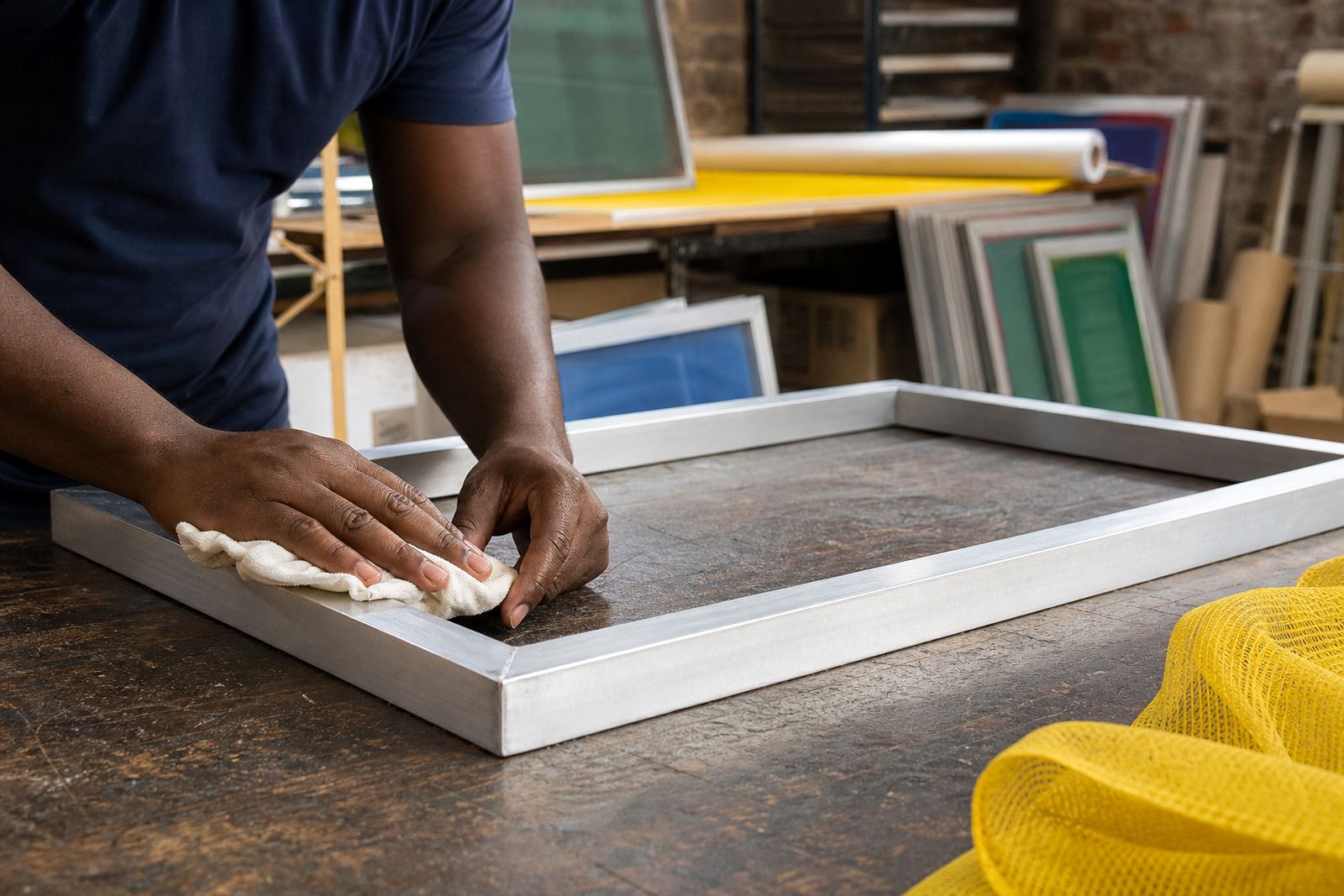
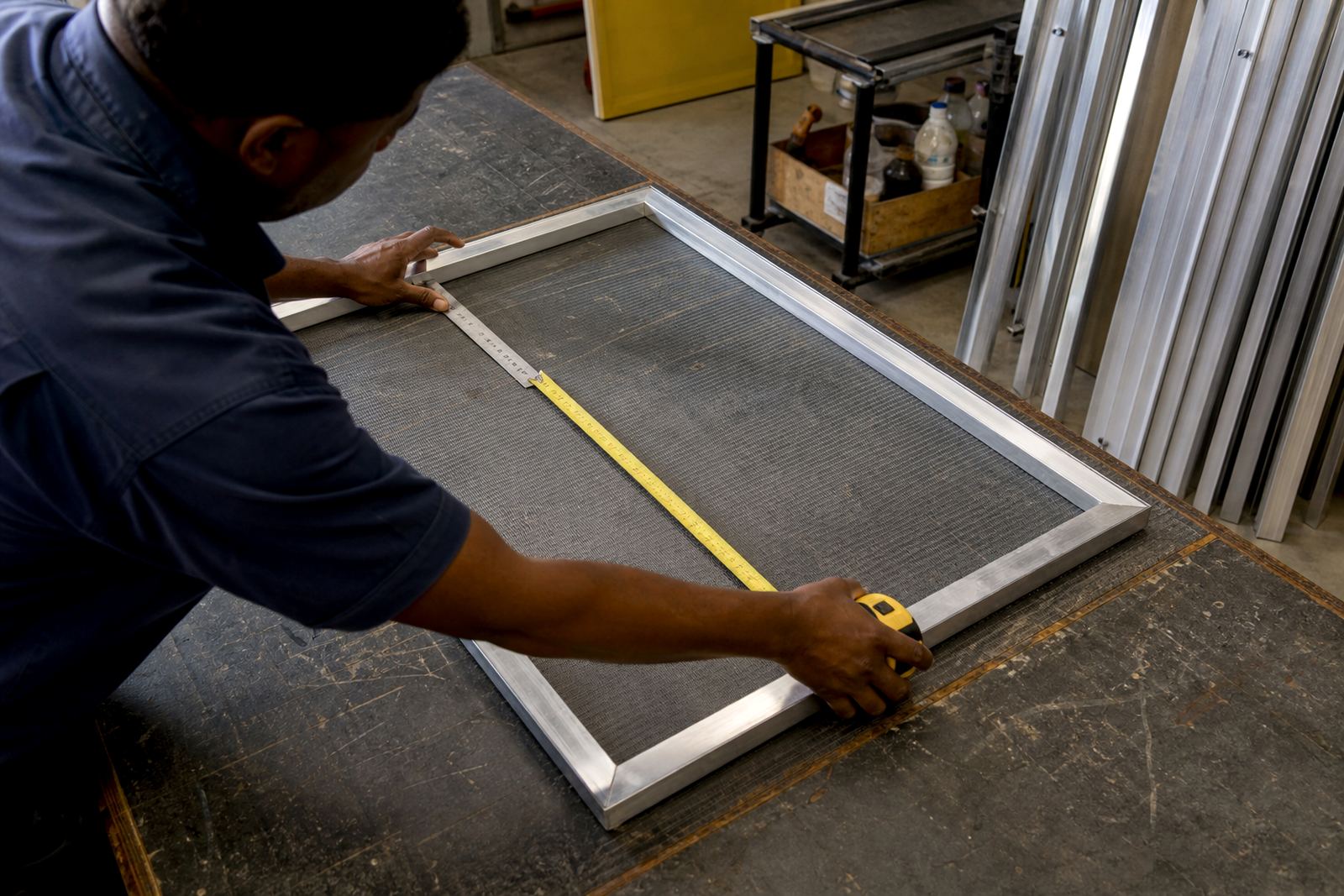
The process starts with frame inspection and cleaning. The aluminium is checked for squareness, flatness and bond areas so the mesh can be anchored properly. Any dust, grease or old adhesive residue is removed before stretching starts, because a clean bonding surface matters for long-term hold.
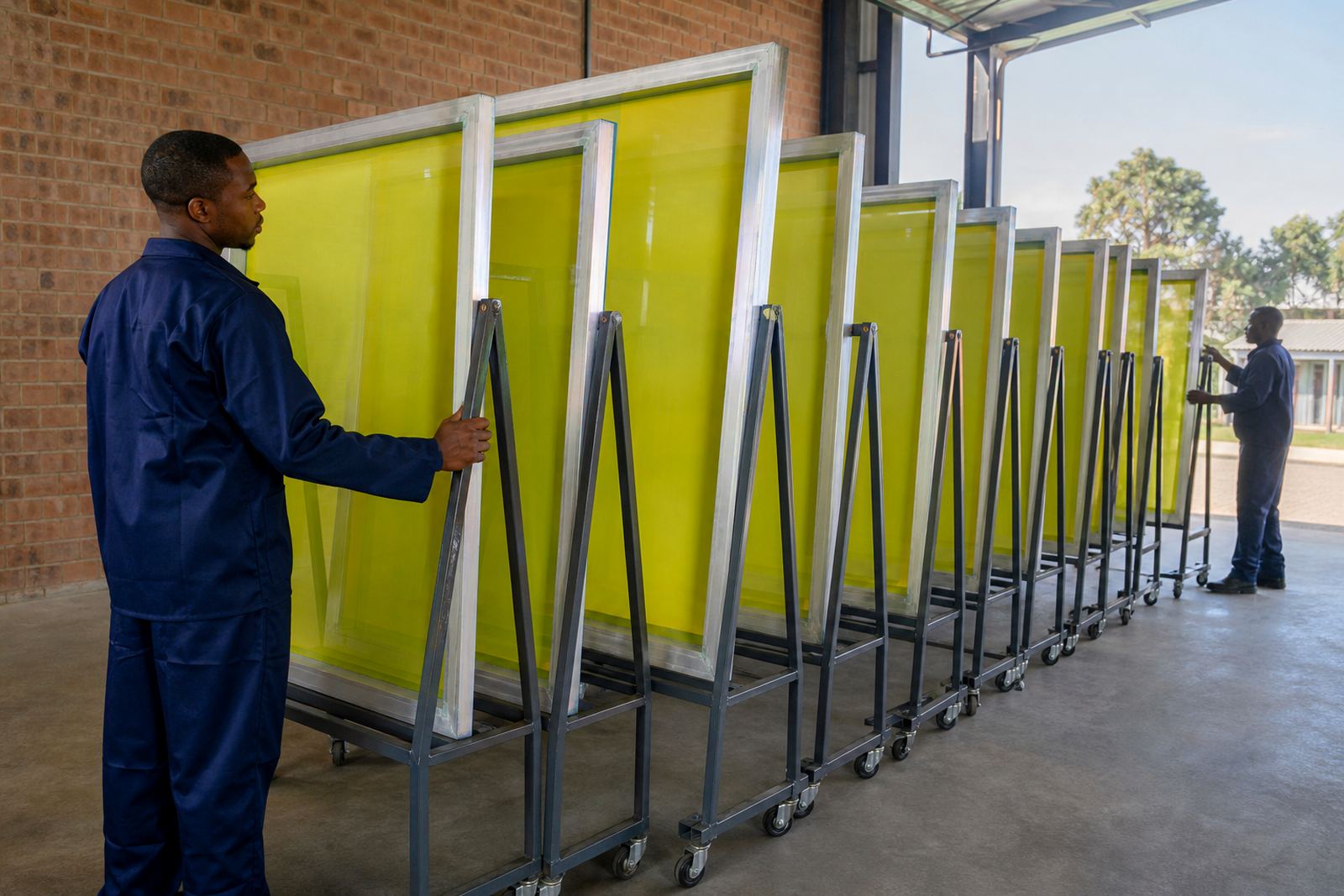
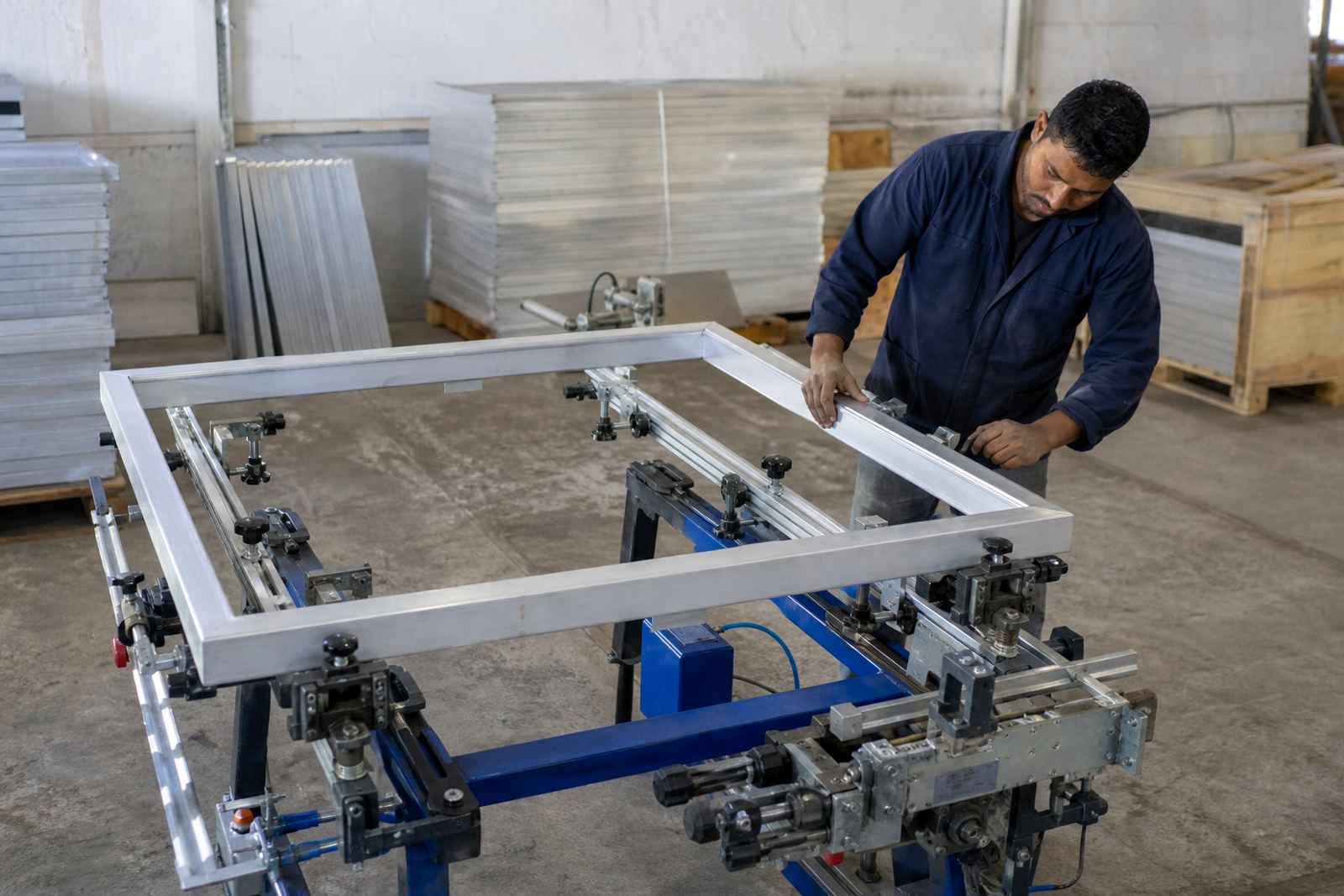
After that, the correct mesh is selected and aligned on the frame. We stretch it evenly, then check tension and corner consistency before final bonding and curing. The screen is then checked again for twist, slack spots and surface defects. If a screen is going into batch work, we make sure the tension is suitable for repeated squeegee passes and normal wash-down routines.
- Frame clean prep and surface check
- Mesh selection by count and application
- Stretching, bonding and tension checking
- Final inspection before dispatch
For print shops in Johannesburg, Pretoria or Midrand, this means fewer delays at the press and less time correcting avoidable setup problems. For coastal deliveries to Durban, Cape Town and Gqeberha, a properly prepared aluminium frame also holds up better where moisture can affect cheaper setups.
Mesh Counts, Tension and Printing Detail
Mesh count is one of the first things to get right. Coarser mesh allows more ink through and is often used where a heavier deposit is needed. Finer mesh supports sharper detail and thinner ink layers. The right choice depends on artwork, substrate, ink type and the finish you want on the final print.
Tension is just as important as mesh count. A screen that is stretched too loose can sag in use, making registration less reliable and slowing production. Too much tension can stress the frame and shorten the life of the mesh. We aim for an even pull across the screen so the print area behaves consistently from first pull to last.
- Finer mesh for detail work and cleaner image edges
- Coarser mesh for stronger ink deposit and faster release
- Even tension for better registration and less bounce on press
- Mesh choice adjusted for textile, poster or general print work
If you are not sure which count to use, we can advise on the screen setup before stretching begins. That is often the difference between a screen that simply holds ink and one that prints cleanly without constant rework.
Turnaround, Order Flow and Dispatch Across South Africa
Turnaround depends on the frame size, quantity and the mesh specification needed. Standard jobs are generally scheduled in batches so that stretching, curing and inspection can be handled in order. If you have repeat production screens or a run of matching frames, we can keep the setup consistent from screen to screen.
Clients in Germiston, the East Rand and Johannesburg often send through batch jobs for faster processing, while deliveries to Pretoria, Durban, Cape Town and Gqeberha are packed for transport with care so the frames stay protected in transit. We use practical dispatch packing because aluminium frames need to arrive square and clean, ready for press setup.
- New frame stretching for single screens or repeat batches
- Screen setup advice for matching mesh to your print job
- Dispatch packing for transport across provincial routes
- Repeat order service for shops that use the same screen spec often
We keep communication straightforward through the enquiry form on our contact page, so you can send in your requirements, sizes and preferred mesh count, then we can quote the correct job rather than guessing from a rough description.
Pricing Approach and What Affects the Quote
Pricing for new frame stretching is based on the frame size, mesh count, quantity and the amount of prep required before stretching. A standard aluminium frame with a common mesh count is priced differently from a larger custom frame or a finer mesh that needs closer handling. If a batch includes several screens with the same spec, the work is usually more efficient than one-off sizes changing from screen to screen.
Other factors that affect the quote include frame cleaning, custom sizing, any added inspection work and the delivery route. We do not use blanket pricing because the right spec matters in screen-printing. A low-cost screen that does not hold tension properly can create more waste and downtime later.
For shops that need ongoing production support, the better approach is to keep a standard screen spec for repeat jobs. That makes reordering easier and helps maintain print consistency over time.
Maintenance Intervals and When to Replace a Screen
Even a well-stretched screen needs checking over time. Mesh slowly loses tension with use, cleaning and storage conditions. In warm inland areas and humid coastal locations, it is worth checking screens more often because heat, moisture and repeated wash-up can affect both mesh and frame performance.
As a practical guide, inspect the screen before each major production run and again after cleaning if the screen has been in storage. Look for slack areas, damaged corners, peeling bond lines, stains that affect coating, or mesh wear near high-use sections. If the screen is still sound, it may only need tension checking. If the mesh has lost hold or the surface is damaged, re-stretching or a new frame may be the better choice.
- Check tension before production starts
- Inspect bond lines after wash-up and storage
- Replace worn mesh before registration problems start
- Keep a consistent screen record for repeat jobs
Good screen care also means avoiding rough stacking, keeping screens dry after cleaning and storing them flat or correctly racked. That extends the working life of the frame and helps protect the print quality you need on the press.
Key facts
| Service area | Germiston, Johannesburg, Pretoria, Durban, Cape Town, Gqeberha and surrounding areas |
|---|---|
| Frame type | New aluminium frames |
| Mesh options | Common screen-printing mesh counts for coarse to fine detail work |
| Process | Frame clean prep, mesh selection, stretching, bonding, tension checking and inspection |
| Use case | Ready-to-use production screens for print shops and repeat jobs |
| Support | Screen setup advice, custom sizing and repeat order service |