
What Frame Clean Prep Covers
Before a frame can be re-meshed, the old adhesive and residue have to come off properly. Our Frame Clean Prep service is for pre-stretched aluminium frames that need to be brought back to a usable condition for the next stretch. The aim is simple: clean contact surfaces, sound corners and a frame that can take new mesh without trapped glue, dust or loose material causing problems later.
We handle frames used for common screen-printing work across textiles, posters, labels and general print production. Whether the frame is being prepared for a finer mesh count for detail work or a lower count for heavier ink deposit, the base surface must be ready first. If the frame is not clean, the mesh bond can fail early, and the screen may lose tension unevenly during use.
How We Prepare Frames Before Re-Meshing
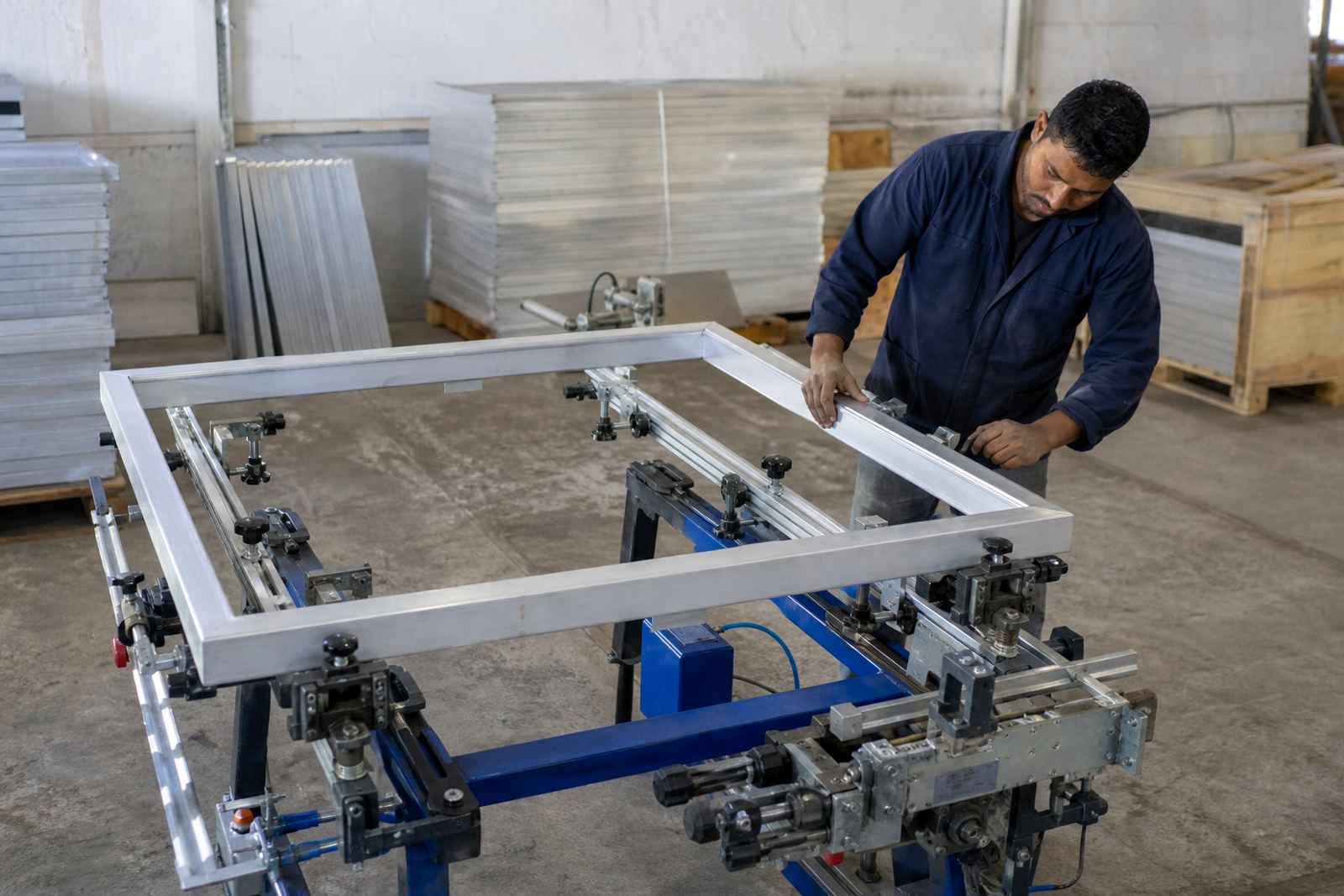
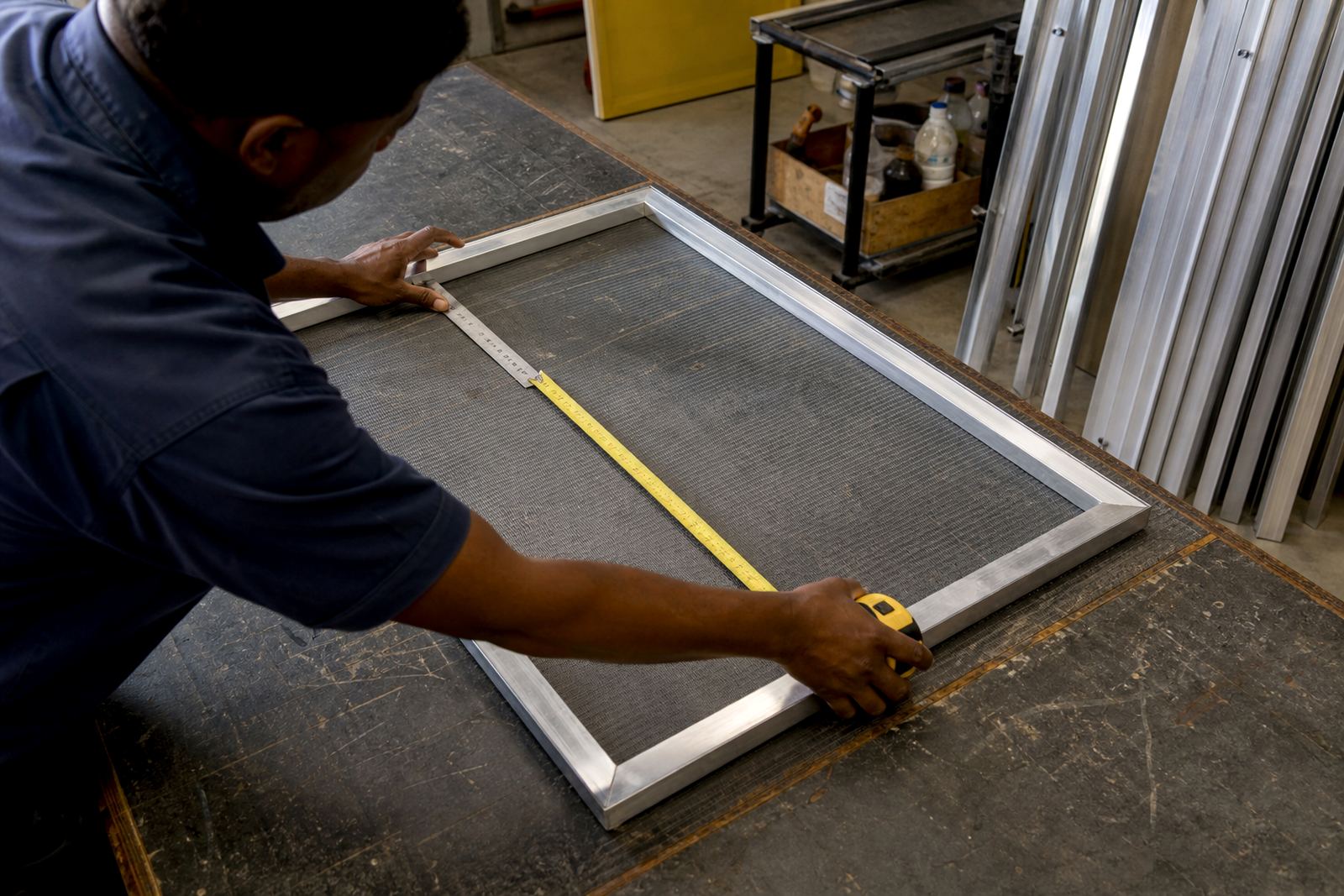
Each frame is checked before prep starts. We look at the frame condition, old adhesive build-up, welds or joins, and any signs of twist or damage that may affect tensioning. If the frame is sound, we proceed with cleaning so the surface is ready for bonding and stretching. If there is obvious damage, we flag it before any work goes ahead.
- Removal of old mesh, glue and surface residue
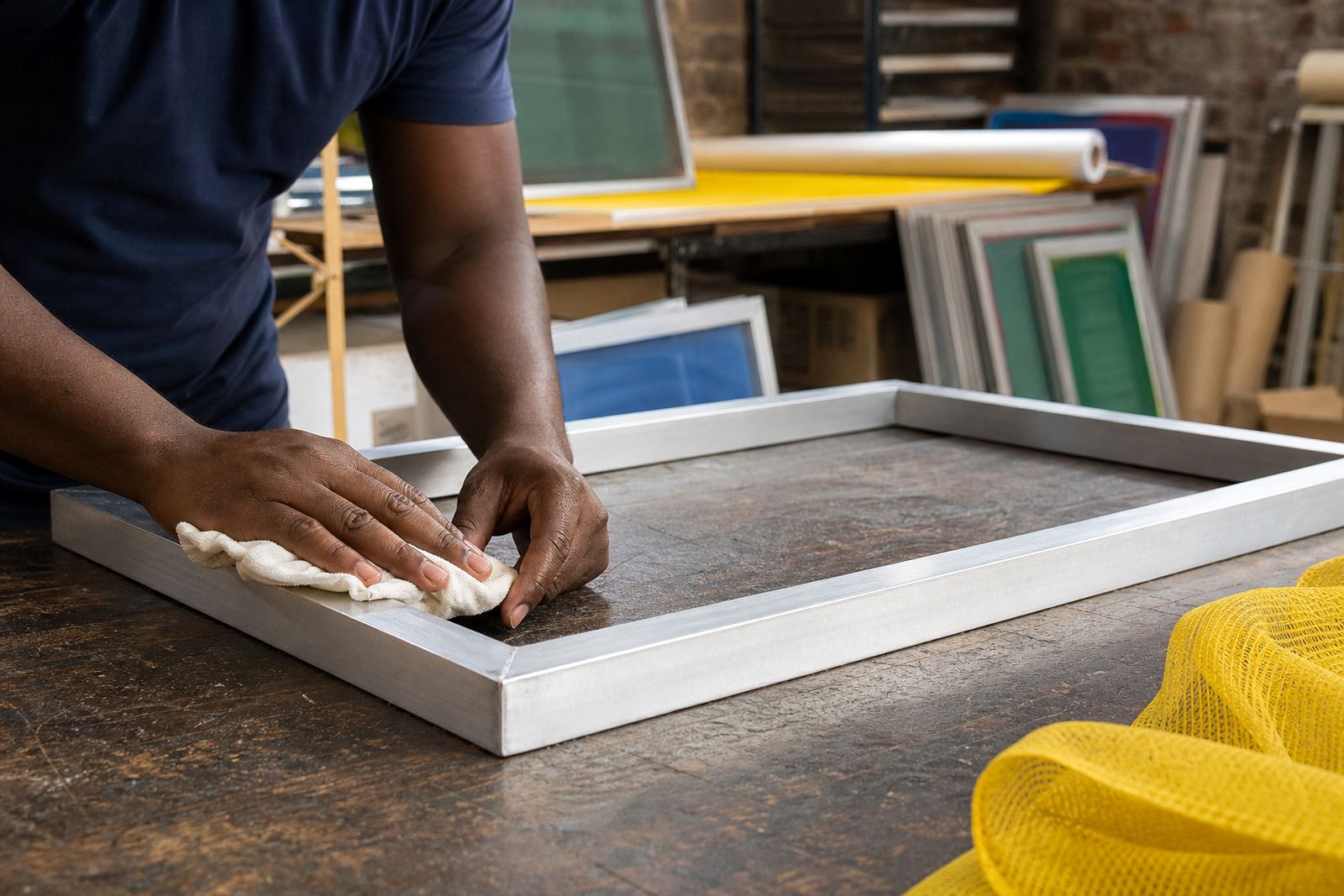
- Cleaning of adhesive areas where the new bond will sit
- Corner and edge inspection for dirt, old tape or hardened build-up
- Surface wipe-down so the frame is free of loose particles
- Basic inspection for frame warping or wear before stretching
The prep stage is important for both new and repeat work. A clean frame gives better contact, better grip and more even tension once the new mesh is fitted. It also makes later maintenance easier because you are not dealing with layers of old adhesive and patchy residue.
Why Clean Contact Surfaces Matter
Screen-printing mesh depends on stable bonding around the frame perimeter. If adhesive is applied over oil, dust, old glue or uneven paint, the bond can lift at the edges. That is when screens begin to slacken, leak ink or pull out during use. Clean prep also supports better mesh count performance, because the stretch is only as good as the frame surface holding it.
For South African print shops working through heat, humidity and load-shedding interruptions, a properly cleaned frame is worth the effort. Coastal areas like Durban and Gqeberha can be hard on stored screens because moisture affects both the frame and the adhesive zone. Inland, dust and workshop residue can settle into corners and under tape. A proper clean helps reduce those issues before the next re-mesh.
We also see better results on frames that are reused often. When a frame is cleaned between jobs, the next mesh can be bonded more consistently and the screen setup takes less correction later. It is a practical step, not a cosmetic one.
Typical Frame Types And Mesh Counts We Prepare For
Frame Clean Prep is suitable for a wide range of screen sizes and mesh types. The exact prep method depends on how the frame was previously used and what count is going on next. Fine mesh used for detail work needs a neat, even bonding surface. Lower counts for thicker ink deposits still need the same clean base, because any rough patch can affect print quality and screen life.
- Polyester mesh used for general textile and graphic printing
- Lower counts for heavier ink deposit work
- Mid-range counts for general production screens
- Finer counts where detail, halftones or smoother stencil work is needed
- Pre-stretched aluminium frames in common production sizes and custom sizes
We also work with frames that are being returned for re-stretching after previous use. In those cases, the frame must be stripped back fully and inspected before the next mesh is fitted. That helps avoid weak spots from old glue lines or uneven residues left behind from the last job.
Turnaround And Pricing Approach
Turnaround depends on the number of frames in the batch, the amount of residue on each one and whether the frames need only light prep or more involved cleaning before re-meshing. Smaller orders can often move through faster, while larger batch screen prep work is scheduled to keep production tidy and consistent. If a frame needs attention before it can be stretched safely, we will say so upfront.
Our pricing approach is based on the frame condition, the prep work required and the follow-on service requested. A lightly used frame needs less time than one with heavy adhesive build-up or damaged surface areas. This keeps the work fair and practical for print shops that need repeat orders, batch preparation or one-off cleanup before a new run.
For customers in Germiston, Johannesburg, Pretoria, Midrand and the East Rand, frames can be handled as part of a local supply run or delivery order. For Durban, Cape Town and Gqeberha, we prepare the work to be packed securely for transit so the cleaned surfaces stay ready for the next stage.
Maintenance Intervals For Reused Frames
There is no fixed rule that suits every shop, but frame cleaning should not be left until the buildup becomes difficult to remove. The best time to do Frame Clean Prep is when a screen is coming off production and before the next mesh is fitted. That keeps the adhesive area in better condition and reduces the risk of old material interfering with the next bond.
For busy print shops, it makes sense to review frame condition at regular intervals as part of normal screen inspection. If screens are used frequently, cleaned promptly and stored properly, they last longer and stay easier to rework. If they are left with old adhesive, ink mist or tape residue, the next prep stage becomes slower and the frame can start to look tired sooner.
- Check frames after each de-mesh or screen strip-down
- Clean before re-meshing rather than after damage builds up
- Store frames dry, flat and away from dust where possible
- Inspect corners and edges for residue every time a frame is reused
How To Send A Frame In For Prep
The easiest way to arrange Frame Clean Prep is through the enquiry form on our contact page. Let us know the frame size, the mesh count you want next, and whether the frame is being prepared for new stretching or re-stretching. If there are multiple frames in the batch, list them clearly so the work can be planned in the right order.
For clean handling, frames should be sent without loose tape, labels or damaged mesh still attached unless you need us to strip them first. If the frame has been used in humid storage conditions, or if it was exposed to dust during power cuts or workshop downtime, mention that as well. It helps us decide how much prep is needed before the frame is ready for the next stage. A bit of detail upfront saves time later.
We supply print shops across South Africa from Germiston and support customers in Johannesburg, Pretoria, Durban, Cape Town and Gqeberha with practical screen preparation advice. If you are not sure whether a frame is worth cleaning and reusing, send the details and we will advise on the best next step.
Key facts
| Service | Frame Clean Prep for screen-printing frames before re-meshing |
|---|---|
| Frame types | Pre-stretched aluminium frames and repeat-use production frames |
| Prep focus | Removal of old adhesive, residue and loose surface contamination |
| Mesh compatibility | Suitable for common coarse, mid-range and fine screen mesh counts |
| Turnaround | Based on batch size, frame condition and follow-on stretching requirements |
| Maintenance interval | Best done before each re-mesh or whenever residue begins to affect bonding |