Start With the Frame, Not the Mesh
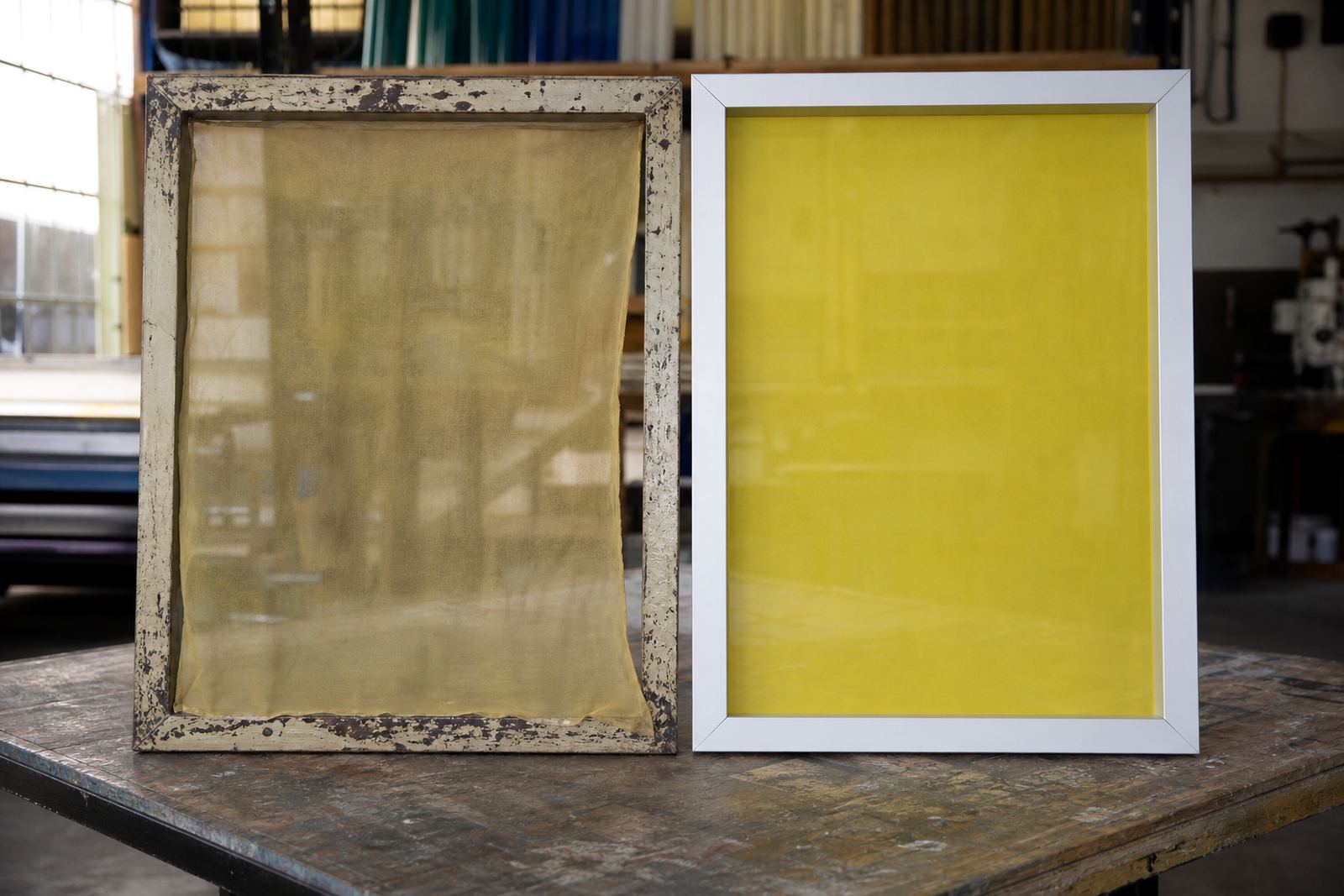
Before you decide to re-stretch or replace, inspect the frame itself. Aluminium frames that are straight, square, and free of twists are often worth keeping, especially when the welds or corners are still sound. If the frame has dents, warping, cracked joins, or has gone out of square, re-meshing will not fix the problem. You may get a screen that looks fine on the bench but gives trouble on press, with uneven contact and poor registration.
For shops running repeat work, frame condition matters more than most people think. A frame that no longer holds consistent tension will cost time at setup, and that shows up in ink deposit, image sharpness, and squeegee feel. In humid coastal conditions, worn frames can also be slower to stabilise after cleaning, which means more waiting and more risk of false tension readings.
When Re-Stretching Makes Good Sense
Re-stretching is usually the better choice when the frame is still structurally sound and the only issue is the mesh. That can happen after long use, accidental snagging, chemical wear, or a mesh count that no longer suits the job. If the aluminium is still true and the screen size is suitable, re-meshing keeps the frame in service and gives you a fresh printing surface without changing your whole screen setup.
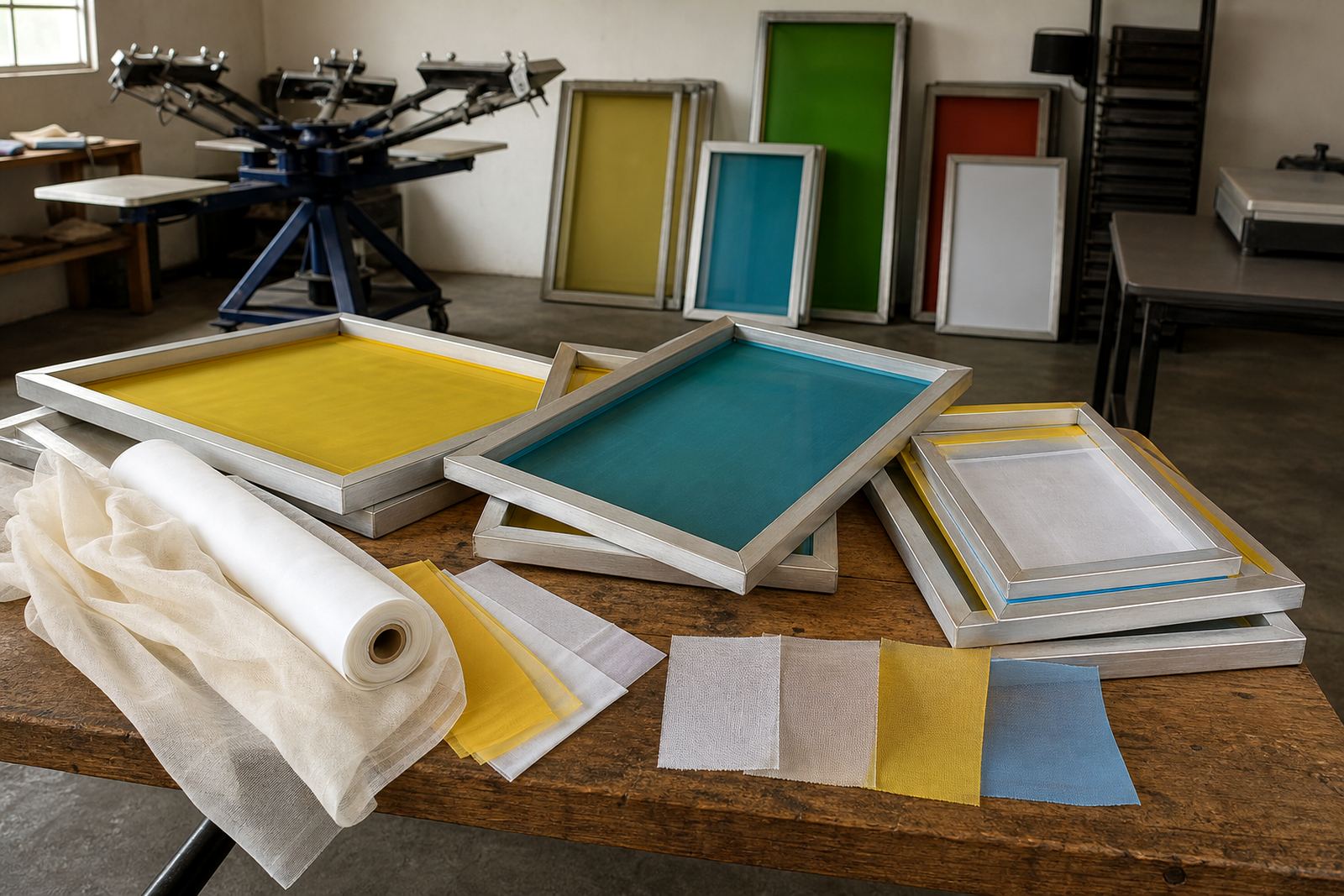
This is especially useful for shops that use specific mesh counts across repeat jobs. A mesh count change from a coarse count to a finer one, or from a fine count back to a more open mesh, may be needed for different ink deposits, stencil detail, or substrate type. Re-stretching also helps when the current screen has lost even tension but the frame itself still sits well in the clamp. A proper re-stretch should leave the mesh evenly tensioned across the full area, not tight in one corner and loose in another.
- Choose re-stretching when the frame is straight and square
- Use it when the mesh is damaged, faded, slack, or no longer matching the job
- It suits repeat sizes where the frame still fits your press and drying space
- It is often the practical option for regular production screens that only need new mesh
When a New Frame Is the Better Call
Replacing the frame is the better option when the structure has failed or is close to failing. If the corners are opening, the rails are twisted, or the frame has been damaged by handling, a new stretch will not solve the underlying issue. A frame that cannot hold square will keep giving trouble during alignment, especially on multi-colour work where screen-to-screen accuracy matters.
New frames also make sense if your current sizes do not suit the work you are taking on. A shop moving into larger artwork, wider print areas, or more demanding setup requirements may need a new frame size rather than forcing old equipment into a new job. In some cases, replacing a tired frame saves more time than it costs, because you avoid rework, repulls, and repeated tension problems that waste ink and substrate.
- Replace the frame if it is warped, cracked, bent, or badly out of square
- Replace it if previous repairs have not held up under production use
- Choose new sizing when the print area or press setup has changed
- Do not keep re-meshing a frame that no longer clamps cleanly or consistently
Mesh Count Matching for Better Print Results
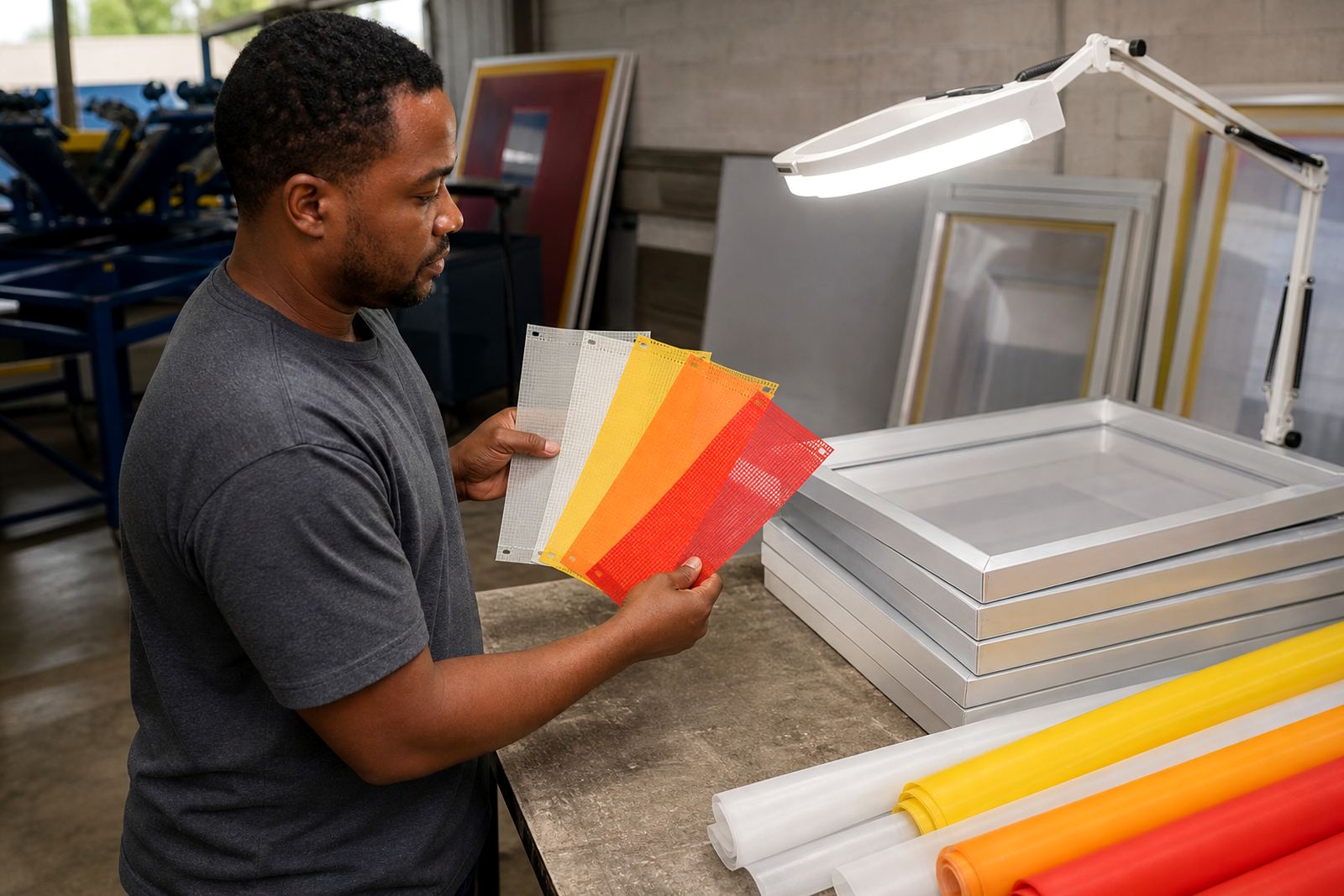
Matching the mesh count to the job is one of the most important parts of screen preparation. Coarser meshes are generally used where you want more ink deposit, while finer meshes suit detail, halftones, and thinner ink layers. The right count depends on the artwork, the substrate, the ink type, and the finish you need. If the count is too open, the print can flood. If it is too fine, you may struggle with ink flow and print speed.
Good mesh selection is not guesswork. It should be matched to how the screen will actually be used, whether that is garment printing, signage work, or other shop applications. Tension also matters here. A well-matched mesh on a poorly tensioned frame will still underperform. The aim is a screen that gives stable detail, predictable snap off, and repeatable results from the first pull to the last.
For shops that handle varied work, keeping a small range of mesh counts can save a lot of trouble. It means you can choose the right screen for the job instead of forcing one mesh to do everything. That improves output and reduces the risk of job-specific problems that only show up once production starts.
What to Check Before You Order
A quick inspection before ordering can prevent delays. Measure the frame size, check the internal opening, and note whether the screen has already been used with a particular mesh count. If you are sending a frame for re-stretching, make sure it is clean and free of old adhesive, ink residue, and loose mesh. Dirty frames slow down prep and can affect bonding quality.
It also helps to look at the press setup and the way screens are handled in your shop. If frames are stored in heat, damp corners, or near open washout areas, they may deteriorate faster. In Gauteng, dust and workshop handling can be just as hard on screens as humidity is on the coast. A simple checklist before re-stretching can stop a lot of repeat work later.
- Check whether the frame is square and free from twist
- Confirm the print area and overall frame size
- Note the current mesh count and the new count needed
- Inspect for old glue, rust marks, dents, or damaged corners
- Decide whether the screen needs clean prep before stretching
A Simple Shop Decision Checklist
If you are unsure whether to re-stretch or replace, use a straightforward rule: keep the frame if the structure is still good, and replace it if the structure is failing. That keeps decisions practical and avoids spending money on screens that will never set up correctly. For most print shops, the best choice comes down to how the frame behaves under real use, not just how it looks on the bench.
Think about turnaround too. A re-stretched screen can be a smart choice when you need to keep a proven frame size in circulation. A new frame is better when you want a long-term fix, a different screen size, or a cleaner start for demanding work. If your team needs help deciding, screen setup advice and tension checking can save time before the job lands on press. It is better to sort the screen now than to fight it during production, when the whole schedule is already tight.
- Keep it if the frame is straight, square, and strong
- Replace it if the frame is warped, cracked, or unstable
- Re-stretch it if only the mesh has failed or no longer suits the job
- Choose the option that gives the most reliable setup over the next run of work