
Start With The Jobs You Plan To Print First
Before you place a first order, write down the work you expect to turn out in the next few weeks. A shop printing school shirts, promotional tees and simple one-colour logos will need a different screen mix to a shop doing halftones, fine text and detailed artwork. In Germiston and across Gauteng, many smaller print rooms start with a core set that covers general garment work first, then add finer mesh as the order book grows.
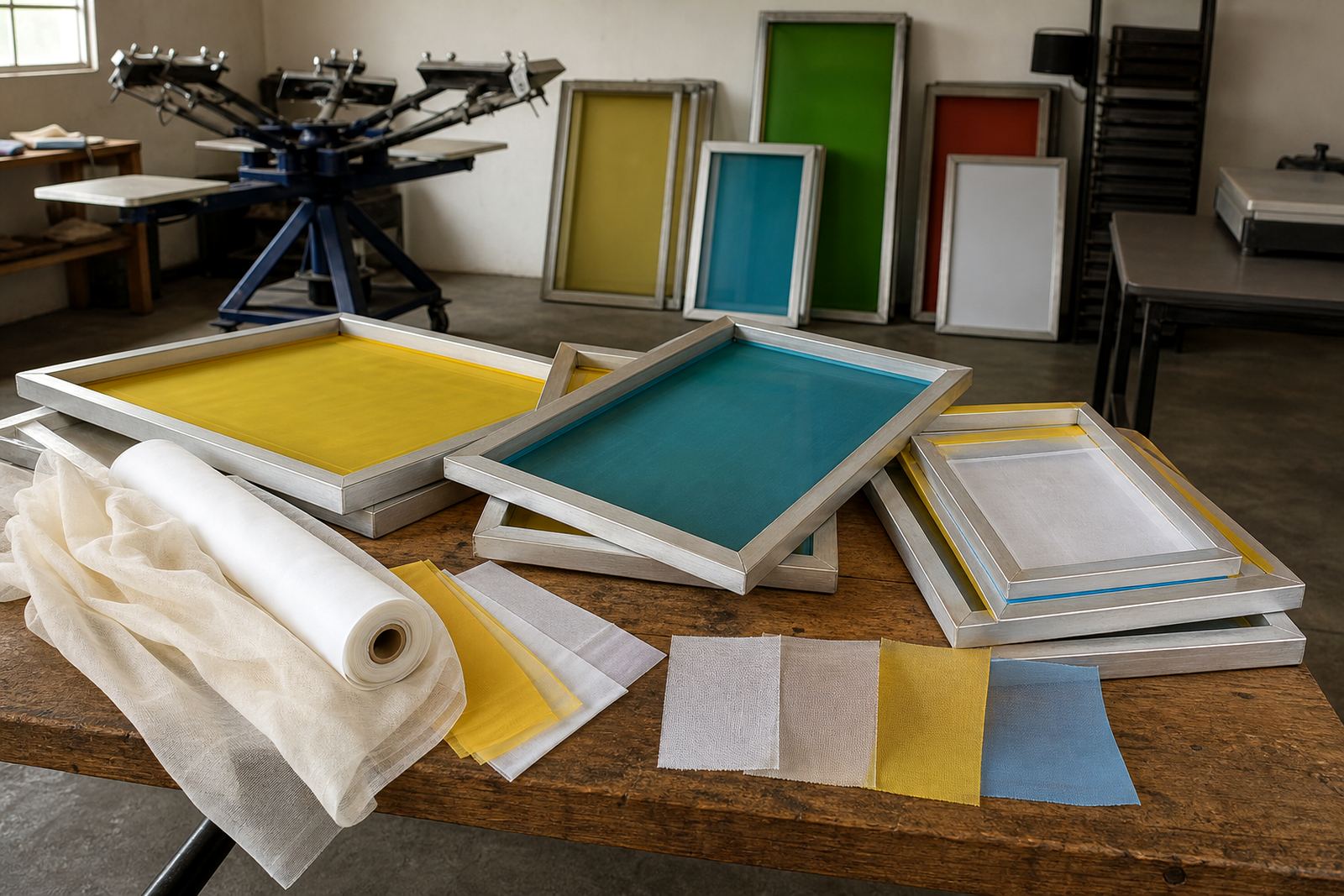
For most starter shops, it helps to think in layers. Coarser mesh is useful for heavier ink deposits on block prints and textile inks. Mid-range mesh suits general garment printing and clearer detail. Higher mesh counts are better when you need fine lines, halftones or a smoother ink laydown. If you are unsure, start with the counts that match the work you already know you can sell, then build from there.
- List your first 10 to 20 likely jobs
- Note the fabric type for each job
- Mark which artwork needs fine detail
- Separate textile work from speciality inks
Choose Mesh Counts That Match Real Production
Mesh count affects how much ink passes through the screen and how much detail the stencil can hold. A lower mesh count allows more ink through and is often used for heavier print deposits. A higher mesh count gives finer detail and a thinner ink layer. That is why one shop may keep a few different counts on hand rather than trying to print every job through the same screen.
For a starter shop, it is usually practical to cover a general range rather than chase every possible option. Count matching matters because the wrong mesh can waste time, cause poor edge definition or leave you fighting the print on press. If you print in Durban or Gqeberha, humidity can also affect your drying and storage routine, so it helps to keep mesh clean and dry between uses.
- Use coarser mesh for heavier ink deposits
- Use mid-range mesh for general garment work
- Use finer mesh for detail and halftones
- Keep separate screens for different ink types where possible
When in doubt, ask for mesh count matching before you commit to a batch. That makes it easier to set up repeat work without re-learning the screen each time.
Why Pre-Stretched Aluminium Frames Save Time
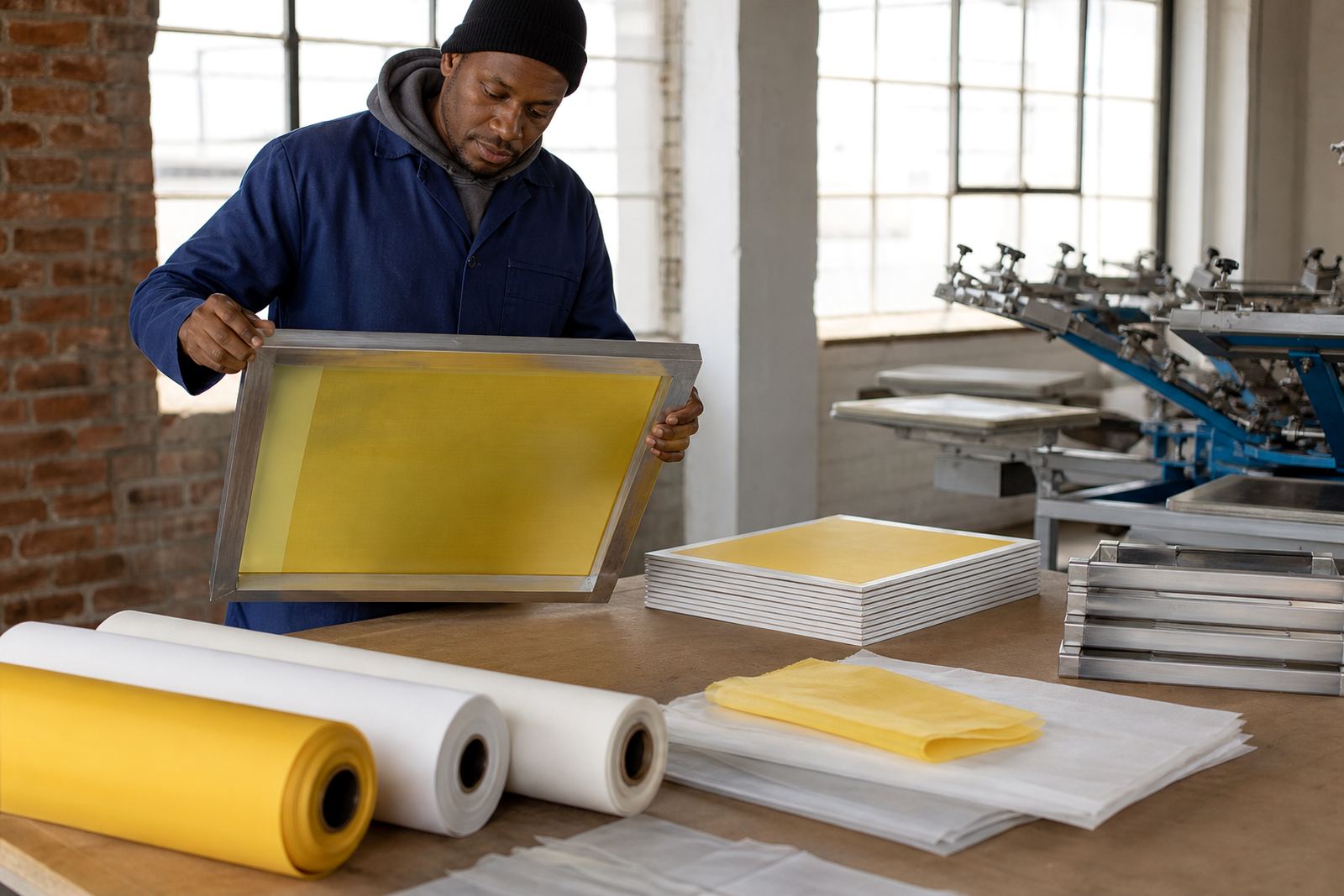
Pre-stretched aluminium frames are a practical choice for a shop that needs to get printing without spending hours on stretching and re-stretching by hand. A properly stretched frame gives more consistent tension across the mesh, which helps with cleaner image edges and easier registration on press. Aluminium also handles daily shop use well and is less prone to the movement you can get from timber in changing conditions.
In South African print rooms, temperature shifts, transport bumps and coastal moisture can all affect screen behaviour. Good tension gives you a more predictable print and reduces the chance of the mesh sagging too early. If you are working from Johannesburg or Pretoria, you may want a different setup than a coastal shop, but the principle stays the same: stable frame, even tension, cleaner print.
- Ask for frame sizing that suits your press and artwork
- Check that the mesh is evenly tensioned across the full screen
- Use aluminium frames for repeat use and cleaner handling
- Keep a spare screen or two for urgent jobs
A Simple First-Buy Stock List
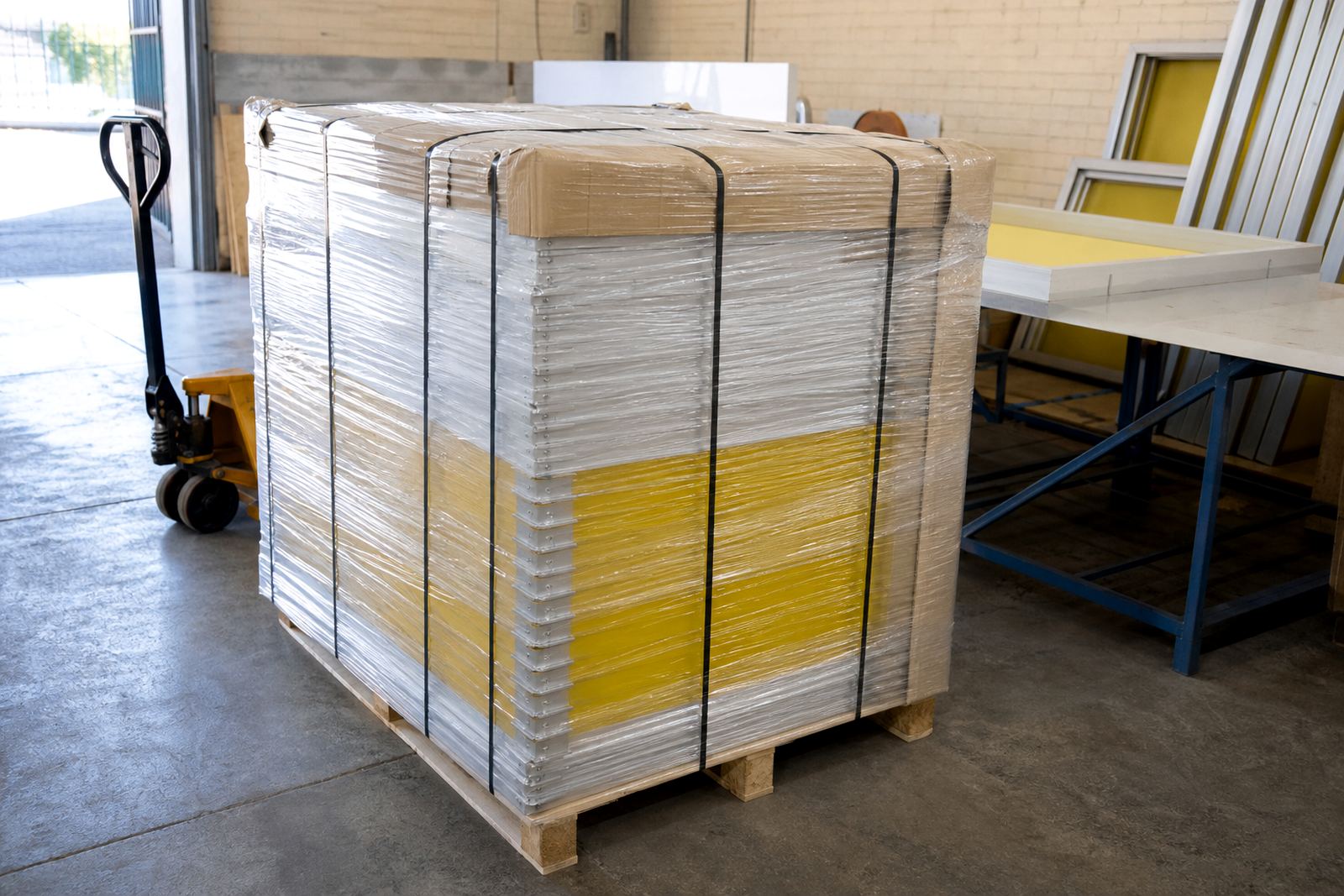
A starter shop does not need a warehouse full of screens. It needs the right screens, set up properly and ready for the jobs you are most likely to print. A balanced first buy usually includes a mix of mesh counts, a few frame sizes and enough extras to keep production moving when one screen is being cleaned or re-coated.
Think in terms of use, not just quantity. If you are doing smaller runs in Midrand or the East Rand, a modest set of reliable screens can carry you through the early months. It is better to have a smaller stock that prints consistently than a large pile of screens that are mismatched or poorly tensioned.
- General purpose screens for everyday textile work
- Finer mesh screens for detail and halftones
- A couple of larger or smaller frame sizes for different artwork
- Backup screens for repeat orders and rush work
- Clean storage space away from dust and moisture
Keep each screen labelled with mesh count, frame size and intended use. That small habit saves time when the shop gets busy and helps staff pick the right screen first time.
Set Up A Basic Screen Care Routine
Good screens last longer when the clean-up routine is steady. After each print run, remove ink properly, inspect the mesh for damage and check whether the tension still feels right. If you leave ink residue in the mesh or store screens while damp, you will see problems later with blocked mesh, weak print edges and avoidable rework.
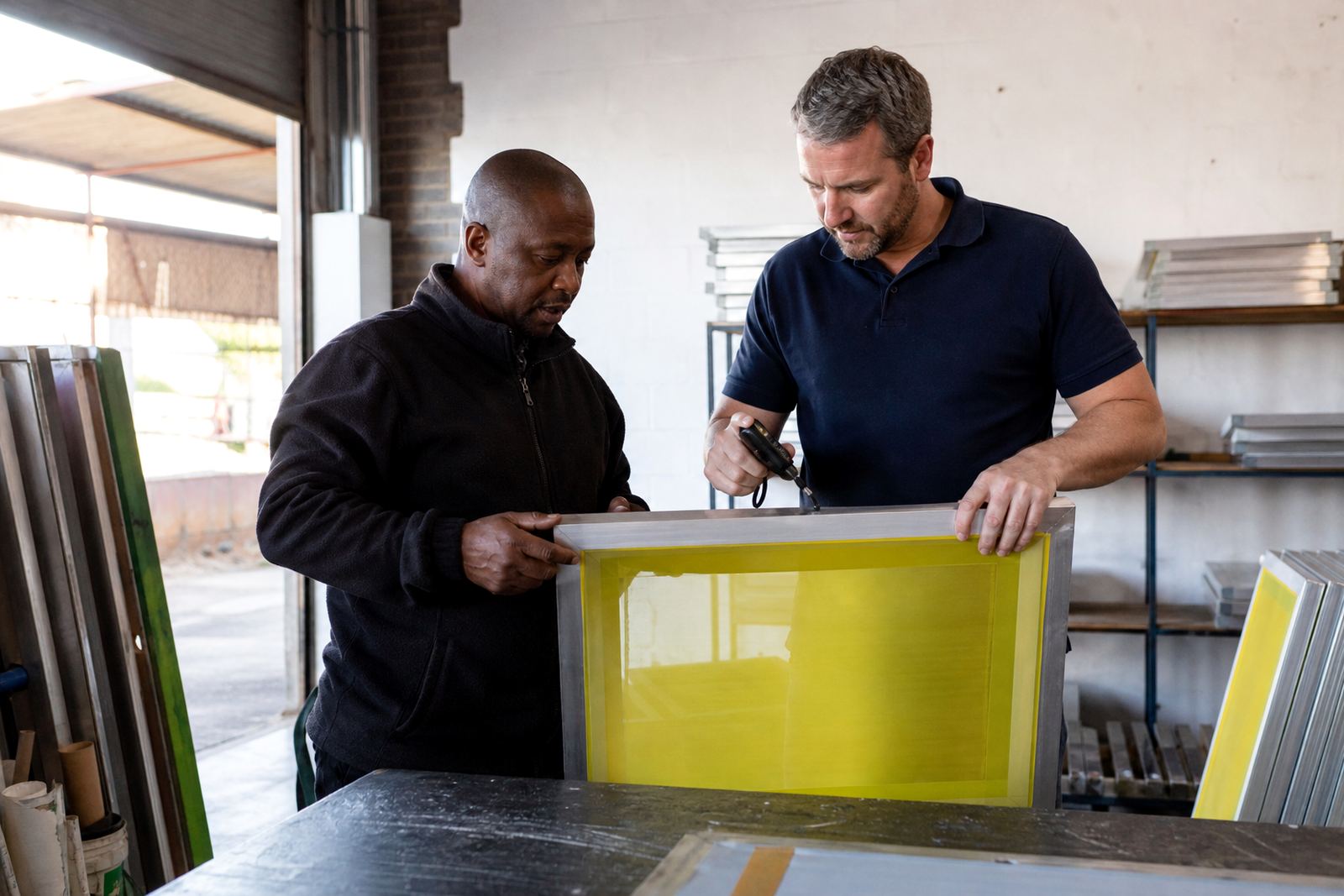
Screen inspection should become part of the daily close-down. That includes looking for pinholes, loose corners, frame damage and any build-up around the edges. For shops dealing with batch work, a short inspection before the next run can stop a full order from going off course. Screen setup advice is often most useful here because small adjustments early can save a lot of waste later.
- Clean screens as soon as the job is done
- Check for mesh damage before storing
- Keep screens flat or racked properly
- Separate used screens from ready-to-print screens
- Mark screens that need re-stretching or repair
When To Re-Stretch, Repair Or Replace
Even a good screen will need attention over time. If the tension drops, prints start losing sharpness or the mesh no longer recovers cleanly after a squeegee pass, it may be time for re-stretching. If the frame is sound but the mesh has worn out, re-stretching can bring it back into service. If the frame is damaged or badly out of shape, replacement may be the better route.
For small shops, the key is knowing the difference between a screen that can be saved and one that will keep causing trouble. Re-stretching works well when the frame is still solid and the mesh bond can be renewed properly. For repeat order service, it is worth keeping a few standard screens ready so your common jobs do not start from zero each time.
- Re-stretch when tension has dropped but the frame is still good
- Replace when the frame is bent, cracked or unstable
- Keep a log of screens used for repeat work
- Schedule checks before busy periods and large orders
A Practical Way To Order For The First Time
When you are ready to place your first order, keep the process straightforward. Share the type of work you plan to print, the garment range, the level of detail in the artwork and the frame sizes you need. That gives the supplier enough information to recommend a sensible screen mix without overcomplicating the order. If you are based in Johannesburg, Pretoria, Durban, Cape Town or Gqeberha, delivery planning should also be part of the discussion from the start.
At MeshMaster in Germiston, the focus is on helping small shops choose screens that fit real production needs. Whether you need new frame stretching, frame re-stretching, mesh count matching or custom frame sizing, the best results come from clear information and a simple setup plan. That way your first screens are ready for actual work, not just for storage.
- Share your main print type and fabric type
- Confirm the mesh counts you want to start with
- Check frame sizes against your press and artwork
- Ask about batch screen prep for repeat jobs