Why screen tension changes the print
Screen tension is the pull in the mesh after it has been stretched and fixed to the frame. If the mesh is too loose, the stencil can move slightly under the squeegee and your print may look soft, with poor edge definition and uneven ink laydown. If it is too tight for the frame or mesh type, the screen can become hard to work with and may lose tension quicker over time.
For South African print shops, especially where work is done in warmer rooms or near the coast, tension matters even more because heat and humidity can shift how a screen feels during the day. In Germiston and across Gauteng, many shops need screens that hold steady through a full shift, even during load-shedding when work stops and starts. That is why the frame, mesh count and stretching method all need to match the job.
Match mesh count to the artwork before you order
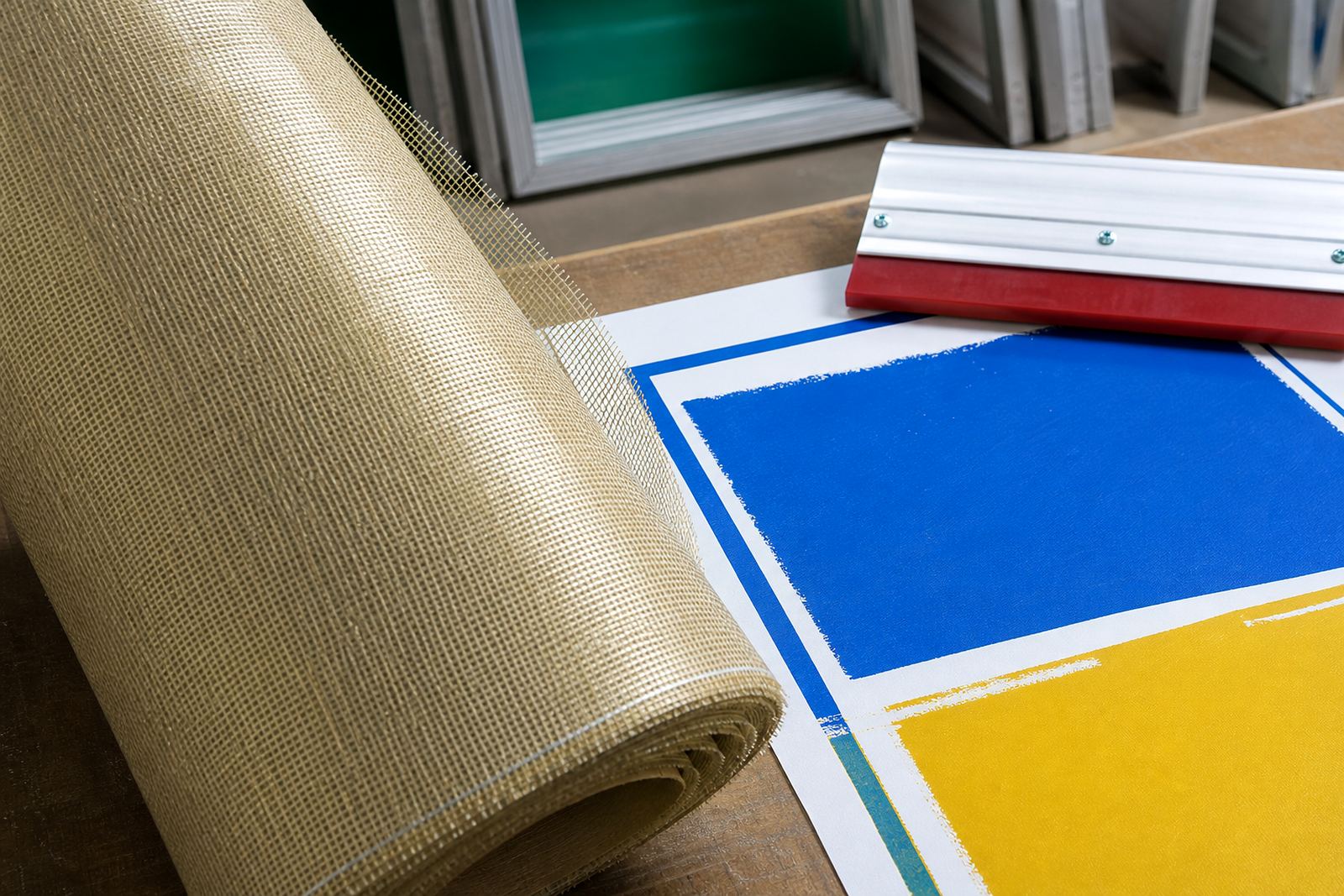
Mesh count refers to how many threads are in the mesh over a set area. A lower mesh count gives more ink pass and is often used for thicker ink deposits, while a higher mesh count gives finer detail and better control for sharper artwork. The right choice depends on the ink, the substrate and the level of detail in the design.
Before placing an order, discuss the following points:
- The type of ink being used, such as textile, solvent-based or water-based systems
- The level of detail in the artwork, especially fine text and halftones
- The material being printed, for example fabric, board or rigid promotional items
- Whether the job needs a heavier deposit or a cleaner, finer finish
- How often the screen will be reused in repeat production
If the mesh count is wrong, even a well-made screen can underperform. A correct match saves time in setup and gives a more predictable result on press.
What to check on a pre-stretched frame
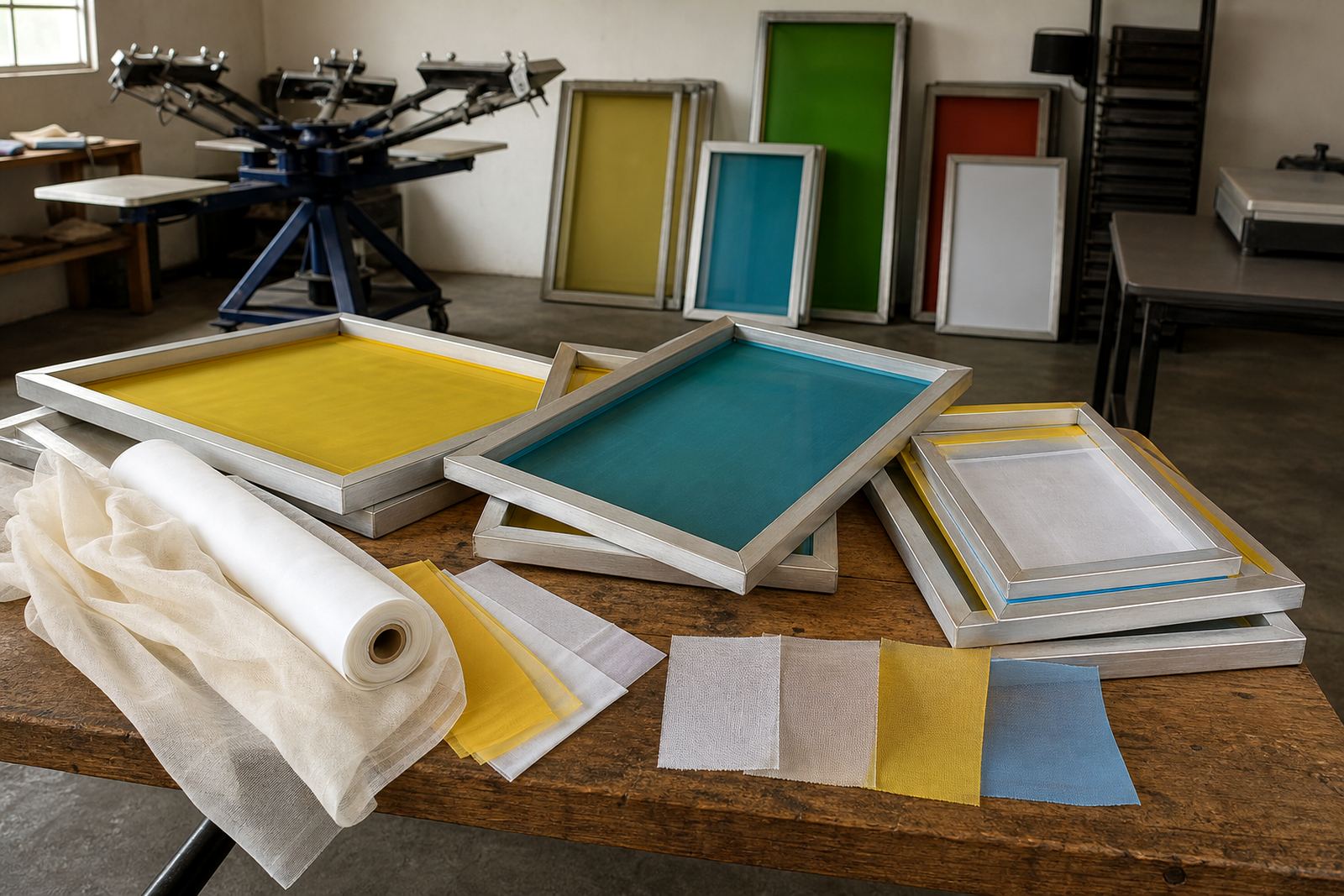
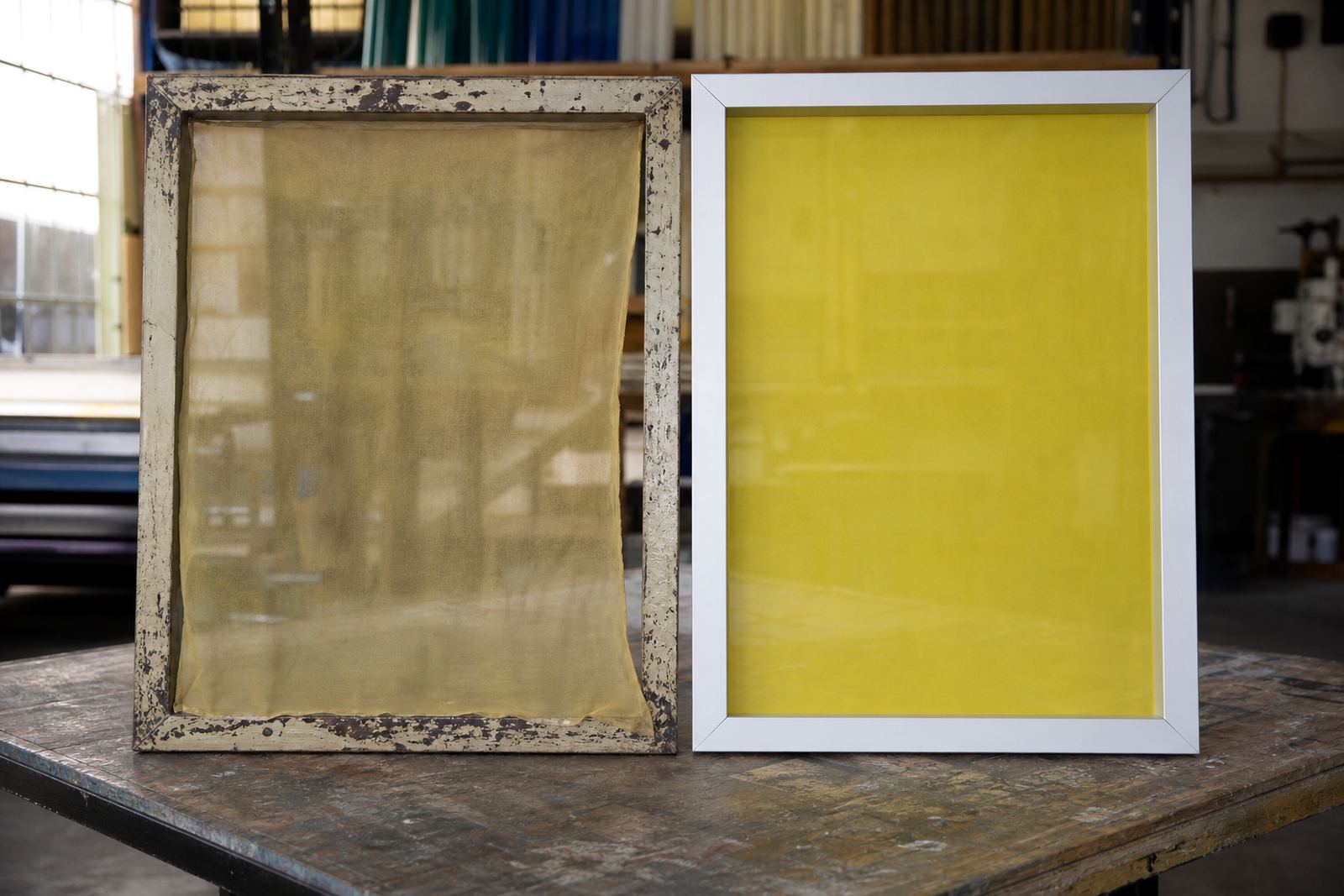
A pre-stretched aluminium frame should arrive square, clean and ready for mesh bonding or direct use depending on the service required. The corners should hold firm, the frame should sit flat and the surface should be suitable for bonding without oil, old adhesive or damage. If the frame twists easily or the sides are not true, tension can vary from one area to another.
When checking a frame, look for these basics:
- Even tension across the full mesh area
- Solid frame corners and straight sides
- Clean surfaces for proper mesh bonding
- Enough clearance for your press and clamp setup
- A size that suits the artwork and screen opening
Custom frame sizing helps when standard sizes do not suit the press, the artwork or the repeat job. For shops in Durban or Cape Town, a properly made aluminium frame also helps with coastal humidity, where timber and older materials can shift more easily.
How to talk about tension when placing an order
When you send through an enquiry, it helps to be clear about the intended use of the screen. You do not need technical jargon, but the more detail you give, the easier it is to match mesh and frame correctly. Mention the job type, the ink system, the artwork size and whether you need new stretching or re-stretching on an existing frame.
Useful order details include:
- Mesh count or the style of print you are aiming for
- Frame size, including the outside dimensions if known
- Whether the screen is for repeat use or a once-off run
- If you want tension checking before dispatch
- Any special packing needs for long-distance transport
This kind of information reduces back-and-forth and helps us suggest the right setup from the start. It also makes repeat order service much easier when the same screen specification is needed again.
Signs that a screen needs re-stretching
Even a good screen will lose some tension over time, especially if it has been washed often, stored badly or left in a hot area. You may notice that the print starts to gain detail loss, the squeegee feels heavier, or the stencil seems to sit less cleanly on the substrate. In some cases the mesh may show slack areas near the edges or small distortions in the print image.
Re-stretching is worth considering when:
- The print quality drops even though the artwork and ink have not changed
- The mesh has become uneven after repeated cleaning
- The frame is still sound but the mesh no longer performs well
- You need better consistency for batch screen prep
- The screen has been repaired before and still does not hold properly
For shops in Johannesburg, Pretoria or Midrand, re-stretching can be a practical way to extend the life of a good frame instead of replacing the whole unit.
Simple pre-press checklist for better tension control
Good tension starts before the screen reaches the press. Keep the screen clean, store it flat where possible and avoid stacking heavy items on top of frames. During busy production periods, a quick inspection before printing can save a lot of rework.
Use this quick checklist:
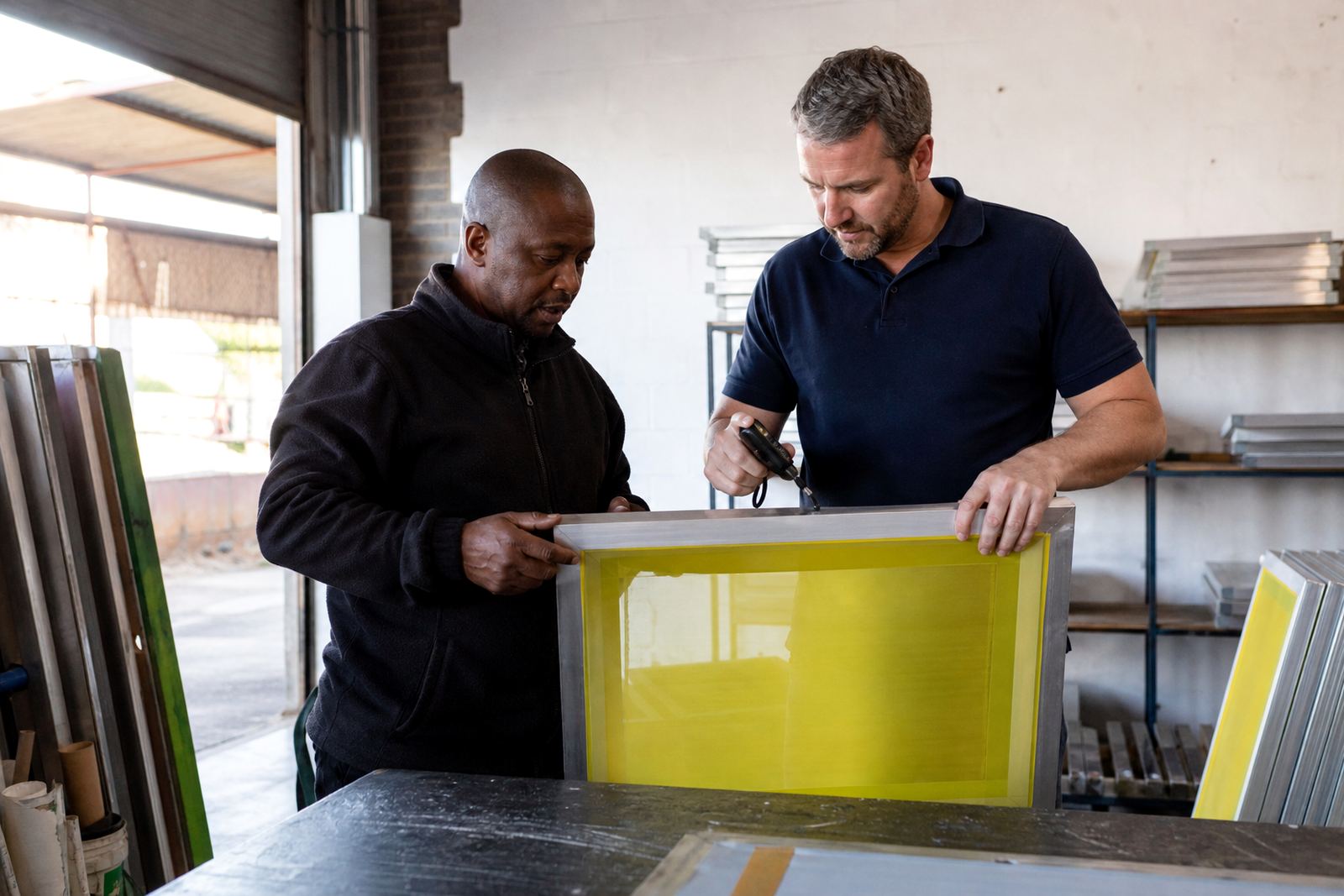
- Check the mesh for damage, slack spots or pinholes
- Confirm the frame is square and not warped
- Make sure the stencil area is clean and dry
- Look at the tension after cleaning and before each new run
- Keep a note of which mesh count worked best for each job type
If your team works through power cuts or split shifts, it is useful to keep screens covered and stored out of direct sun so the tension stays predictable. A little care at this stage helps the screen last longer and print more evenly.
Getting the right advice before you order from Germiston
From our Germiston base, we supply screen-printing mesh and pre-stretched aluminium frames to print shops across South Africa, including Johannesburg, Pretoria, Durban, Cape Town and Gqeberha. The right screen choice depends on how you print, what you print on and how fine the finished result must be. That is why we always recommend discussing the job before placing an order.
Whether you need new frame stretching, mesh count matching, tension checking or screen setup advice, a clear brief helps us prepare the right screen for the work ahead. If you are unsure about mesh count or tension, send the details through the enquiry form on our contact page and we will help you work through it step by step.