Start with the print area, not the outside frame
Before you choose a frame size, measure the area you actually need to print. Many shops start with the garment or substrate size, then allow space for the image, off contact, clamps and registration marks. A frame that is too small can limit your artwork placement and make repeat jobs awkward. A frame that is too large can take up unnecessary space on the press and in storage.
For screen printing, the useful measurement is the inside print window created by the mesh area, not just the outside aluminium size. Allow enough clear mesh for your design plus border space on all sides. That extra border helps during coating, exposure, washing out and tension holding. If you are printing on A4, A3, shirts, tote bags or signage panels, the same rule applies: size the screen to the job, not the other way around.
- Measure the artwork size in millimetres, not only in paper size terms.
- Allow border space around the image for emulsion, tape and handling.
- Check that the frame fits your press arms or clamps without fouling.
- Leave room for registration marks if you run multi colour jobs.
Match frame size to your press and workshop flow
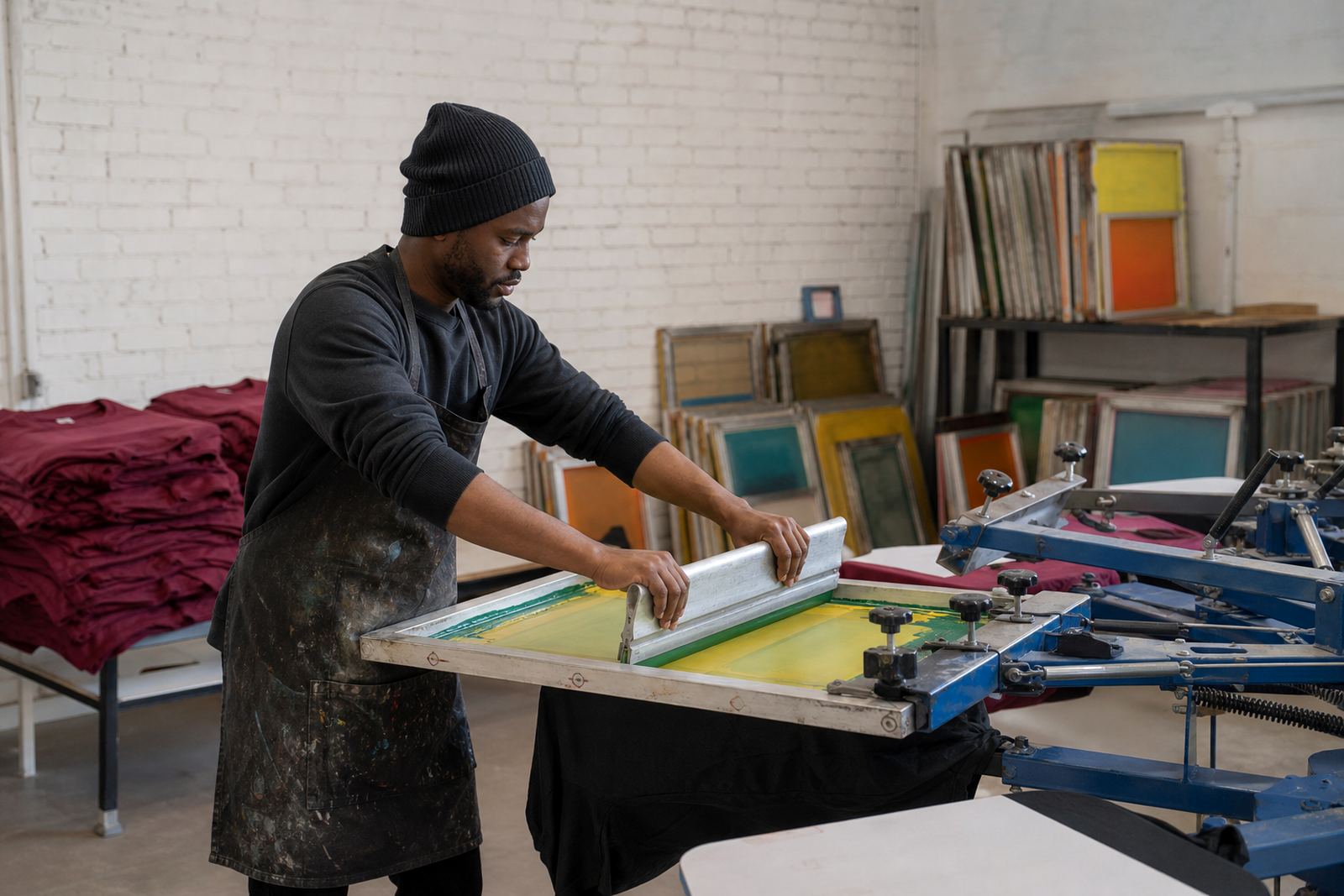
Your press layout matters just as much as the artwork. A manual press with limited platen spacing may need a more compact frame so screens can swing and lock in easily. Larger presses can handle bigger frames, but that does not mean every job should use the largest option. In a busy workshop, the right frame size should load quickly, store neatly and move between prep, exposure and printing without slowing the team down.
For Germiston, Johannesburg and the East Rand, many shops work with mixed orders through the week. One day may be small one colour runs, the next day larger bulk orders for Durban, Cape Town or Gqeberha. In that kind of workflow, having a few standard frame sizes ready saves time. Keep sizes that suit your common artwork ranges and press spacing, then use custom sizing for special jobs.
- Check the clamp opening and screen clearance on your press.
- Make sure the frame does not block squeegee movement or flood stroke.
- Plan for how screens will be stacked, labelled and stored.
- Choose sizes that suit your most common repeat orders first.
Choose a size that supports the mesh count you need
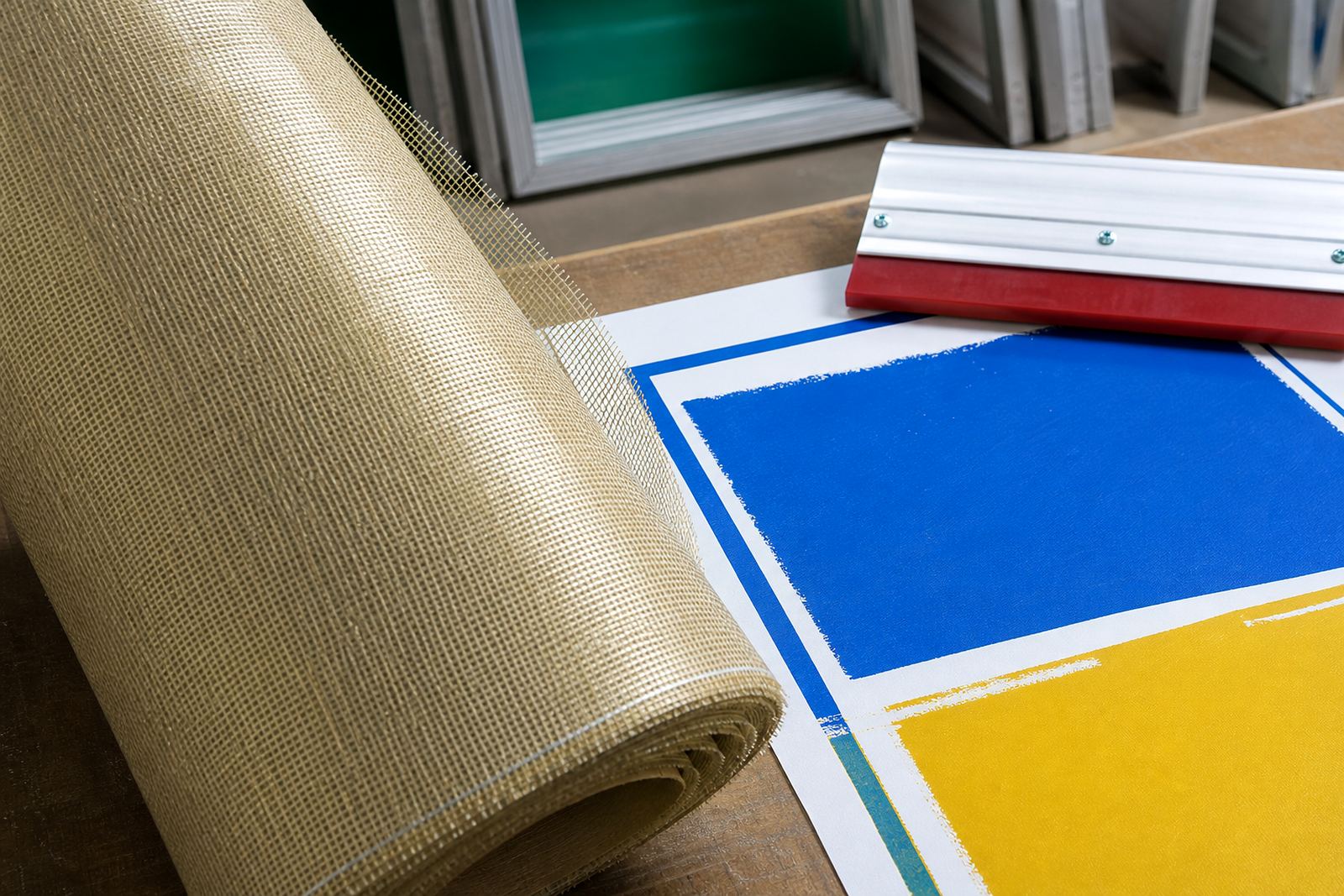
Frame size and mesh count work together. Finer mesh counts are often used for detailed artwork, halftones and thinner inks, while coarser mesh counts are better for heavier deposits and bolder prints. The frame must hold the mesh with even tension across the full area. If the frame is too small for the artwork, you may struggle to keep enough open print area while still maintaining the right tension in the mesh.
In practical terms, the bigger the image area, the more important it is to keep tension consistent from edge to edge. Poor tension can show up as blurred detail, uneven ink deposit or images that shift during longer runs. A properly selected frame size gives the stretch room it needs so the mesh count performs as expected.
- Use finer mesh where detail and sharp edges matter.
- Use coarser mesh where a heavier ink deposit is needed.
- Make sure the mesh count and frame size suit the same job, not separate guesses.
- Ask for tension checking if the screen will be used for repeat production.
When custom frame sizing makes more sense
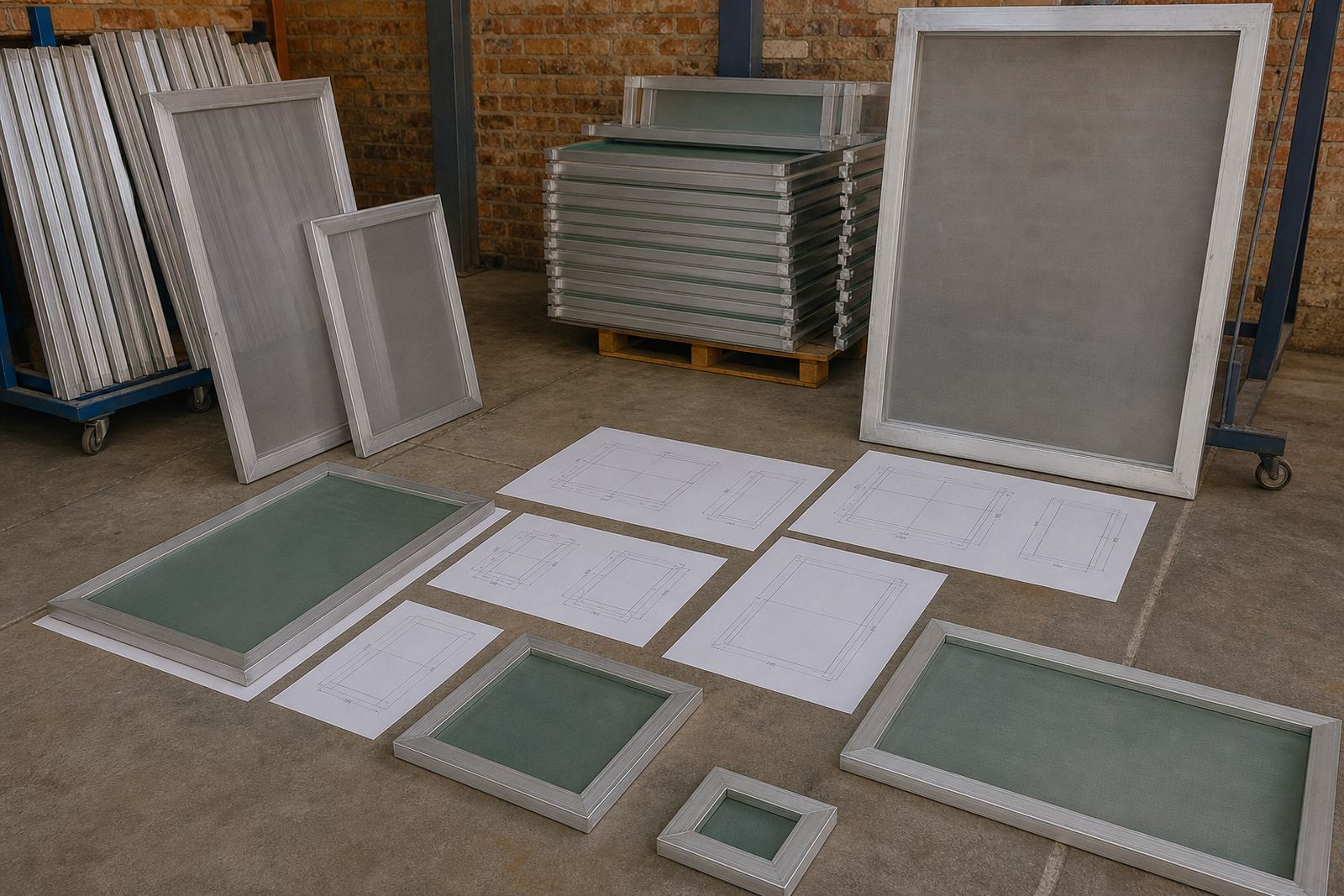
Standard sizes are useful, but some jobs need a frame built around the artwork and the press rather than around a common pattern. Custom sizing helps when you print odd shaped graphics, oversize panels, narrow long layouts or work that must sit within a specific platen arrangement. It also helps if your workshop has a fixed storage system and you want screens that stack cleanly.
Custom sizing is especially useful for shops handling mixed product ranges such as T shirts, corrugated board, bags and labels. A frame that suits one item might waste time on another. If the frame can be sized to suit your actual print footprint, you get better use of the mesh and fewer awkward set ups. This is useful for shops in Pretoria, Midrand and Cape Town where work often needs to move fast and space can be tight.
When a custom size is worth it:
- The artwork is longer or wider than your usual jobs.
- You need consistent registration across repeated prints.
- Your press has specific clamp spacing or clearance limits.
- You want cleaner storage and easier handling in a small prep area.
Check tension, frame condition and re-stretch options
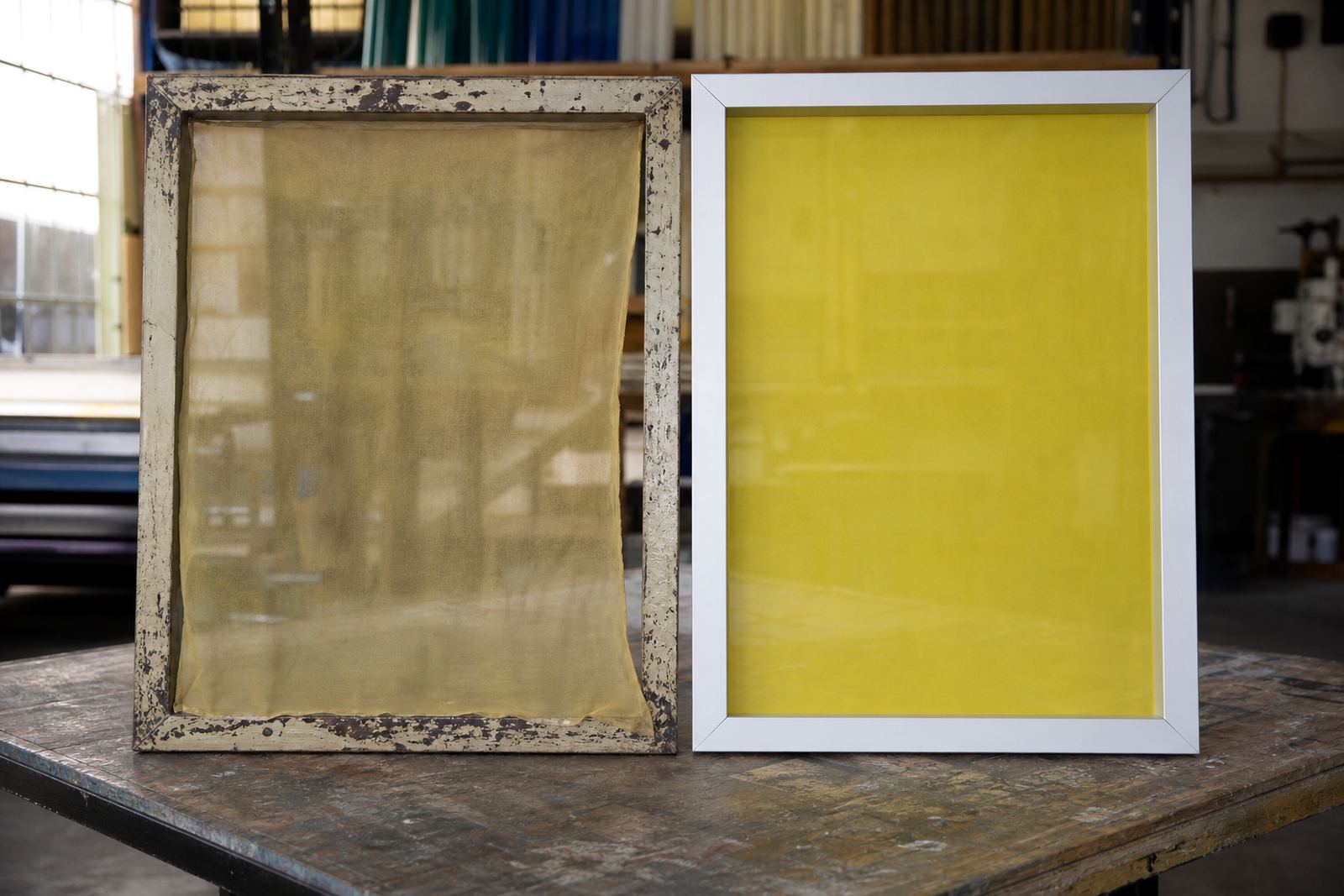
A frame size only works well if the frame is straight, clean and able to hold proper tension. If the aluminium is bent, the corners are loose, or the mesh is lifting, the screen will not print consistently no matter how good the artwork is. Before you choose a new frame size, look at the condition of your current screens and decide whether a re-stretch is enough.
Frame re-stretching can be the practical choice when the frame is still sound but the mesh has lost tension. It is also worth checking whether the frame surface is ready for new bonding and whether the mesh can be cleaned and prepared properly before stretching. For shops working through load-shedding, or printing near the coast where humidity can affect prep and drying times, a neat and orderly screen prep process helps reduce problems later. A screen that starts right tends to stay right.
- Look for warped corners or damaged joins.
- Check for old adhesive, ink or mesh residue on the frame.
- Confirm the frame can hold even tension after re-stretching.
- Use frame inspection before placing repeat orders on the same size.
A simple checklist before you place an order
If you are unsure about frame size, work through a basic checklist before you send an enquiry. This helps avoid mismatched screens and wasted prep time. It also gives the team enough information to match the frame to your artwork, your press and the way you run jobs day to day. The more clearly you define your needs, the easier it is to match mesh count and frame dimensions properly.
Checklist for choosing a frame size:
- Artwork dimensions, including bleed or borders.
- Type of press and available clamp or platen space.
- Usual mesh count for the job type.
- Whether you need new stretching or re-stretching.
- Whether the job is single colour, multi colour or repeat production.
- Storage space available in your workshop.
If your shop serves Johannesburg, Pretoria, Durban, Cape Town or Gqeberha, it helps to keep a few standard sizes on hand and use custom sizing where needed. That way you can handle both quick turnaround work and planned production without making every screen a special case.