
Start With The Substrate, Not The Mesh
Before you choose a screen, look at the sign material first. Foamex, PVC board, ACM panels, polycarbonate sheets and other rigid substrates all behave differently under ink and squeegee pressure. Smooth surfaces often need finer mesh and thinner ink layers, while textured or darker boards may need a heavier deposit for solid coverage.
In Germiston and other busy production areas, many shops run mixed signage jobs in the same week. That means the screen decision should be made from the print requirement, not just from what is already in the rack. If the job is for fine type, small logos or tight halftones, the mesh count needs to support detail. If the job is for block colour, spot colour or a primer layer, you may need a more open mesh that can lay down enough ink without forcing too many passes.
As a simple rule, the smoother and finer the artwork, the higher the mesh count should generally be. The rougher or more absorbent the substrate, the more you need to check ink flow, coverage and curing time, especially in warmer inland conditions where ink can start to skin faster than expected.
Choose Mesh Count For The Detail You Need
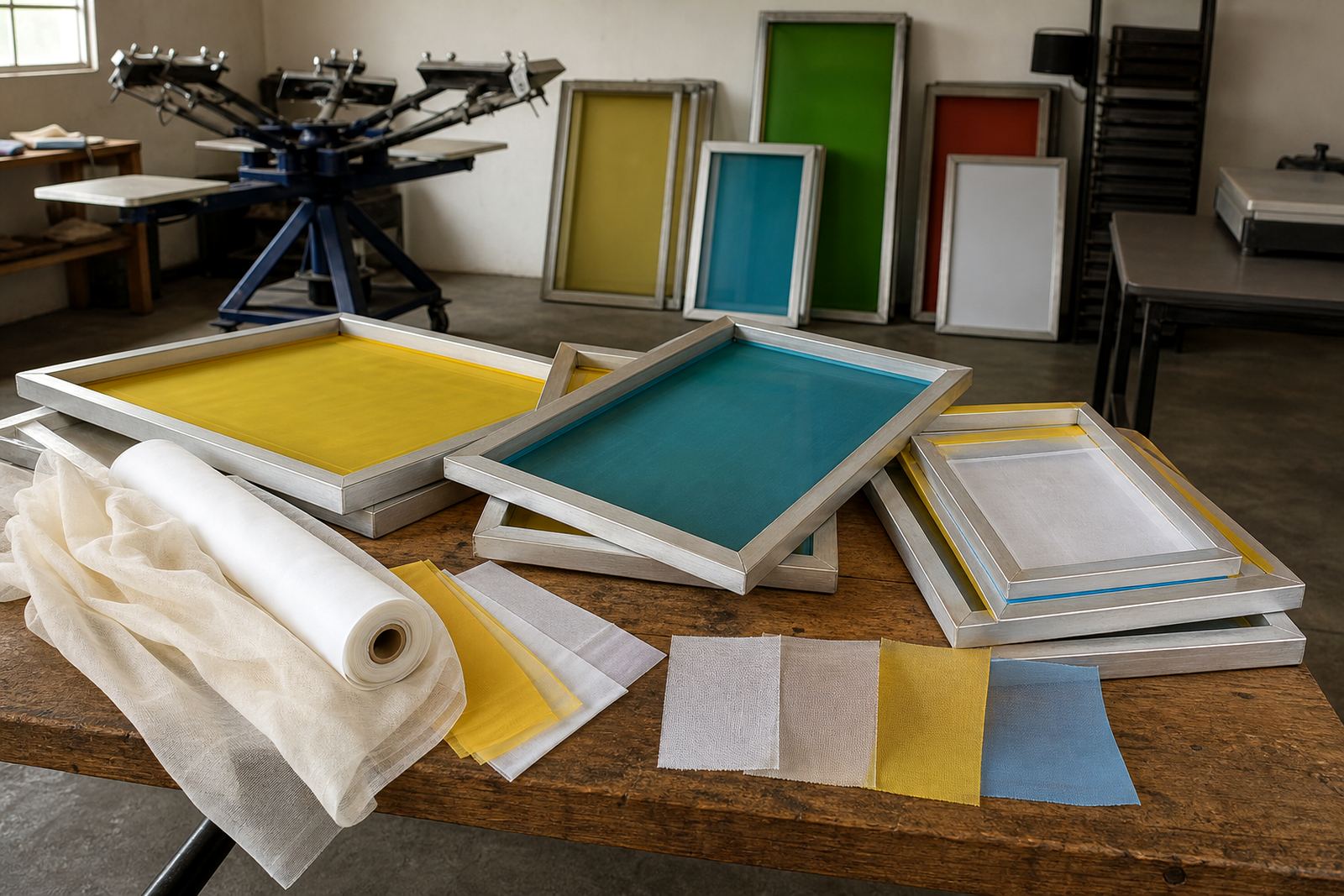
Mesh count affects how much ink passes through the screen and how sharp the image will be. Lower counts allow more ink through and suit bold graphics, underbases and some opaque work. Higher counts hold finer detail and are better for line work, small text and crisp edge definition. The right choice depends on the artwork, the ink system and the finish required on the board.
For signage work, it helps to think in practical groups rather than chasing a number alone. A shop doing general rigid sign printing may keep several counts ready for different tasks. If the artwork includes fine gradients or detailed lettering, the screen has to carry those details without flooding the image. If the artwork is simple and bold, the screen should still release ink evenly across a full panel.
- Use finer mesh for small text, fine lines and sharp edge detail.
- Use medium mesh for most general sign graphics and mixed-detail artwork.
- Use more open mesh when the job needs a heavier ink deposit or better opacity.
- Match the mesh count to the ink type, not just to the artwork size.
- Check whether the sign will be viewed close up or from a distance.
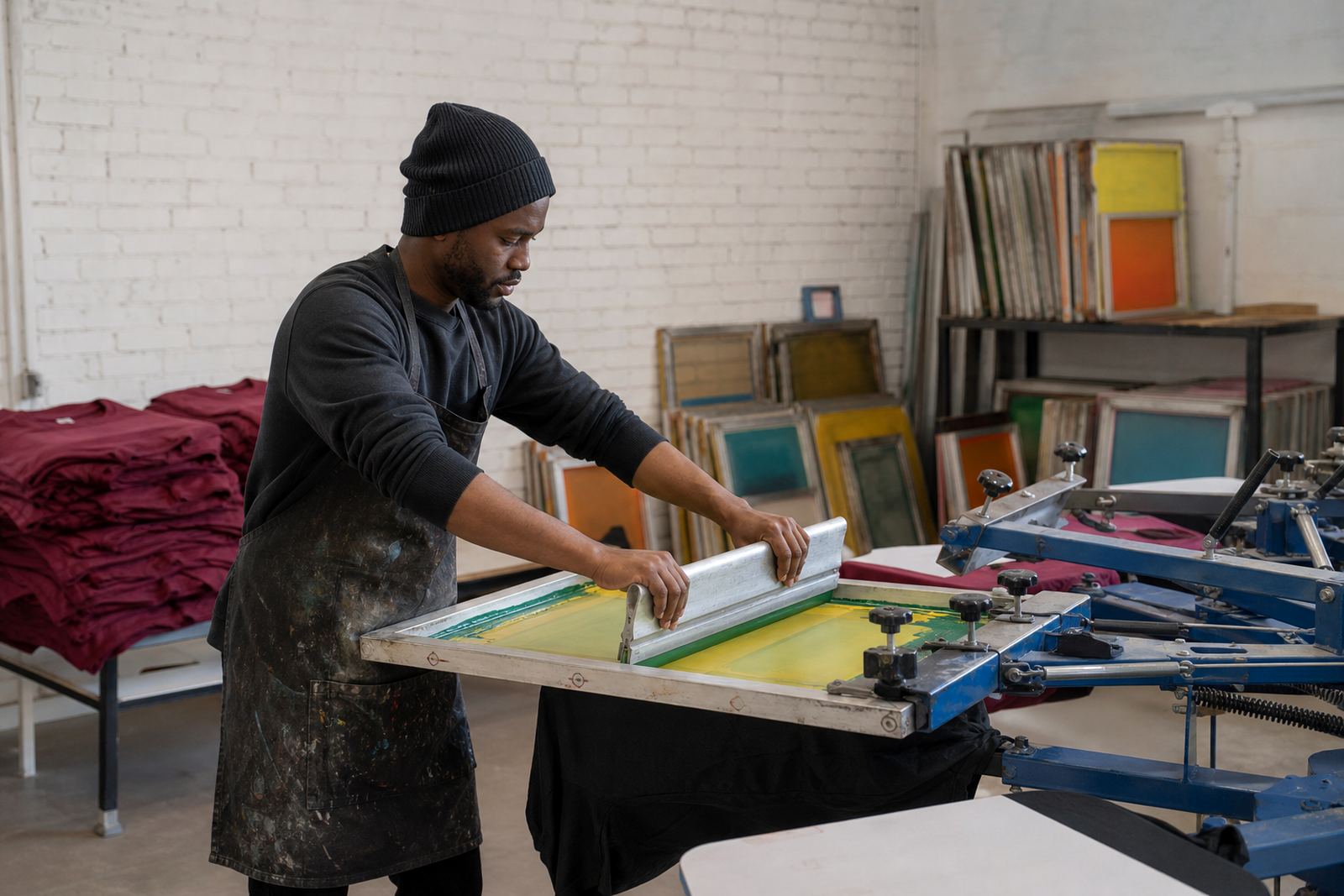
A quick test print on the same substrate is often worth more than guessing. If the image looks soft, the mesh may be too open or the tension may be inconsistent. If the print looks starved, the mesh may be too fine for the ink deposit you need.
Frame Tension Matters More Than Most Shops Think
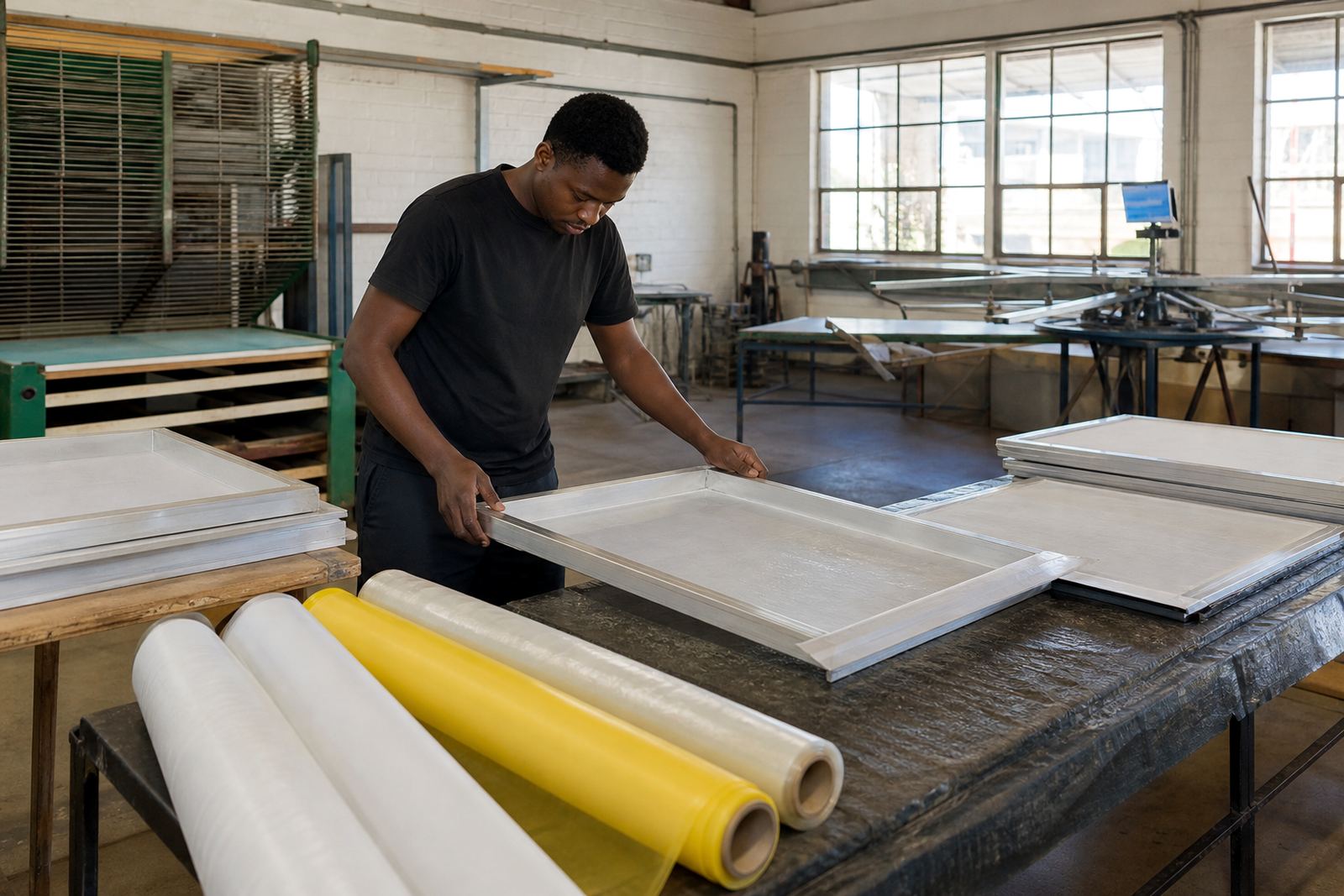
A pre-stretched aluminium frame is only useful if it holds consistent tension across the full area. Uneven tension can cause image distortion, poor registration and ink build-up at the wrong points on the stencil. For rigid sign work, that becomes a problem very quickly because boards show faults clearly. There is nowhere to hide a wavy edge or a stretched letter.
Good tension gives better snap-off, cleaner prints and more repeatable results across a run. It also helps when the same screen is used for repeat orders, because the screen behaves the same from one job to the next. In South African print shops where load-shedding can interrupt the day, it is useful to have screens that stay stable and ready to go when the press starts again.
When checking a frame, look at the corners, the mesh bond and the overall pull across the screen. A frame should feel even from edge to edge, with no soft spots that may cause registration drift. If a frame has been in use for a while, re-stretching can bring it back into service when the frame itself is still sound.
A Practical Screen Setup Checklist For Sign Jobs
Before you start a rigid sign run, set the screen up with the end use in mind. The print area, board size and artwork placement all affect how the screen should be prepared. A clean frame and properly bonded mesh can save time later when you are dealing with multiple sheets or panels.
- Confirm the board size and the print area before stretching or mounting the screen.
- Check the mesh count against the artwork detail and the ink deposit needed.
- Inspect the frame for damage, bent corners or loose bonding.
- Make sure the stencil area is clean, dry and free from dust or tape residue.
- Confirm register marks if the job needs more than one colour.
- Check that the screen is free from pinholes and unwanted light leakage.
- Keep a spare screen ready if the job is time-sensitive or repeating.
For sign printers working across Johannesburg, Pretoria, Durban, Cape Town and Gqeberha, planning the setup is often the difference between a tidy run and a day spent correcting avoidable faults. A screen that is prepared properly gives you a better starting point before the first board even enters the line.
When To Re-Stretch, Replace Or Keep Using The Frame
Not every worn screen needs to be thrown out. In many cases, the mesh is the part that has aged while the aluminium frame is still fine. If the frame is square, clean and structurally sound, re-stretching can be the sensible choice. If the frame is bent, badly damaged or no longer holds tension evenly, replacement may be the better option.
Signs that a screen needs attention include sloppy print edges, loss of image sharpness, repeated registration movement and visible mesh fatigue. Coastal humidity can also affect storage and handling, especially in places like Durban and Gqeberha, where screens need to be kept dry and well protected from dust. Inland, heat and dust can be just as troublesome if screens are left exposed in a busy workshop.
A short inspection before every repeat order helps keep the workflow steady. Look for mesh damage, blocked areas, weak bond lines and any frame twist. If the screen is clean and the tension still holds, it can go back into production. If not, it is better to sort it before the next run starts.
How MeshMaster Supports Signage Screen Preparation
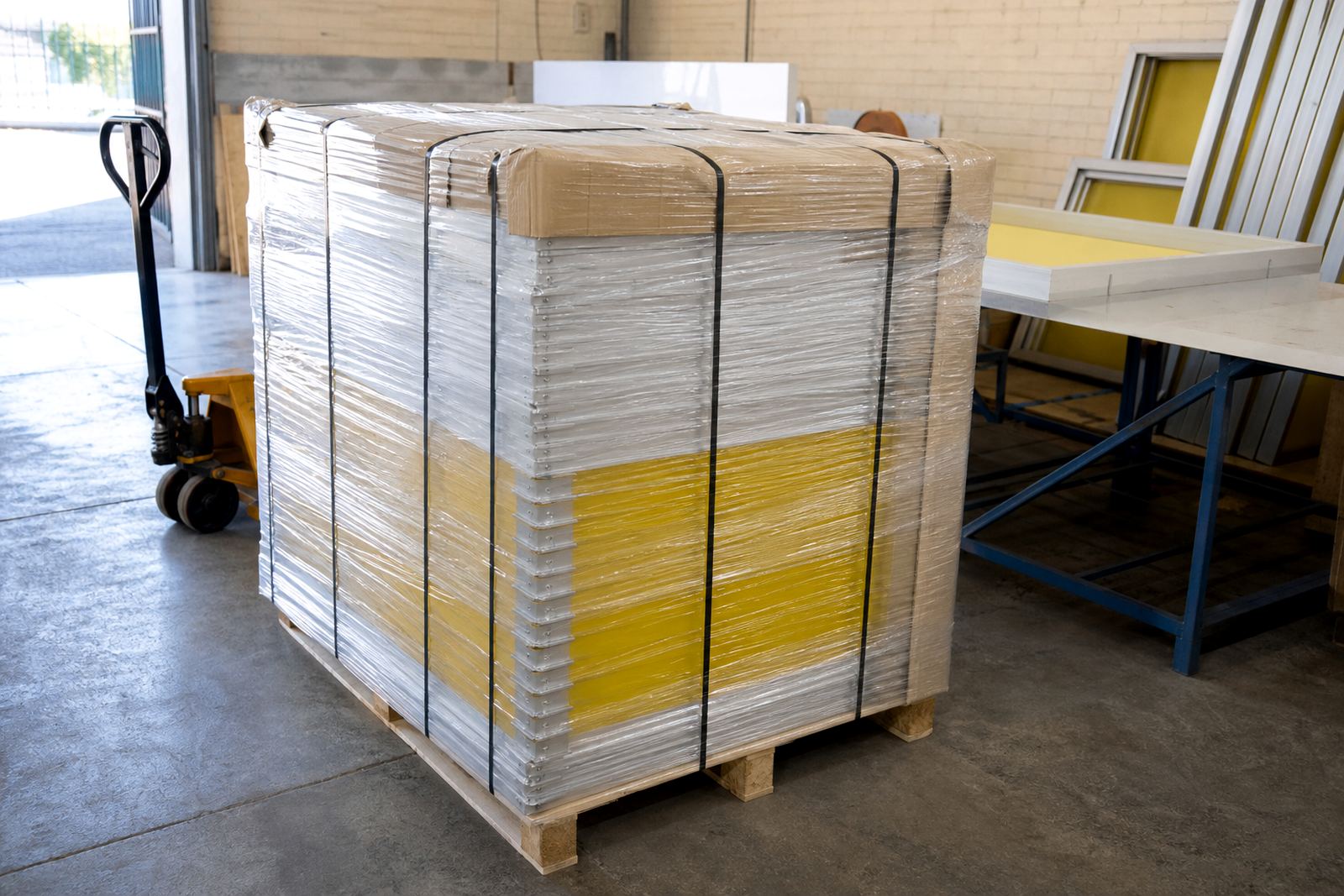
MeshMaster supplies screen-printing mesh and pre-stretched aluminium frames from Germiston, Gauteng for print shops across South Africa. We work with shops that need new frame stretching, frame re-stretching, mesh count matching, tension checking, frame clean prep, mesh bonding, custom frame sizing, batch screen prep, screen inspection, dispatch packing, repeat order service and screen setup advice. The aim is simple: give printers a practical starting point for sign work on rigid substrates.
For buyers comparing screen formats, it helps to think about the whole process, not just the mesh on its own. The mesh count, the frame size, the tension and the stencil condition all work together. When those parts are matched properly, the screen is easier to use, easier to repeat and less likely to waste material.
Whether you are setting up for a one-off board or a repeat signage run, the right screen format should support clean print quality and steady production. If you are unsure which count or frame format fits your next job, use the enquiry form on our contact page and ask for guidance based on the artwork and substrate.