Start With the Print Job, Not the Mesh Count
Before you order ready screens, match the screen to the job. A solid spot colour print for workwear needs a different setup from fine halftones on fashion garments. In garment printing, the mesh count controls how much ink passes through, so the first step is always to look at the artwork, the ink type and the fabric.
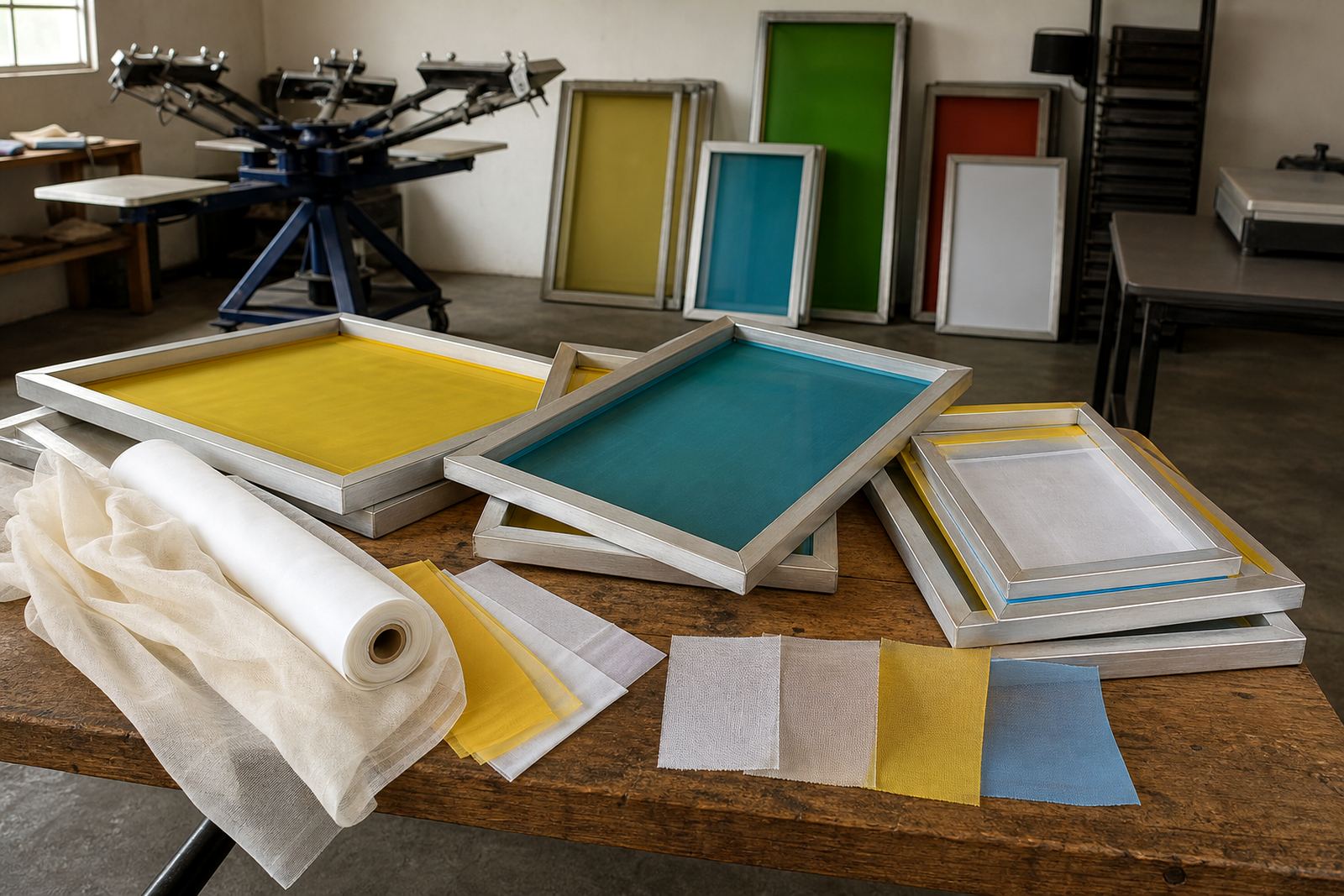
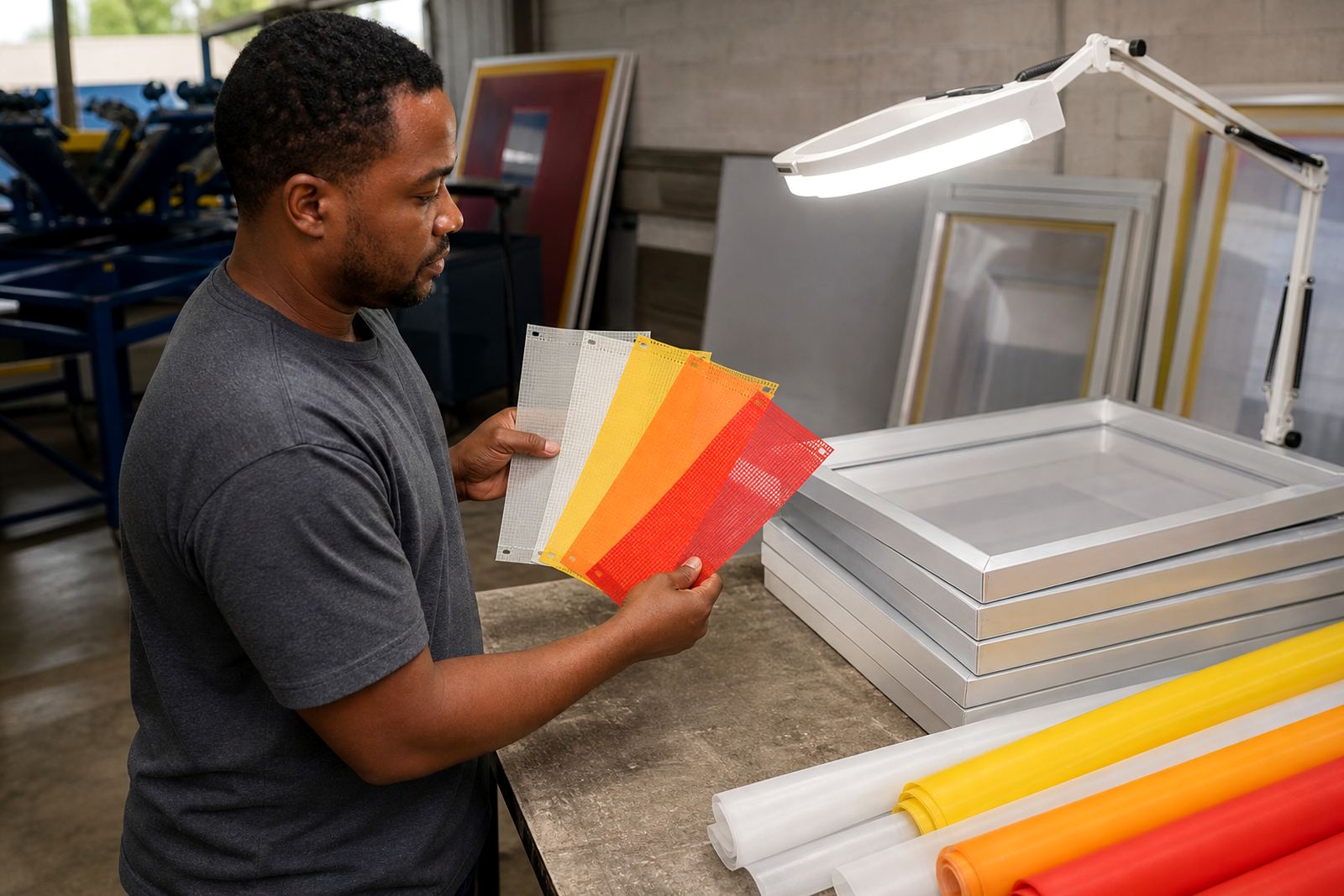
Lower mesh counts let more ink through and suit bold prints, underbases and heavier deposits. Higher mesh counts give better detail and cleaner edges for small text, fine lines and delicate halftones. If your shop handles mixed orders each week, keep a few common mesh options on hand so you are not forced to make one screen do everything.
- Use lower mesh for heavy ink deposits and opaque base layers
- Use medium mesh for general garment work and everyday spot colour jobs
- Use higher mesh for detail, fine line work and halftone printing
- Check the garment type, because polyester, cotton and blends behave differently
Know What Ready Screens Should Feel Like
A ready screen should arrive clean, square and tensioned for repeat use. When the frame is properly stretched, the mesh feels even across the whole surface, not loose in one corner and tight in another. Good tension helps with registration, cleaner print edges and easier flooding on press.
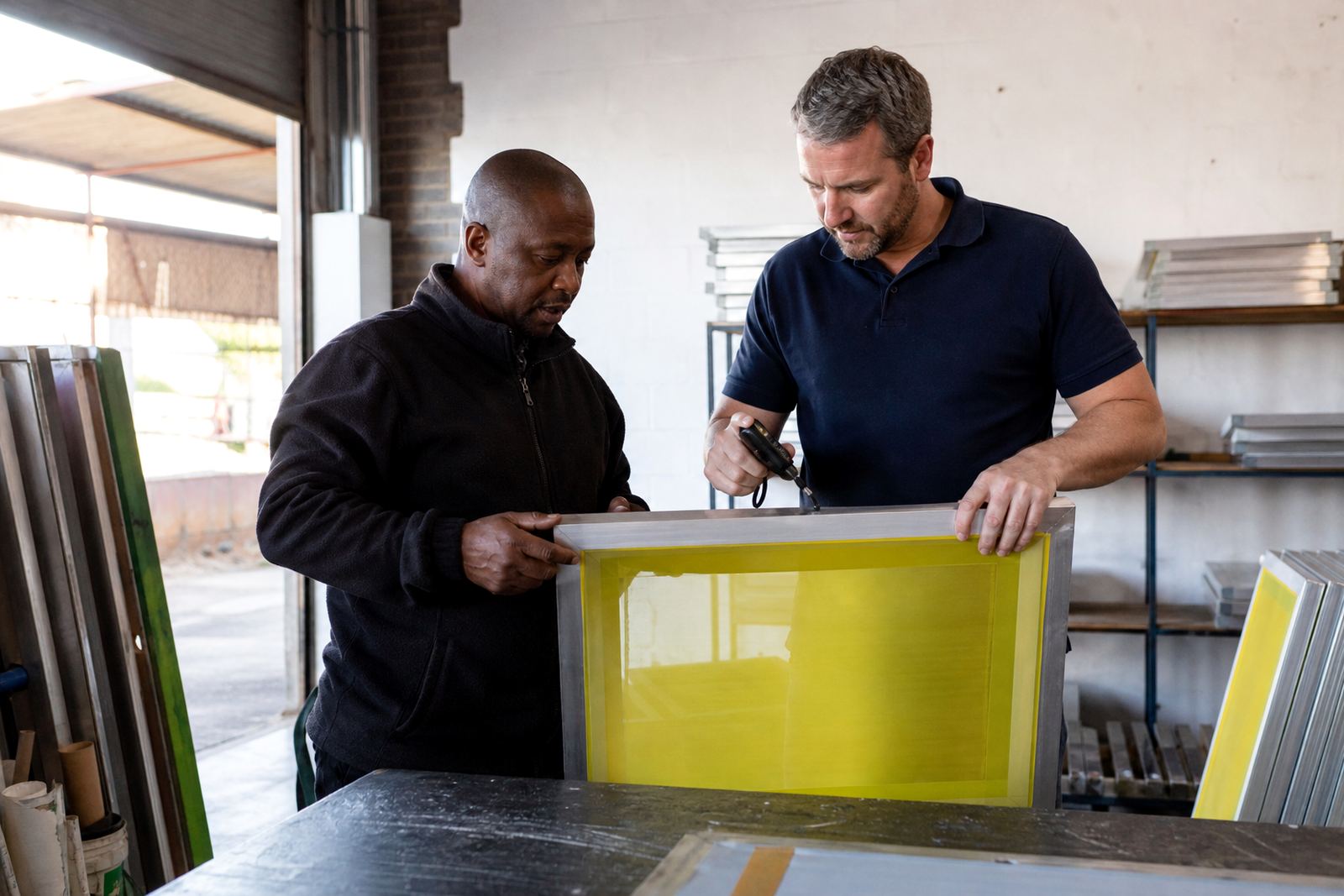
For busy print shops in Johannesburg, Pretoria and Durban, ready screens save time when production gets tight. You should still inspect each one before it goes into the line. Look at the frame corners, check for glue lines that are neat and continuous, and make sure the mesh sits flat with no wrinkles or lifted edges. A screen that looks fine at a glance can still drift during longer runs if the tension is uneven.
- Hold the screen up to light and check for even mesh spacing
- Press gently near the centre to feel for soft areas
- Inspect corners and edges for clean bonding
- Confirm the frame size matches your press and your artwork area
Choose Mesh Counts for Everyday Garment Printing
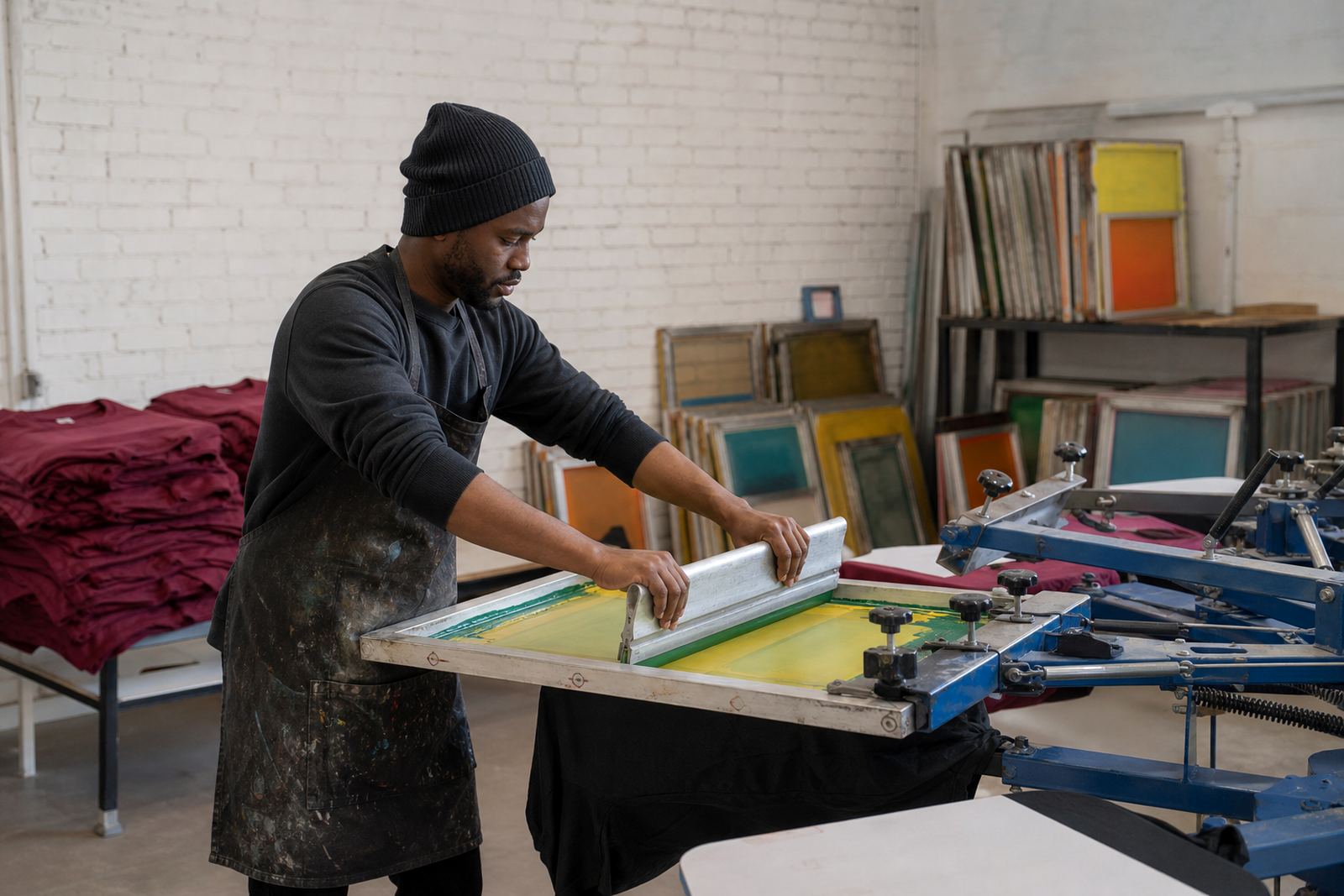
For garment printing, the right mesh count depends on the job mix in your shop. If you print mostly bold logos on T shirts and hoodies, a medium mesh is often the workhorse. For finer details, smaller type and cleaner halftones, step up to a higher mesh so you keep the image sharp. If you need to push a lot of ink for solid white underbases on dark garments, a lower mesh may be the better choice.
There is no single mesh that suits every print. That is why many print shops keep a small range ready for use. A practical approach is to separate screens by job type rather than by guesswork. That saves rework and helps your press operator move quicker when orders stack up before a delivery run to Cape Town, Gqeberha or the East Rand.
- Keep one set for general spot colour work
- Keep one set for detail work and fine artwork
- Keep one set for heavy ink deposit jobs
- Label screens clearly so the wrong mesh is not pulled for the next run
Why Frame Quality Matters in South African Conditions
Frame quality matters because South African shops deal with heat, dust and in some coastal areas high humidity. A weak or poorly prepared frame can shift over time, especially if it is stored badly or handled roughly on a packed production floor. Aluminium frames are popular because they stay light, are easy to clean and hold up well in daily use.
If your shop works through load-shedding, you already know that production rhythm gets interrupted. Ready screens help because they reduce setup time when the press comes back online. A frame that has been properly cleaned, stretched and inspected also reduces the chance of problems during a rush order. For batch work, consistency across frames matters more than any single perfect screen.
When ordering custom frame sizes, make sure the print area, platen clearance and storage space all line up. If the frame is too large, handling gets clumsy. If it is too small, artwork placement becomes awkward and you lose useful print area.
A Simple Buying Checklist Before You Place an Order
If you are buying ready screens for everyday production, use a short checklist before you place the order. That keeps the buying process practical and helps your team ask for the right screen the first time. It also avoids delays when you need repeat orders for the same garments.
- Confirm the garment type and ink system
- Choose the mesh count based on detail or ink deposit
- Check that the frame size suits the press and artwork
- Ask for tension checking if consistency matters in your line
- Decide whether you need new frames or re-stretched frames
- Make sure the screens are clean, packed securely and ready for dispatch
In many cases, the best choice is not the highest mesh or the biggest frame. It is the screen that matches the job and holds up across repeat runs. For shops printing day after day, that practical fit is what keeps production moving.
How MeshMaster Supports Garment Printers Across South Africa
MeshMaster supplies screen-printing mesh and pre-stretched aluminium frames from Germiston, Gauteng to print shops across Johannesburg, Pretoria, Durban, Cape Town and Gqeberha. Our team works with garment printers who need reliable screens for daily production, repeat orders and mixed artwork. Whether you need new frame stretching, frame re-stretching or mesh count matching, the goal is to keep your screens ready for use.
We also help with tension checking, frame clean prep, mesh bonding, custom frame sizing, batch screen prep, screen inspection, dispatch packing and repeat order service. If you are not sure what mesh count or frame size suits your work, use the enquiry form on our contact page and ask for screen setup advice. That is often the quickest way to avoid buying the wrong screens for the next run.
For shops across the East Rand and Midrand, or for delivery into larger production areas, a clear screen spec makes ordering much easier. Keep your preferred mesh counts and frame sizes on file, then reorder the same setup when the work pattern stays consistent. It's a small step that saves time in the workshop.