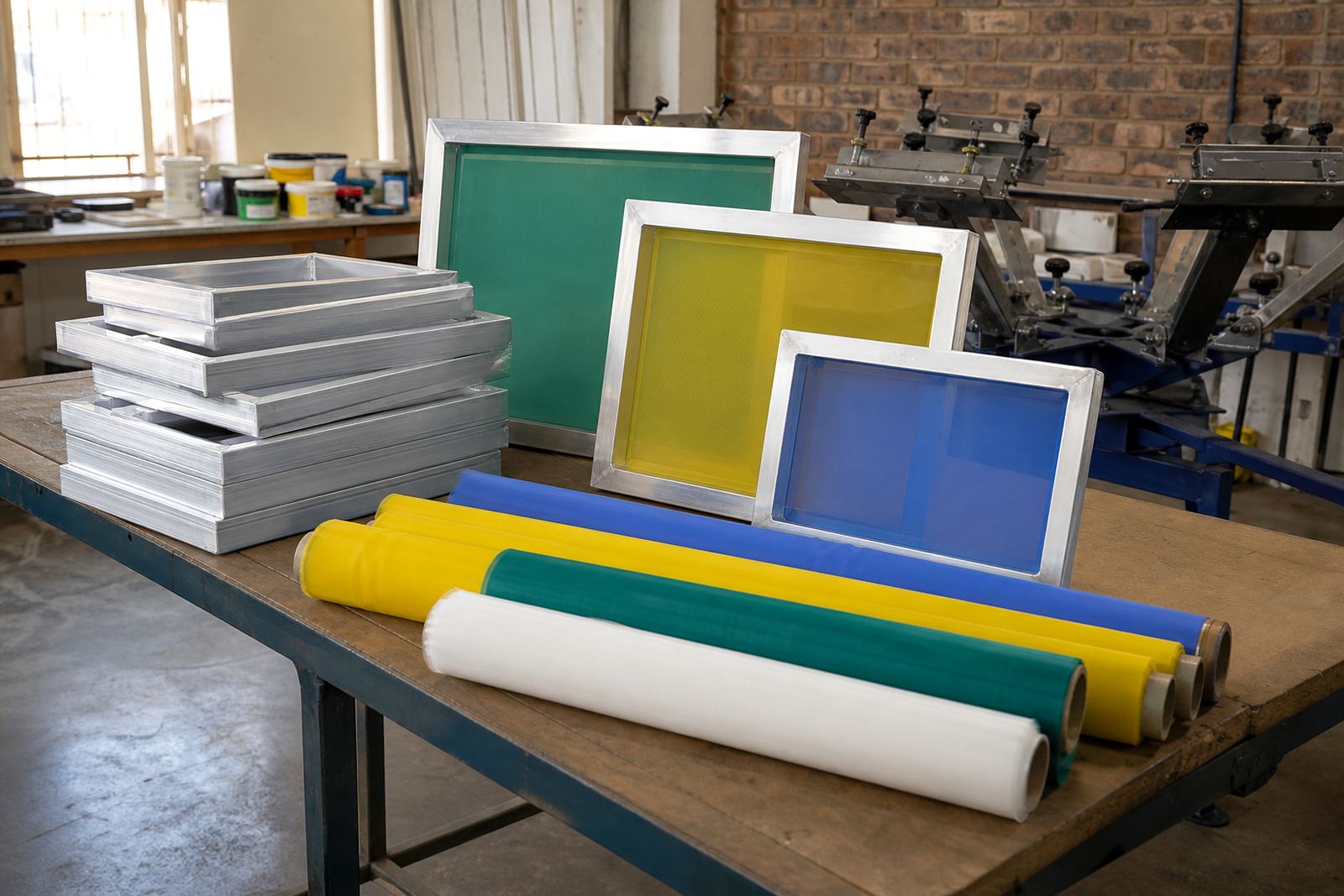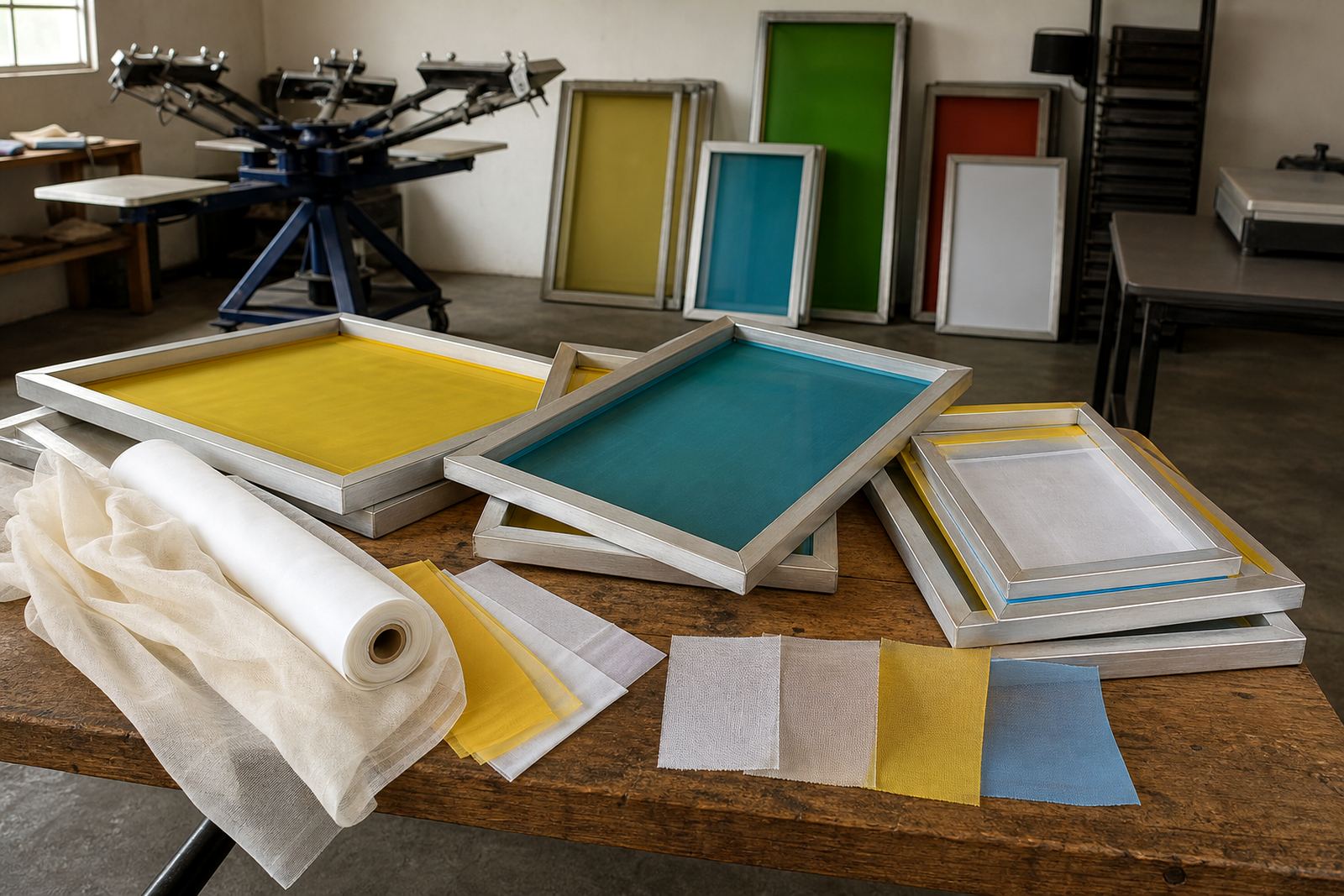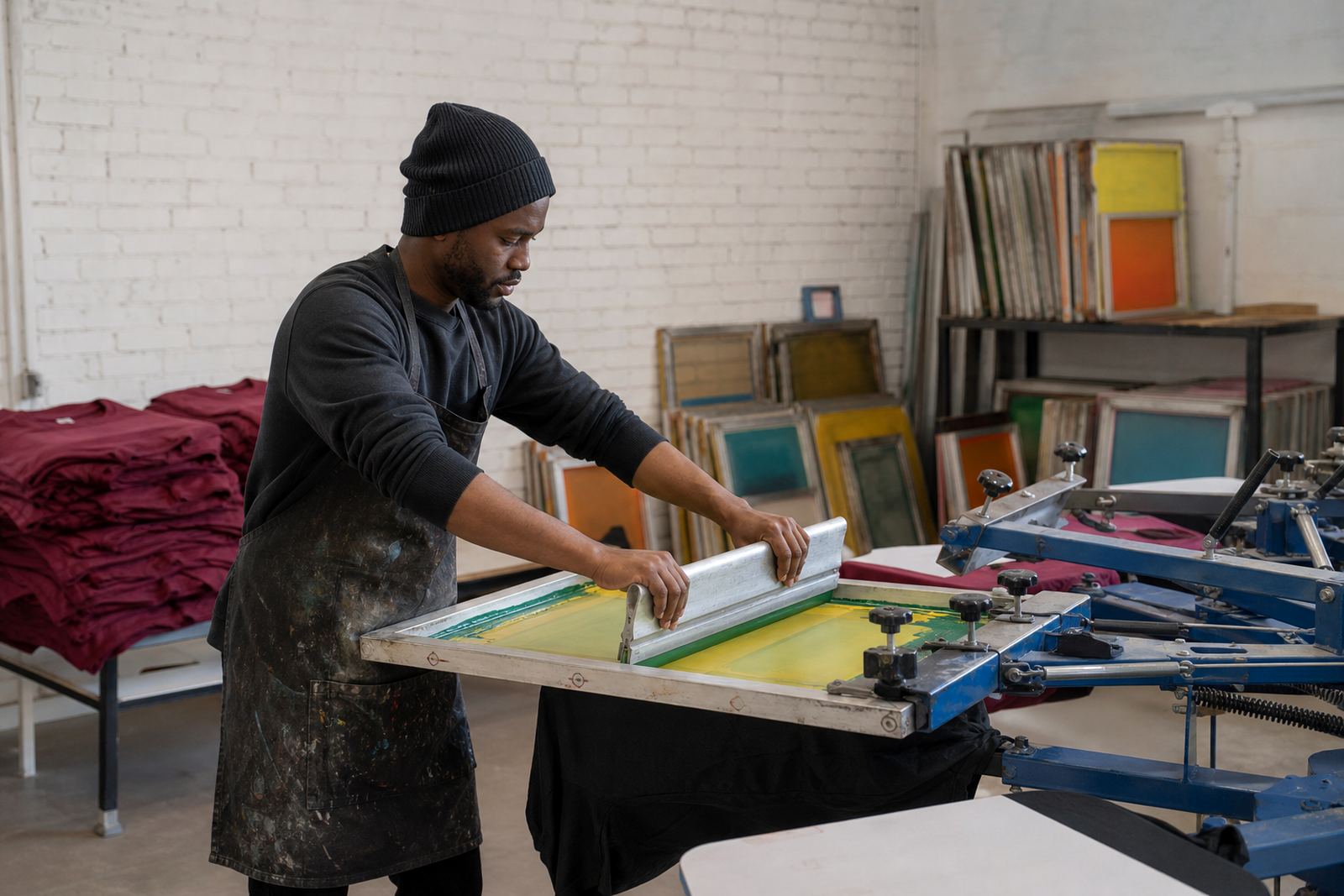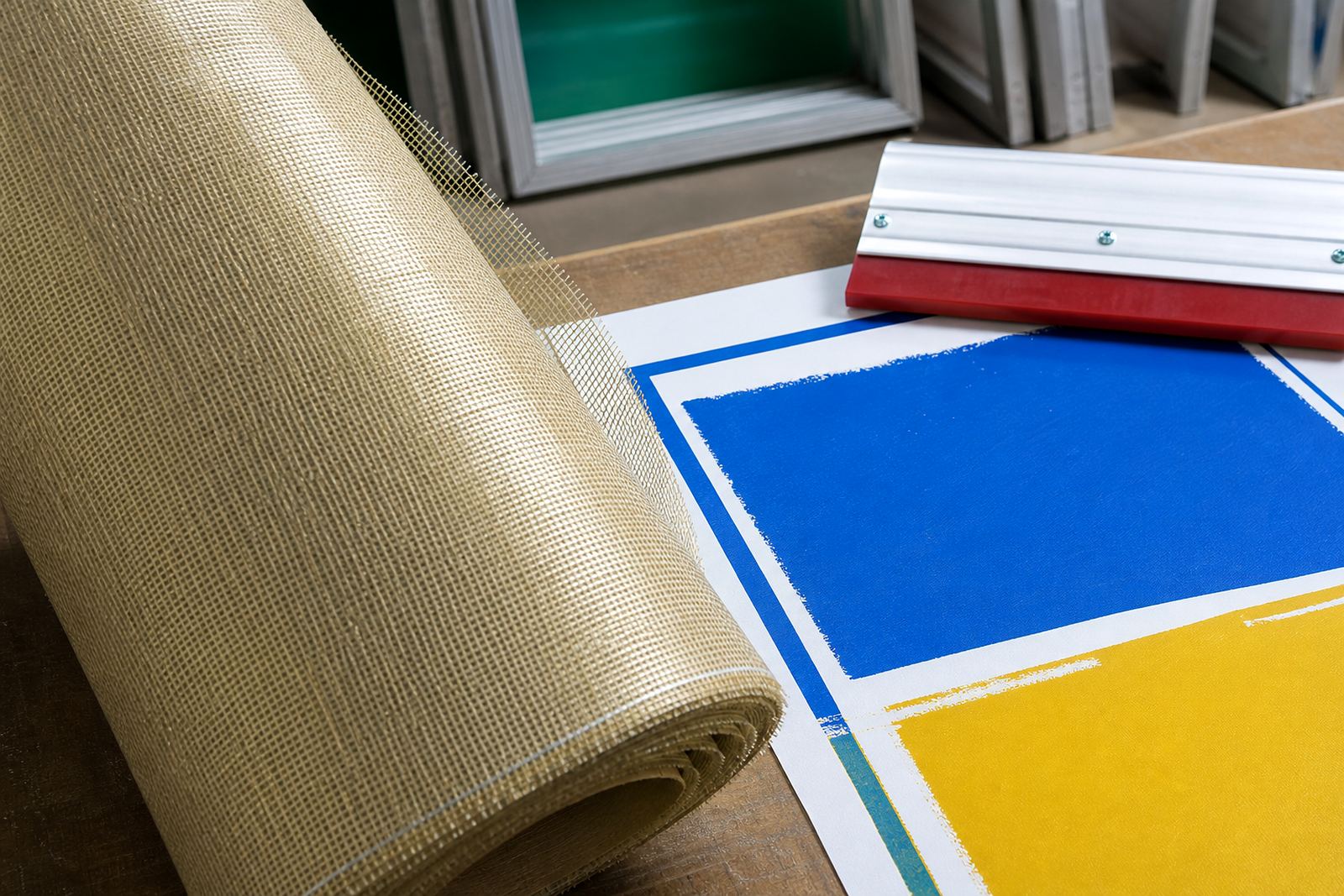
When lower mesh counts make sense
Coarse mesh is often the better fit when you need more ink through the screen in one pass. It is commonly used for bold spot colour work, heavy coverage on dark garments, textured surfaces and speciality inks that need a larger opening to move cleanly. If the artwork is not built around fine halftones or tiny type, a lower count can save time and reduce the need for repeated prints.
In many South African print shops, the choice comes down to the ink and the substrate. Thicker inks, shimmer blends and some high-opacity inks usually behave better on a lower mesh because the mesh opening allows a fuller deposit. On fast moving production runs, that can mean cleaner transfers, fewer blocked details and less time fighting the screen. It also helps when jobs are printed in warmer rooms where ink starts to thicken quicker.
Common coarse mesh ranges and what they are used for
There is no single rule for every job, but lower mesh counts are typically chosen for high ink deposit rather than ultra-fine detail. The exact count depends on the ink system, artwork and the fabric or item being printed. A practical way to think about it is this: the lower the mesh count, the more ink can pass through, but the less detail the screen will hold.
- Very open mesh for heavy deposits, glitter style work and some speciality inks.
- Mid coarse mesh for solid blocks of colour, underbases and stronger coverage on dark garments.
- Lower-to-mid counts for larger graphics where edge sharpness is still needed but detail is not tiny.
- Higher counts should be kept for finer lines, halftones and smaller text.
If your print is showing weakness in colour strength, a coarse mesh may be the better starting point. If it is losing sharpness, stepping up the count may be wiser. That balance is what experienced printers check before making a frame decision.
How to match mesh count to the ink and artwork
Start with the ink, then look at the artwork. Thick, heavy bodied inks need space to release properly through the mesh. Fine detail needs tighter control. When the two are pulled in opposite directions, the screen has to be chosen carefully so the print does not become either too heavy or too weak.
A simple check list can help before you stretch a frame:
- Is the print mostly solid colour or fine detail?
- Does the ink need a large deposit to cover the base fabric?
- Will the job run on cotton, polycotton or another harder surface?
- Are you printing by hand or with a setup that needs repeatable stroke pressure?
- Will the job need a clean edge, or is coverage more important than sharpness?
For print shops in places like Germiston, Johannesburg and Pretoria, this kind of matching matters on repeat orders. A screen that is too fine can slow the work down, while one that is too open can flood the image. Good mesh count matching helps keep the job consistent from first pull to last.
Frame tension and why coarse mesh still needs control
Lower mesh counts are sometimes mistaken for a shortcut, but they still need proper tension. If the mesh is loose, the print stroke becomes less predictable, the image can smear and the screen may release too much ink in some areas. Good tension gives the mesh a stable surface so the print holds its shape and the ink lands where it should.
With coarse mesh, the fabric itself has more open area, so the frame and stretch need to be handled properly to avoid slack spots. Aluminium frames are a practical choice because they stay stable and are easier to keep consistent across repeat jobs. On the coast, where humidity can shift through the day, stable tension is even more important because moisture can affect how a screen behaves from morning to afternoon.
Before production, check that the frame sits square, the corners are secure and the mesh feels even across the full area. Small irregularities can show up quickly on a coarse screen because more ink is moving through the mesh at once.
Practical steps before you print
Preparing a coarse screen properly can save a lot of rework. A clean frame and a well bonded mesh give you a better starting point, especially when you are running multiple screens for one job. Dust, old emulsion and loose adhesive can cause pinholes or weak areas that show up on press.
- Inspect the frame for damage, bent corners or old residue.
- Check the mesh for even tension across the whole print area.
- Confirm the mesh count suits the ink thickness and the artwork.
- Make sure the screen is clean and fully dry before coating or use.
- Test a small print before running the full batch.
If you are setting up screens for a run from Midrand to Cape Town or Gqeberha, it is worth keeping the same prep steps every time. Repeatable preparation helps avoid variation between screens and reduces waste from misprints. It also makes it easier to keep a second screen ready if one needs to be swapped during a job.
When to use re-stretching instead of a new frame
Not every screen needs a brand new frame. If the aluminium is still sound and the stretch surface is clean, re-stretching can be a practical option. It is useful when the frame size still suits your work and the old mesh has lost tension, been damaged or simply no longer matches the type of job you are running.
Re-stretching makes sense when the frame is straight, the corners are firm and the overall condition is still suitable for production. It is also a good time to review whether the current mesh count is still the right choice. A print shop that handles both bold garment work and finer jobs may need different screens for each type of run rather than forcing one screen to do everything.
For Durban deliveries and coastal workshops, checking the frame condition regularly matters because heat and moisture can expose weak points sooner. A screen that looks usable at first glance may still need fresh mesh or a new stretch to stay dependable on press.
Getting help with coarse mesh selection
If you are unsure which mesh count will suit a particular job, it helps to talk through the ink, fabric and print size before placing an order. The right choice is usually practical rather than complicated. It comes down to how much ink needs to pass, how fine the detail is and how much consistency you need from screen to screen.
MeshMaster supplies screen-printing mesh and pre-stretched aluminium frames from Germiston, Gauteng to print shops across South Africa. Our team handles new frame stretching, frame re-stretching, mesh count matching, tension checking and screen setup advice for shops in Johannesburg, Pretoria, Durban, Cape Town and Gqeberha. If you need a coarse mesh recommendation for a specific run, send your enquiry through the contact form and we will help you work it out.