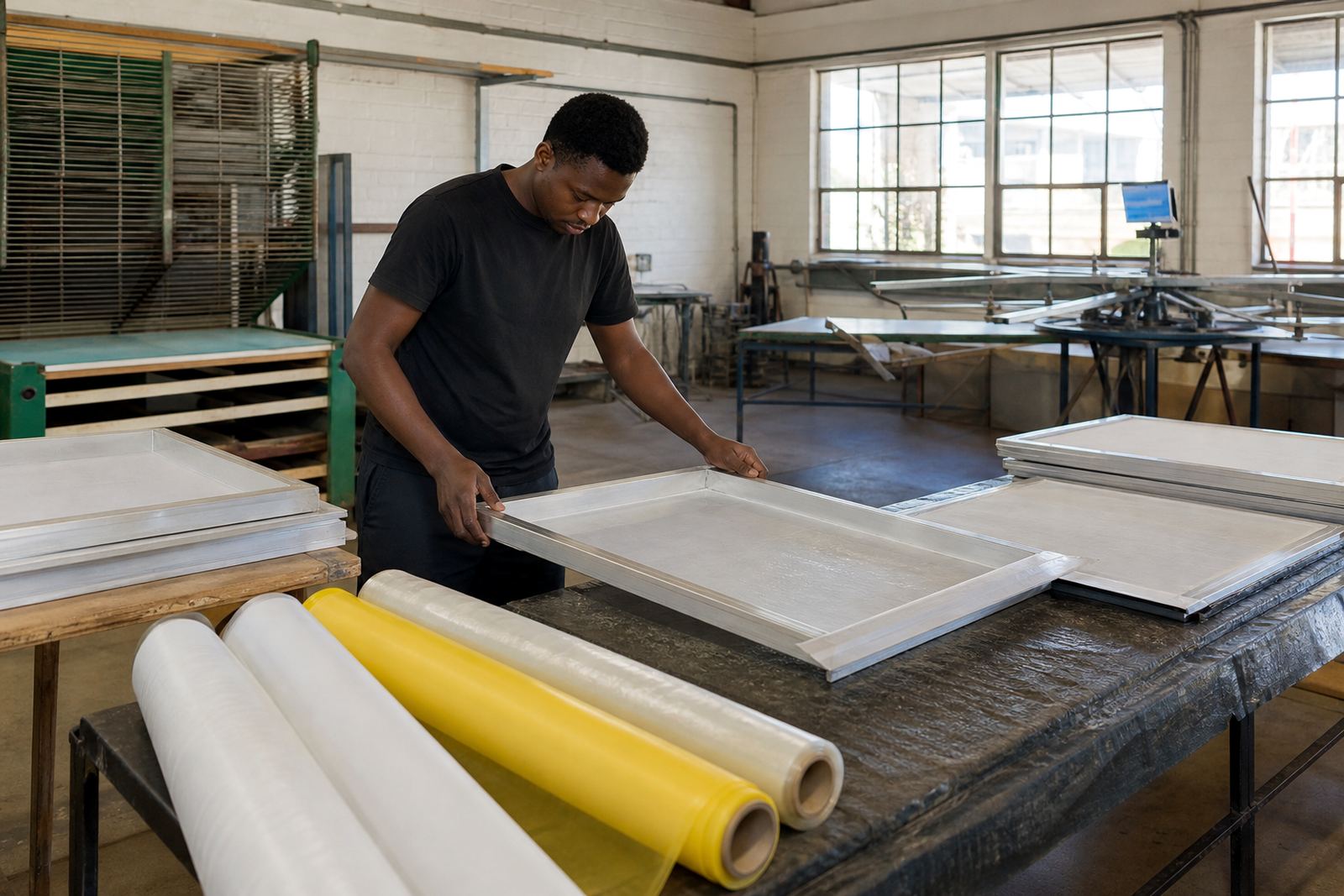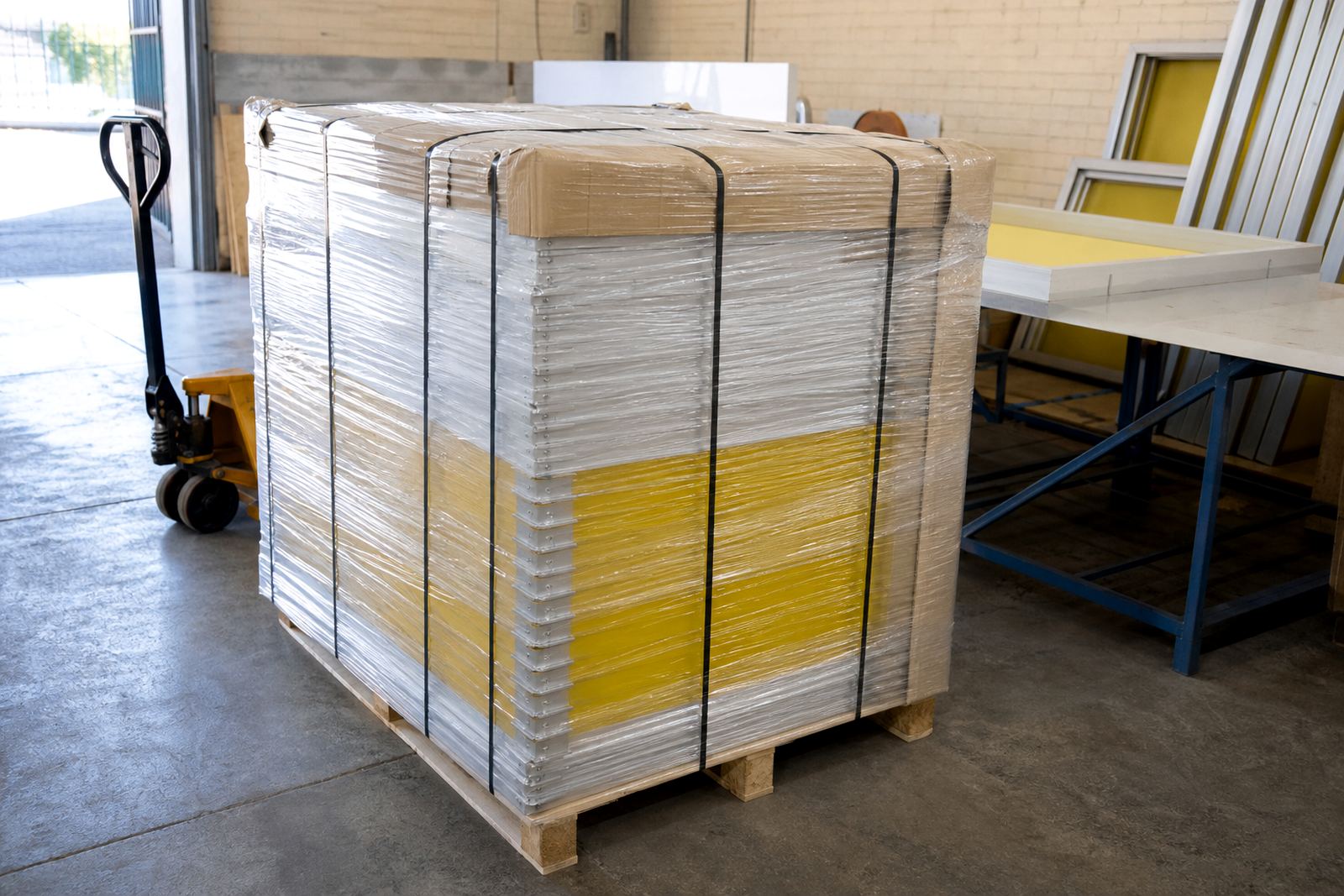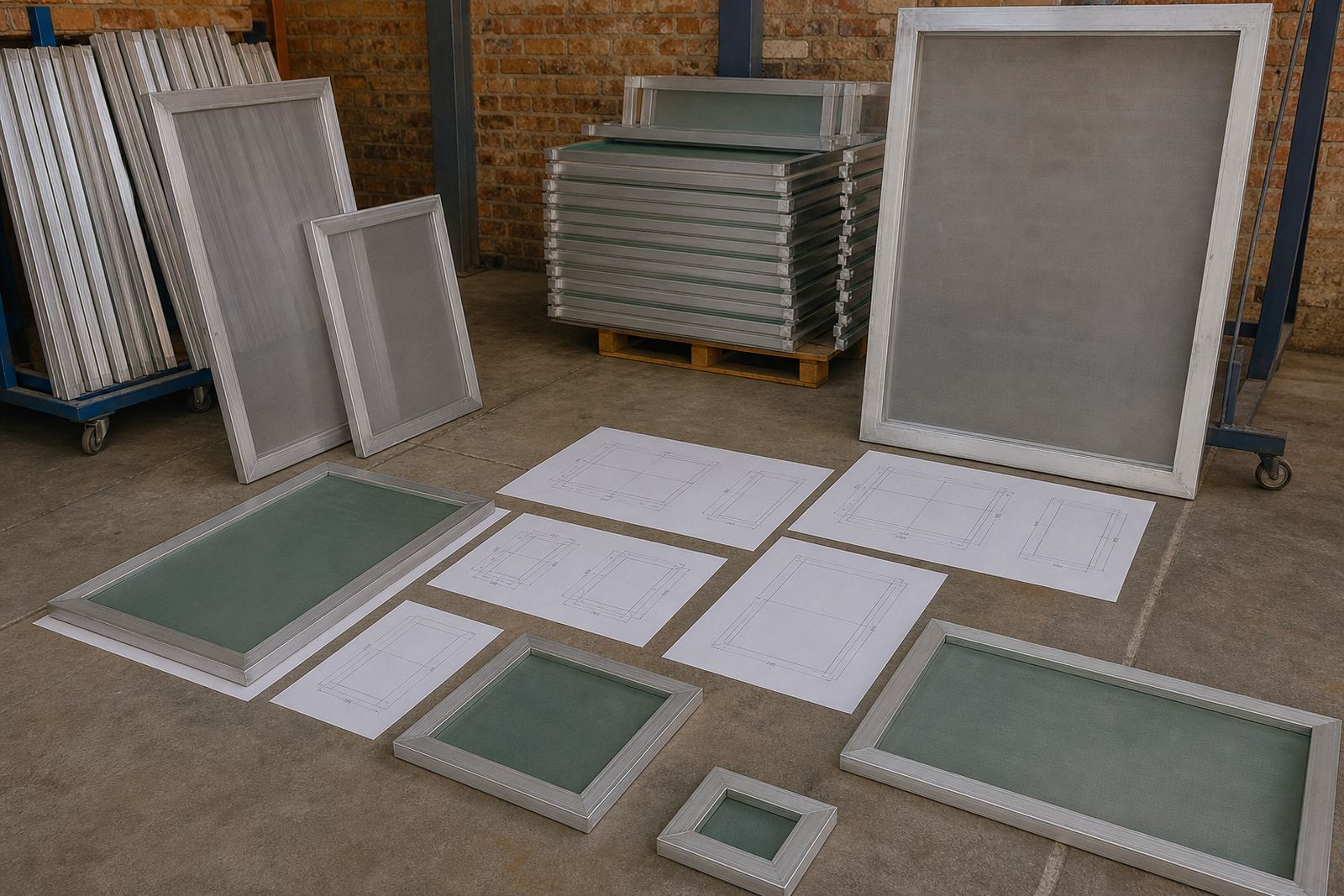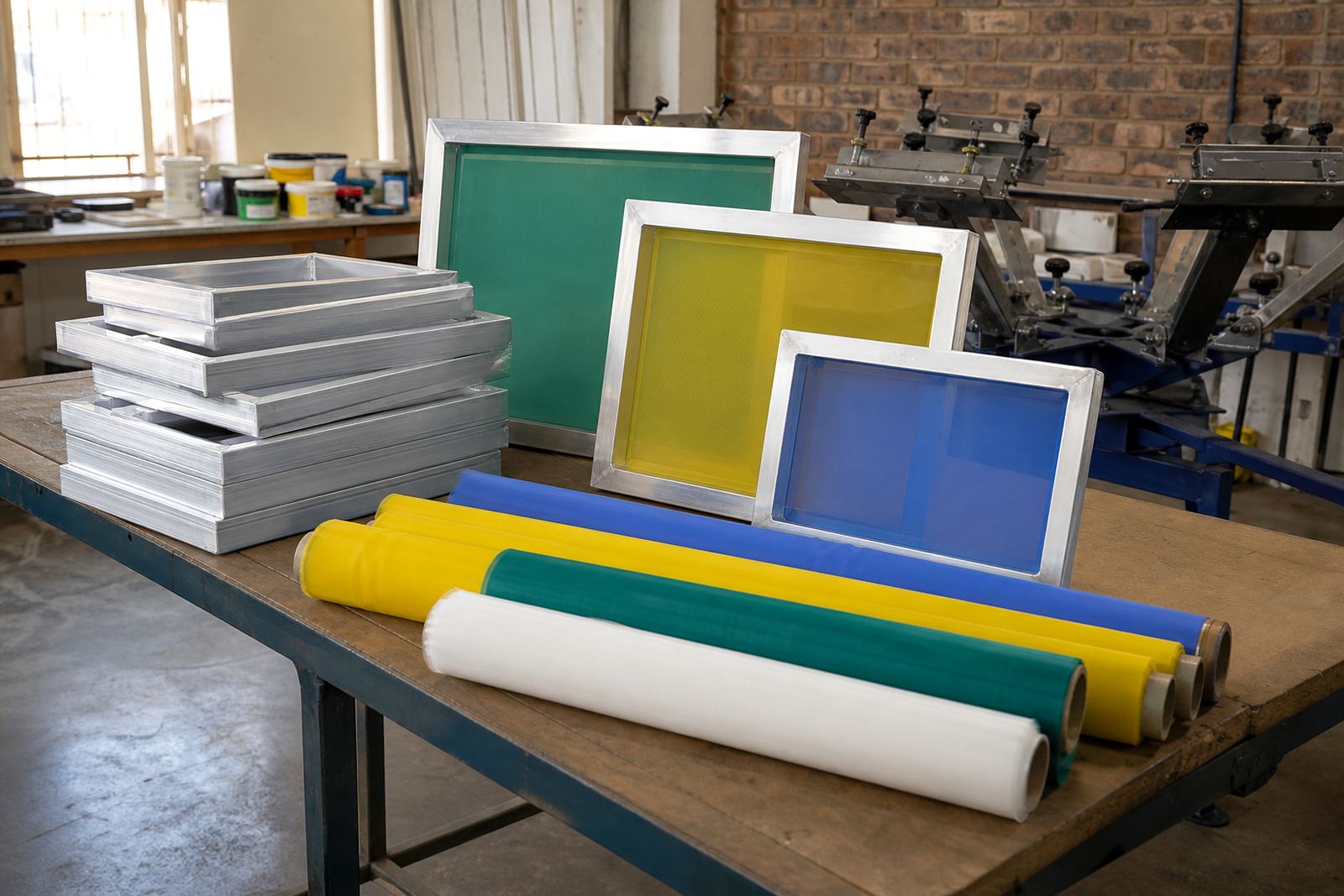
Start With The Print Job, Not The Frame
The right frame starts with what you plan to print. Fine artwork, halftones and detailed text need a tighter mesh count and stable tension, while heavier ink deposits or tougher substrates may need a different mesh choice and a frame that can hold it evenly. In shops from Germiston to Cape Town, that decision saves time at press and reduces rework.
Before choosing a pre-stretched aluminium frame, match the frame to the work you do most often. A good frame should support the mesh count required, keep tension even across the whole area and suit the size of your screens and press clamps.
- Confirm the print type: text, line work, spot colour or finer detail
- Check the mesh count needed for the ink and substrate
- Choose a frame size that fits your press and artwork area
- Allow for repeat use and regular cleaning between runs
Understand Mesh Count And Why It Matters
Mesh count is one of the first things to check because it affects ink flow, detail and stencil behaviour. Lower mesh counts allow more ink through and suit heavier deposits. Higher mesh counts give more control for fine detail and cleaner edges. The frame itself does not change the count, but it must hold the mesh at proper tension so the count performs as expected.
If your shop handles mixed work, it helps to keep a clear system for mesh count matching. That way the frame sent for re-stretching or a new stretch can be set up for the same job again without guesswork.
- Lower counts for thicker deposits and simpler graphics
- Mid-range counts for general garment printing
- Higher counts for finer detail and smaller dots
- Keep mesh count records with the job ticket for repeat orders
Check Frame Size, Profile And Corner Quality
Aluminium frames are valued because they stay straighter than timber and stand up well to regular use. Still, not all frames are the same. The profile needs to suit the screen size and the tension you want to hold. Corners should be neat, square and firm so the frame stays true after washing, reclaiming and repeated clamping.
For print shops in Johannesburg, Pretoria and Durban, where screens may be moved between prep, storage and press areas many times a week, a frame with clean edges and good rigidity is worth checking carefully. If the frame twists, the stencil can misregister and the screen may not sit properly on press.
- Measure the outside size and the usable print area
- Check that the frame fits your press bed and clamps
- Look for square corners and even joins
- Make sure the frame profile is comfortable for handling and stacking
Tension Is The Real Test Of A Pre-Stretched Frame
Good tension helps the mesh release ink cleanly, improves registration and makes the screen easier to flood and print. Uneven tension can show up as blurry edges, poor contact or images that shift from one side of the screen to the other. A pre-stretched frame should hold the mesh evenly across the full surface, not only in the centre.
When checking a frame, ask how the tension was prepared and whether it was checked before dispatch. If a screen feels soft in one corner or tight in another, it can affect the whole run. For busy shops, a quick tension check before production is simple insurance.
- Look for even bounce and consistent pull across the mesh
- Check corners and edges for slack spots
- Use the same tension standard for repeat jobs where possible
- Inspect screens again after reclaiming or transport
Choose Between New Stretching And Re-Stretching
Not every screen needs to be replaced. If the aluminium frame is still straight and sound, re-stretching can be a practical option. It is often suitable when the mesh is worn, the job has changed or the original tension has dropped after long use. New frame stretching is usually the better choice when the frame itself is bent, damaged or no longer matches your current work.
In humid areas like coastal Durban or in stores that sit through load-shedding and temperature swings, it is especially useful to inspect frames for movement, loose mesh and glue failure. The same applies after long storage in a hot room or packed transport.
- Choose re-stretching when the frame is still straight and serviceable
- Choose new stretching when the frame is damaged or outdated
- Check the bond, corners and mesh condition before deciding
- Keep spare screens ready for busy repeat work
A Simple Buying Checklist Before You Place The Order
Before you place a screen order, check the practical details that affect daily use. A frame that looks fine on paper may not suit your press setup, storage space or production pace. The best screen is the one that moves easily through prep, exposure, printing and reclaim without causing delays.
Use this checklist when ordering from Germiston, East Rand, Midrand or further afield. It helps keep communication clear and reduces back and forth on the job.
- Artwork type and expected mesh count
- Frame dimensions and usable print area
- Need for new stretching, re-stretching or batch prep
- Transport size, stacking space and handling needs
- Whether you need repeat screens for the same job
Care And Storage Keep The Frame Working Longer
Even a well-made frame needs proper care. Wash screens gently, avoid harsh knocks on corners and store them in a dry, flat position. If you work near the coast or in a workshop with dust and heat, keep an eye on mesh condition and frame alignment. Small habits protect tension and reduce the risk of damage before the next run.
For print shops across South Africa, good storage is part of the buying decision too. A screen that is easy to clean, label and pack will usually save more time than one that needs constant adjusting.
- Rinse and clean screens after each run
- Keep screens off damp floors and out of direct sun
- Label frames by mesh count and job use
- Inspect after transport and before pressing the first sheet
When To Ask For Setup Advice
If you are unsure which frame or mesh count will suit a job, it helps to ask before production starts. The right advice can prevent wasted screens, poor detail and delayed orders. This is especially useful when changing from one substrate to another or when a repeat job suddenly needs a different finish.
For print shops handling regular work in Johannesburg, Pretoria, Durban, Cape Town and Gqeberha, setup advice can save time on the press floor and keep repeat orders consistent.