Why frame material matters when every print must line up
In screen printing, the frame is not just something to hold the mesh. It affects how the screen handles tension, how easy it is to reclaim after a run, and how well the mesh stays stable during repeated use. A frame that twists or shifts can throw off registration, create uneven ink deposits and make setup slower than it should be.
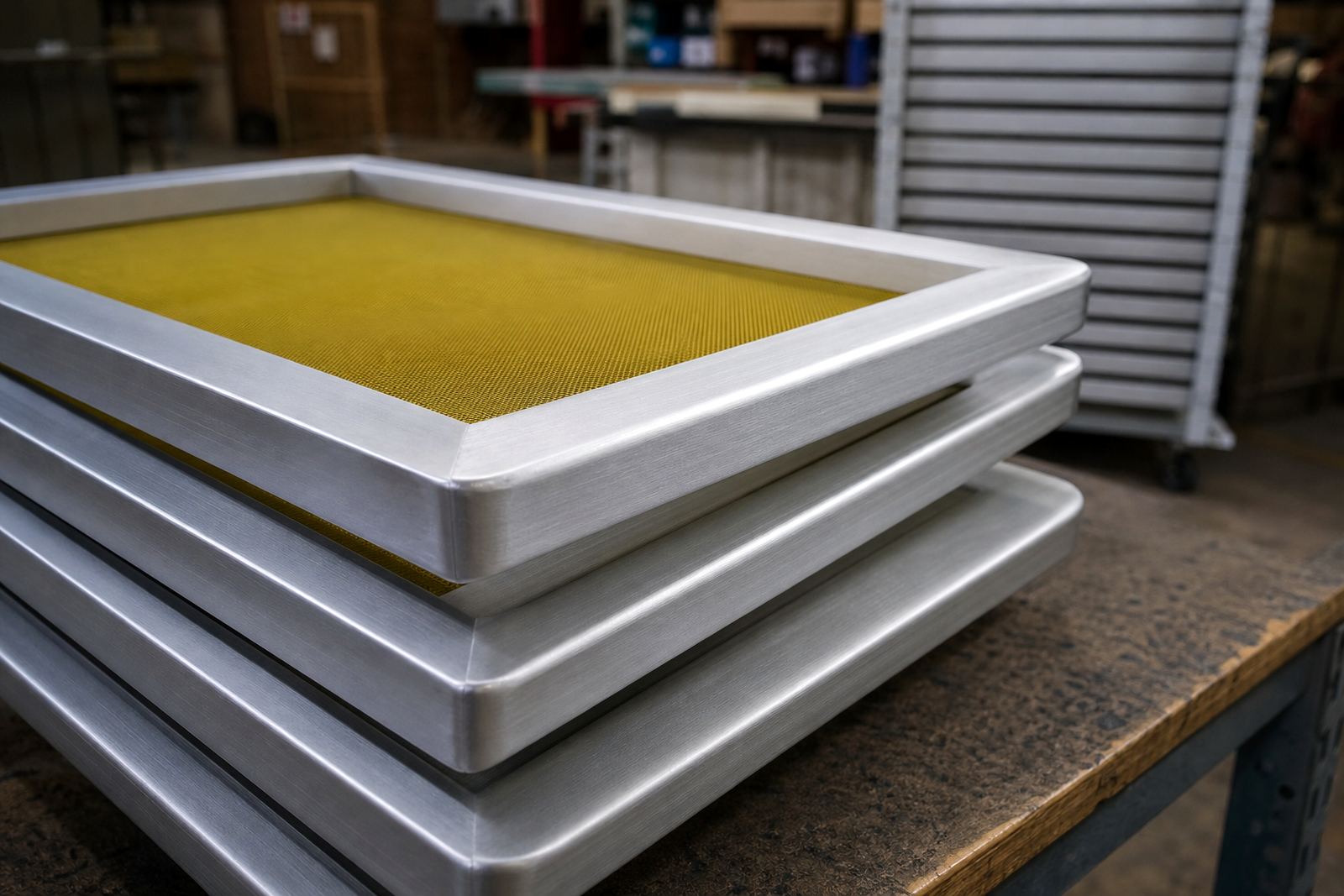
Aluminium frames are preferred by many print shops because they are light enough to handle on a busy floor yet firm enough to support proper stretching. That balance matters when you are moving screens between prep, exposure, washout and press work all day. In a shop in Germiston or Midrand where screens turn around quickly, less handling strain means less damage and fewer surprises.
- They are easier to lift and move during setup
- They hold shape well under repeated tensioning
- They suit repeat orders where screen consistency matters
- They clean up well after inks, emulsion and reclaim chemicals
What aluminium does better in daily print shop use
One of the main reasons shops choose aluminium is stability. A straight, properly joined aluminium frame gives the mesh a cleaner base to stretch against. That helps when you are working with different mesh counts for different jobs, from coarse meshes for heavier deposits to finer meshes for detail work and finer halftones.
Aluminium also handles moisture better than many timber options, which is useful in coastal areas like Durban and Gqeberha where humidity can affect storage and drying. A frame that resists movement under changing conditions helps keep tension more reliable over time, especially when screens are stored between jobs or used again on a repeat order.
- Less warping from humidity and temperature changes
- Cleaner edges for bonding and mesh alignment
- Better long term use in shops with regular reclaim cycles
- More predictable results across multiple screens
For shops dealing with load-shedding as well, fewer do overs matter. If exposure times or drying windows are interrupted, a frame that stays true gives you one less thing to correct later.
Tension and stretch quality are where the real gains show
The value of an aluminium frame becomes clear during stretching. A well prepared frame supports even tension across the full mesh area, which helps reduce weak spots near corners and along the centre line. That is important whether you are stretching a new screen or re-stretching one for another round of production.
Good tension does not come from the frame alone. It depends on clean frame prep, careful mesh bonding and proper checking after stretch. Still, aluminium gives the process a more dependable base because it does not flex as easily under the pull of the mesh. For finer mesh counts, that steadiness is especially useful because small changes in tension can affect print sharpness and stencil life.
In practical terms, that means fewer screen faults and less time spent chasing the same problem across the whole batch.
Where aluminium frames save time in the shop
Print shops often measure value by time as much as by output. Aluminium frames help on both counts. They are easier to handle during batch screen prep, simpler to inspect, and less likely to cause trouble when you need to repeat a setup later. That makes them useful for shops that run the same artwork across several orders or need quick turnaround for promotional work, uniforms or label screens.
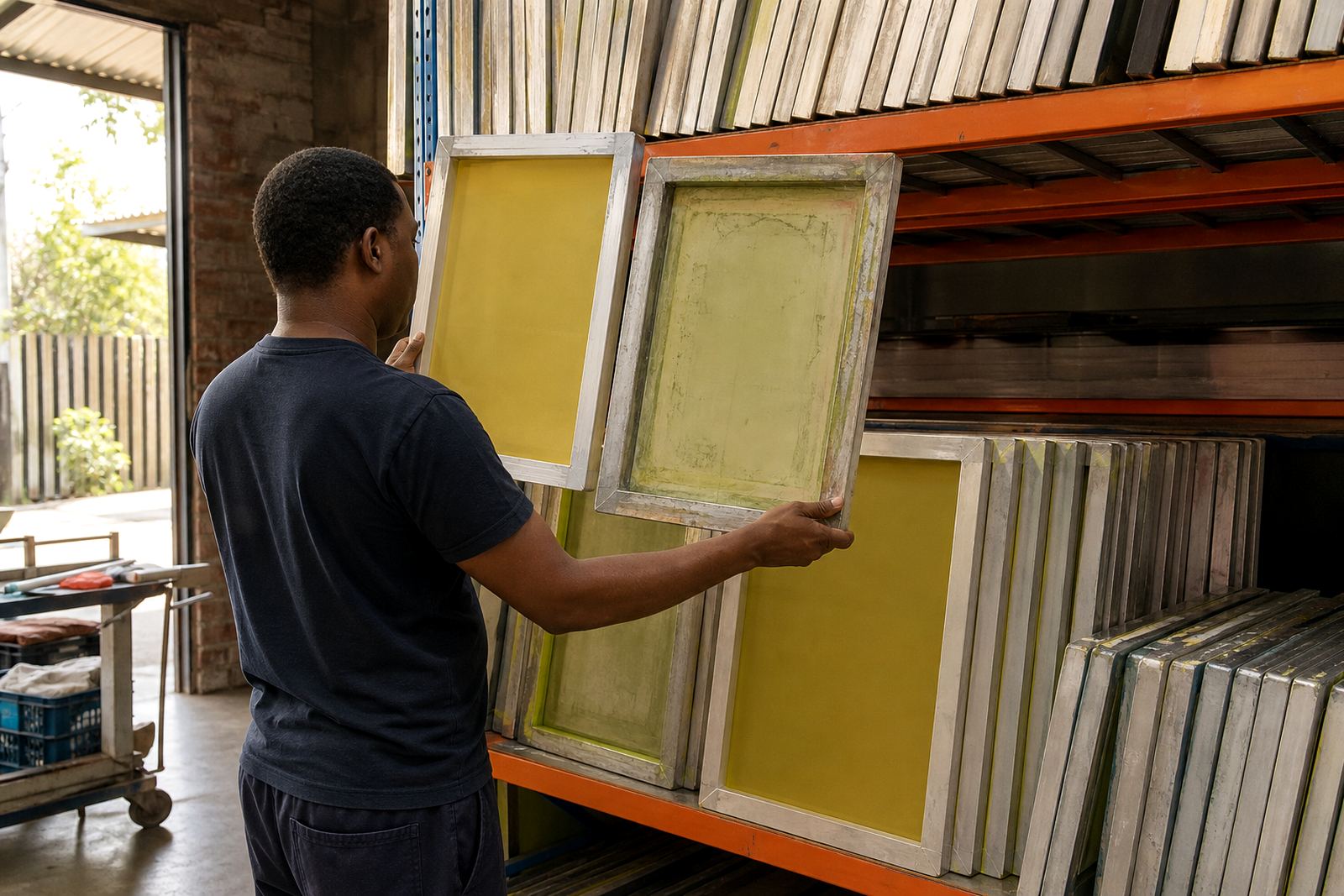
Because the frame is easier to clean and inspect, it also supports better housekeeping. Ink build-up, adhesive residue and reclaim chemicals can be spotted earlier, which helps you protect the mesh and keep the screen ready for the next job. On a busy production floor, that kind of routine control is what keeps things moving without wasting labour.
- Faster handling during prep and setup
- Simpler inspection before exposure or press use
- Less chance of hidden damage from old frames
- Better repeatability on recurring jobs
When a shop in Pretoria or Johannesburg is balancing several jobs at once, those minutes saved on each screen add up quickly.
Local conditions in South Africa make material choice practical
Screen shops around South Africa do not work in ideal conditions all the time. Coastal humidity, dust, heat and power interruptions all affect how screens are stored and used. An aluminium frame is a practical choice because it tolerates those conditions better than a frame that absorbs moisture or shifts over time.
In Germiston, where many print operations run through tight schedules and mixed production areas, a frame that stays square is easier to keep in circulation. In Durban, humidity can make storage and drying more demanding. In Cape Town and Gqeberha, sea air and temperature changes can also affect how long a screen stays stable between runs. Aluminium gives a shop more control, even when the rest of the workflow has to adapt.
For that reason, many shops ask for custom frame sizing and mesh count matching rather than trying to make one frame suit every job.
New stretching or re-stretching: choosing the better route
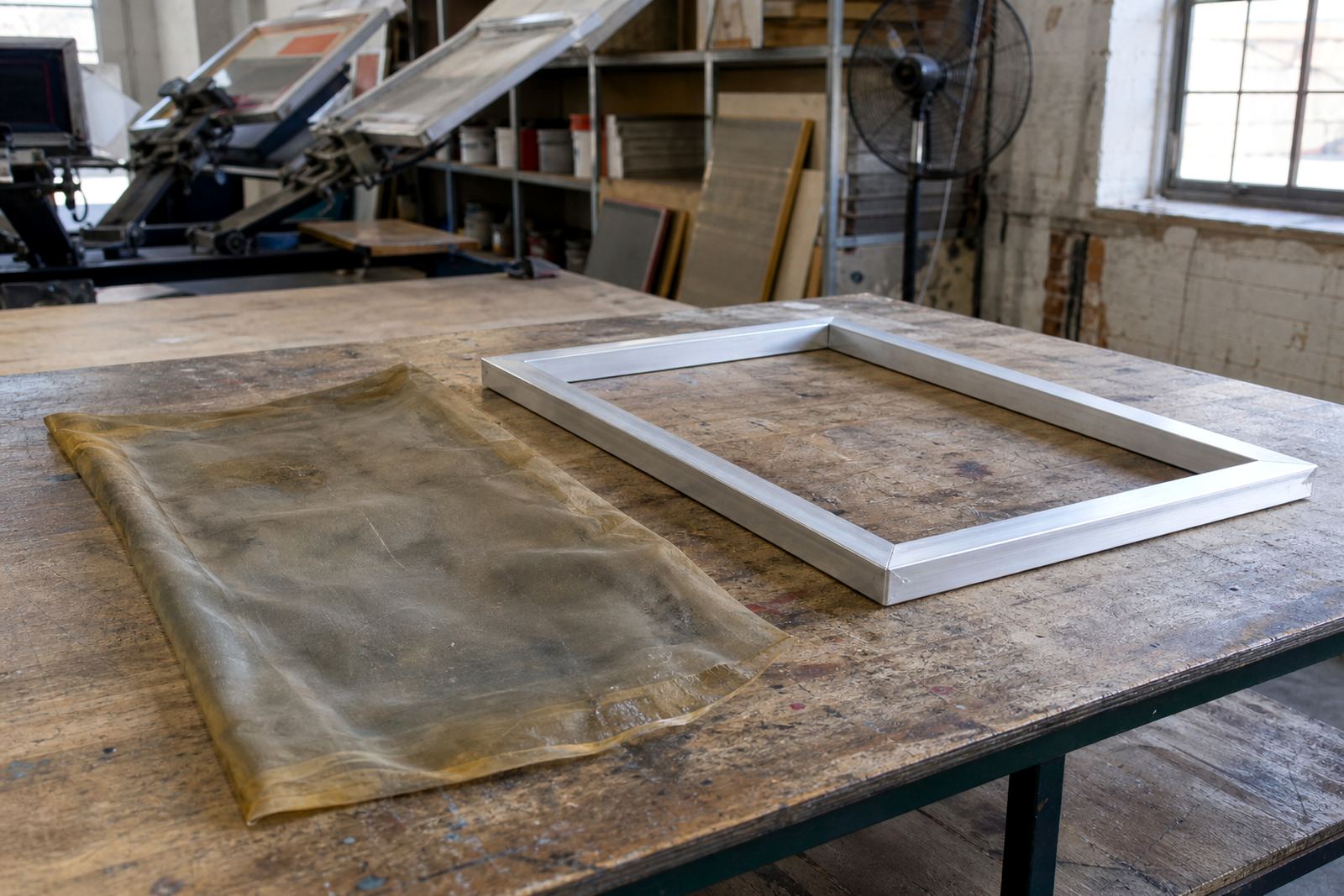
Not every screen needs to be replaced. Some frames can be re-stretched if the structure is still sound and the old mesh has simply reached the end of its useful life. Other frames are better replaced or built new, especially if corners are damaged, the frame is bent, or old bonding points will not hold a fresh stretch properly.
Here is a simple way to think about it:
- New frame stretching works well when you need a fresh screen built to a specific size and mesh count
- Frame re-stretching is useful when the aluminium frame is still true but the mesh needs replacing
- Frame clean prep matters in both cases because bonding works best on a clean surface
- Tension checking helps confirm the screen is ready for production before it leaves the prep area
If the goal is dependable press work, the decision should be based on the condition of the frame not just on the cost of the job.
A practical example from a busy Gauteng print floor
Consider a print shop in the East Rand handling repeat runs for local workwear and event branding. The team needs screens that can be set up quickly, stored between orders and brought back into use without much adjustment. Aluminium frames help because they keep their shape, support consistent tension and make repeat order service easier to manage.
When the same artwork returns two weeks later, the operator wants less guesswork and fewer issues with mesh movement. A properly prepared aluminium frame gives the shop a better starting point for screen inspection, mesh bonding and final setup advice. That means less time correcting old problems and more time printing the next batch.
For shops serving Johannesburg, Pretoria and surrounding areas, that kind of reliability is not a luxury. It is part of keeping production steady when deadlines are close and the press cannot wait for avoidable repairs.