What gives a screen a long working life
A screen lasts longer when the mesh count suits the job, the frame is straight and the tension is set correctly from the start. A fine mesh used for detailed work will behave differently from a lower count mesh used for heavier ink deposits, so the first decision already affects how long the screen stays useful in production.
In practical terms, a good screen is one that prints cleanly, holds registration and returns to a stable tension after cleaning and drying. If the frame is sound and the mesh was stretched evenly, the screen can be reused many times before the print quality starts to drift. If the mesh was uneven from the outset, it may become troublesome much sooner.
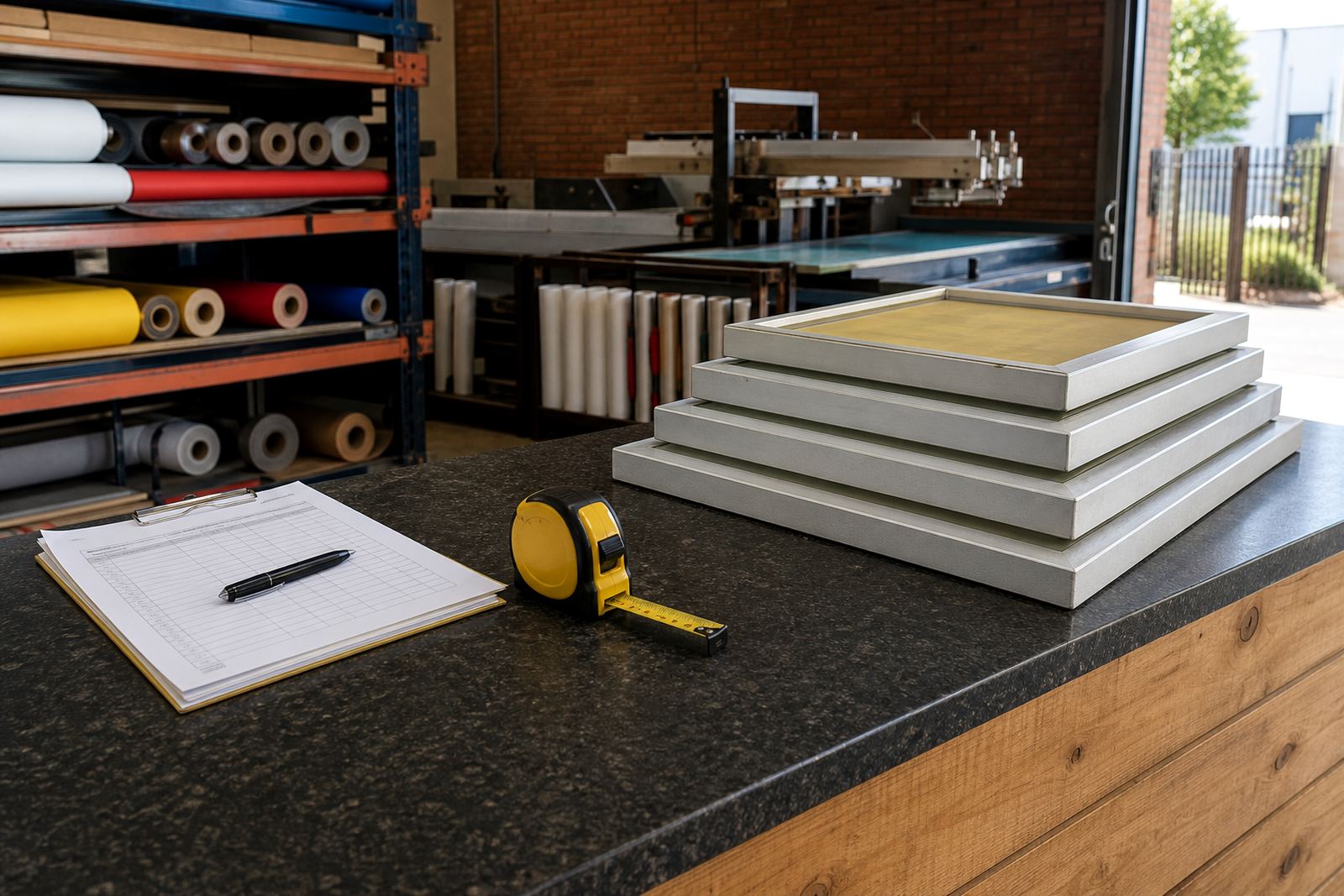
At MeshMaster in Germiston, we see that the longest lasting screens are usually the ones matched carefully to the artwork and ink system. That includes checking the mesh count, the frame size and whether the screen will be used for fine detail, spot colour work or heavier coverage.
Tension is the first thing to monitor
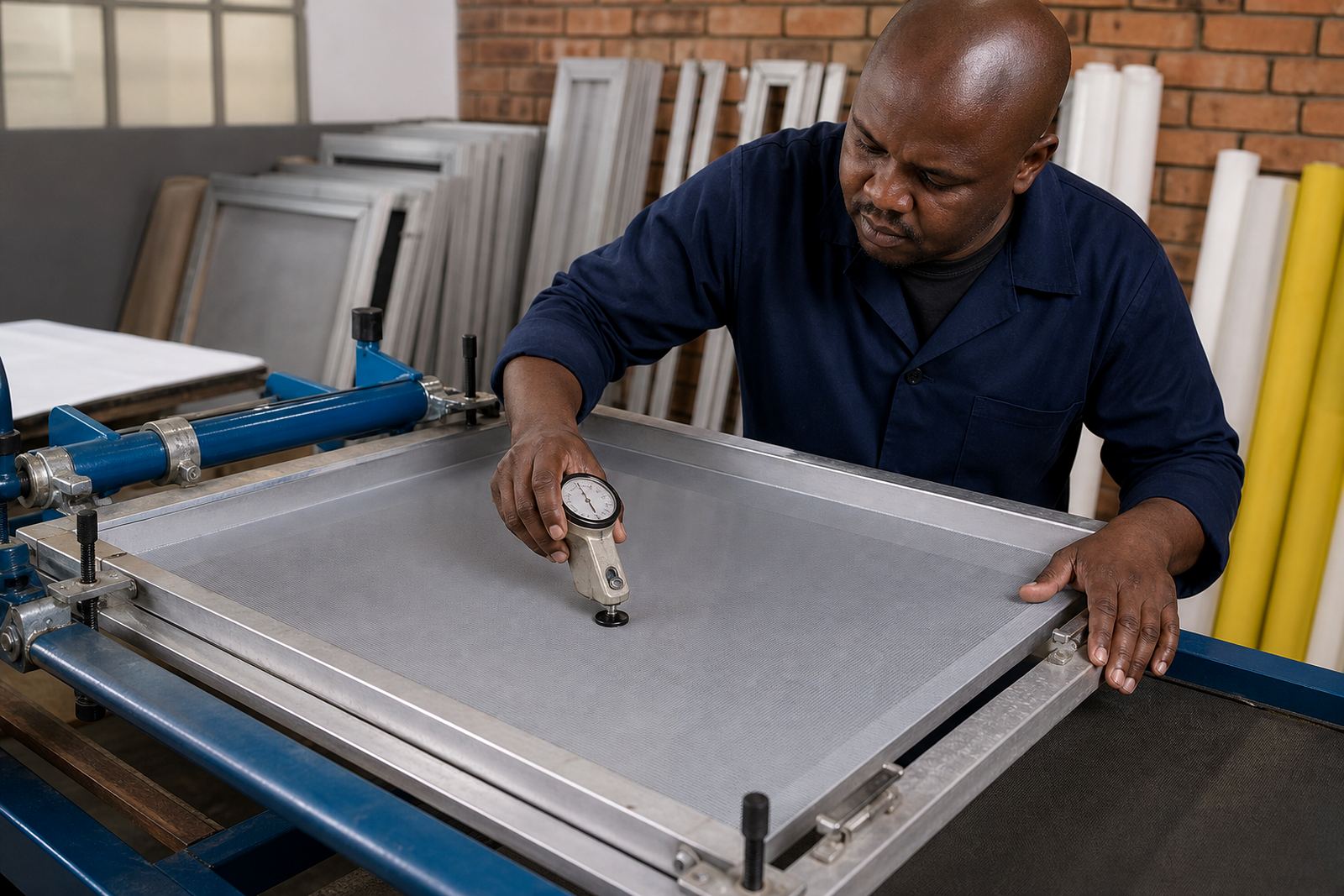
Tension is one of the clearest indicators of screen life. When tension drops, prints can start to blur, edges lose sharpness and off contact becomes harder to maintain. A screen does not have to be visibly damaged to be out of service, it may simply have lost enough tension to make repeat work inconsistent.
Heat, repeated cleaning and general handling all affect tension. Water-based cleaning methods, aggressive solvents and poor drying can all shorten useful life. In a warm Gauteng workshop, a screen that is left damp overnight can pick up problems faster than one dried properly and stored flat or upright in a clean area.
- Check tension before starting a repeat run, not only when problems appear.
- Look for loss of snap in the mesh when the squeegee passes across the screen.
- Watch for print gain, patchy edges and changes in stencil release.
- Re-stretch when the screen no longer holds the repeatable result you need.
Mesh count changes how a screen ages
Mesh count affects both print detail and the wear pattern on a screen. A higher mesh count usually suits finer detail and thinner ink deposits, while a lower count can handle more ink but may open the mesh up to heavier strain during printing and cleaning. The wrong mesh for the artwork often shows its age early because it works harder than it should.
If a shop uses one screen for a job that really needs another count, the screen may still print for a while but the results become less predictable. That is why mesh count matching matters. It helps the screen do the job it was stretched for instead of forcing it into a use that wears it out faster.
For example, a print shop in Pretoria doing repeat work on detailed graphics may keep a fine mesh screen in service for longer by using the correct ink flow and cleaning method. The same shop, if it used that same screen for a heavy deposit job, could see faster wear around the print area and a shorter useful life.
Cleaning and drying habits can shorten or extend screen life
Screen life is strongly tied to what happens after the press. Ink residue left in the mesh hardens, builds up and makes the next clean harder. That extra scrubbing can loosen the mesh, damage the stencil area and reduce the consistency of the print surface.
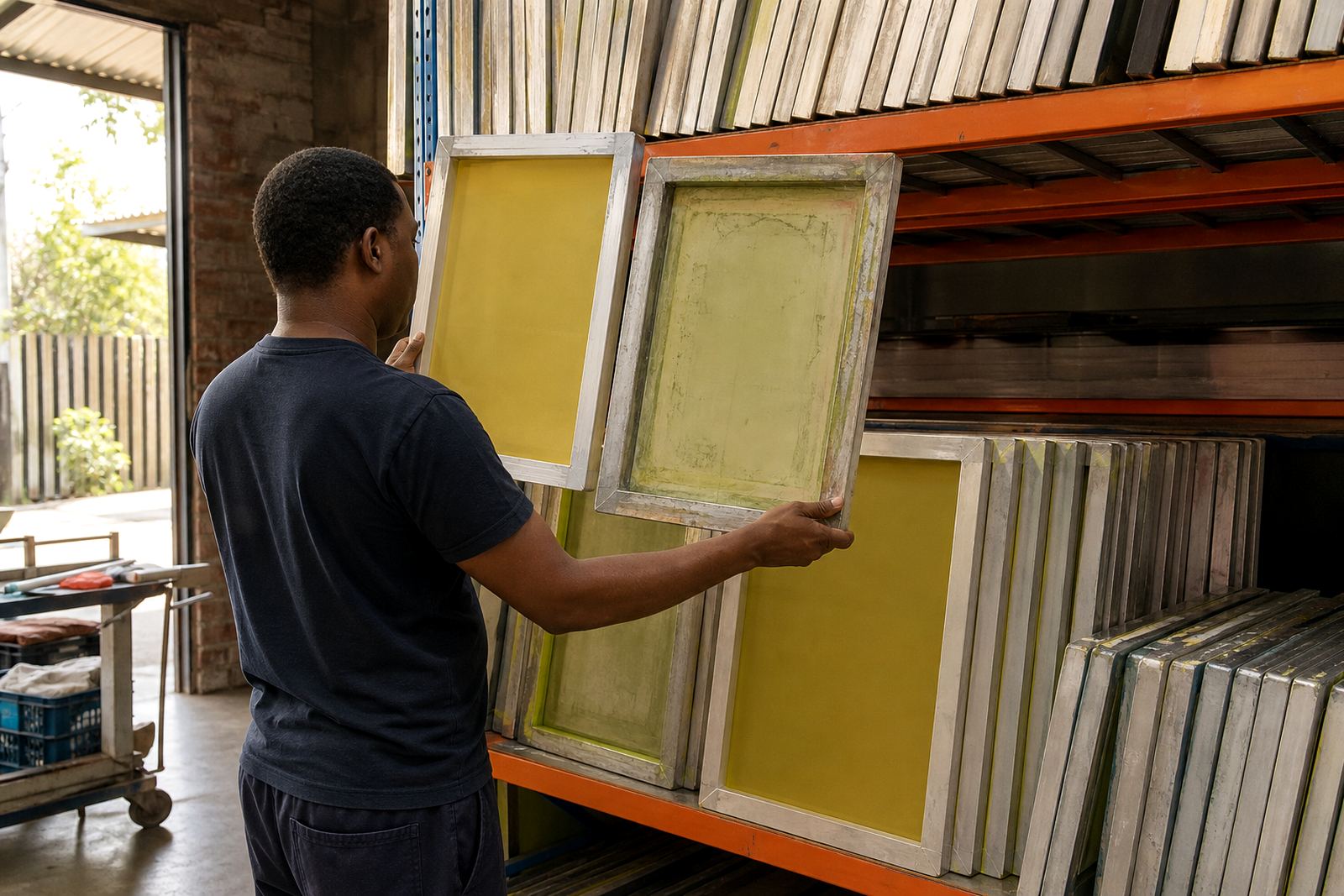
Good handling makes a noticeable difference. Screens should be cleaned fully, dried properly and stored in a way that avoids knocks to the corners or frame edges. In coastal areas like Durban and Gqeberha, humidity can slow drying and leave screens vulnerable to mould, staining or residue if they are stacked before they are ready.
- Remove ink fully after each run, especially in fine mesh counts.
- Do not leave wet screens leaning against dusty walls or floors.
- Keep frames away from impact points, forklifts and loose stacking.
- Use careful frame clean prep before re-stretching or reusing older frames.
Frames matter just as much as the mesh
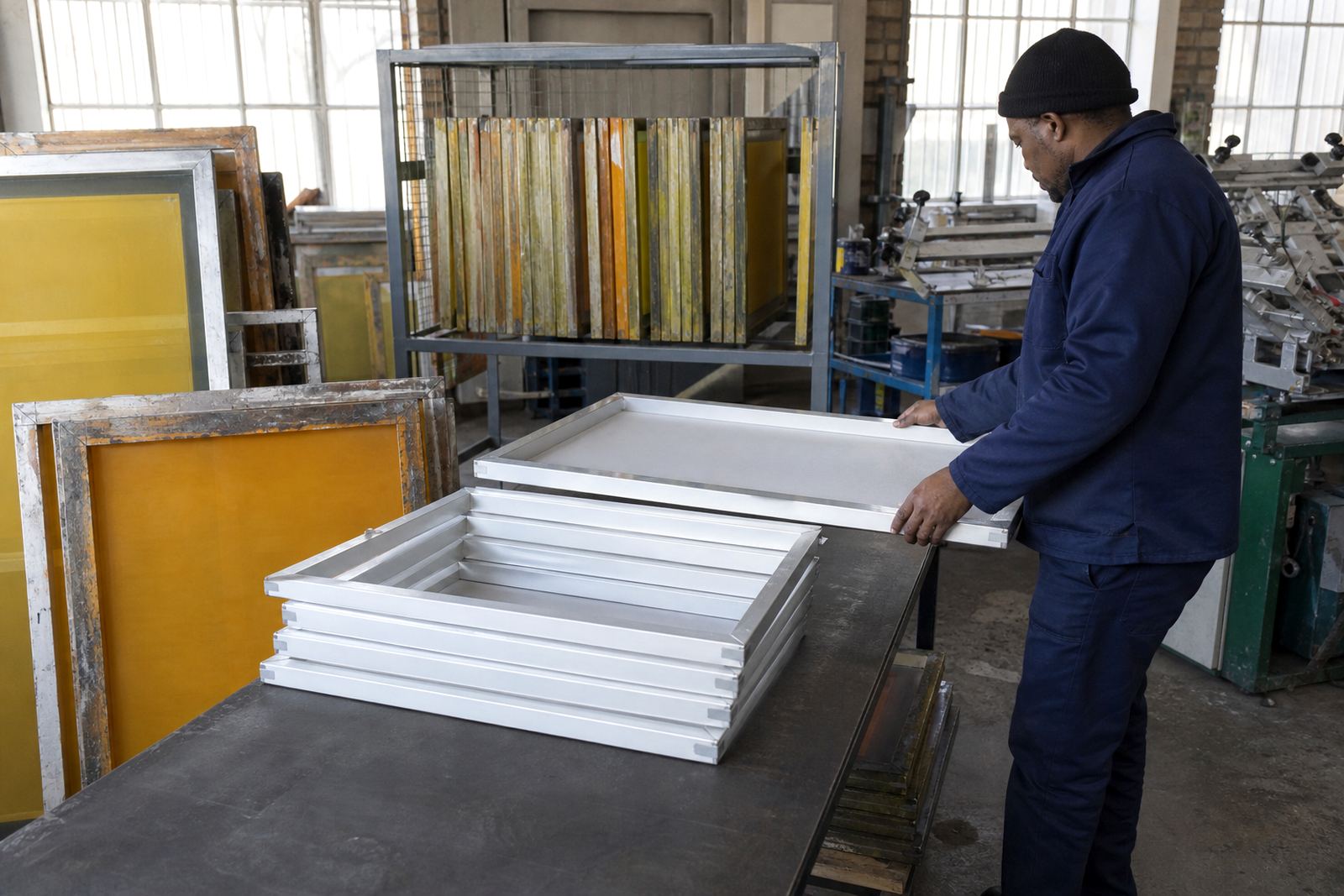
A screen can only perform as well as the frame holding it. Aluminium frames are popular because they are light, stable and suitable for repeated use when handled correctly. If a frame twists, dents or loses bond strength, the mesh cannot maintain even tension across the print area.
Pre-stretched frames need accurate preparation before the mesh is bonded. Clean surfaces, even stretching and correct curing all help the screen stay serviceable. A poorly prepared frame may still look fine at first, but it often gives trouble later through slipping mesh, uneven print pressure or edge fatigue.
Our team in Germiston also sees this with rush jobs. When screens are packed quickly for Johannesburg delivery or sent out for Pretoria and Midrand jobs, careful dispatch packing helps preserve the frame corners and the mesh face. A small knock in transit can affect the screen more than many operators expect.
When to re-stretch instead of replacing
There is a point where a screen is no longer at its best, but that does not always mean the frame must be discarded. If the frame is still straight and the mesh bond area is sound, re-stretching can restore the screen to useful production condition. This is often the better choice when the frame itself is still practical for the size and type of work.
The decision usually comes down to print consistency. If the screen still cleans well, holds tension evenly and gives repeatable results after re-stretching, it remains a good production tool. If the frame is bent, the corners are damaged or the bond has failed, replacement is usually more sensible than trying to force another round of use.
For shops across South Africa, especially those balancing production costs with fast turnaround, re-stretching is a useful way to keep screens working without compromising the print. It is also helpful for repeat order service, where a familiar frame size and mesh count can be kept in rotation for regular jobs.
A Germiston example from day to day production
A local print shop in Germiston may run the same artwork several times through the month for schools, clubs or trade work. If the screen is cleaned carefully, stored well and checked before each run, it can stay in service through those repeat orders without causing registration issues. If the same shop ignores tension loss and keeps using a tired screen, the prints may begin to shift even though the artwork and press settings have not changed.
That is why screen life expectations should be practical rather than hopeful. A screen is not judged by how old it is, but by whether it still gives clean edges, even ink release and stable setup on the press. For screen printers in Johannesburg, Durban, Cape Town and Gqeberha, the same principle applies: the right mesh, proper stretching and sensible handling will always stretch the useful life of the screen further.
If you want screens that are matched properly from the start, MeshMaster supplies screen-printing mesh and pre-stretched aluminium frames from Germiston to print shops across South Africa, with support from our team for frame stretching, mesh count matching and screen setup advice.