When the print starts losing edge detail
If fine lettering is filling in, halftones are closing up, or clean corners are starting to look soft, the issue is often more than ink choice or squeegee pressure. Old mesh loses tension over time, especially on frames that have seen repeated washout cycles, strong cleaning chemicals, or long periods in storage between runs. Once the mesh begins to sag, the stencil no longer holds the same open area across the print.
A good shop will check the frame before blaming the artwork. If a design printed well last month and now needs more pressure to pass ink through, the mesh may be tired. In Johannesburg and Pretoria, where many printers run the same screen across several short jobs, this shows up quickly on detail work like text, fine lines and small logos.
- Blurred edges on repeated jobs
- Uneven ink deposit from top to bottom of the image
- More off-contact adjustments than usual
- Visible slack when the screen is held up to light
Signs the mesh has aged out of service
Mesh does not fail all at once. It usually stretches a little each time it is used, cleaned and dried. Over time that movement changes the tension reading, and the frame starts behaving differently from one run to the next. On a humid day in Durban or near the coast in Gqeberha, this can be more noticeable because moisture and storage conditions affect how the screen settles after cleaning.
If you are seeing one or more of these signs, it is worth arranging a re-stretch before the next run. Sometimes the frame itself is still sound, but the mesh has simply reached the point where it cannot hold a stable print area any more.
- The mesh feels soft when pressed with a fingertip
- There are ripples near the corners or along one side
- The screen sounds dull rather than tight when tapped lightly
- Registration starts drifting even though the setup has not changed
When that happens, a new stretch is usually the better choice than trying to push one more run out of the same screen. It saves time on press, and it keeps the print room from chasing faults that are really coming from the frame.
Mesh count matters more than many shops think
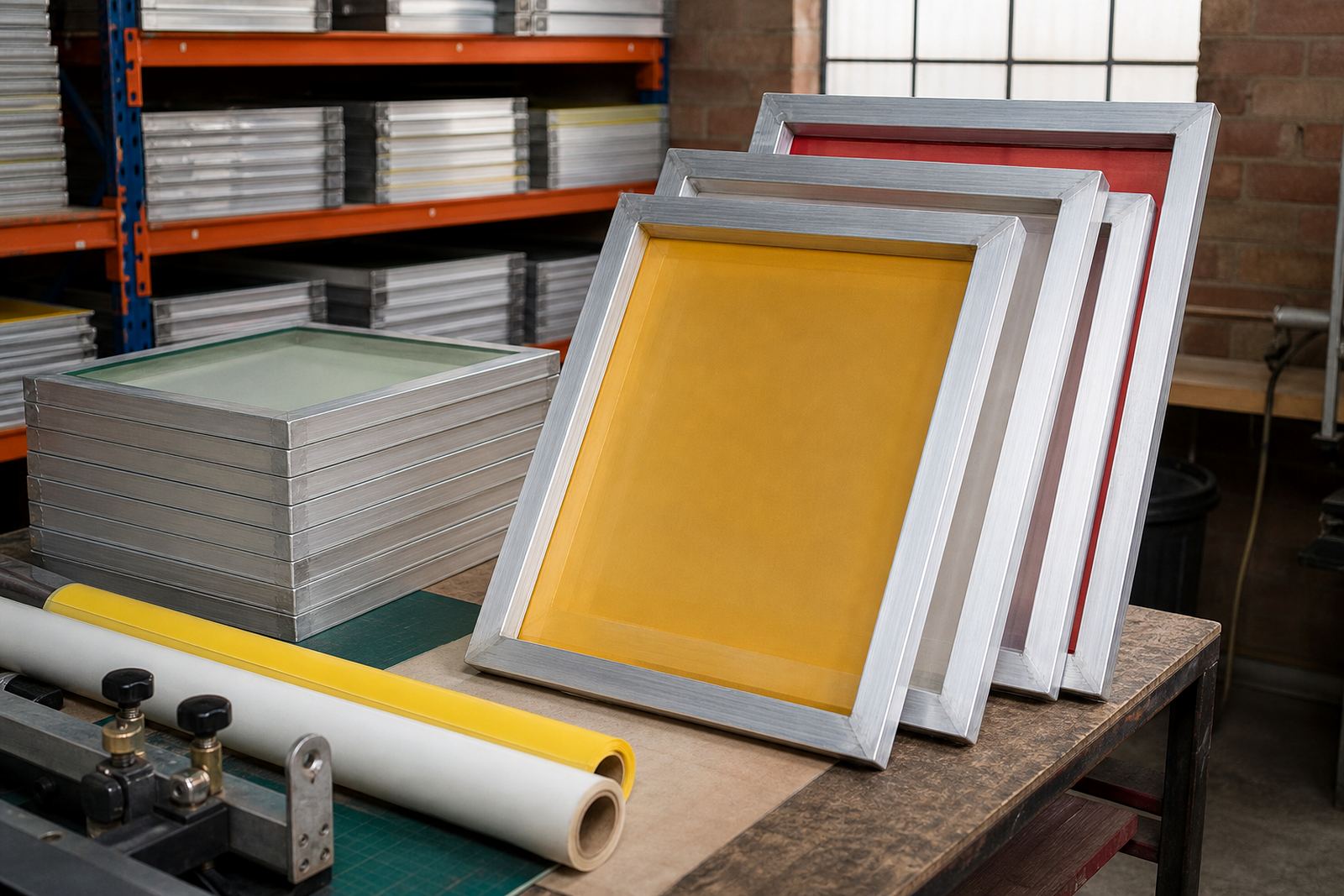
Choosing the right mesh count is not only about how much ink goes through. It also affects how long the screen stays useful between runs. Higher mesh counts are commonly used for finer detail and thinner ink deposits, while lower counts suit heavier coverage and bold graphics. If the wrong count is mounted for the job, the screen may be overworked from the start, which shortens its service life.
That is why Mesh count matching is part of sensible frame planning. A frame used for a coarse textile print will not behave the same as one set up for detail work. If a shop is trying to reuse a frame on a different type of job without checking the mesh count, the result can be poor print quality and unnecessary strain on the screen.
- Fine detail usually calls for a tighter, more controlled mesh
- Bold spot colours may need a different open area
- Changing the ink type can change the right mesh choice
- Reusing the wrong mesh count can mean more waste on press
What a proper re-stretch should achieve
A re-stretched frame should feel consistent across the full print area, not tight in one corner and loose in another. The aim is stable tension, clean mesh bonding and a frame that is ready for screen setup without extra fuss. If the tension is uneven, the printer ends up compensating during the run, which slows production and affects repeat orders.
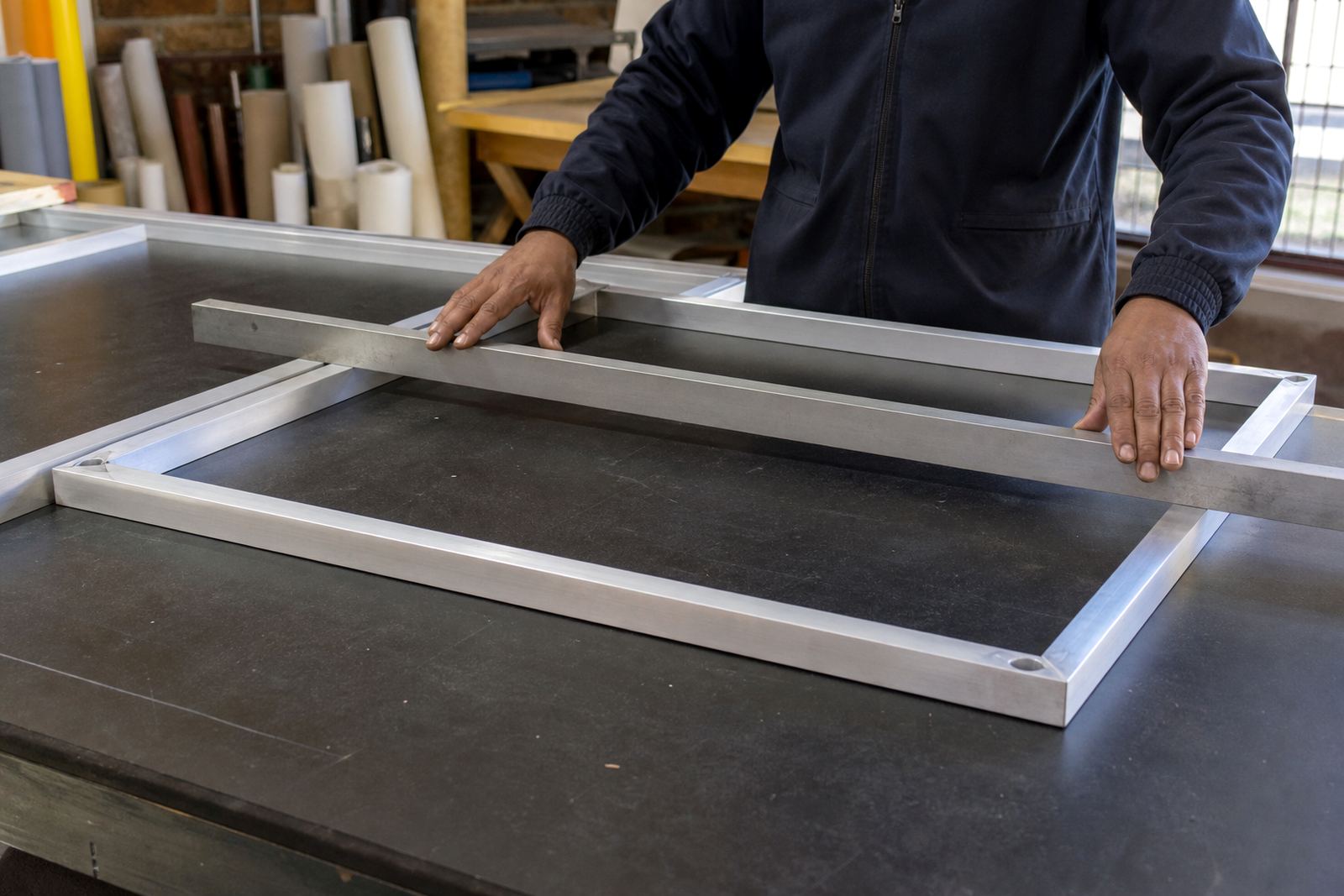
Before a frame goes back into service, it should be checked for the condition of the aluminium, the quality of the bond and any residue that could interfere with adhesion. A clean prep also matters. Leftover ink, tape glue or washout buildup can stop the new mesh from sitting properly on the frame. That is the sort of small issue that can cost a full day later on, especially when load-shedding interrupts the schedule and the shop needs the screen ready the moment power is back.
- Even tension across the full frame
- Clean bonding surfaces with no loose residue
- Square frame alignment for consistent registration
- Ready for inspection before the next production batch
A Germiston example from a busy print week
A local print shop in Germiston may have a stack of repeat school and corporate jobs lined up for the same week. The first few screens look fine, but by the second run the text begins to widen, and one colour is laying down heavier than the rest. Instead of adjusting every press setting, the team checks the screen frame and finds the mesh has lost tension after repeated cleaning and storage.
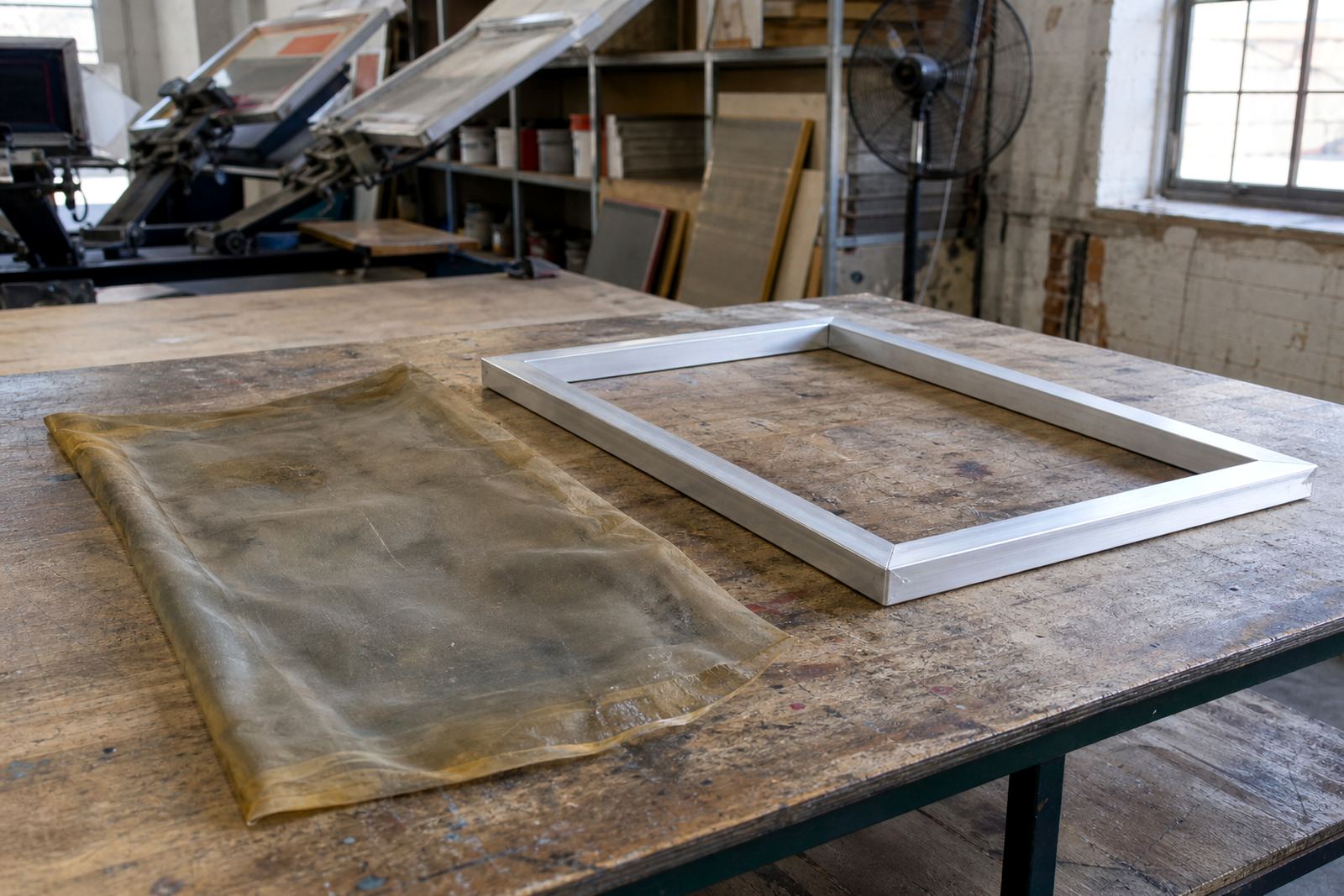
In that situation, a re-stretch is the practical answer. The shop can keep the aluminium frame, replace the worn mesh, and return to a stable setup for the next batch. For printers serving Johannesburg, Midrand and the East Rand, that kind of turnaround matters because schedules are often tight and delivery windows are narrow. One tired screen can hold back a full order if it is not dealt with early enough.
This is also where repeat order service helps. Once a shop has a known mesh count and frame size, the next stretch can be matched more accurately. That saves time and avoids last-minute guesswork before dispatch.
How to decide before the next run
If a screen has started behaving differently, do not wait until it ruins a full batch. A quick inspection can tell you whether the mesh still has life left or whether it needs to be replaced now. Shops that check screens before every major run usually avoid more downtime than the ones that only inspect after something goes wrong.
Use this short checklist before you load the press:
- Is the mesh still tight across the whole frame?
- Does the print still hold detail at the same settings?
- Have you cleaned the screen more than usual since the last run?
- Did humidity, heat or storage conditions change since the last job?
- Is the frame needed for a repeat order where consistency matters?
If the answer to two or more of those is yes, a re-stretch is worth considering. For shops across South Africa, from Cape Town to Durban and Pretoria, that small decision can protect the job schedule, reduce rework and keep the print room moving without unnecessary hold-ups.