Why frame straightness matters before you stretch mesh
In screen printing, a frame that is out of square or twisted can create uneven tension across the mesh. That shows up later as uneven contact, poor detail, or a screen that loses register faster than it should. Even a small bend can affect how the image sits on the substrate, especially when you are working with fine halftones or tight line work.
Aluminium frames are widely used because they hold shape well, but they still need checking after repeated use, cleaning, transport, or re-stretching. In shops around Germiston and the East Rand, frames often get handled in busy packing areas, moved between washout and prep spaces, and stacked with other screens. That is where knocks and minor distortion creep in.
The key point is simple: straightness is not only about appearance. It affects tension, print consistency, and whether the frame is worth reusing for the next run.
Start with a flat surface and a quick visual sweep
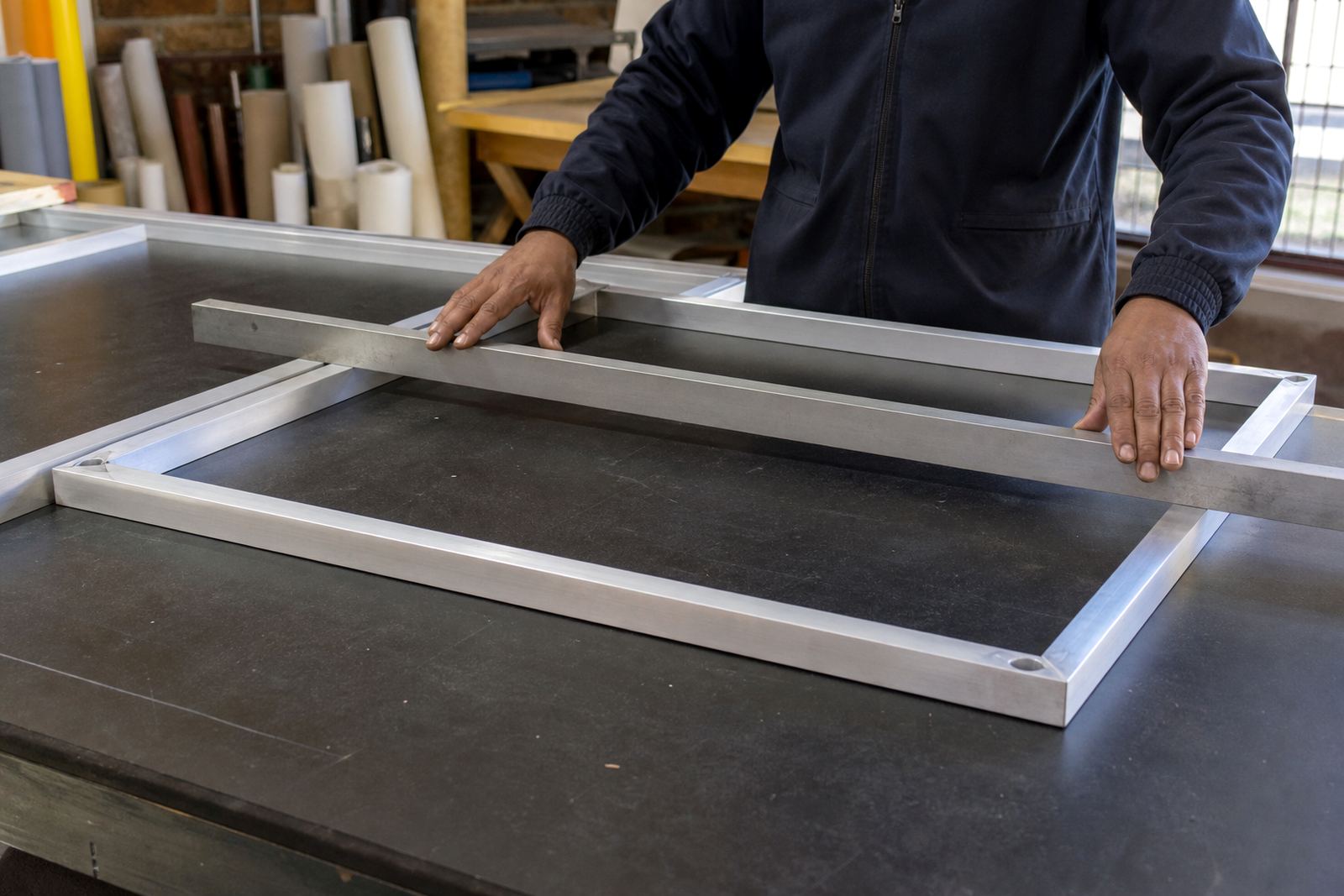
The first check does not need special tools. Place the frame on a known flat surface and look for rocking, daylight under the corners, or one side sitting higher than the others. If the frame lifts at one corner, that is usually your first clue that it is no longer true.
Then sight along each rail. You are looking for bows, twists, dents, and corner movement. A frame can still appear square from above but carry a slight twist through the body. That twist will often show when the mesh is tensioned. If the frame is used for repeat jobs, mark any problem areas so the same issue can be checked next time.
- Check all four corners for open joints or movement
- Look for dents near clamp points and handling points
- Inspect the rail edges for bends caused by stacking or transport
- Compare the opposite sides to see if one has drifted inward
Measure diagonals to confirm the frame is square
A frame can look straight and still be out of square. The most practical test is to measure the diagonals from corner to corner. If the two diagonal measurements do not match, the frame is no longer square and may need correction before stretching. The bigger the difference, the more likely you are to have trouble with fit and print alignment.
For busy print shops, this is one of the fastest habits to build into frame prep. Measure before you clean, before you bond mesh, and before you commit a good screen to a job. It saves time later. If the frame has been through multiple re-stretches, compare the current measurement with the intended size rather than guessing from memory.
It also helps to check that the outer edges are consistent all round. If one rail has shifted, the frame may still hold mesh but sit unevenly in the press. That can affect off contact and make the screen harder to set up properly.
Watch for twist, not only bend
Twist is harder to spot than a simple bend. A frame may sit flat on one side and still carry a slight rotation through the structure. This becomes clearer when you lift one corner and press another, or when you check how evenly the rails meet the surface. A twisted frame often gives mixed results during tensioning because the mesh pulls differently from one side to the next.
Coastal humidity in places like Durban and Gqeberha can also change how equipment behaves over time, especially if frames are stored poorly or exposed to moisture during washout and drying. That does not usually ruin a good aluminium frame on its own, but it can expose weak points in older joints or stretched corners.
- Uneven screen tension across the mesh field
- One corner lifting while the others stay flat
- Mesh pulling at an angle during stretching
- Poor repeatability when the same frame is reused
If you see these signs, the frame may still be usable but it needs a closer inspection before it goes back into the line.
Check joints, corners and previous repair points
The corners tell you a lot about the life of a frame. Look for cracked welds, loose joinery, adhesive residue, or signs that a corner has been repaired more than once. A frame with a tired joint may still carry mesh, but it will not hold tension evenly for long. That is especially true on larger screens where stress is higher across the span.
It is worth cleaning the rail edges and corner areas first, so you can see the actual condition of the frame. Ink build-up, tape residue, and old bonding material can hide small defects. Once the frame is clean, inspect it from both sides under good light. Small bends near the corners are often easier to spot that way.
If the frame is being prepared for a repeat order, the decision should be practical. A frame that is straight, square and free of movement can usually go back into service. A frame that has obvious joint fatigue may cost more in rework than replacement.
What to do when a frame is not straight enough
When a frame fails the straightness check, the next step depends on how severe the problem is. Minor distortion may be managed with careful re-stretching and setup advice. More serious twist or rail movement usually means the frame should not be used for fine work. Trying to force mesh onto a poor frame often leads to wasted mesh, unstable tension, and extra setup time.
At that point, it helps to separate the frame into one of three groups: fit for immediate use, suitable for re-stretching, or unsuitable for precise work. That sort of sorting makes batch screen prep easier and gives the press room a cleaner workflow.
- Use it as is if it passes flatness, diagonal and joint checks
- Re-stretch it if the frame is sound but the mesh setup has drifted
- Set it aside if there is clear twist, corner movement or rail damage
In a Germiston workshop where several screens are moving through prep at once, that simple triage keeps the process calm and saves the team from chasing problems later.
Build straightness checks into everyday screen prep
Frame straightness checks work best when they are part of the normal prep routine, not an occasional extra. Before stretching, before cleaning and before dispatch, give each frame a quick inspection. If you are running repeat orders, compare the frame against the last approved setup and note any change in fit or tension behaviour.
Good handling matters too. Store frames level, avoid leaning them at odd angles, and keep them clear of heavy traffic areas where they can be knocked. On load-shedding days, many shops work with tighter timing and less light, so a simple, repeatable inspection routine becomes even more useful. It reduces mistakes when the pace picks up.
The aim is not perfection for its own sake. It is to keep every frame serviceable enough to support clean, reliable printing. A straight frame is easier to stretch, easier to register, and easier to trust on the press.