When a Standard Setup Starts Holding You Back
Most screen shops begin with a handful of trusted mesh counts and a few frame sizes that cover the bulk of the work. That is sensible. A reliable 43T or 61T mesh can carry a lot of textile and general-purpose printing, while finer meshes help when the artwork needs cleaner edges, thinner ink deposit or more controlled detail. The trouble starts when every job gets forced through the same setup.
Signs are usually practical, not dramatic. The print may look heavy on fine detail, the stencil may break down sooner than expected, or the squeegee feel changes from one frame to the next. If your team is adjusting pressure, flood speed and off-contact far too often, the issue may be less about technique and more about the mesh and frame mix you are running every day.
In Germiston and across the East Rand, many shops print through the same rack whether the order is for workwear, labels, flats or spot colour graphics. That can work for a while, but once order variety grows, standardisation needs to be a bit smarter. A narrower mesh range, matched properly to the ink and artwork, often gives steadier results than trying to make one setup do all the work.
Matching Mesh Count to the Job, Not the Habit
Mesh count decisions should start with the print outcome you need, not with whatever happens to be hanging ready. Coarser mesh lets more ink through and is often suited to bold graphics, heavier deposit and some textile work. Finer mesh holds back more ink and supports sharper detail, thinner layers and more controlled printing on smoother substrates.
- Coarser meshes are often chosen for strong ink deposit, solid blocks, and prints where coverage matters more than fine detail.
- Medium meshes usually serve as the everyday workhorse for mixed orders, balancing deposit and definition.
- Finer meshes help when detail, halftones or tighter registration are important and the ink system can cope with a lighter deposit.
- Special jobs may need a mesh choice tied to ink body, garment texture, substrate finish, and the level of stencil stability needed through the run.
A common mistake is assuming a finer mesh will fix a messy design or that a coarse mesh will speed up every print. In reality, mesh count is part of a wider setup that includes stencil thickness, screen tension, ink choice and the type of frame being used. When those elements are matched properly, the press room usually runs smoother and waste drops a bit too.
Why Frame Tension Matters More Than Many Shops Realise
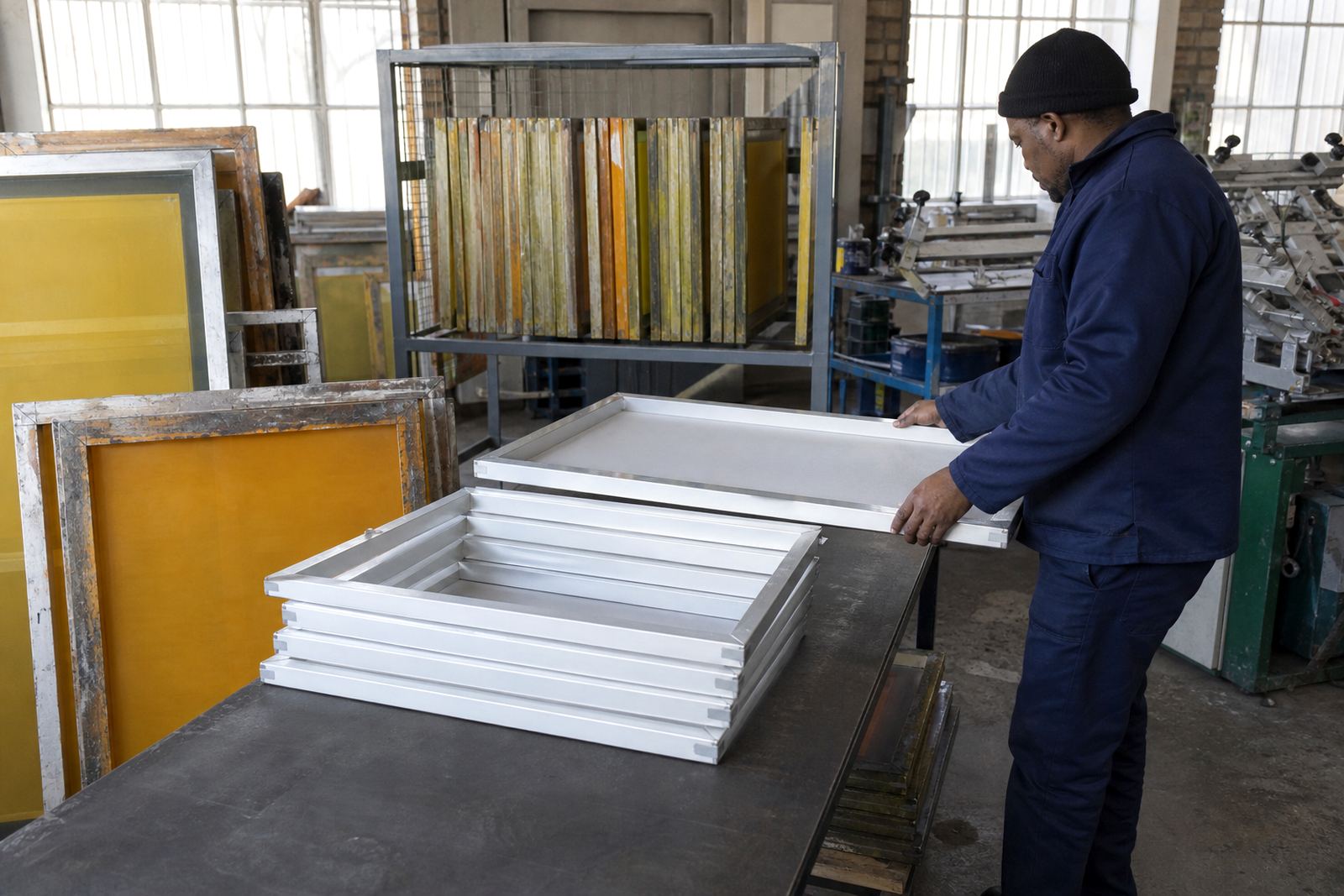
Pre-stretched aluminium frames bring consistency, but only if the tension is suitable for the job and stays there. A screen that is too loose can drag, blur detail and make registration harder, especially on long runs. If it is stretched unevenly, you may see image distortion or a print that looks fine on one side of the frame and tired on the other.
Tension affects how ink releases, how the squeegee rides, and how repeatable the print feels from the first pull to the last. That matters on busy production days, particularly when power interruptions disrupt a rhythm and operators need to resume work cleanly after a pause. In South African shops, that is a real factor, not a theory.
- Higher tension can support cleaner release and better detail when the mesh, stencil and frame are matched correctly.
- Lower tension may be more forgiving in some setups, but it often asks the operator to work harder for the same result.
- Even tension across the screen is as important as the number on paper, because uneven pull affects print consistency.
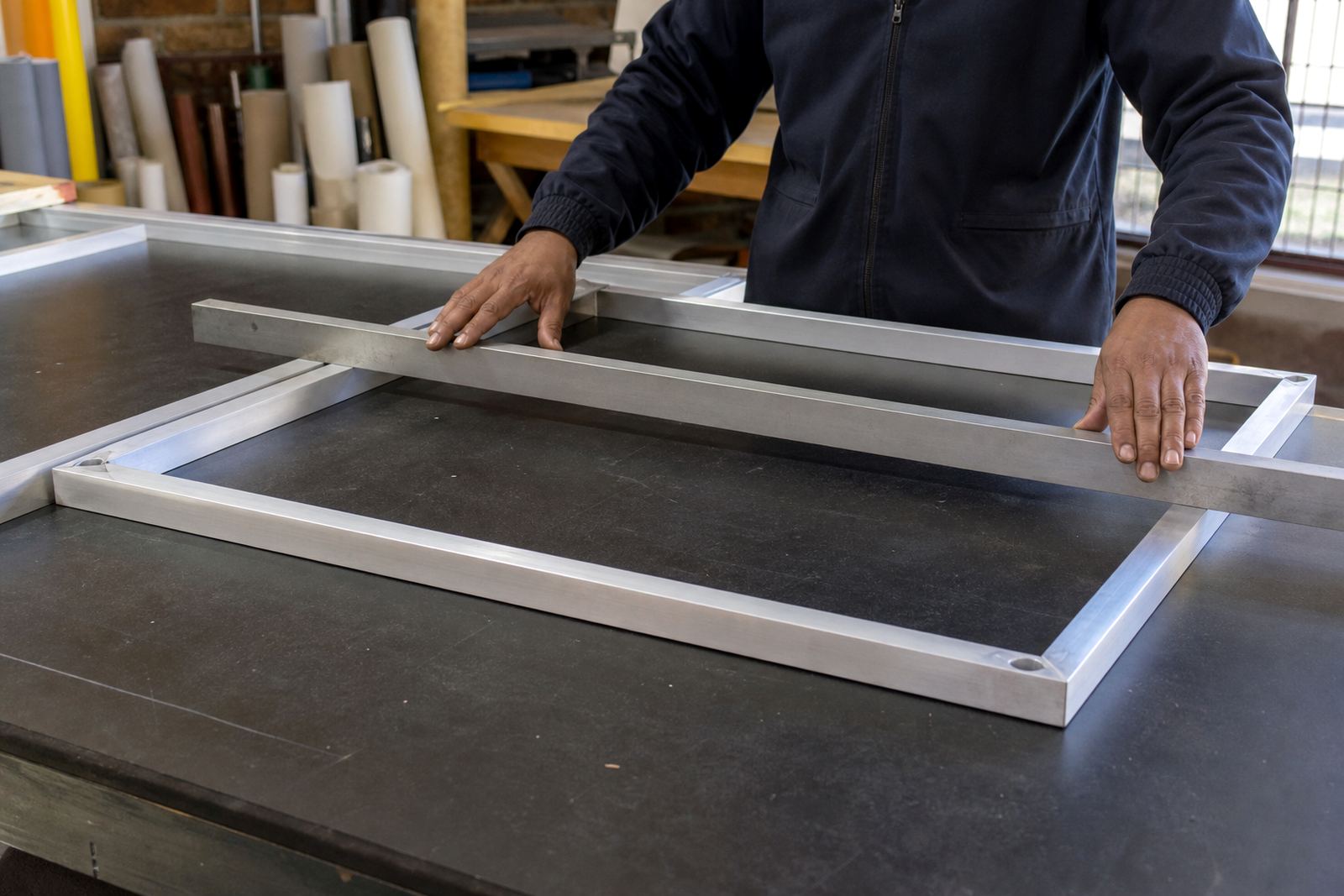
- Frame condition matters too. If a frame has repeated strain, poor bonding or a twisted profile, stretching quality suffers.
For many shops, upgrading is not about chasing a higher tension figure for its own sake. It is about finding a repeatable level that suits the inks, the artwork and the pace of work. That is where proper stretching and re-stretching make a difference.
Local Conditions Change the Way Screens Perform
Screen printing in Gauteng is not the same as printing near the coast. In Durban or Gqeberha, humidity can affect drying, emulsion behaviour and how screens behave over time. In Johannesburg and Pretoria, drier air and dust can create different prep issues, while load-shedding can interrupt drying cycles and slow down batch work. A screen setup that copes on one site may need a small adjustment on another.
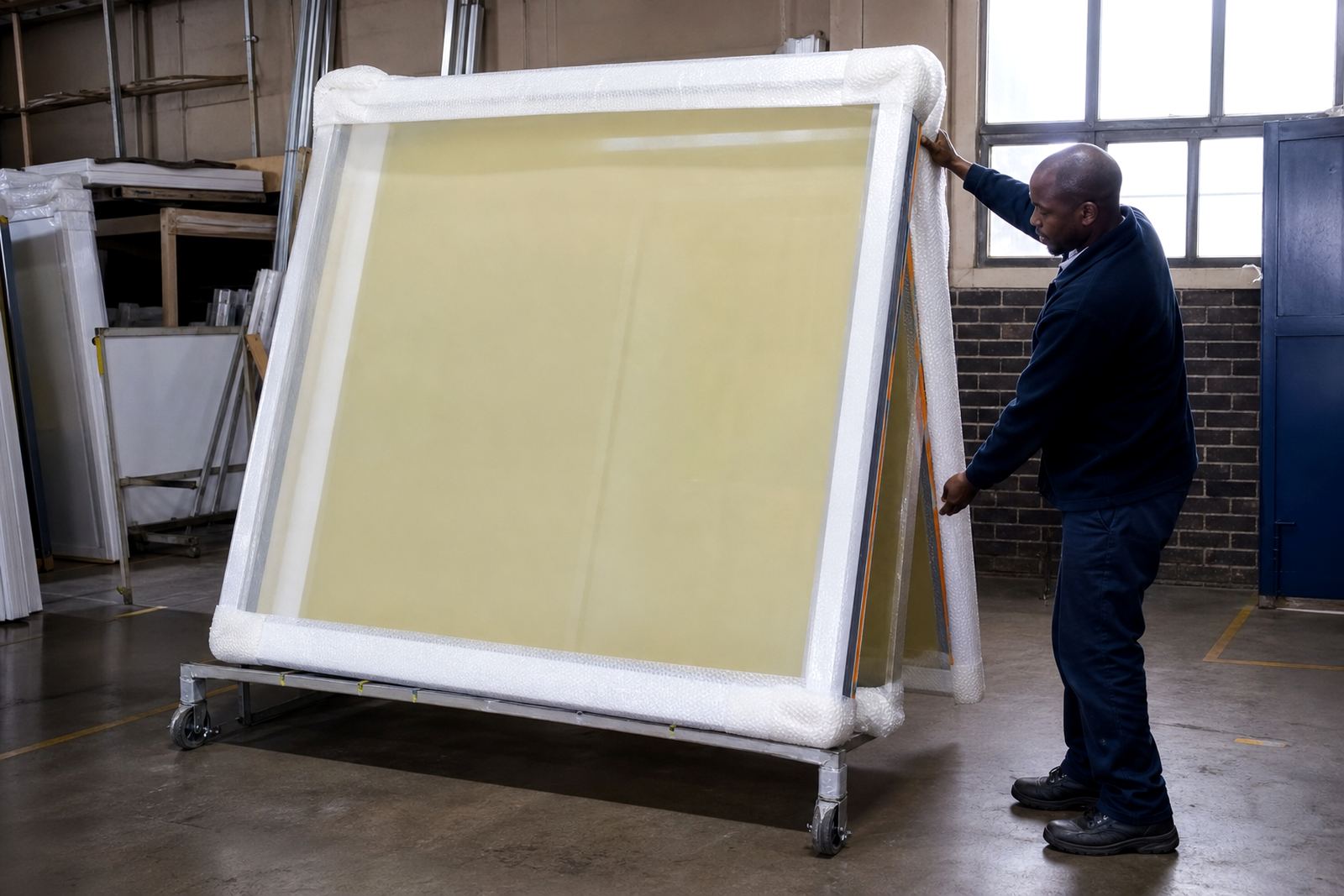
That is why frame selection and mesh matching should be practical, not one-size-fits-all. A shop in Midrand doing repeat work on mixed garments may need a different mesh spread from a printer handling larger runs in Cape Town with frequent coastal moisture exposure. Even the way screens are packed for dispatch can matter when orders travel between branches and delivery routes.
At this stage, the question is often less about buying more screens and more about refining the mix you already rely on. If certain jobs keep needing extra touch-ups, or the team keeps asking for the same frame to be rechecked, then your current setup is giving you a clue.
What to Review Before You Expand the Rack
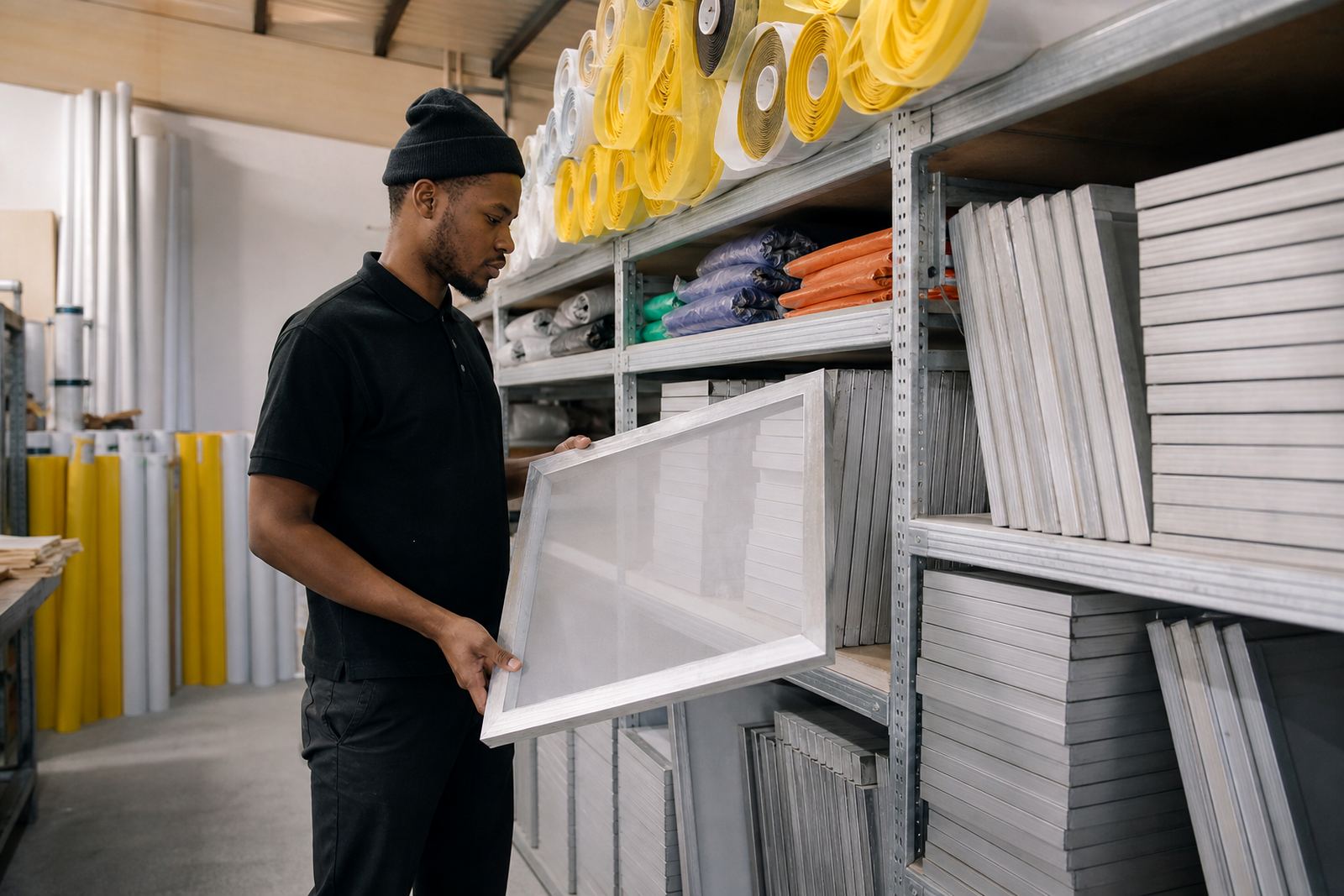
A proper review does not need to be complicated. Start with the jobs that come up most often, then compare what is actually on the screen table. You may find that one mesh count is doing too much, while another sits idle most weeks. That is usually the sign that the range needs tightening up or splitting into clearer roles.
- Check which mesh counts are used for your most common inks and garment types.
- Review whether the same frame size is being pushed into jobs it was never really suited to.
- Look at where print defects repeat, especially on detail, coverage and alignment.
- Ask whether the screen prep process is consistent from one order to the next.
- Set aside any frames that no longer hold tension evenly or need repeated correction.
This is also the point where a screen inspection can save time. If a frame needs clean prep, re-stretching or better bonding, it is often cheaper to deal with that now than to lose production time later. Small adjustments to the rack can make a noticeable difference to how the whole shop feels during a busy week.
A Germiston Example for Shops Across the Country
Consider a print shop in Germiston serving walk-in work, repeat garment orders and the odd rush job from Johannesburg or Pretoria. It starts with a few dependable screens, then the work mix changes. A customer wants finer logo detail on one run, thicker coverage on another, and faster turnaround on the next. Soon the team is using the same mesh count for too many different jobs.
Once the shop separates the work into clearer categories, the difference is easier to manage. Medium meshes handle the everyday prints, finer meshes are kept for detail and controlled ink deposit, and stronger pre-stretched aluminium frames are reserved for screens that must stay stable through repeat use. The team spends less time adjusting and more time printing. It is not flashy, just more practical.
That is the real value of upgrading screen setups. You are not changing everything at once. You are refining the standard mix so the common jobs print better, the difficult jobs become more predictable, and the screens in circulation actually match the work on the order sheet.
How MeshMaster Supports a Better Screen Mix
MeshMaster supplies screen-printing mesh and pre-stretched aluminium frames to print shops across South Africa from Germiston, with support for Johannesburg Delivery, Pretoria Delivery, Durban Delivery, Cape Town Delivery, Gqeberha Delivery, East Rand Supply and Midrand Delivery. If you need new frame stretching, frame re-stretching, mesh count matching, tension checking or custom frame sizing, it helps to work from the demands of the print room rather than guesswork.
Our team can also assist with frame clean prep, mesh bonding, batch screen prep, screen inspection, dispatch packing, repeat order service and screen setup advice. For shops refining their standard setup, that means the parts of the system can be matched more carefully, whether the priority is stronger production flow, better detail or more consistent repeat work. To discuss a cleaner mix for your screens, send an enquiry through the contact page.