Start with the jobs you print every week
The safest way to avoid overbuying is to look at repeat work first. If most of your orders are schoolwear, workwear, labels or simple one-colour garments, you probably do not need a wall full of every mesh count under the sun. A practical stock plan starts with the screens you use most often, then adds a few extras for special jobs and replacements.
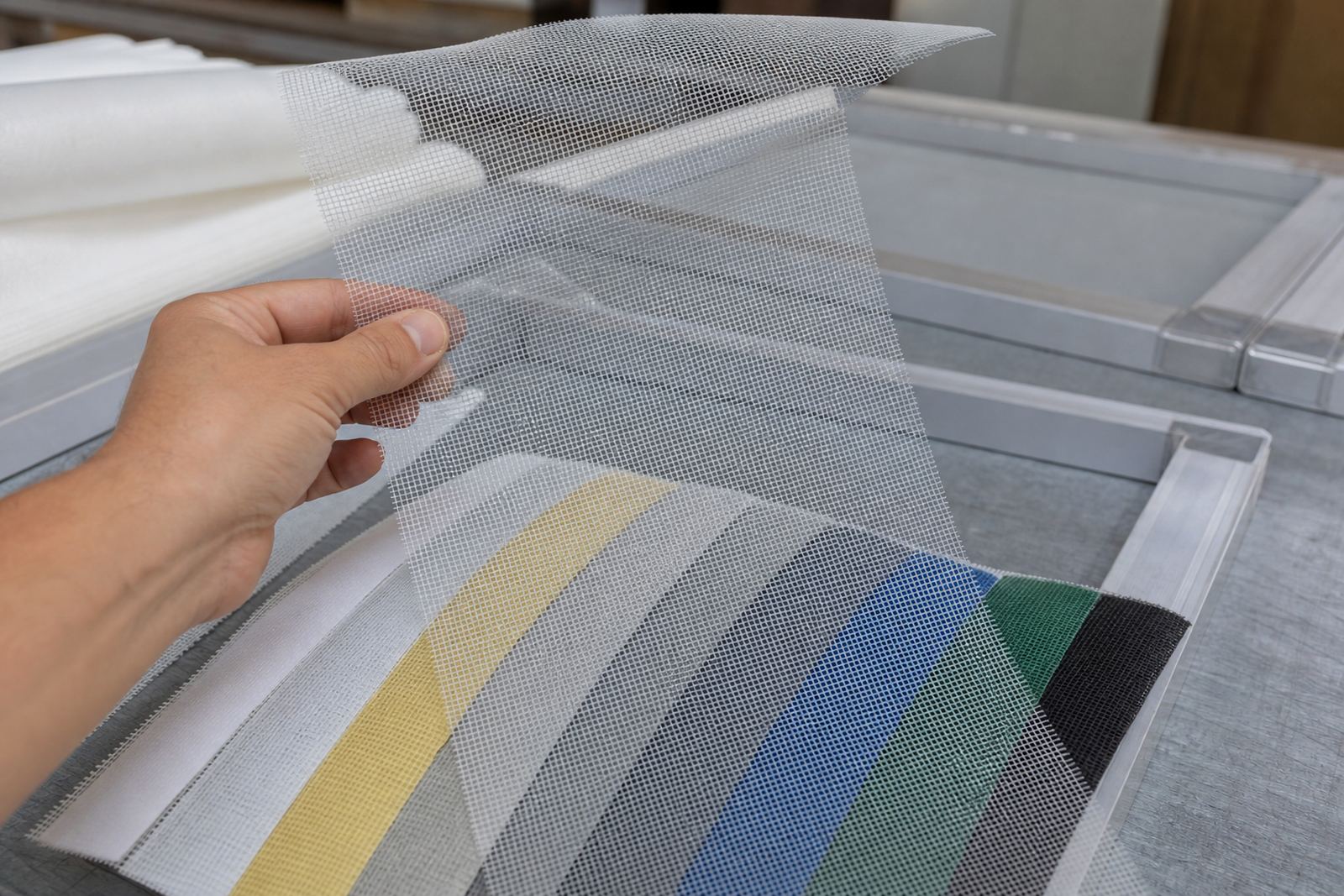
In screen printing, mesh choice follows the artwork and ink. Higher mesh counts suit finer detail and thinner ink films, while lower counts are used for heavier deposit on bold graphics, white underbases and specialty inks. If you print mainly on T-shirts in Johannesburg or Pretoria, your day-to-day needs may differ from a shop doing packaging or textile work in Durban where humidity can affect drying and handling. Buy for your real mix, not for the jobs you might one day get.
- Count the jobs you repeat each month, not just the odd rush order.
- Separate textile work, paper work and specialty ink jobs.
- Keep a small buffer for spoilage, but do not double up on every size.
Choose a mesh count range that covers most of your work
Most print shops do better with a focused range than with a broad collection of mesh counts that sit idle. A sensible range usually includes lower counts for heavy ink laydown, mid-range counts for general garment work and higher counts for finer detail. The exact spread depends on the inks you use and the level of detail in your artwork.
It also helps to think in terms of production flow. If one screen can be used across several jobs with only a small artwork change, that is often better than stocking a separate screen for every possible design. A screen that stays in use is doing its job. One that sits in storage takes up space and still needs handling, cleaning and protection from dust and knocks.
- Lower counts: bold prints, heavier inks, underbases and coverage.
- Mid counts: general garment printing and everyday shop work.
- Higher counts: fine detail, halftones and cleaner image transfer.
- Keep notes on what your team actually reaches for most often.
How many pre-stretched frames is enough
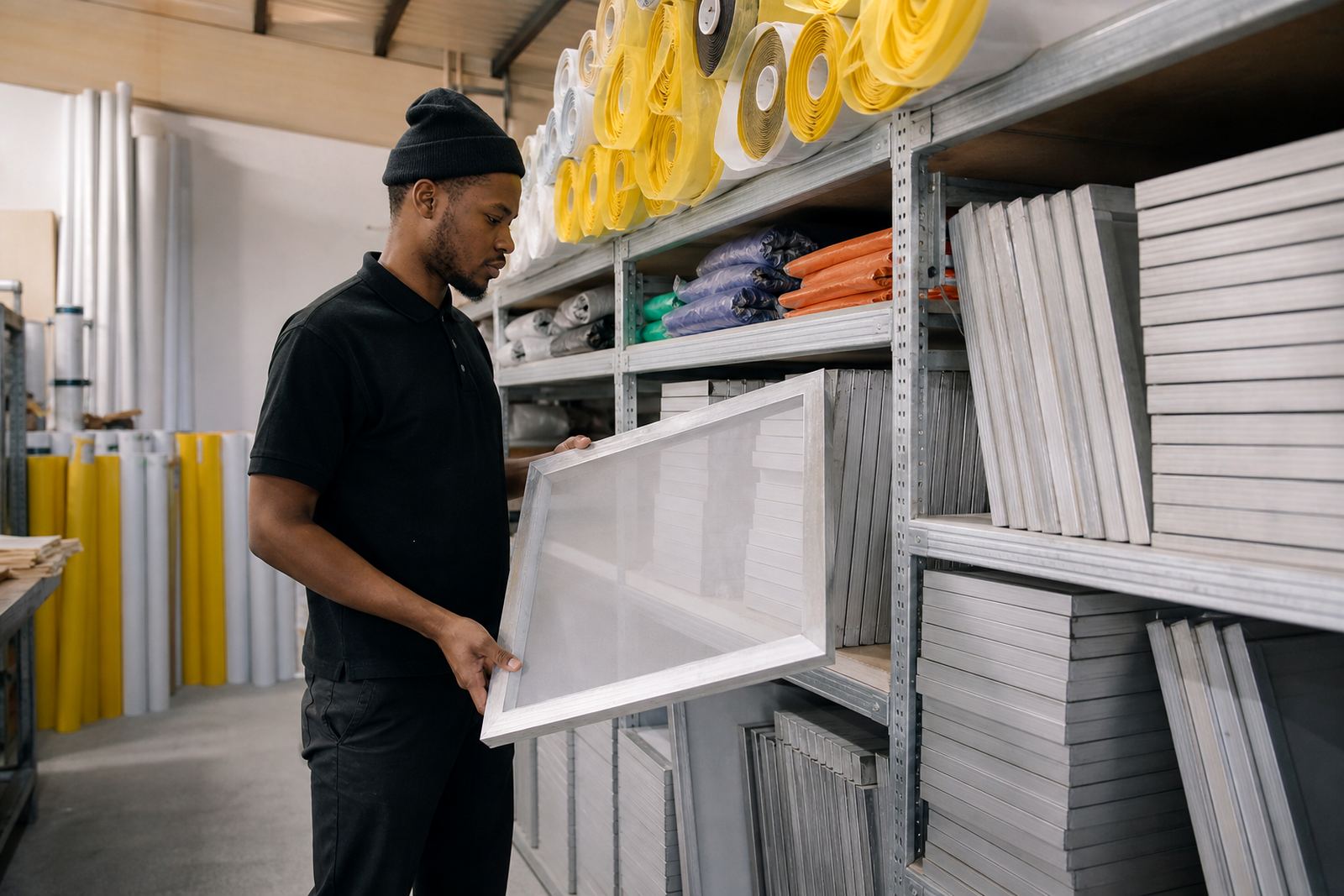
Pre-stretched aluminium frames save time, but there is still no benefit in buying more than your storage and turnaround can handle. The right number depends on how many jobs you run at once, how often screens are reused and whether you keep spare frames ready for urgent work. If you have a small team and limited space, a tighter set of standard sizes is usually easier to manage than a wide collection of odd formats.
For many shops, the best approach is to keep a few common sizes that suit most platens and artwork layouts, then add custom sizing only where the work demands it. That way you are not tying up racking space with frames that are rarely used. In Germiston and the East Rand, where floor space is often at a premium, this can make a real difference to how cleanly a print room runs.
- Match frame sizes to your most common artwork sizes.
- Keep spares for rush jobs and reprints.
- Use custom sizes only when they solve a real production need.
- Factor in storage, cleaning and handling space before you order more.
Tension matters more than having extra screens
A smaller set of correctly stretched screens will usually outperform a larger pile of loose or uneven ones. Good tension helps with registration, cleaner print edges and better repeatability. It also reduces the stop-start problems that cost time during long runs. If a frame is out of tension, the artwork can shift slightly, flooding may behave differently and the printer ends up adjusting more than is necessary.
That is why tension checking and frame re-stretching are often better investments than buying another batch of screens. It is easy to overbuy when the real issue is that the existing screens are no longer performing as they should. A clean frame with proper mesh tension can be put back into service quickly, especially when the job list changes through the month.
- Check tension before assuming you need more frames.
- Re-stretch serviceable frames instead of replacing them too early.
- Watch for uneven pull, slack corners and poor registration.
Plan storage before you place the order
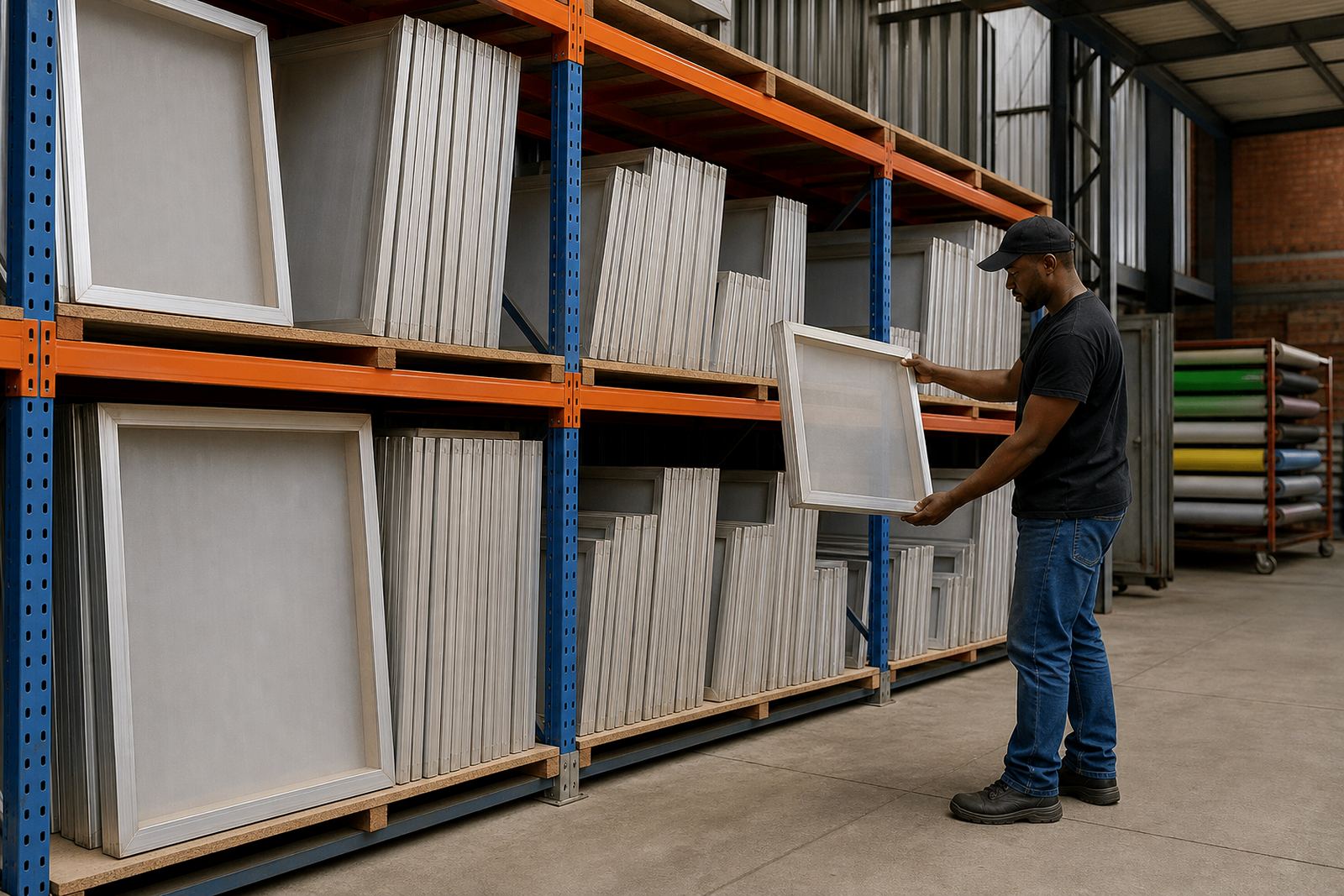
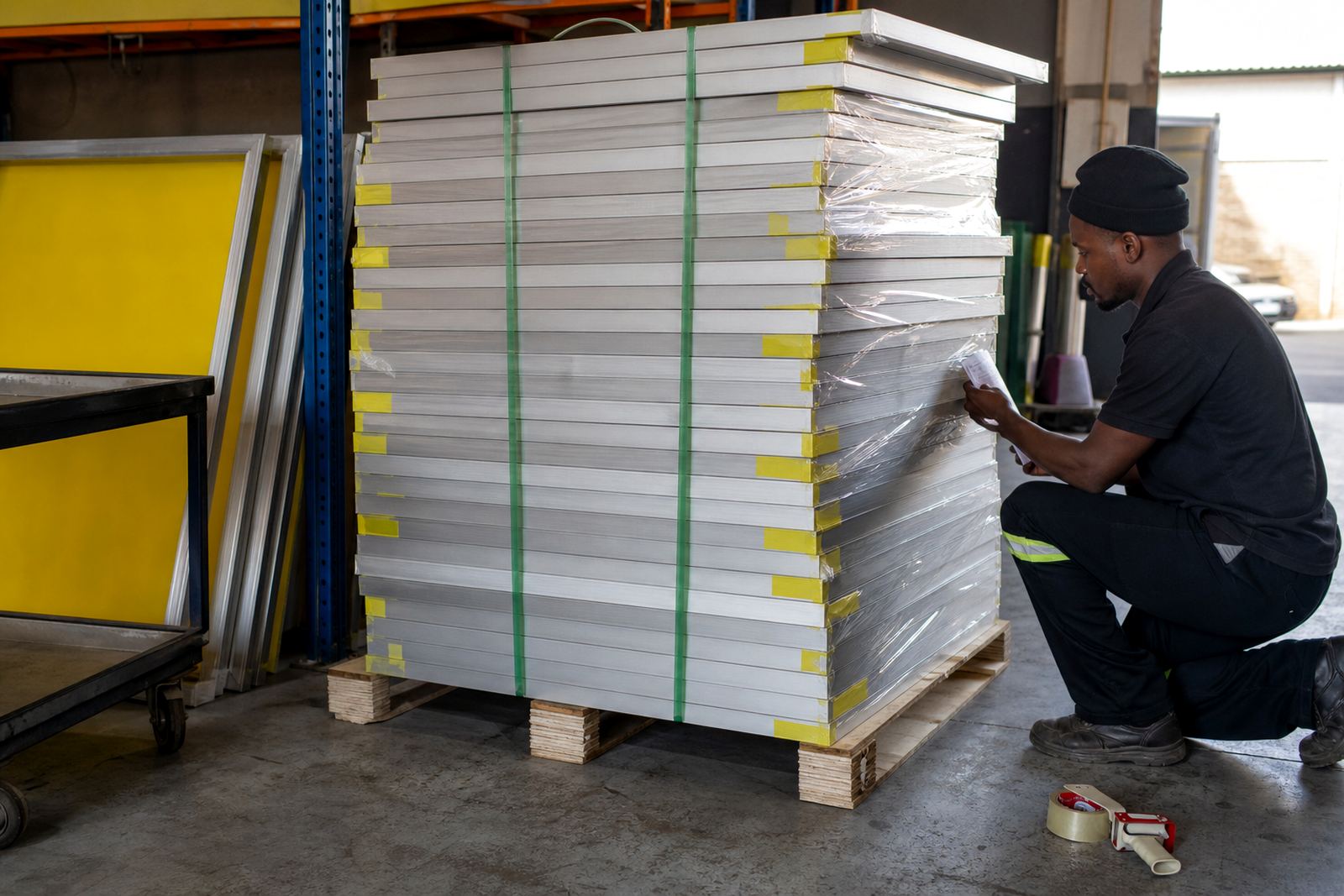
Screen stock takes up more room than people expect. Frames need protected stacking, mesh needs to stay clean and dry, and new stock should not be squeezed into corners where it bends or collects dust. In coastal areas like Durban and Gqeberha, moisture can be a nuisance, so proper storage matters even more. In Gauteng, dust and workshop traffic can be just as hard on stock if it is left uncovered.
If your storage is tight, buying fewer screens in better-fitted batches is usually smarter than placing a large once-off order. You can also group your stock by mesh count and frame size so your team finds the right screen quickly instead of pulling out three others to get to the one they need. That saves time and keeps the set in better condition.
- Measure storage space before ordering larger quantities.
- Keep screens off the floor and away from damp walls.
- Store by size and count so staff can reach the right frame fast.
- In humid areas, protect stock from moisture during delivery and storage.
Use ordering patterns to avoid dead stock
Most print shops already know their busy months. School wear, campaigns, sporting events and retail peaks all create different needs. Use those patterns to decide when to top up and when to hold back. A repeat order schedule often works better than a big single purchase, because it keeps cash moving and prevents screens from sitting unused for months.
At MeshMaster in Germiston, we often see shops across Johannesburg, Pretoria, Durban, Cape Town and Gqeberha do best when they match stock to their actual turnover. A printer in Midrand may need a different mix from a shop doing more short-run work on the coast. The principle is the same: keep enough to print without crowding your floor or your budget.
- Review your busiest months before ordering more.
- Top up the screens that move fastest first.
- Keep a small reserve for rush work, but not a pile of slow movers.
When a smaller order is the better choice
There are times when the best buying decision is simply to do less. If you are testing a new job type, changing inks, or moving into a different garment range, start with a smaller batch and see how the screens are used. That gives you room to adjust mesh counts, frame sizes and tension targets without tying up money in stock that does not suit the work.
Practical buying is about fit, not volume. A tidy set of well-chosen screens, properly checked and stored, will carry more work than a cluttered rack full of almost-right options. When the order list changes, your stock should still be easy to move, easy to find and ready for the next run.