Why large screens are vulnerable in transit
Once a frame gets bigger, the weak points become easier to damage. A large screen carries more surface area, more tension across the mesh and more chance of corner knock, bowing or rubbing if it shifts in the vehicle. That matters whether the load is going from Germiston to Johannesburg, or making a longer run to Durban, Cape Town or Gqeberha.
For print shops, the problem is usually not one hard impact. It is the small movements that happen on bad roads, during loading, or when a frame is stood on edge against other cargo. A stretched mesh can take a lot, but if the frame twists even a little, registration can go out and the print edge may start to show uneven pressure.
On oversized screens, good packing starts before the wrap goes on. The frame should be clean, dry and checked for loose adhesive, burrs on the aluminium, or any small lift at the mesh bond line. If a frame is going out with a fresh stretch, it helps to confirm the tension has settled and the corners are sound before dispatch.
What to check before the screen leaves the workshop
Before packing, a proper screen inspection saves time later. The point is to catch issues while the screen is still easy to handle, not after it has been unloaded at the other end. This is especially important on repeat orders, where a shop may be running the same artwork across several frames and expects each one to behave the same way.
- Check that the mesh count matches the print task, since a fine mesh and a coarse mesh do not travel or print the same way.
- Look for even tension across the full image area, not just at the centre.
- Inspect the corners for movement, dents or sharp edges that could cut into wrap or carton.
- Make sure the frame is clean and free from loose emulsion, tape or ink residue.
- Confirm the screen size and orientation so the receiving team can stack it correctly.
If the screen has been re-stretched, the frame should be checked again after bonding and again before dispatch. That extra look helps catch a side that has pulled slightly or a mesh line that has been disturbed during handling.
Packing points that protect tension and mesh
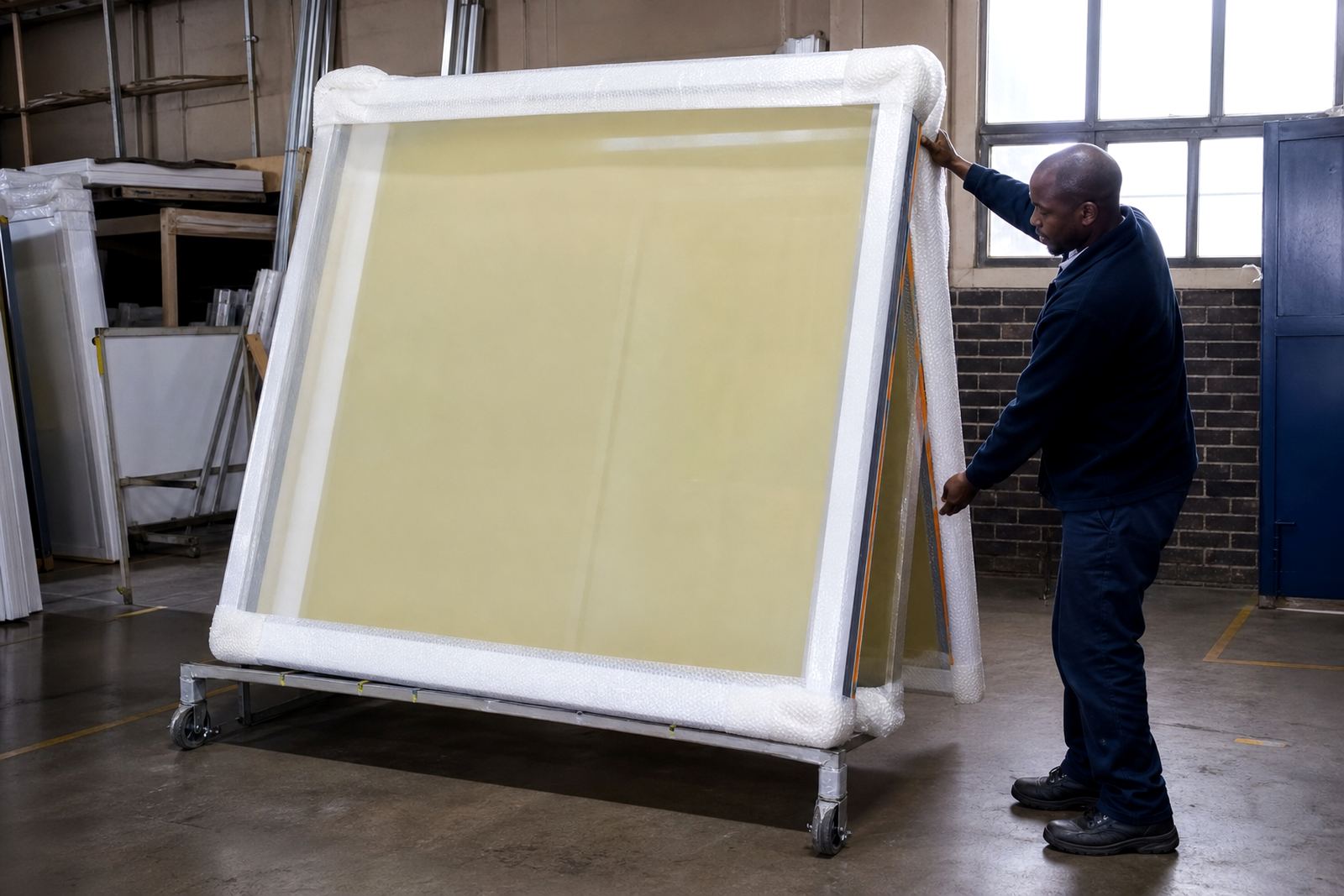
The best packing method is the one that stops a frame from flexing. Oversized screens should not be left to rattle around in open space. They need support at the edges, protection at the corners and enough restraint to stop the mesh from being pressed by rough surfaces. A screen can survive a long trip, but only if the load is organised around its size.
Corner protection matters most. The frame edges should sit against material that can absorb light knocks without digging into the aluminium. The face of the mesh should never press directly against hard straps, rough timber or exposed metal. If more than one frame is travelling together, each one should be separated so the mesh does not rub against another frame during braking or load shifting.
- Use flat support under the frame rather than resting it on one narrow point.
- Keep the mesh face away from anything sharp or abrasive.
- Separate stacked screens with clean interleaving material.
- Secure the load so it cannot slide when the vehicle stops suddenly.
- Avoid over-tightening straps across the mesh area, since that can mark or distort the screen.
In coastal deliveries, a little extra care helps because humidity can soften packaging material and create condensation on the frame. In dry inland conditions, dust and grit are the bigger concern, so the packing should still seal cleanly without trapping loose particles against the mesh.
How route and vehicle choice affect the load
Dispatching a large screen from Germiston to a nearby Gauteng address is not the same as sending it down to the coast. Long-distance transport means more time in the vehicle, more stops, and more chances for the load to settle or shift. That is why route planning matters as much as the wrap itself.
For smaller local drops, a well-organised bakkie load can work if the screen is supported and the route is direct. For longer runs, the screen should be packed so it can handle being handled twice, once at collection and again at delivery. Load-shedding also has a quiet effect in some workshops because delays can push dispatch into later hours, which means the packing must be ready to go without last-minute adjustments in poor light.
A good rule is to think about what the screen will meet on the road. Gauteng traffic brings stop-start movement. National routes bring vibration over distance. Coastal routes bring moisture and salt air. The packing should answer all three, not just one.
A Germiston example: large frames heading to a busy print floor
A typical dispatch from Germiston might be a set of oversized pre-stretched aluminium frames going to a print shop in Pretoria or Johannesburg for a run of signage and garment work. The shop may need the frames kept in matching order, because each one is tied to a different mesh count and print requirement. If the screens arrive mixed up, setup time is lost and the crew has to re-check each one before starting.
In that situation, clear labelling and sensible grouping help. Frames with the same mesh count can be packed together, while special screens can be marked separately so the receiving team knows what to inspect first. If a batch has been tension-checked and cleaned ready for dispatch, the pack should preserve that condition, not force the shop to redo simple checks on arrival.
For a Durban delivery, we would be even more careful with wrap integrity and moisture protection. For Cape Town or Gqeberha, the same screen still needs edge support, but the pack should also be neat enough to hold its shape after a longer road trip. That is practical work, not guesswork.
Receiving screens and getting them onto the rack
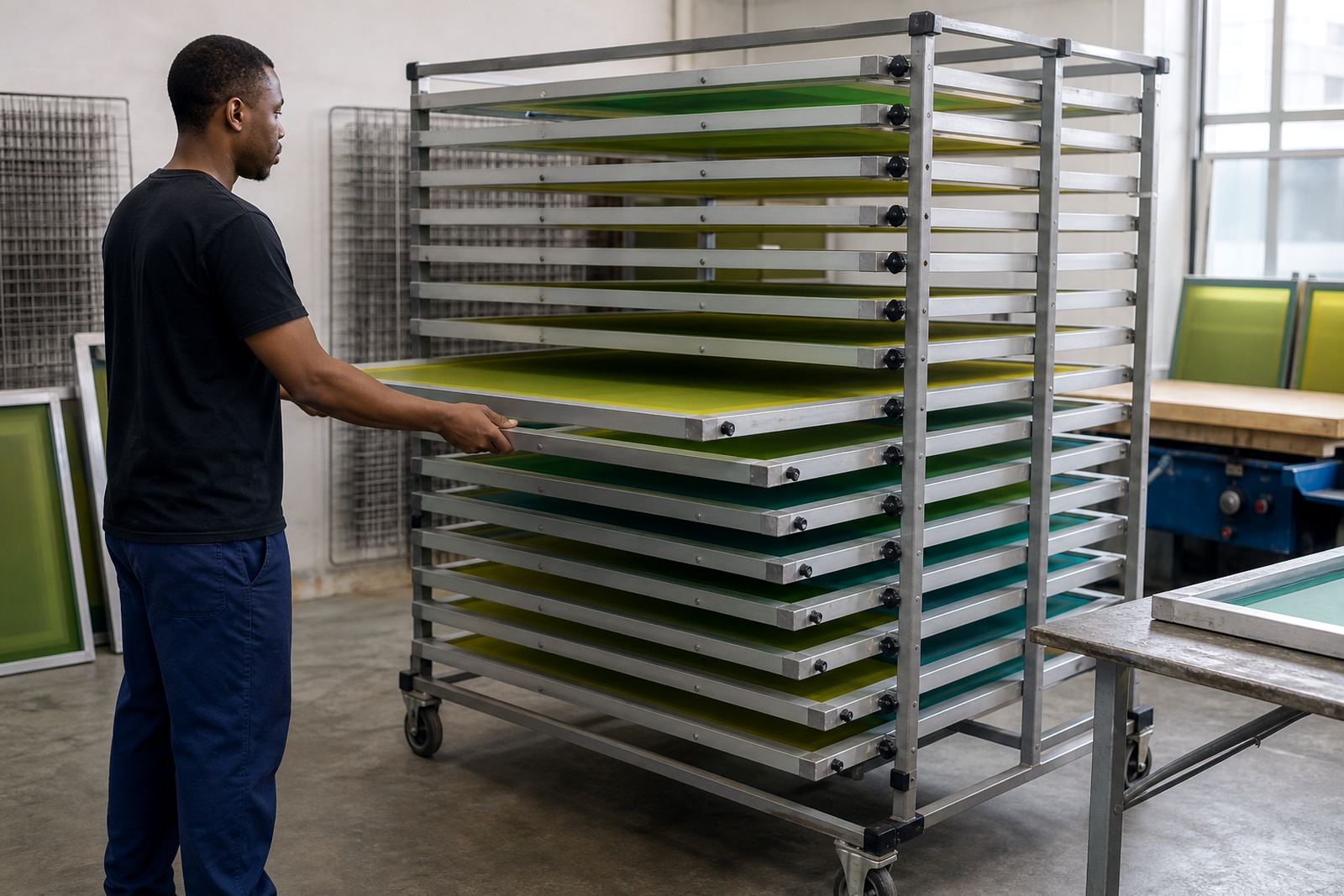
What happens after delivery is part of the packing plan too. A good pack should be easy to open without damaging the frame, and the receiving team should be able to move the screen straight to inspection or rack storage. If the screen has been packed too tightly or with awkward fasteners, people tend to rush, and that is where corners get knocked and mesh gets nicked.
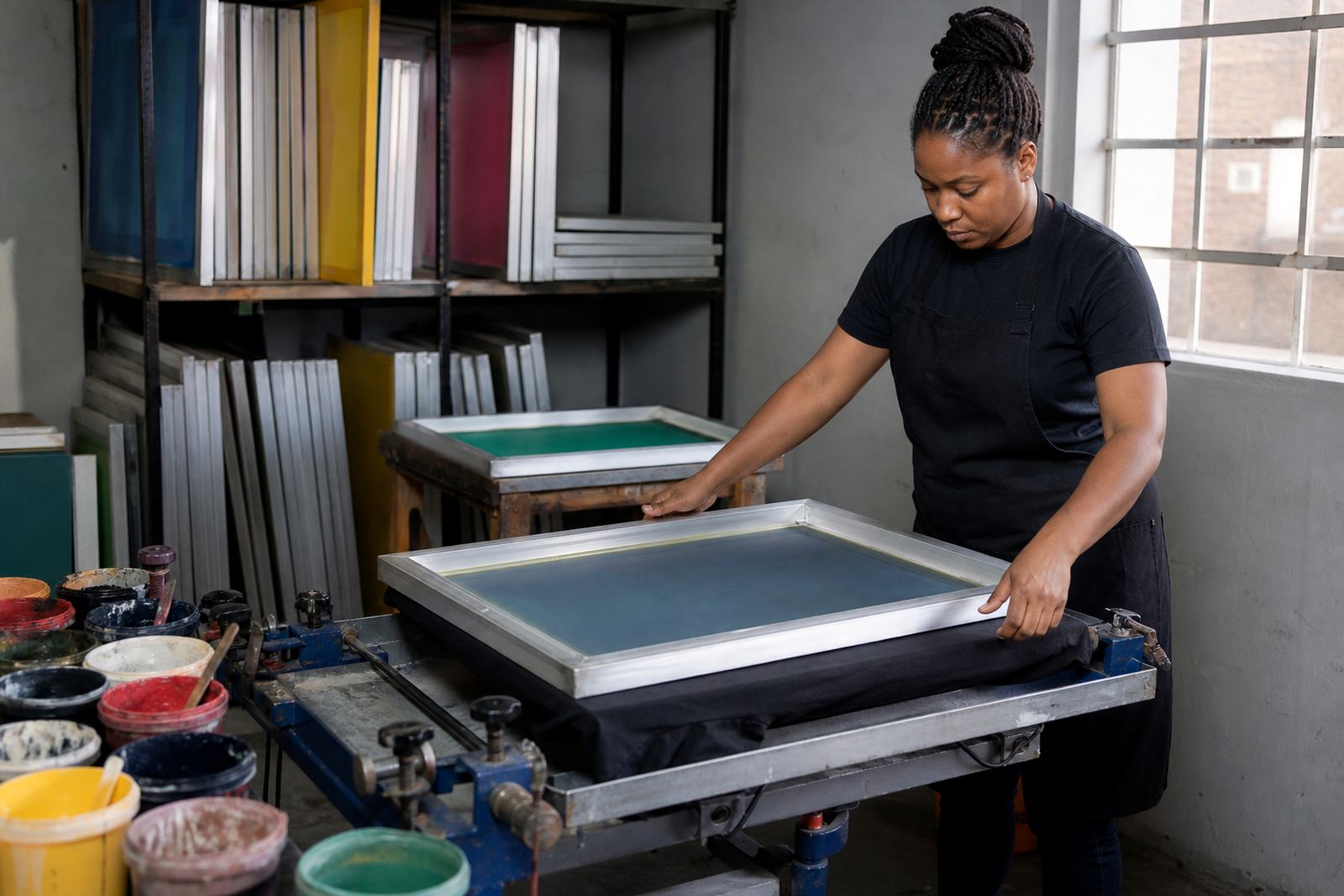
Once the screen is unpacked, it should be checked again before use. Look at the tension, the mesh surface and the frame edges. If there is any sign of bowing or rubbing, deal with it before the screen goes into production. That small pause can save a print run later.
- Open the pack on a clean surface, not on a floor with grit or swarf.
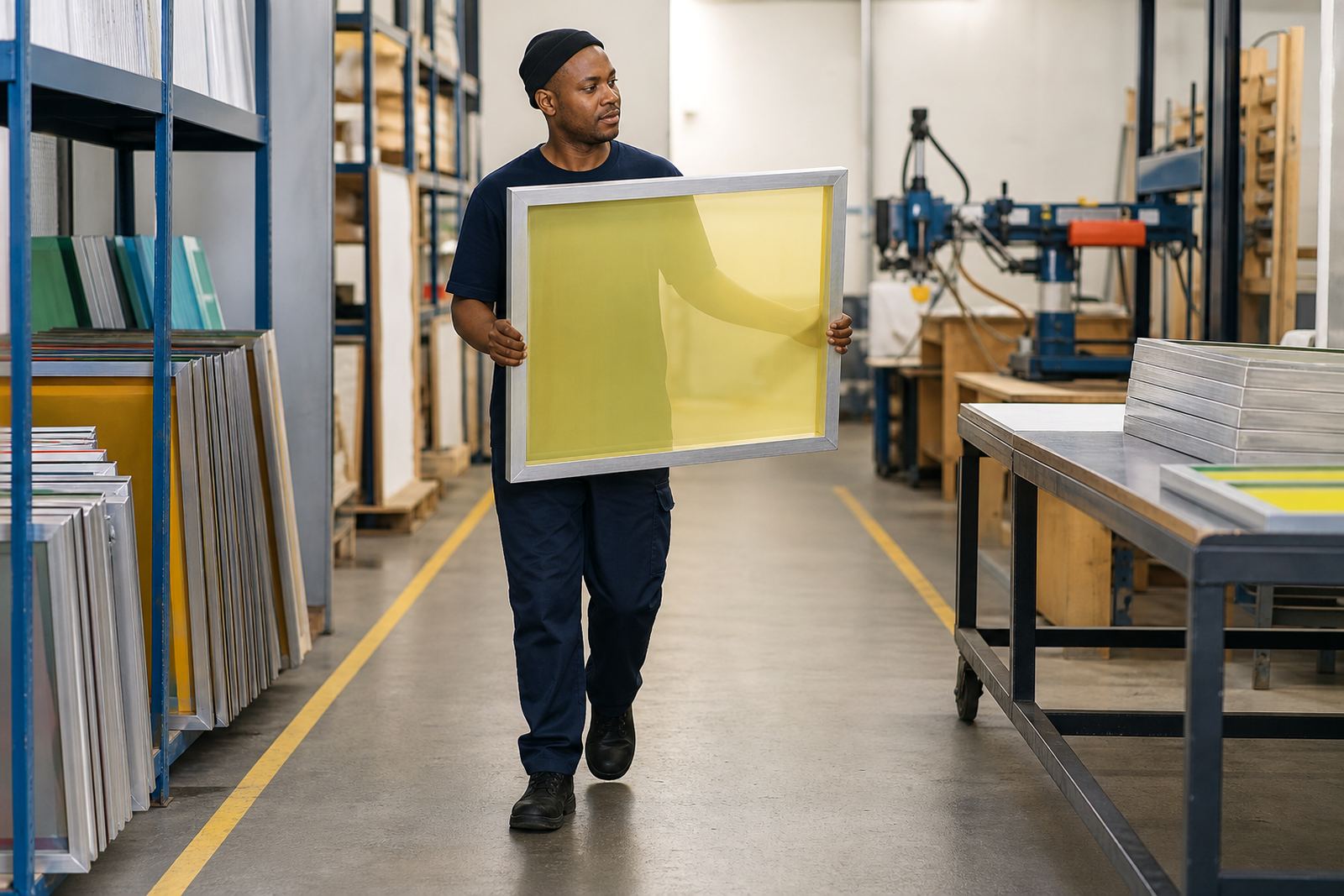
- Lift the screen by the frame, not by the mesh.
- Store it upright or flat in a way that avoids bending.
- Keep it away from heat, direct sun and damp corners of the workshop.
- Recheck the screen before the first print if it travelled a long way.
When dispatch is handled properly, oversized screens arrive ready for work instead of needing repairs. That is the real saving, because a protected screen keeps its shape, holds its tension better and gets onto press faster.