What open area means in screen printing
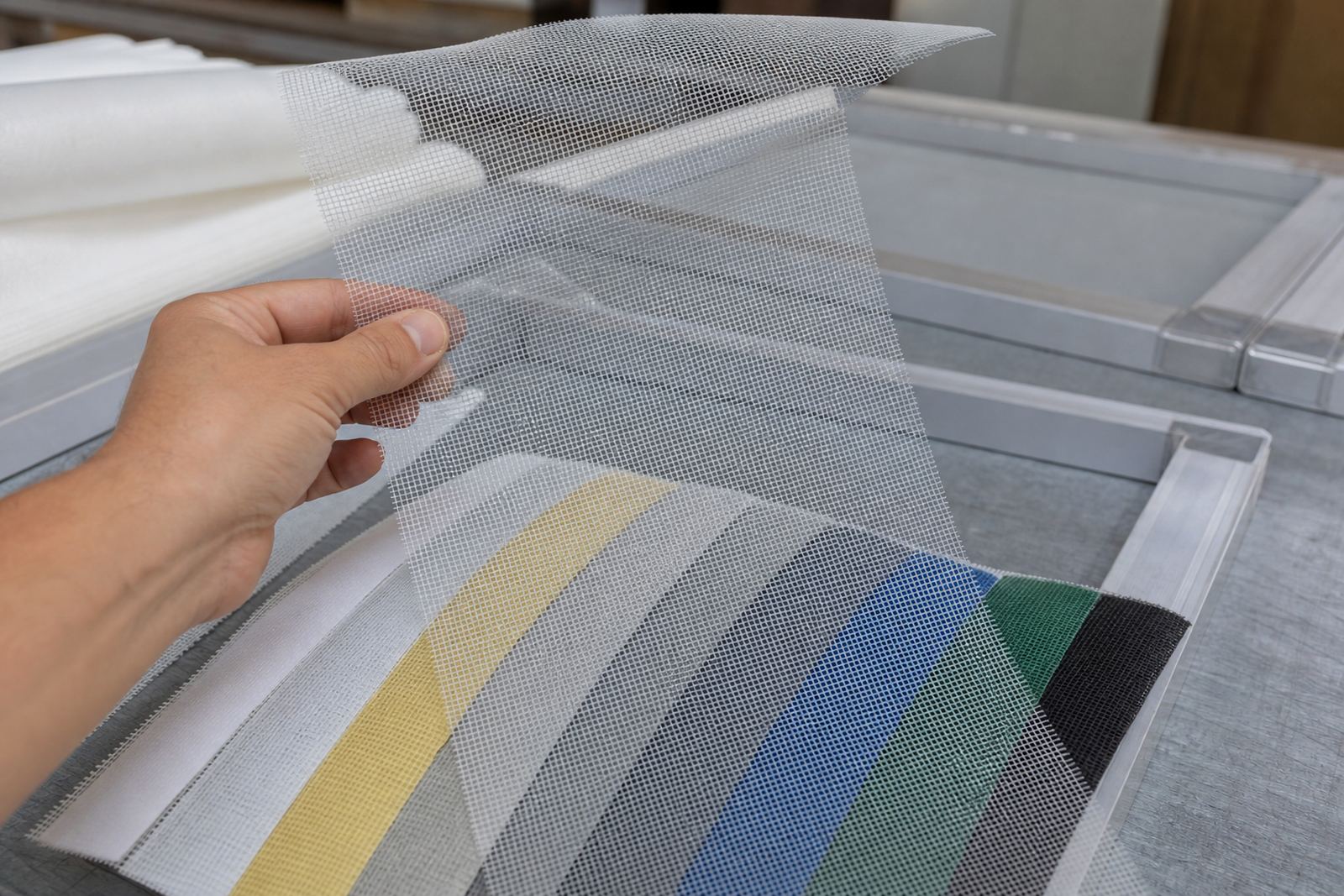
Open area is the part of the mesh that is not covered by thread. In plain terms, it is the space where ink can pass through the screen and onto the garment or substrate. A mesh with a higher open area usually lets more ink through, while a tighter mesh with less open area gives finer control and a thinner ink deposit.
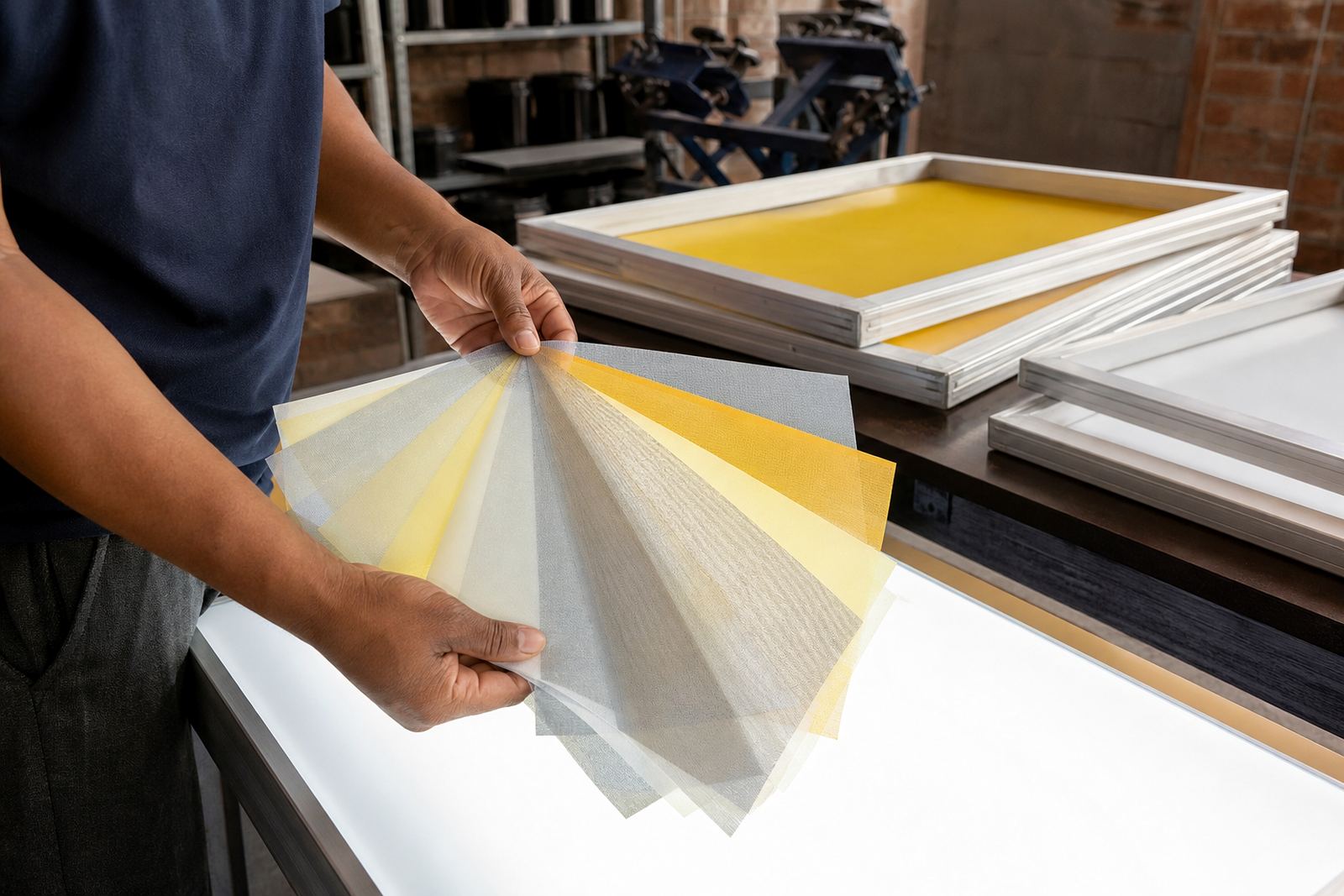
People often talk only about mesh count, but count alone does not tell the full story. Two meshes can both be called the same count and still behave differently because thread thickness, weave type and thread shape change how much open space there really is. That is why a mesh count match should always be checked with the print job in mind, not just a number on a label.
Why open area changes print results
The amount of open area affects how much ink gets through, how quickly it releases, and how the image sits on the surface. If the open area is too generous for the job, you may get heavy ink deposits, soft detail and longer drying times. If it is too tight, the print can look starved, especially on bold spot colours or fabrics that need a stronger laydown.
Open area also affects the feel of the finished print. On a T-shirt, a tighter mesh can help keep the print lighter and smoother to the touch. On some signage or industrial jobs, a more open mesh is useful because the ink needs to carry more body. The right balance depends on the artwork, the substrate and the ink system being used.
- Higher open area usually means more ink deposit
- Lower open area usually gives finer detail and cleaner edges
- Open area affects drying, opacity and hand feel
- The same mesh count can behave differently from one weave to another
Mesh count is only part of the story
In screen printing, people often start with mesh count because it is easy to understand. A lower count generally has larger openings, while a higher count has smaller openings. That is useful, but it can be misleading if you stop there. The thread diameter and the weave construction can change the real open area quite a lot.
A practical way to think about it is this: mesh count tells you how many threads are packed into a given space, while open area tells you how much room is left for ink. For a printer in Germiston or Durban dealing with different fabrics and humidity levels, that difference matters. A mesh that looks suitable on paper may still need adjustment once you start pulling test prints.
For fine halftones, small lettering or detailed art, a more controlled open area helps keep edges sharp. For bold logos, underbases or heavier ink films, more openness can help the print do its job without forcing the operator to overwork the squeegee.
How open area affects tension and stretching
Open area does not work on its own, because the screen also depends on tension. When a mesh is stretched properly, the openings stay consistent and the stencil releases cleanly. If the tension is uneven, the open area may be the same on paper but the screen will behave differently across the frame.
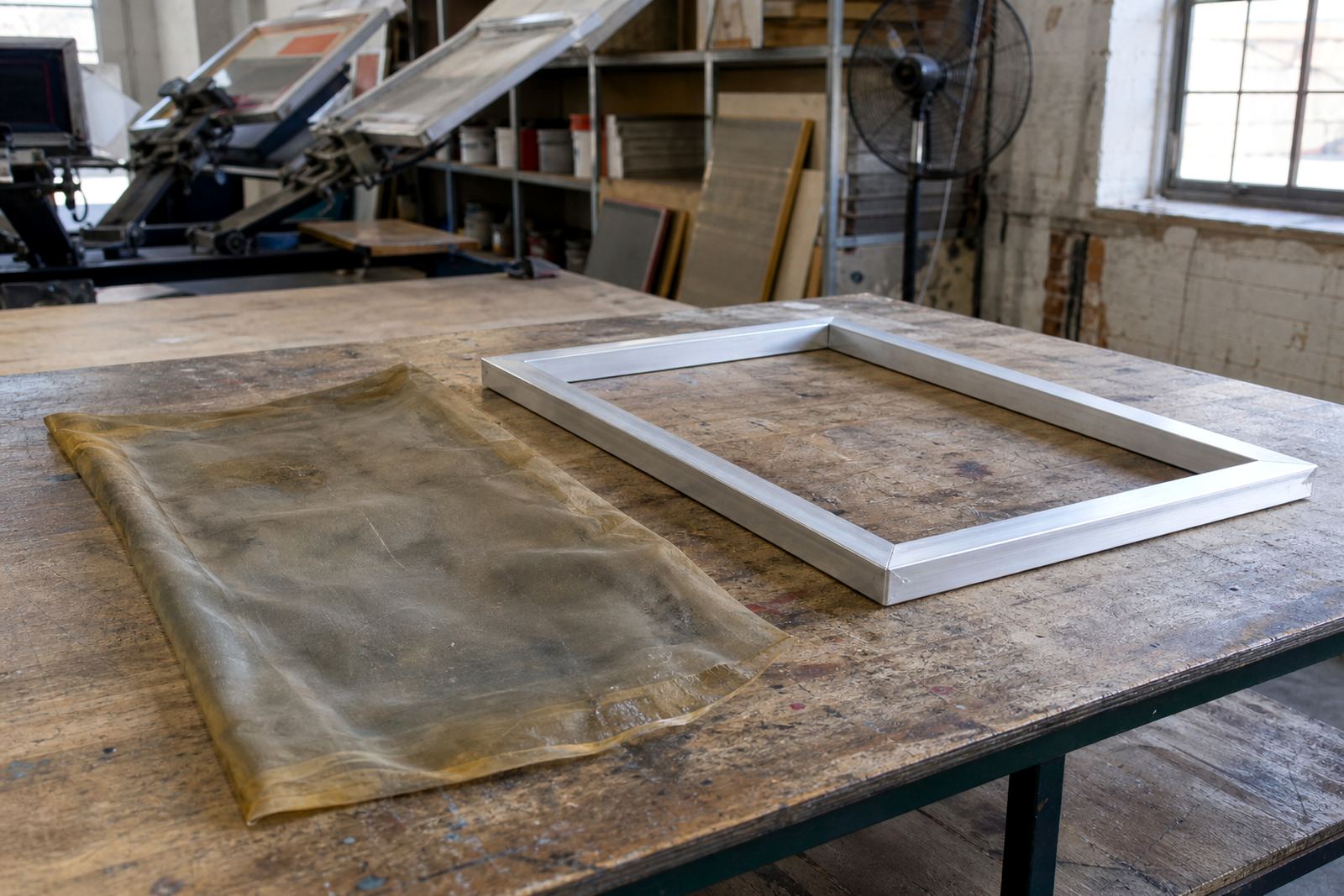
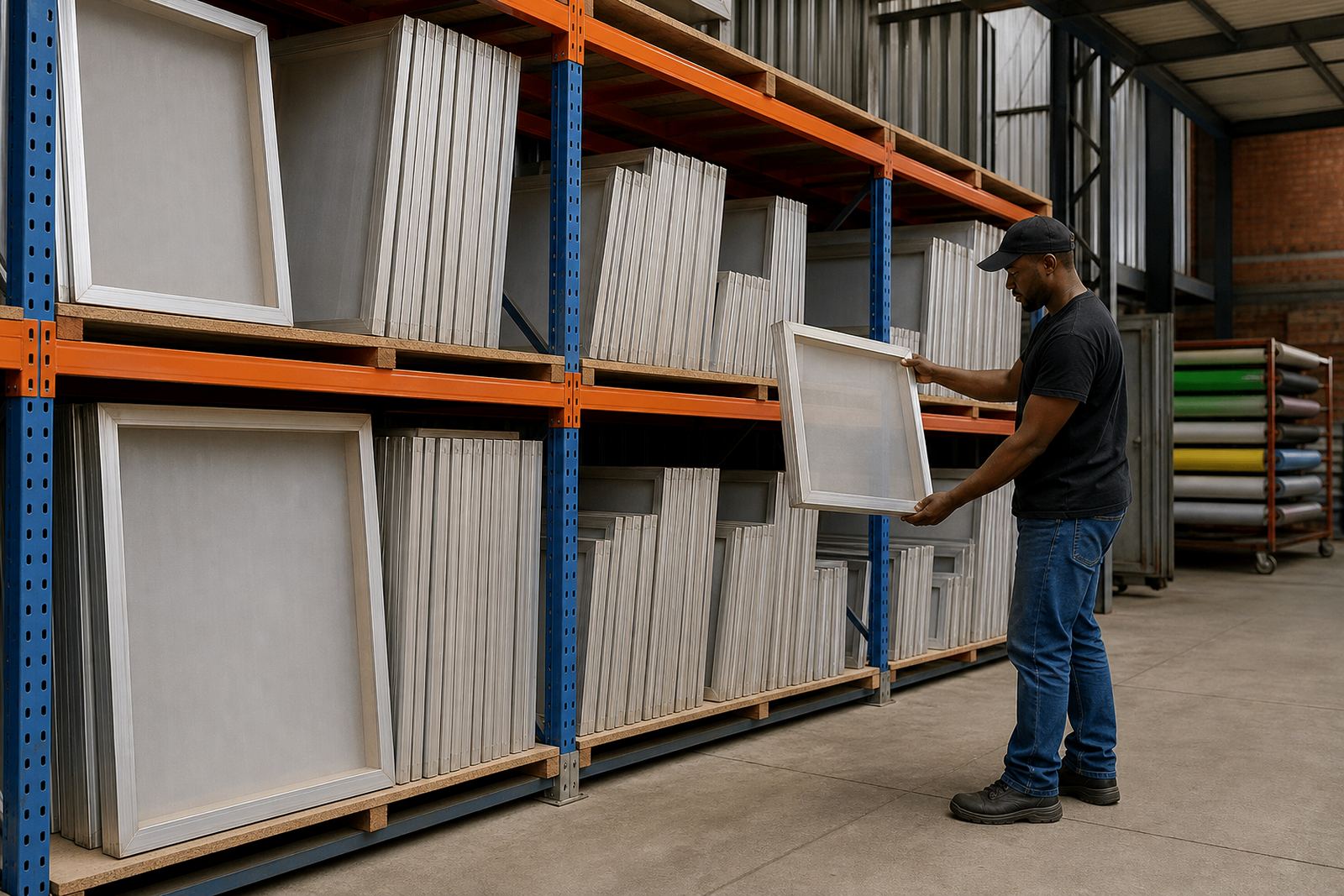
That is why frame stretching and re-stretching need proper attention. A pre-stretched aluminium frame should hold tension evenly across the full area, and the mesh bond must stay stable through repeated use. If the screen relaxes after a few print runs, the open area may no longer be working the way it should. On jobs where registration matters, that can show up as fuzzy edges, poor overlap or colour shift.
- Good tension helps ink shear cleanly through the mesh
- Even stretching supports consistent print pressure across the screen
- Poor tension can make a suitable mesh perform badly
- Re-stretching can bring a screen back into usable condition if the frame is still sound
Choosing openness for different jobs
There is no single open area that suits every print. A shop doing soft garment printing may want one range for fine detail and another for heavier spot colour work. A printer handling packaging, posters or industrial marking may need different screen behaviour again. The key is to match the openness to the ink, the image and the surface.
As a general rule, finer work needs a more controlled mesh, while heavier deposits need more openness. But the final choice should also take account of mesh tension, stencil thickness and the way the screen will be cleaned and reused. If the job is being repeated, it is worth keeping the same mesh setup so the results stay consistent from run to run.
- Fine detail: usually needs tighter control and cleaner release
- Bold spot colour: often benefits from more open mesh
- Special inks: may need a different balance because of viscosity
- Repeat orders: should keep the same mesh and frame setup where possible
A Germiston example from a busy print floor
Picture a print shop in Germiston handling a mixed run for local school wear and a few urgent corporate shirts heading to Pretoria and Johannesburg. The artwork includes small text on the chest and a larger logo on the back. If one screen is too open, the small text may flood and the logo can look heavy. If the mesh is too tight, the print operator may need extra passes and still not get enough coverage.
In that situation, the practical answer is to match the mesh count and open area to the part of the job that is most demanding. The front print may need finer control, while the back print can sometimes use a different setup. That approach saves time, reduces waste and makes the print more predictable. It also helps when the weather changes, which matters in Gauteng and even more so for coastal deliveries where humidity can affect drying and handling.
For shops working across South Africa, from Midrand to Durban and Cape Town, consistency is the real value. A screen that is correctly stretched and matched to the right open area gives you a better starting point every time. That means less chasing of faults on press and fewer surprises at dispatch.
How to talk about open area when ordering screens
If you are ordering new frames or asking for re-stretching, it helps to describe the print job clearly rather than asking only for a mesh number. Tell the supplier what you are printing, what ink you are using, how fine the detail is and whether the screen must be reused often. That gives the frame stretching team a better basis for selecting the right mesh and tension.
Useful details to share include the artwork style, substrate, print size and whether the job needs heavier ink laydown or finer detail. If you already have screens that work well, compare them against the new job so the mesh count matching can stay close to what your operators know. Small changes in openness can have a big effect, so a careful match is worth the effort.
When the right open area, tension and frame condition come together, the screen behaves the way a printer wants it to. Ink moves cleanly, detail stays sharp and the print floor runs with fewer interruptions.