Why frame size variation slows a print shop down
Many print rooms end up with screens in every shape and size because jobs arrive one by one. A small order gets stretched on one frame, a larger repeat job uses another and before long the team is guessing which screen fits which artwork. That extra variation costs time at setup, takes up more storage space and makes it harder to keep a steady process from one operator to the next.
Standardising frame sizes does not mean every job must use the same mesh count or the same frame for every print. It means setting a few practical sizes that cover most work your shop handles, then building your workflow around those sizes. In a busy Germiston shop serving Johannesburg and Pretoria, that small change can cut the number of decisions made on press day and reduce delays when an urgent order comes in.
- Faster screen selection for repeat work
- Less storage clutter in the prep area
- Lower risk of the wrong screen being pulled for a job
- More predictable screen handling during transport and drying
Choose a core set of sizes that suits your job mix
The right standard sizes depend on the type of printing you do. A shop focusing on small logos, labels and short runs may only need a few compact frames, while a business handling larger garment prints, signage panels or multi-colour jobs will need bigger formats as well. The aim is not to force every design into one frame, but to create a sensible range that suits the work you actually print.
Most shops find it useful to group screens into three or four core sizes. That keeps inventory manageable and gives the team a known frame for common artwork sizes, reclaim cycles and press layouts. If the same size is used often, screen prep becomes more repeatable and it is easier to match mesh count, stencil area and print stroke to the job. It also helps when a team member is off sick or the load shedding schedule disrupts the day, because another operator can step into a familiar system without wasting time.
- Small screens for labels, pocket prints and fine detail work
- Mid-size screens for most garment and general shop work
- Large screens for oversized artwork or wider print areas
- Optional special sizes only where needed for unusual jobs
How standard sizes improve tension control and print consistency
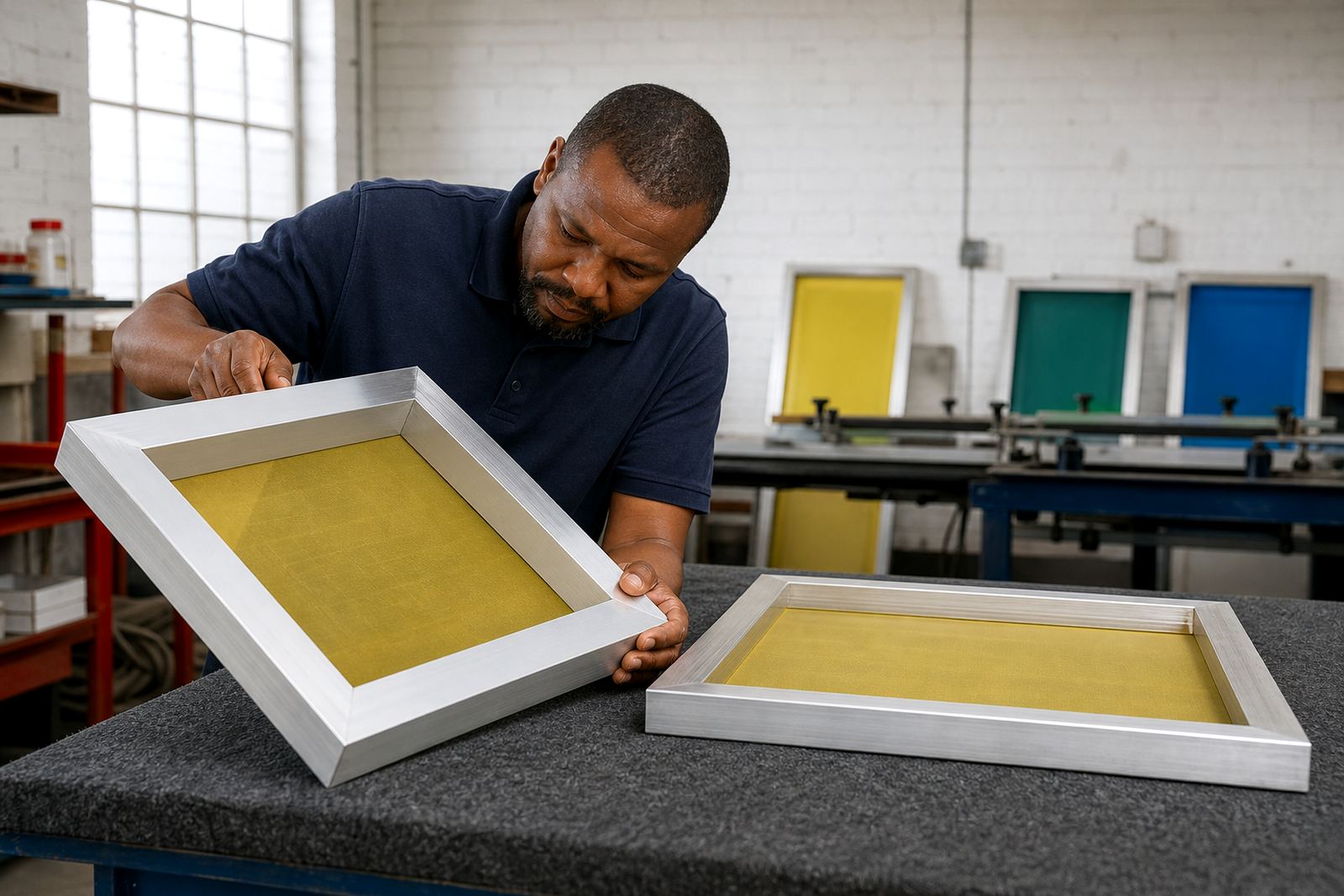
Frame size affects how mesh behaves once it is stretched. If a shop uses many different frame types, the tension results can drift from one screen to another because each frame reacts slightly differently during stretching and use. With standard sizes, your stretching setup can be repeated more consistently, which helps the mesh sit more evenly across the frame and hold up better under print pressure.
This matters when you are matching mesh counts for specific inks and image detail. A finer mesh count needs controlled tension to keep detail sharp and avoid mesh movement at print. A coarser mesh count used for heavier ink deposits still benefits from even stretch so the print stays clean and the screen recovers properly between pulls. When the frame size is known, the stretching team can work to a familiar target and check that the corners, edges and centre are behaving the same way from one batch to the next.
In practice, that means fewer surprises on press, fewer screens rejected after inspection and less time spent adjusting off-registration prints. It also makes re-stretching easier because the frame can be brought back into the same working pattern instead of starting from scratch every time.
Storage, transport and screen life all get easier
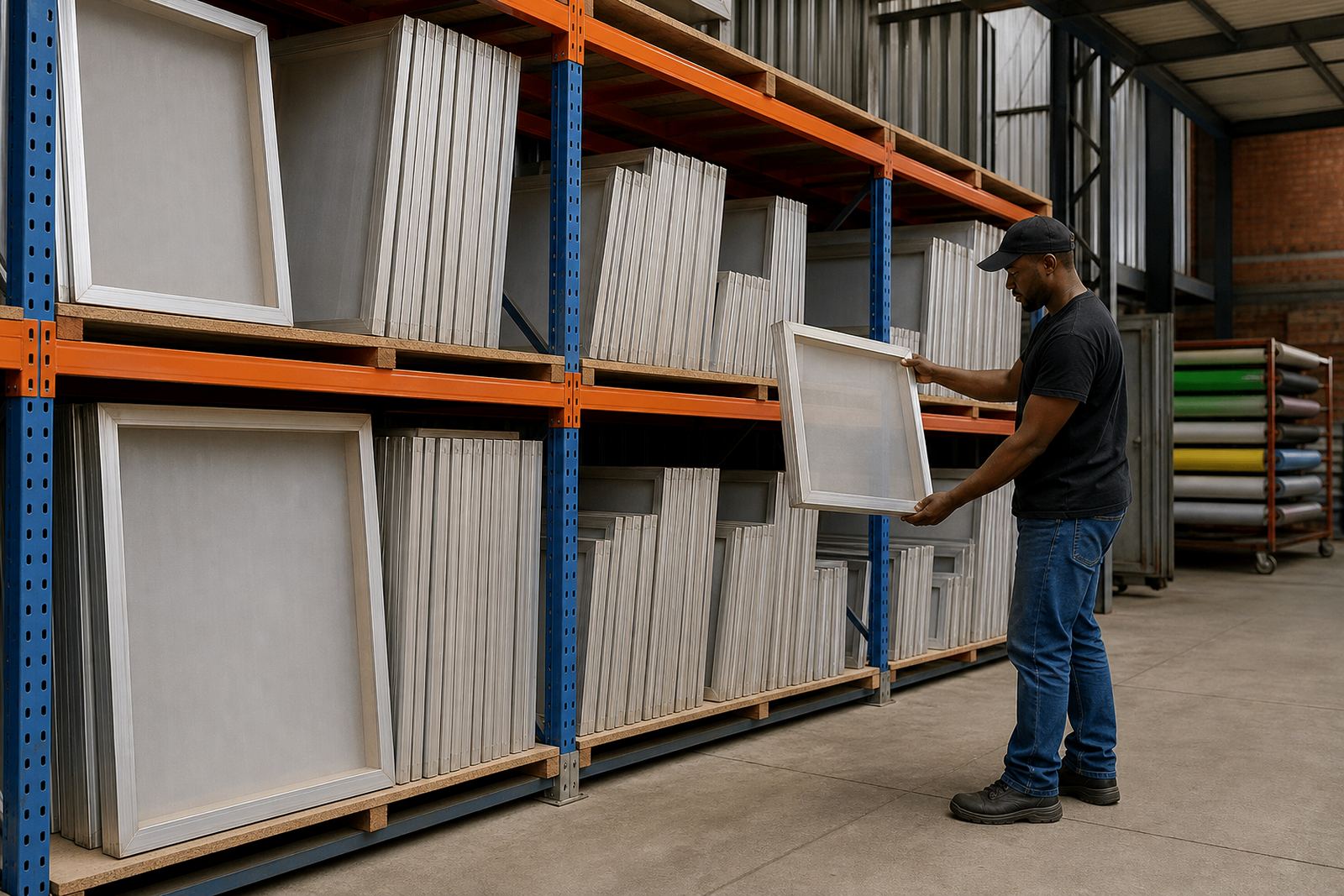
Standardised frames are easier to store because they stack more neatly, hang more cleanly and are simpler to label. In a shop where space is tight, that matters. Screens with random outer dimensions can catch on one another, damage mesh edges or take up more floor space than necessary. A set of known sizes lets you plan rack spacing and protect the mesh from bending or impact during daily handling.
Transport also becomes simpler. Screens moving between Germiston and delivery points in Johannesburg, Midrand or Pretoria can be packed more safely when the team knows exactly what sizes are going out. Less fiddling at dispatch means less chance of twisted frames, marked mesh or corners rubbing during transit. For coastal deliveries to Durban, Cape Town or Gqeberha, standard packing also helps reduce exposure to moisture when screens are waiting for collection or sitting in a depot.
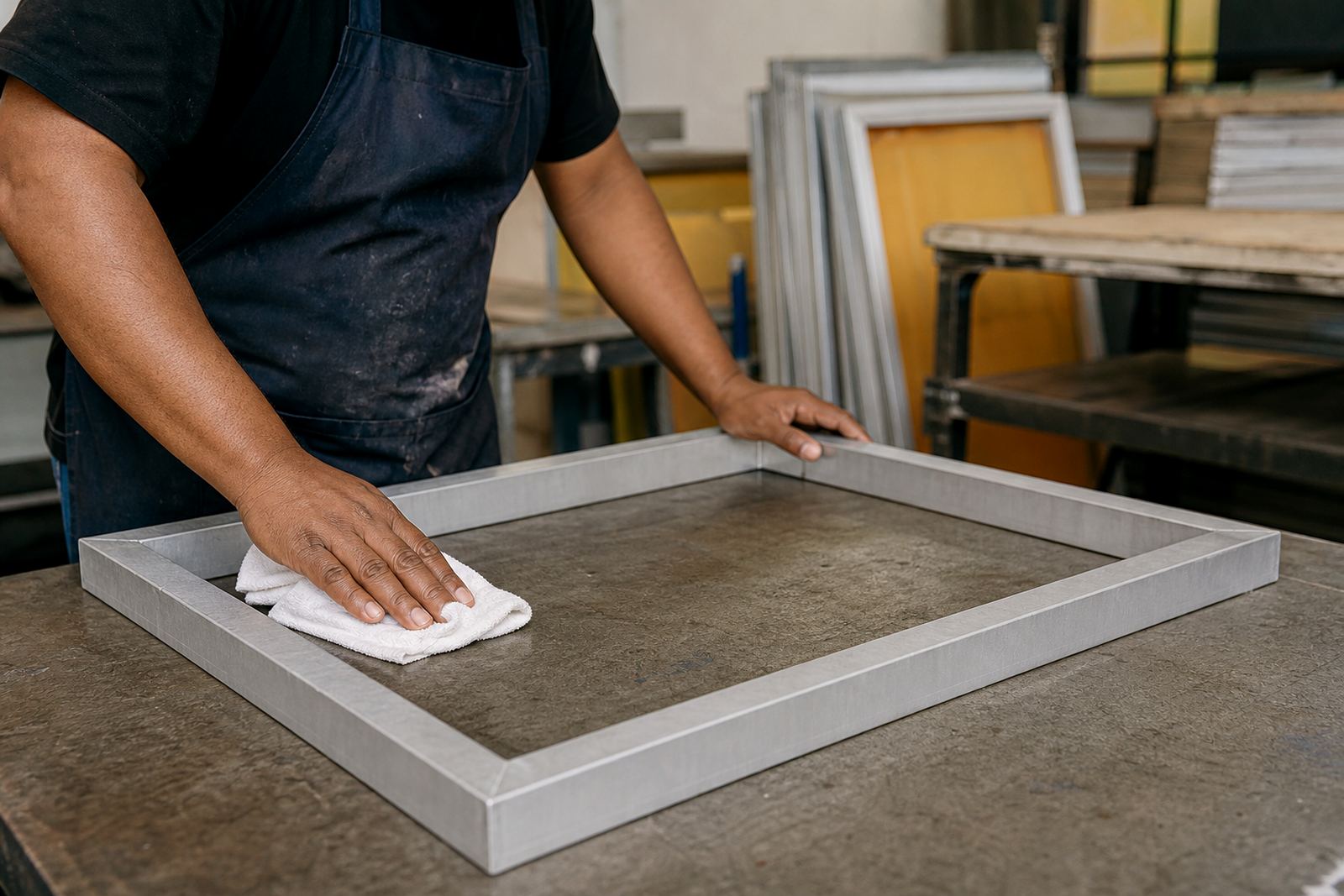
There is also a maintenance benefit. When screens are standardised, clean prep, mesh bonding and inspection can follow the same checks each time. That makes wear patterns easier to spot, and a shop can decide sooner whether a screen should be repaired, re-stretched or retired. It is simpler for the whole team when the same sizes keep coming back through the same process.
A practical Germiston example from a busy print room
Picture a print shop in Germiston handling repeat orders for local schools, small business uniforms and event runs. If every order arrives with a different screen size, the team spends too much time hunting for the right frame, checking old notes and making fresh setup decisions. But if the shop settles on a few standard frame sizes, those jobs can move through the day in a steady rhythm.
For example, a mid-size frame may be used for most garment artwork, while a smaller frame handles fine detail jobs and a larger frame is kept for oversized prints. The artwork sizes still vary, but the screen handling stays familiar. That means the technical team can focus on mesh count matching, tension checking and clean prep instead of constantly working around awkward frame differences. It also makes repeat order service more reliable because the shop knows which screen should be pulled first for a coming job.
This is where standardising starts paying off. The shop can train new staff faster, reduce mix-ups during busy periods and keep production moving even when the day is interrupted by load shedding or late artwork changes.
How to standardise without disrupting current work
You do not need to replace every screen at once. The best approach is to review what your shop prints most often, then choose a small set of sizes that cover the bulk of those jobs. From there, mark each size clearly, record the mesh counts used on each frame type and keep a simple system for inspection and storage. If a screen falls outside the standard set, treat it as a special-use frame rather than letting it become the default.
It also helps to set a rule for new work coming in. If a customer needs a frame outside the normal range, decide early whether the job really needs that size or whether it can be adjusted to one of the shop standards. That small step saves a lot of rework later. A few practical checks make the change easier:
- List the frame sizes already in active use
- Identify the sizes that handle most of your daily work
- Match each standard size to the mesh counts you use most often
- Set a simple label system for storage, inspection and dispatch
- Keep one person responsible for approving non-standard frames
The payoff is consistency, not just convenience
Standardising frame sizes is not about making the shop rigid. It is about giving the team a dependable base to work from. When the frame sizes are controlled, the rest of the process becomes easier to manage, from stretching and mesh matching through to packing and repeat orders. That is especially useful for South African print shops that need to handle mixed work, tight turnarounds and changing conditions from one week to the next.
At MeshMaster in Germiston, we see the value of a shop working with a clear screen system every day. The more consistent the frame sizes, the easier it is to keep tension checks, frame re-stretching and batch screen prep on track. For a shop trying to print cleaner, move faster and cut waste, standard sizes are a practical place to start.