
Why storage matters after the last print run
A screen frame does not stop needing care once the job is done. Ink residue, wash-up moisture, dust and careless stacking can all affect mesh tension and print quality the next time the frame comes out. If screens are stored badly, the first signs are usually scumming, pinholes, poor image edges or a mesh that no longer gives a clean release.
In a busy Germiston or Johannesburg workshop, frames often move from press to wash-up to drying rack in a hurry. That is where small storage habits make a real difference. A frame that is cleaned properly and stored in a stable position will keep its shape better, last longer and need fewer repairs or re-stretching jobs.
For shops working with different mesh counts, storage matters even more. A 43T mesh used for thicker inks does not behave the same way as a finer count used for detail work. If both are tossed into the same pile, the chances of damaging a stencil or knocking a corner are much higher.
Clean and dry before any frame goes onto the rack
The best storage starts at wash-up. Any screen that is still damp, or has cleaner trapped in the mesh, should be left to dry fully before it is stacked or hung. In coastal areas such as Durban and Gqeberha, moisture in the air can slow drying, so allow extra time and keep air moving around the frames.
- Remove ink, emulsion and tape residue as soon as the job is finished.
- Rinse both sides of the mesh, then inspect the corners and frame edges.
- Let the screen dry upright where air can pass through it.
- Do not cover a damp frame with plastic or cloth.
If moisture is trapped in storage, it can mark the mesh, affect stencil edges and cause unpleasant smells in the wash area. Dry storage is basic, but it is one of the most important parts of screen care.
Stacking rules that protect tension and corners
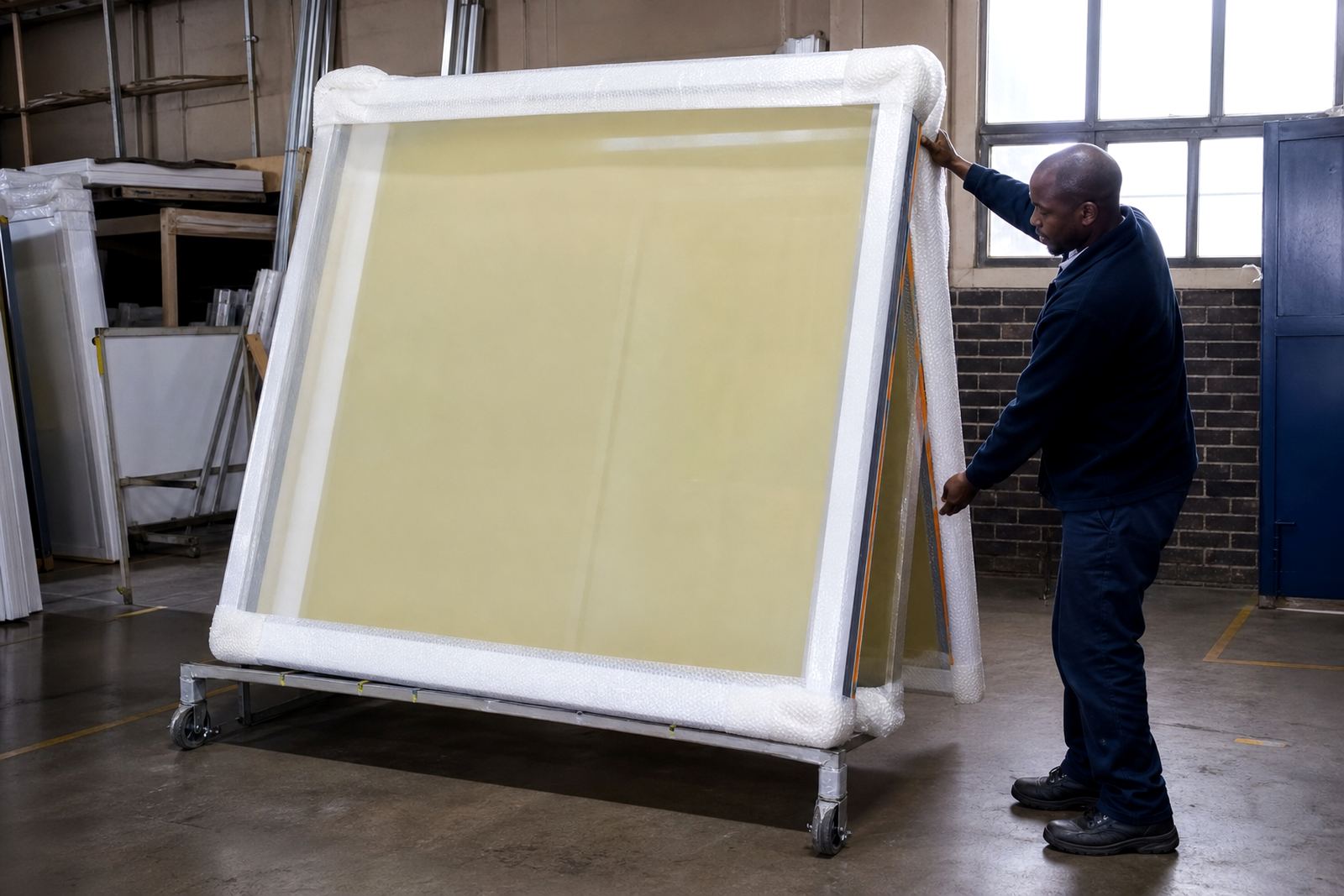
Pre-stretched aluminium frames are built for repeat use, but they still need sensible handling. The frame corners are usually the first points to take strain when screens are stacked badly or knocked against each other. Keep heavier frames low and lighter or finer-mesh screens higher up, so weight is not pressing onto the mesh surface.
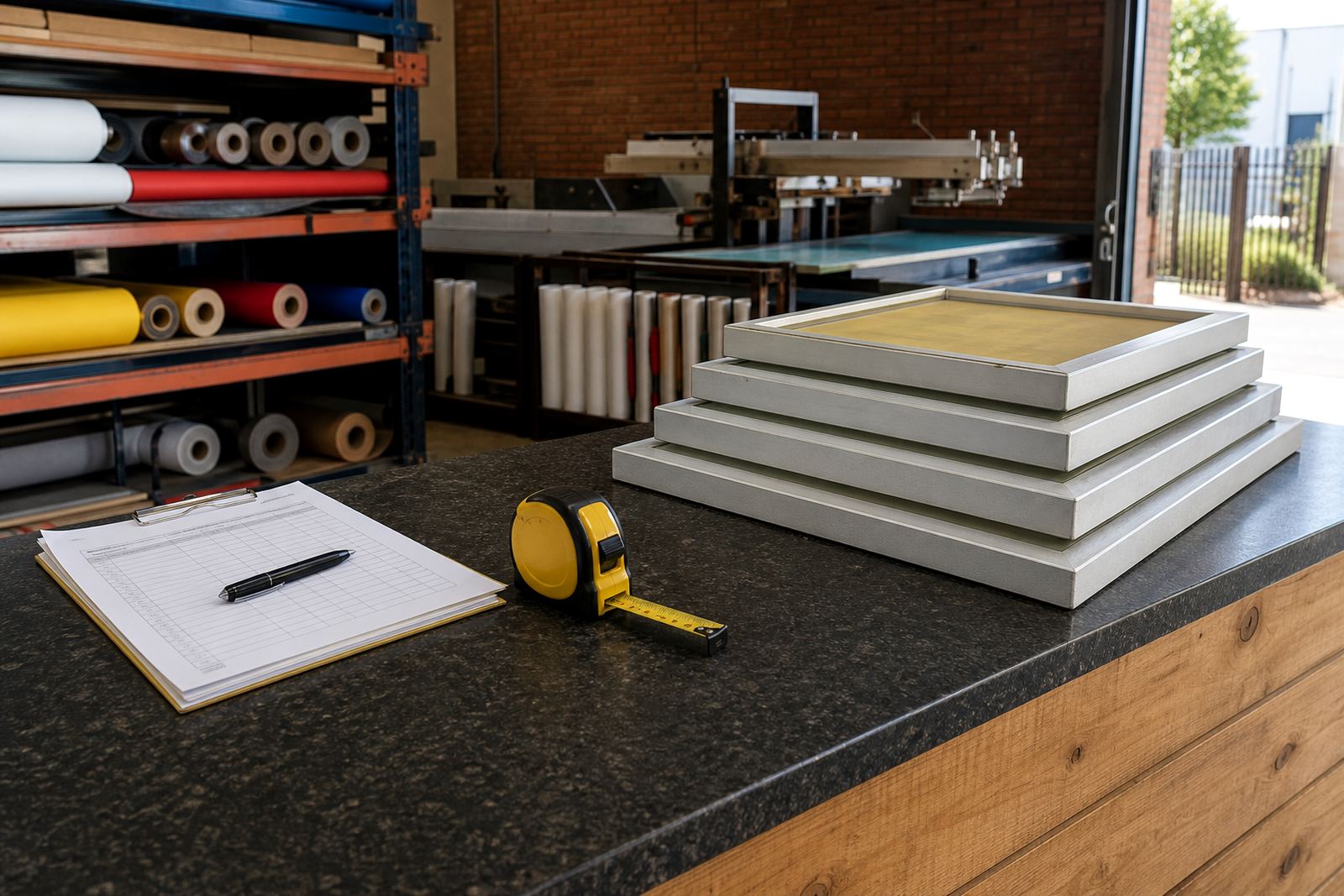
When screens are placed flat, use spacers or a rack system that keeps the mesh from touching the next frame. A direct contact point can leave marks or flatten the coating. If screens are leaned upright, make sure the support is even and the frames are not twisting under their own weight.
- Never place sharp tools or loose tape rolls on top of stored frames.
- Keep frames away from oily floors and wash-up chemical splashes.
- Do not rest screens against rough walls or exposed metal edges.
- Leave enough space to lift each frame without dragging another one.
That small bit of organisation saves time later. It also helps when a job must be pulled quickly for a repeat order and there is no room for searching through a cramped stack.
Keep mesh counts grouped for faster job planning
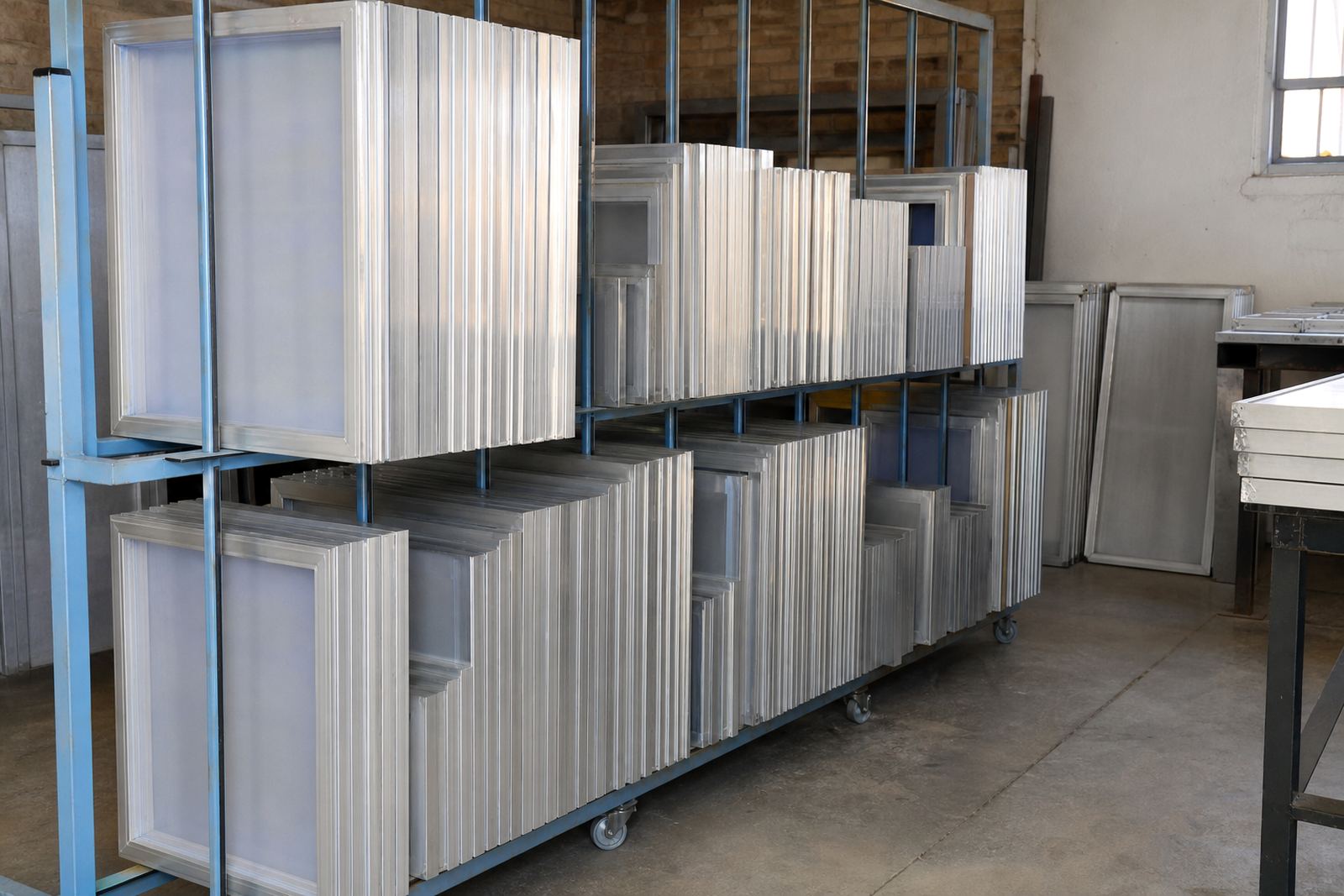
One of the easiest ways to manage stored screens is to group them by mesh count and job type. Fine meshes for detail work, standard meshes for general textile printing and coarser counts for heavier ink deposits should not all be mixed together. Clear grouping makes selection quicker and reduces handling.
Many print shops mark frames in a simple, practical way: mesh count, stencil type, date used and whether the screen is ready, needs checking or should be re-stretched. That helps the team know which screens can go straight back into production and which ones need attention first.
- Keep similar mesh counts together to avoid confusion during busy shifts.
- Label the frame clearly after inspection or reuse.
- Separate screens with damaged stencils from screens ready for printing.
- Store repeat job screens in a known place so they are easy to find.
This is especially useful when work is moving between Johannesburg, Pretoria and the East Rand, where same-day dispatch can depend on quick picking and packing. A well grouped storage system keeps the workflow calmer.
Humidity, dust and heat in South African workshops
Storage conditions change from town to town. In Gauteng, dust and heat can build up in workshops with open doors and rolling traffic nearby. Near the coast, humidity is the bigger concern. Both can affect mesh, adhesive bond lines and the cleanliness of the screen surface.
Keep screens in a dry area away from direct sunlight and chemical storage. Heat can make tape lose grip, while moisture can soften parts of the stencil and attract dirt. A screen should not sit near paint mixing, floor wash areas or places where overspray lands on the mesh.
If the workshop has load-shedding interruptions, make sure the storage area still has enough airflow. A dark, closed room with poor ventilation can hold damp air for hours. Simple ventilation and regular checks go a long way, even without powered drying equipment.
When to inspect a stored screen before reuse
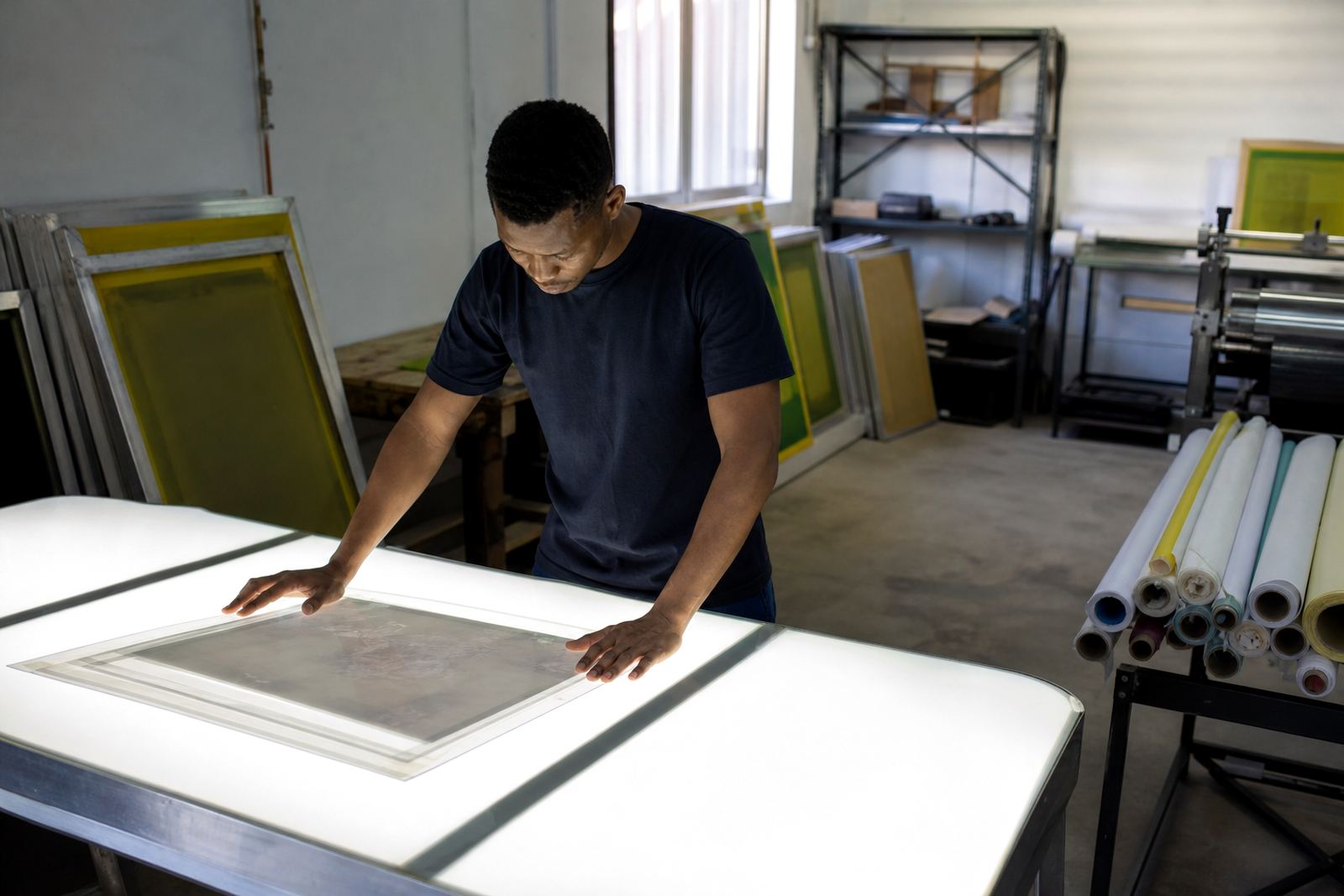
A stored screen should always be checked before it goes back onto the press. Do not assume that because it looked fine last week, it is ready now. A quick inspection catches small issues before they become waste on the floor.
Look for mesh damage, weak corners, loose tape, stencil breakdown and any sign that the frame has twisted. Check the tension by feel and by print behaviour if the frame has been used before. If the mesh seems soft or the image has lost sharpness, it may be time for tension checking or frame re-stretching.
- Confirm the screen is clean and dry.
- Inspect corners, joints and mesh edges for wear.
- Check for dust, tape lift or old adhesive marks.
- Set aside any frame that needs repair or re-prep.
In our work with print shops across South Africa, the best results usually come from simple routines done consistently. A stored screen that gets checked before use is far less likely to cause stoppages during a press run.
A practical example from a busy Gauteng print shop
A small print shop in Germiston may be handling textile orders in the morning, then a short run of promotional work later in the day. If screens are washed, dried and stacked without order, the team spends extra time checking each frame before use. But if the shop separates screens by mesh count, hangs them to dry properly and keeps damaged frames out of the ready pile, the whole process becomes easier.
That same approach works for branches and delivery runs into Pretoria, Midrand and Johannesburg. A screen prepared well and stored correctly is easier to move, easier to inspect and less likely to need last-minute attention. The result is less wasted time and a better chance of consistent print quality on the next job.
Good storage is not complicated. It is mostly about clean habits, dry conditions and respect for the frame. Do that and your screens will stay ready for work longer, with less fuss.