Stiff Frames Keep the Mesh Working at the Right Tension
In screen printing, rigidity starts with the frame. If the side walls flex or twist, the mesh can lose even tension across the print area, and that shows up in the job straight away. You may see slight image movement, soft edges, or areas where the ink deposit changes from one side of the screen to the other.
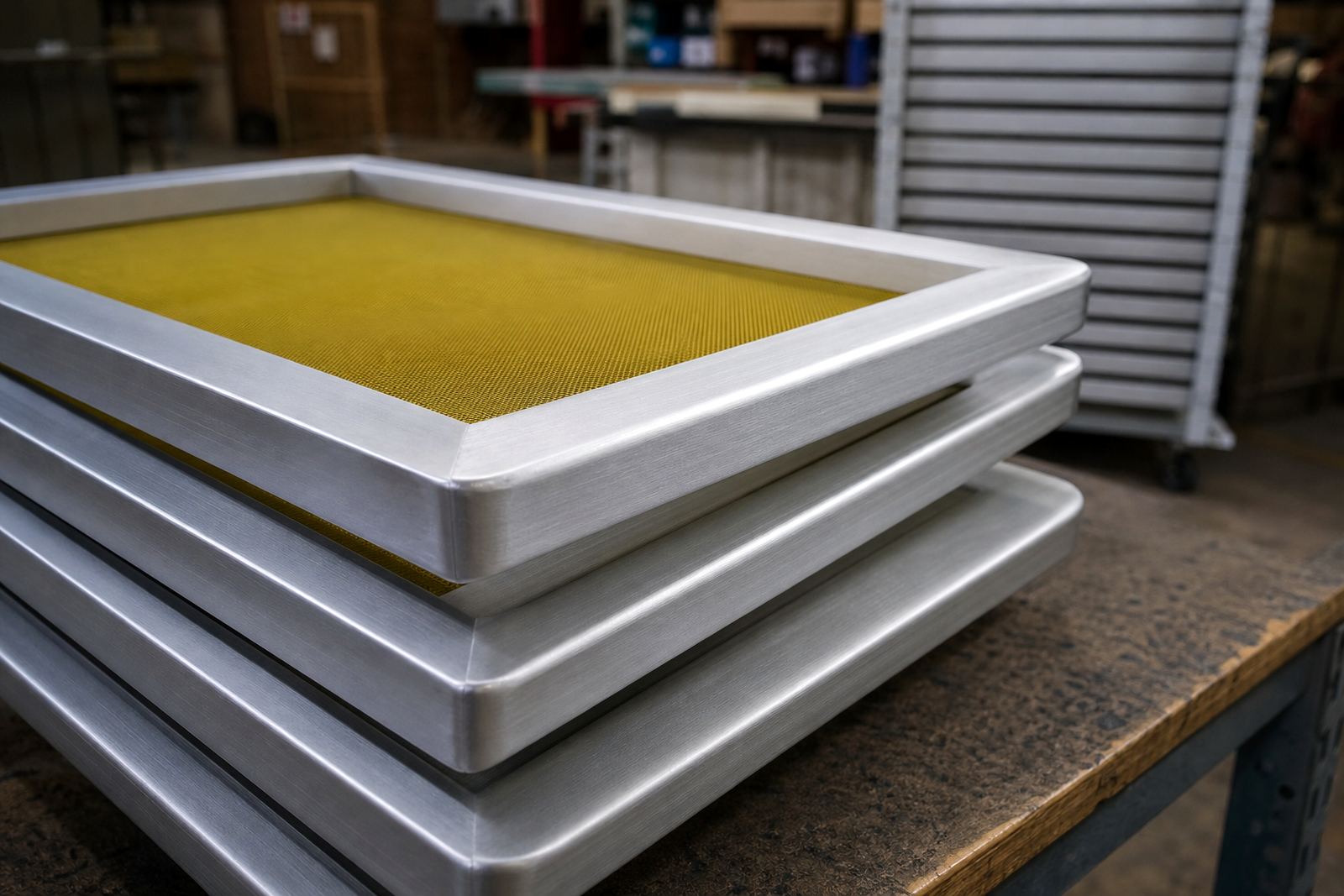
A stiff aluminium frame gives the mesh a firm base, so the screen holds its shape while you flood, print and lift. That matters whether you are running fine detail on light garments or heavier ink deposits on signage work. When the frame remains square, the mesh behaves more predictably and the stencil keeps better contact with the substrate.
For shops handling repeat orders, that consistency is practical. The second run should behave like the first, not need extra pressure or a different off-contact setting just to get the same result. A frame that holds its shape helps make that possible.
Why Contact Stability Affects Print Quality
Stable contact is one of those things printers notice most when it is missing. If the frame flexes under squeegee pressure, the screen can bounce slightly against the print surface. That can leave a soft print edge, poor detail on small text, or ink smudging around fine lines.
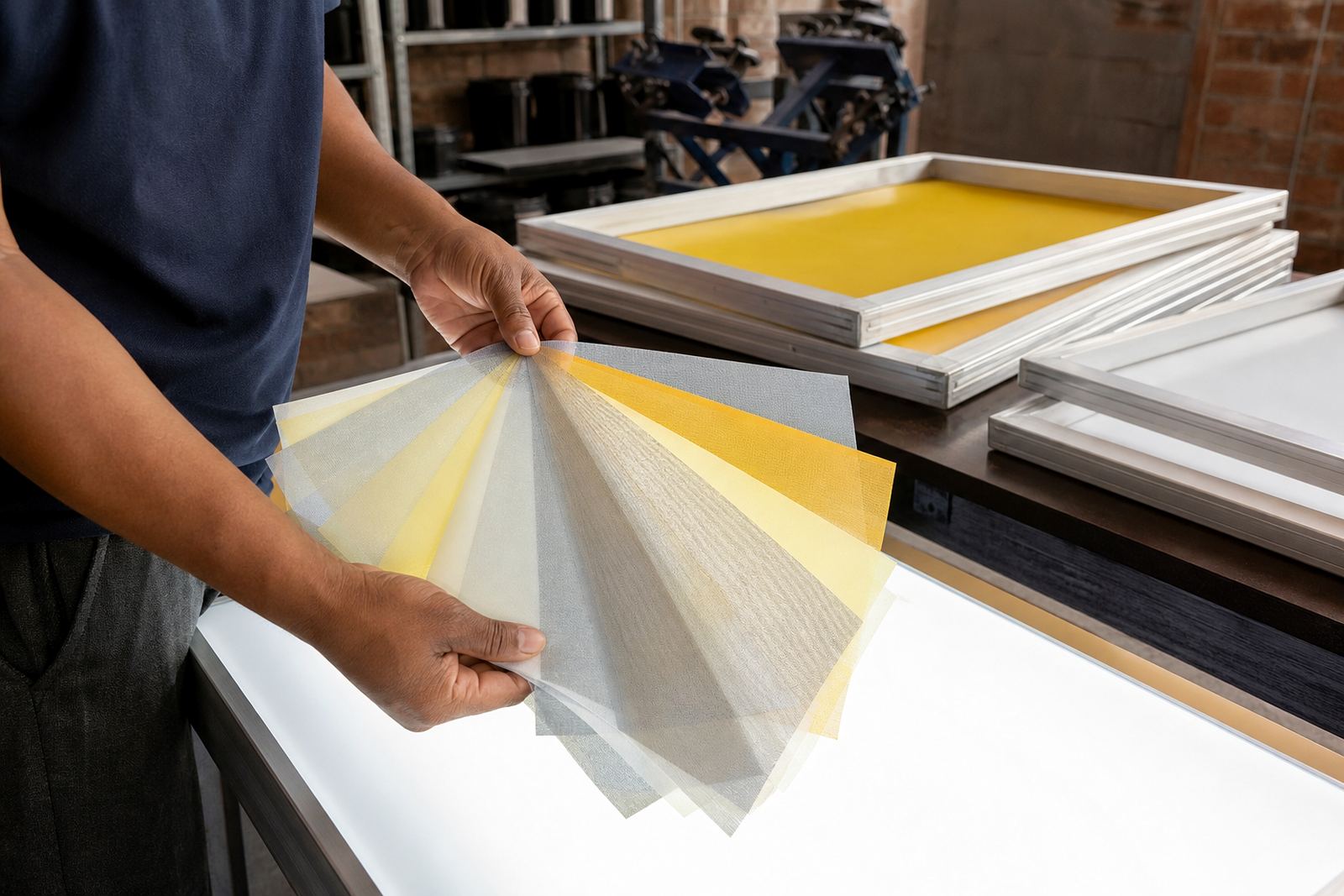
With the right rigidity, the screen sits more evenly during the print stroke. This is especially useful on jobs where the mesh count is high and the artwork needs sharp definition. Higher mesh counts are often chosen for finer detail and thinner ink film, while lower counts are used when more ink deposit is needed. In both cases, the frame must stay steady so the mesh can do its work properly.
- Less frame movement during the print stroke
- More even mesh tension across the screen
- Cleaner edges on fine detail and text
- More predictable off-contact and snap back
In practice, that means fewer surprises on press and less time chasing adjustments from one screen to the next.
What Happens When a Frame Is Too Flexible
A flexible frame often causes problems that look like mesh trouble but are actually frame trouble. The screen may seem fine when it is off the press, then shift once pressure is applied. That can lead to uneven registration on multi-colour jobs, or inconsistent results when printing across a large area.
Heat, repeated use and rough handling can all affect a frame over time. In Gauteng, many shops work through load-shedding schedules and stop-start production days, which can mean screens are stored, moved and used more often than ideal. If the frame is already weak, that extra handling can make the issue worse. On the coast, humidity can also add strain during storage if screens are left unprotected.
- Twisting at the corners after repeated use
- Uneven tension after re-stretching
- Difficulty holding registration on longer runs
- More time spent resetting screen pressure
A good frame should help the operator, not fight the operator. If you are constantly compensating at the press, the frame may be part of the problem.
Why Custom Sizing Helps for Real Production Rooms
Not every print shop works with the same press sizes, artwork sizes or handling space. A frame that is sized correctly for the job is easier to clamp, store and register. Oversized or awkward screens can flex more in use simply because they are harder to support properly.
Custom frame sizing also helps when a shop is balancing different mesh counts for different work. A fine mesh for detailed graphics may be stretched differently from a lower count screen used for heavier ink work, and each one should sit correctly in the frame. When the frame dimensions suit the press and the job, tension is easier to manage and contact stays more consistent.
At MeshMaster in Germiston, that is why many shops ask for new frame stretching or re-stretching matched to their usual work. It saves time later when the screen arrives ready for the task instead of needing extra correction on site.
Frame Preparation Makes a Difference Before Stretching
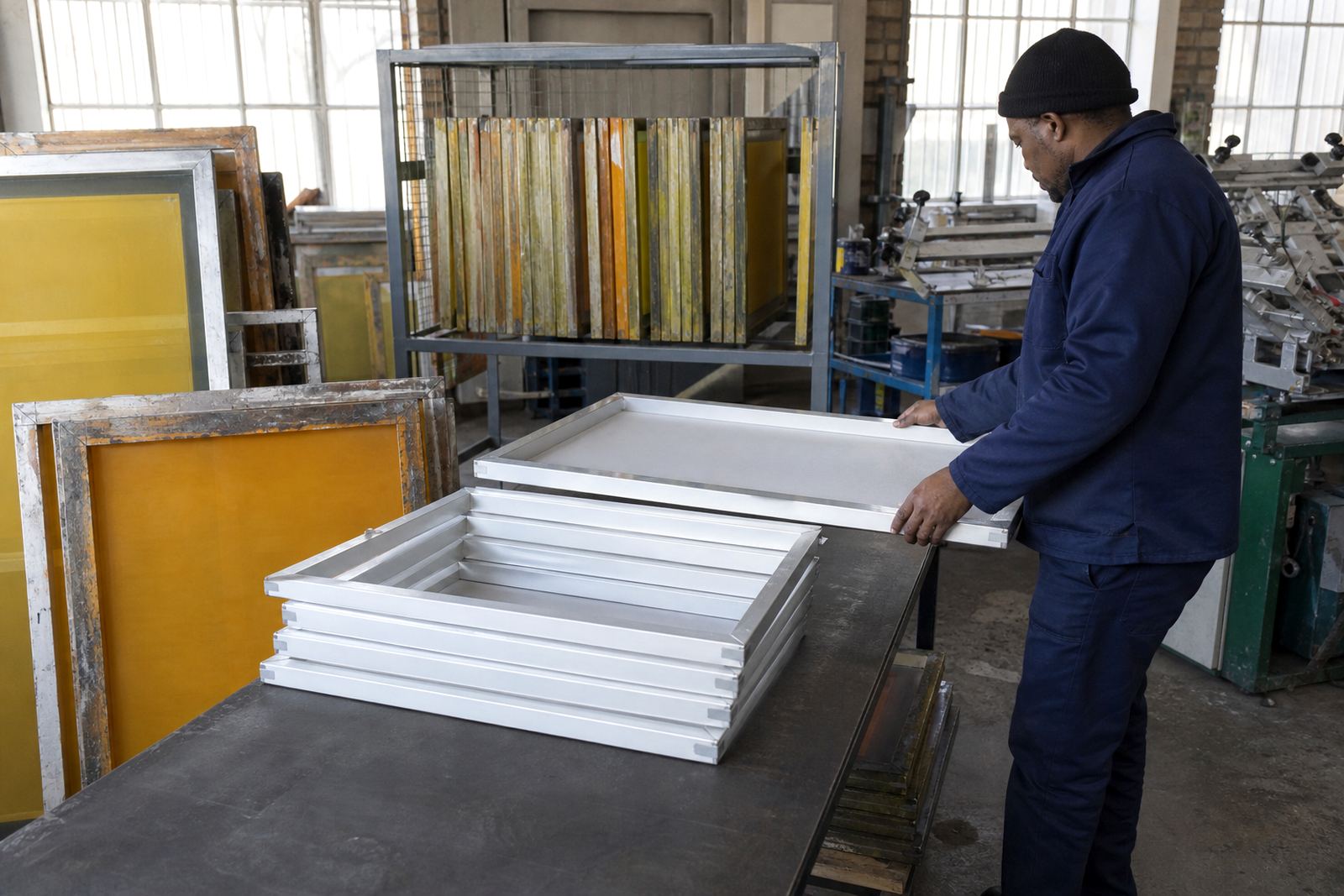
Good stretching begins before the mesh goes on. The frame should be cleaned properly, checked for damage and prepared so the bonding surface is ready to hold the mesh securely. If there is residue, corrosion or old adhesive left behind, the new stretch may not hold as well as it should.
That preparation is especially important where frames are reused. A re-stretch can work well, but only if the frame is still straight and the bonding area is sound. The goal is not just to attach mesh, but to support stable tension for the full working life of the screen.
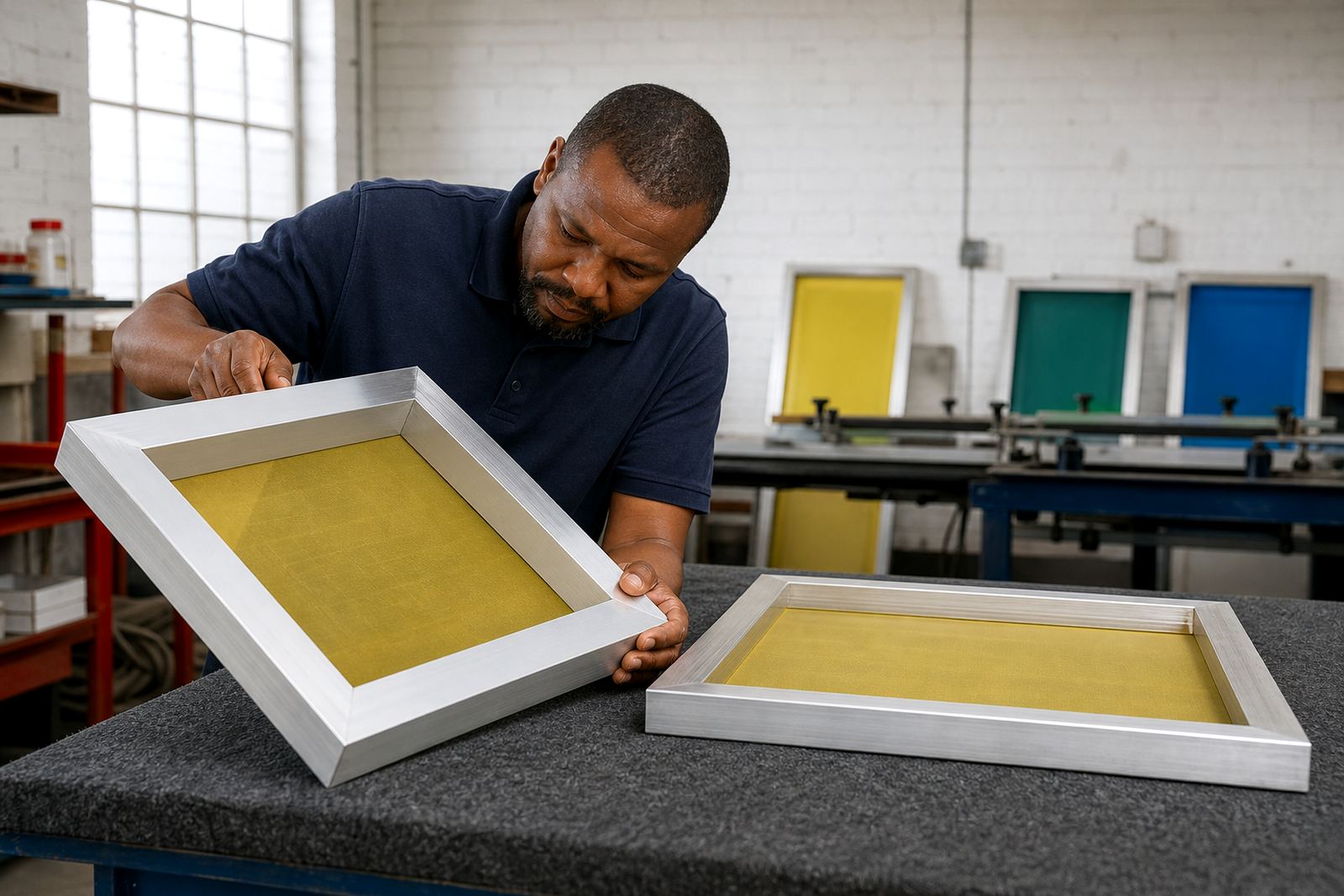
- Check the frame for square and straightness
- Remove old mesh and adhesive fully
- Prepare the bonding area for a secure hold
- Inspect the frame before dispatch or setup
When these steps are handled properly, the finished screen is more likely to stay reliable from the first print to the last.
A Germiston Example: Local Speed, Consistent Screens
Picture a print shop in Johannesburg that is preparing a run for a client in the week. The screens need to be packed, moved and set back up without losing the tension that was checked during prep. If the frame has enough rigidity, that job can travel better and stay more predictable when it reaches the press.
That is the practical value of stiff frames for South African print shops. Whether the delivery is heading to Pretoria, Durban, Cape Town or Gqeberha, the screen needs to arrive ready for work, not ready for repair. In a busy week with repeat orders, speed matters but so does the ability to print the same result again tomorrow.
For shops in Germiston and across the East Rand, frame stiffness supports the whole process from mesh count matching and tension checking through to dispatch packing and repeat order service. It is simple really: if the frame stays true, the print is easier to trust.