Why solid fills ask more from the screen
Solid colour work looks simple until the first print shows weak spots, streaks or a slightly grainy edge. Large areas of ink ask the mesh to release evenly, hold detail at the edges and keep a steady stencil through repeated pulls. If the screen is too loose or the mesh count is wrong for the ink, the result is often patchy coverage and extra passes.
For broad logos, safety markings and block text, printers usually want a screen that carries enough ink without flooding the image. That balance starts with the mesh count. Coarser mesh lets more ink through and suits heavy coverage, while finer mesh gives cleaner detail but can starve a solid area if the stencil and squeegee setup are not matched properly.
Choosing the right mesh count for coverage
Mesh count is one of the first decisions to get right. A lower mesh count generally suits bold coverage, especially when printing opaque colours on dark fabric, while a higher mesh count is better for finer detail, halftones and smoother edges. The exact choice depends on the ink body, the garment or substrate and how much lift you need from the stencil.
- Lower mesh counts are often used for heavy white, underbases and solid spot colours.
- Mid-range counts suit general purpose textile work where coverage and detail both matter.
- Higher counts help when the artwork is sharp but the ink deposit must stay controlled.
- The wrong mesh can force extra pressure, which can distort the image and wear the stencil faster.
In practice, a print shop in Germiston sending work to Durban may choose differently from one printing in dry inland conditions. Coastal humidity can slow drying on the screen and change how the ink sits in the mesh, so a setup that works on a cool morning in Gauteng may need adjustment in hotter, wetter conditions.
Tension is the difference between flat and patchy
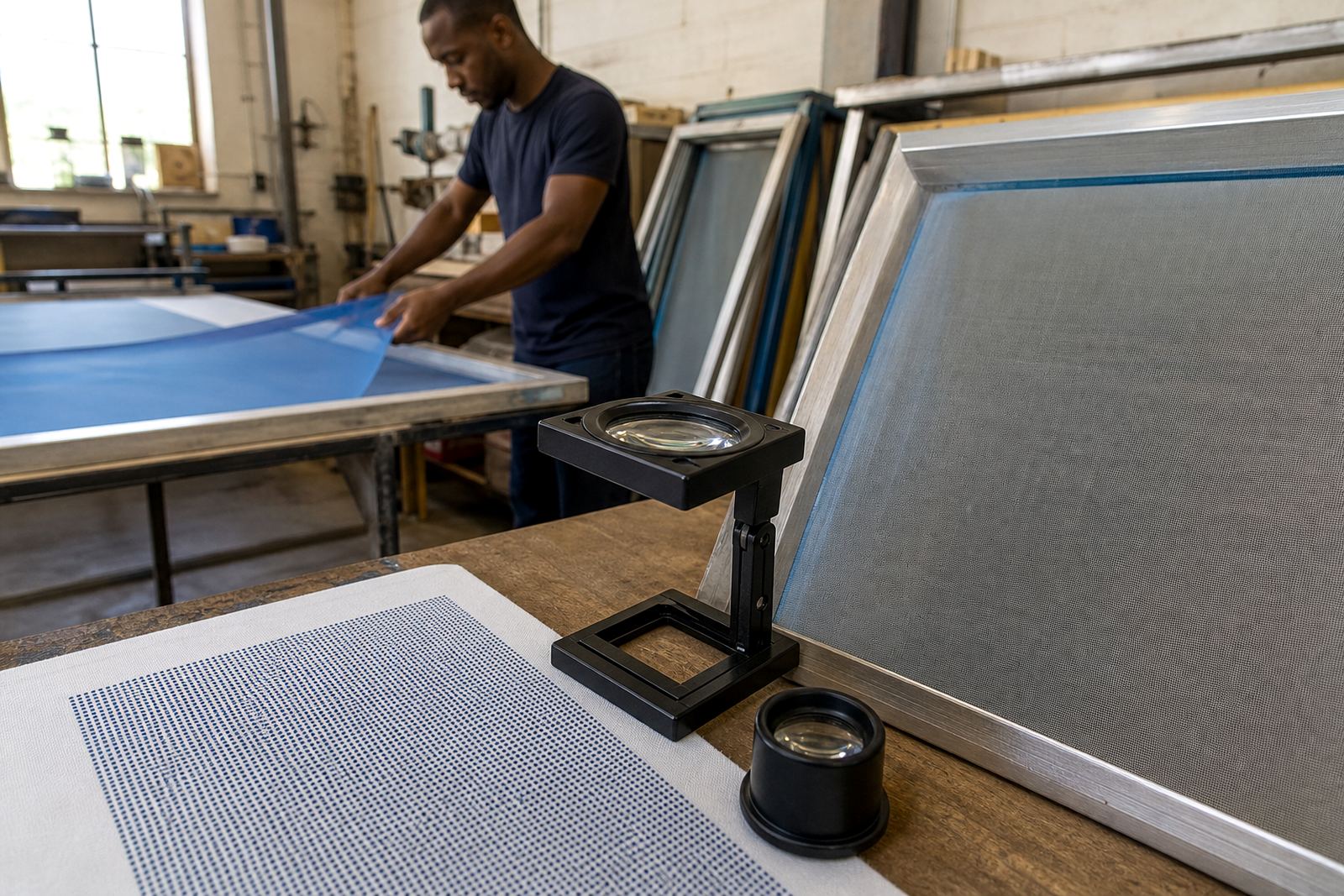
Even colour relies on even tension. A frame that has been stretched properly helps the squeegee move cleanly and keeps the mesh snapping back after each stroke. If tension drops, the screen can lay down too much ink in one area and too little in another. You may see soft edges, uneven sheen or a centre that prints differently from the corners.
Pre-stretched aluminium frames are a practical choice for repeat work because they hold shape well and are easier to handle during prep and storage. For shops running batches across Johannesburg, Pretoria and the East Rand, that consistency saves time when screens are used repeatedly for the same artwork.
- Check tension before a run, not after the first bad print.
- Look for even rebound across the full screen, including the corners.
- Re-stretching can restore usable screens when the frame is still sound.
- Clean prep before bonding helps the mesh sit correctly and hold tension longer.
Ink deposit, squeegee angle and stroke control
Strong opacity is not only about putting more ink down. It is about putting the right amount down in a controlled layer. A softer stroke can flood too much ink into the mesh and blur detail, while a hard stroke can leave the solid area thin and dry-looking. The operator needs a clean angle, steady pressure and a screen that lets the ink release without dragging.
For broad fills, the screen should be set up so the squeegee clears the image area evenly with each pass. If the mesh is too tight for the ink or the stencil is undercut, the print can look glossy on one side and flat on the other. When the screen is matched properly, the colour reads solid from edge to edge and the hand feel stays more even too.
Local conditions that affect solid colour work
South African print rooms do not all behave the same. Summer heat in Pretoria, winter dryness on the Highveld and coastal moisture in Cape Town or Gqeberha all affect how screens dry, how ink flows and how long a screen can sit before it starts to change. Load-shedding adds another layer because drying and curing times can shift when airflow and heat are interrupted.
That is why mesh handling matters from the moment the screen is cleaned. A good frame prep routine helps prevent bonding issues and keeps the mesh stable through the run. For print shops dealing with municipal indoor workwear, school wear or event garments, a screen that prints consistently reduces rework and waste.
- Store screens flat and away from dust where possible.
- Avoid leaving wet screens in a warm vehicle or direct sun.
- Allow extra drying time when humidity is high on the coast.
- Inspect screens after transport because vibration can loosen weak spots.
A practical setup for repeat orders
Repeat orders need screens that behave the same way each time. That means keeping the mesh count recorded, matching replacement frames correctly and checking tension before the next dispatch. If a job printed well last month and looks different this month, the cause is often in the screen rather than the artwork.
Mesh count matching, frame clean prep and batch screen prep help keep the set consistent across runs. For a Germiston supplier sending pre-stretched aluminium frames to shops in Midrand or Durban, the goal is simple: the printer should be able to pull the same solid colour with less adjustment at the press.
- Keep one screen specification for each repeat artwork where possible.
- Inspect the stencil area for wear before the next batch.
- Check frame corners and mesh edges for lift or damage.
- Use the same setup notes for re-stretching and future replacements.
What a clean solid print should look like
A well-set screen gives you a solid block with no pinholes, no streaking and no thin centre. The print should look even under normal light and still hold its shape when viewed at an angle. On garments, the coverage should feel deliberate rather than heavy. On signage or flat stock, the colour should read clean without blotching.
That result starts before the first pull. When the mesh count is chosen properly, the frame is stretched evenly and the screen is inspected before dispatch, the press operator gets a better starting point. For print shops across South Africa, that is the difference between chasing problems and running a steady job.