Start with the print, not the mesh number
For plastisol-style garment printing, the right mesh depends on whether you are laying down a solid block of colour, fine text, halftones or a soft hand feel on darker shirts. Lower mesh counts let more ink through and suit heavier coverage, while higher counts help hold detail and control ink deposit on finer work. A common mistake is to choose one mesh count for every job, then wonder why some prints look thick and others starved. The better approach is to match the screen to the artwork, garment colour and finish you need.
In practice, many shops keep a few standard options ready for repeat work. A lower count can be useful for bold spot colours and underbases, while a medium or higher count is often better for sharper detail, smaller type and prints where you want less ink sitting on the fabric. Mesh choice is not just about image quality either, it also affects how easily the screen clears, how much pressure you need on the squeegee and how forgiving the screen is during a long run.
What different mesh counts do on garment jobs
Screen printers often talk about mesh count as a starting point, but the open area, thread diameter and tension all matter too. A lower mesh count has larger openings, so it can move more plastisol and build a thicker print layer. That helps with strong colour on dark garments, but it can reduce detail on small lettering. Higher mesh counts hold finer detail and are usually better where the artwork has thin lines or where a softer print is preferred. The trade-off is that you may need finer emulsion work and a more careful print stroke.
- Lower counts suit bold logos, heavy white underbases and prints that need more ink deposit.
- Mid-range counts are a practical all-round option for many garment shops.
- Higher counts are useful for detail, halftones and cleaner edges on smaller artwork.
- Mesh with consistent weave and even tension helps keep registration steady from screen to screen.
On busy production days, a screen that behaves predictably saves time. If the same artwork is being printed in Johannesburg in the morning and Durban the next day, the printer still wants the same feel, the same pull and the same result. That is where good mesh matching and proper stretching pay off.
Why tension matters as much as count
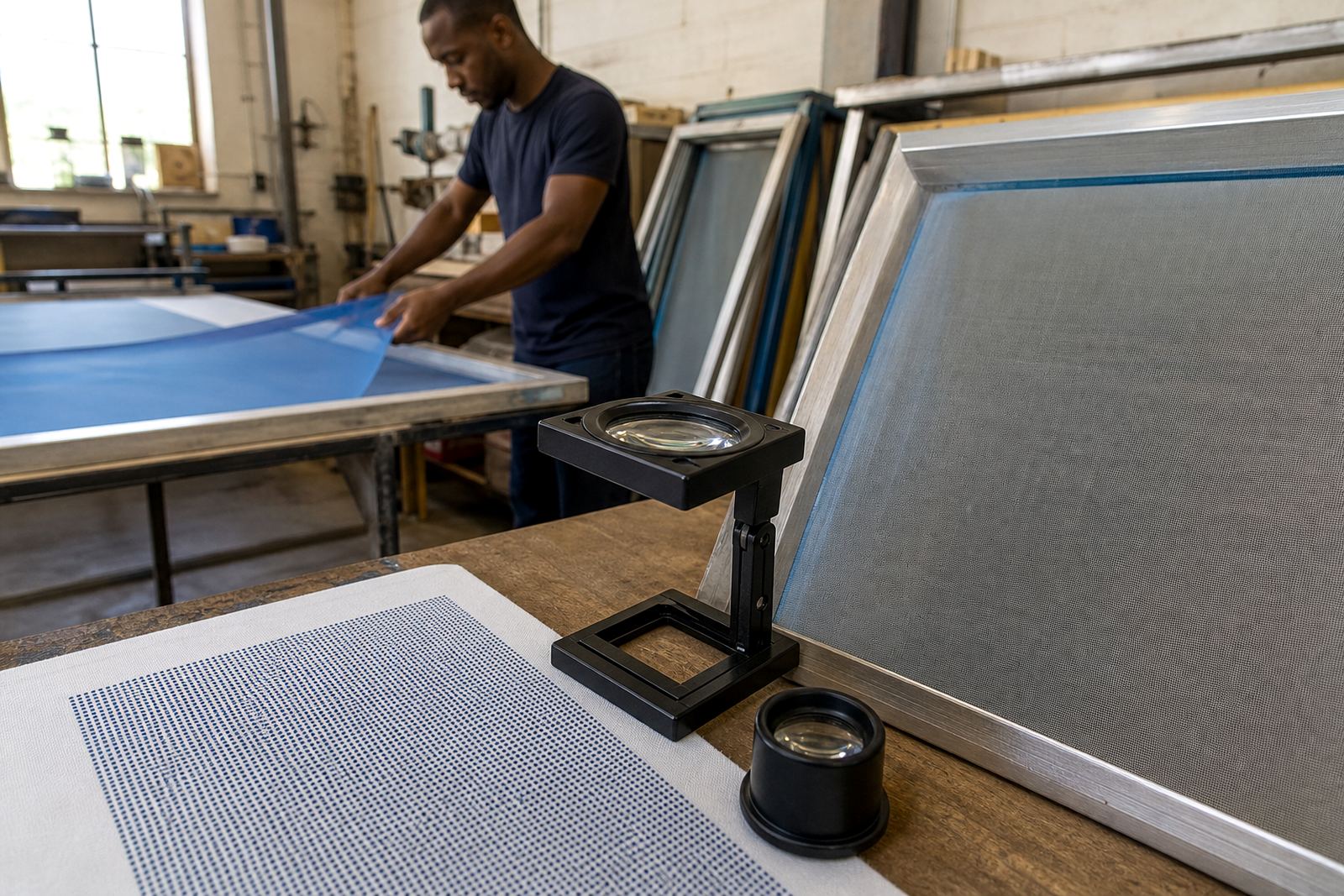
Mesh count gets most of the attention, but tension is what gives the screen its working character. A well tensioned screen releases ink cleanly, helps with sharper edges and makes the print stroke feel more controlled. If the mesh is too loose, the image can blur, the print can flood unevenly and the screen may bounce under pressure. If it is stretched too tight without care, the frame and mesh may not hold consistently over time, especially in hot or humid conditions.
In South Africa, that matters. A screen stored in Germiston may behave differently after a few days in coastal humidity in Cape Town or Gqeberha. Heat, dust and moisture can all affect how a screen sits on press. That is why many print shops ask for tension checking, frame clean prep and repeat order consistency. It helps keep the screens working the same way from one batch to the next, even when production is under pressure.
If you are printing plastisol on cotton tees, blended garments or heavier hoodies, tension consistency can make the difference between a print that sits neatly and one that feels heavy or uneven.
Pre-stretched aluminium frames and why they help production
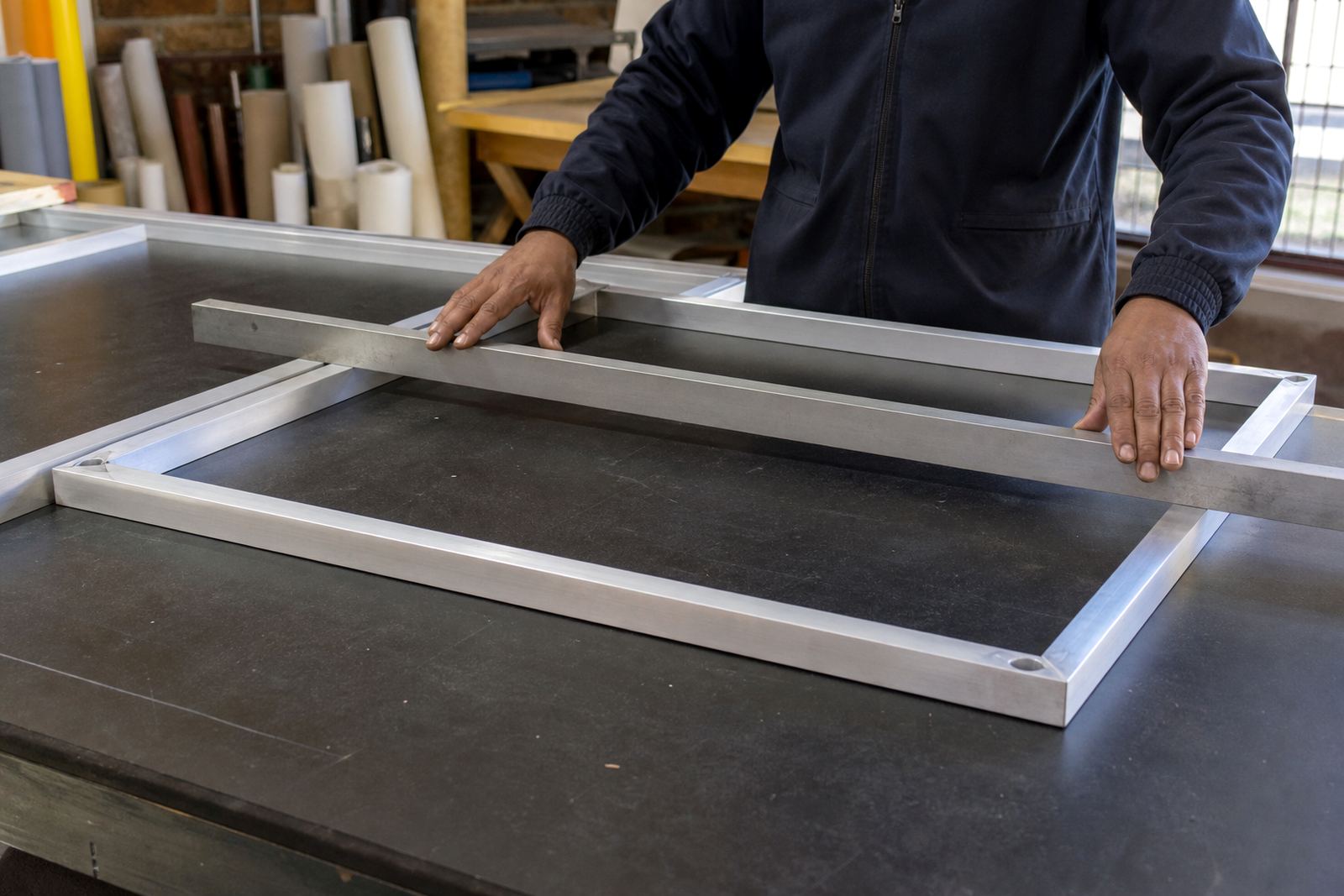
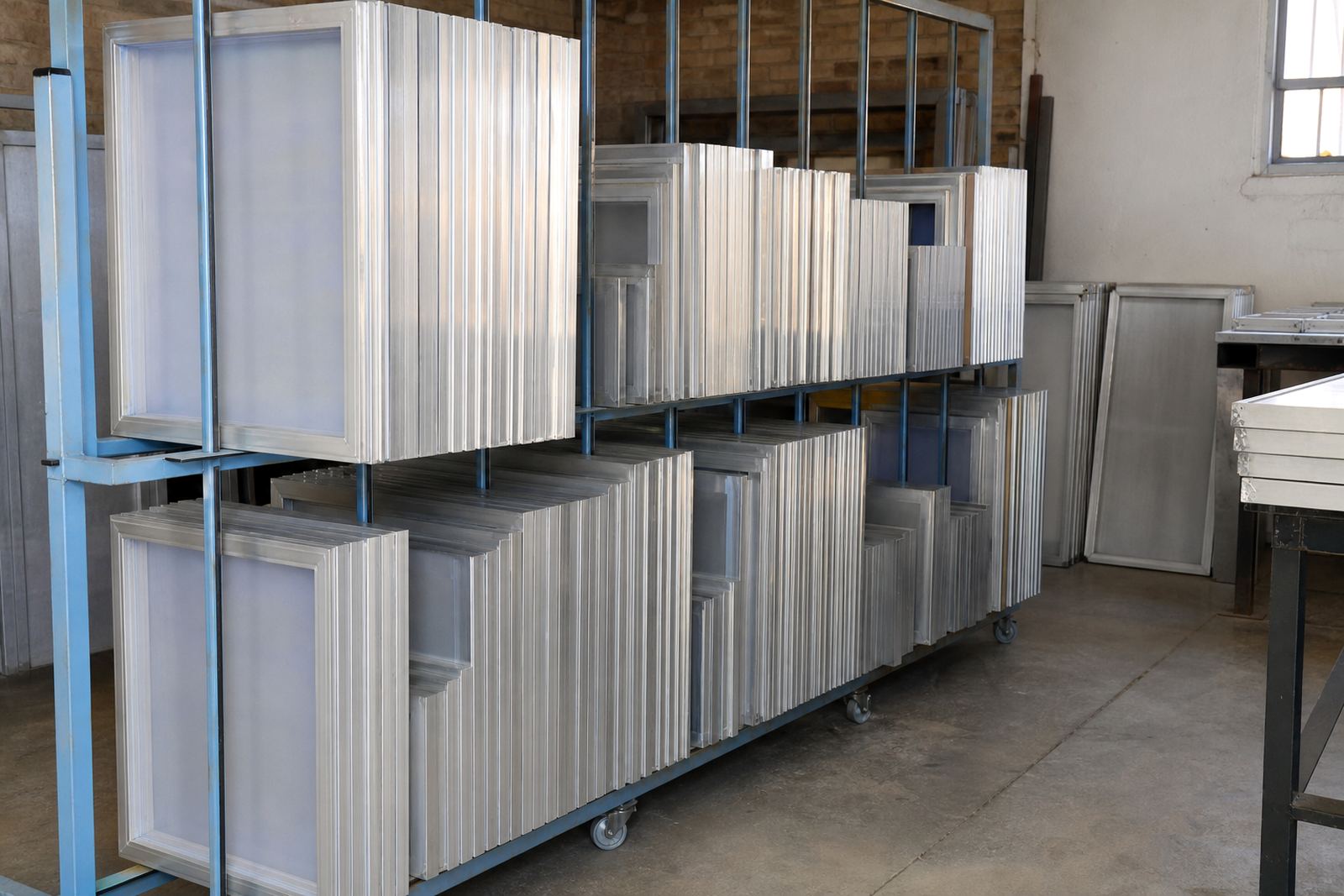
Pre-stretched aluminium frames are a practical choice for shops that want stable screens without the hassle of constant rework. Aluminium handles repeated use well and is a good fit for garment printing where screens are cleaned, reclaimed and reused often. For shops doing regular runs across Pretoria, Midrand and Johannesburg, pre-stretched frames can save setup time and reduce variation between screens.
When a frame is stretched properly, the mesh sits flat and the print area remains more predictable. That helps during registration, especially on multicolour jobs. It also supports cleaner off-contact settings and more even contact with the garment surface. For repeat orders, a good frame and matched mesh combination is often worth more than trying to force one screen to do everything.
- Useful for repeat work where consistency matters.
- Helps reduce time spent re-stretching worn screens.
- Supports cleaner registration across multi-colour artwork.
- Suitable for shops that need screens ready for fast dispatch.
For print shops on the East Rand or in Germiston, pre-stretched frames also help when orders need to move quickly before a public holiday or a load-shedding window. Less time on setup means more time on the press.
Matching mesh to plastisol printing conditions
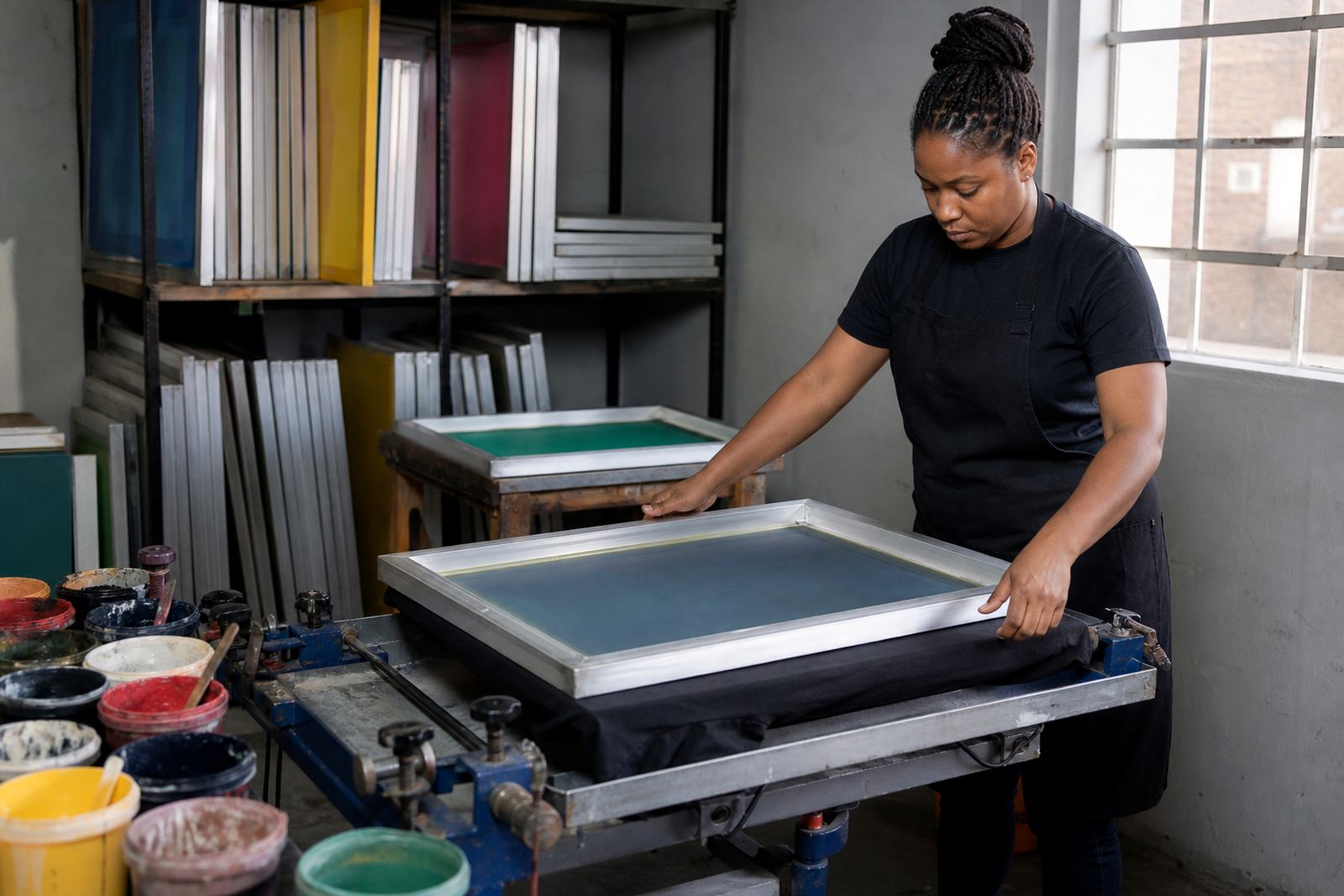
Plastisol behaves differently from other inks, so the screen should support the way you print and cure it. If the screen is too open for the artwork, too much ink can build up and curing may take longer or feel uneven. If the mesh is too fine, solid coverage can become patchy and the printer may overwork the stroke. A good match keeps the print neat without forcing the operator to compensate every time.
Think about the garment colour too. White prints on dark cotton often need a different screen setup from a single-colour print on light fabric. Heavier prints usually benefit from a screen that can carry more ink, while lighter, finer work often needs better control. If the job includes underbases, flash time and a second print layer, the screen has to handle that extra ink without smearing or clogging. That is why mesh count matching is worth doing properly instead of guessing.
Clean screen prep also matters. Any residue on the frame or old mesh glue can affect how the screen sits and how the print behaves. A clean, well prepared screen gives you a more reliable starting point before the first pull.
A local example from a busy Gauteng print shop
Consider a garment printer in Germiston handling a mix of work for Johannesburg school events, Pretoria corporate orders and couriered repeat jobs for Cape Town. One week they may need bold logo prints for staff shirts, and the next a finer job for promotional tees with small text on the chest. If they try to run every job through the same screen, they spend more time adjusting pressure, chasing detail and cleaning up after each run.
A better setup is to keep a few screen options ready: one for heavier coverage, one for general garment work and one for finer detail. With consistent frame sizing, tension checking and clear mesh count matching, the shop can move from one job to the next with less trial and error. That is especially useful when dispatch packing and repeat orders need to go out the same day.
- Heavy print jobs need more ink deposit and a screen that can carry it.
- General work benefits from a balanced mesh that is easy to print through.
- Fine detail needs tighter control and a cleaner edge.
- Keeping screens matched helps when orders are split between branches or delivery areas.
That practical setup is usually what keeps production steady when the phone rings, the courier arrives and the press still has to finish the run before knock off.
How MeshMaster helps you choose the right screen
MeshMaster supplies screen-printing mesh and pre-stretched aluminium frames for print shops across South Africa, with support for Germiston, Johannesburg, Pretoria, Durban, Cape Town and Gqeberha. If you need new frame stretching, frame re-stretching, mesh count matching, tension checking, screen inspection or custom frame sizing, the point is to get screens that suit the job from the start. That includes clean prep, bonding and packing for dispatch when orders need to move quickly.
Our team works with practical screen-printing needs every day, from batch screen prep to repeat order service and screen setup advice. If you are planning plastisol work, the best time to sort out your mesh is before the screen hits press. A well matched screen makes the whole job easier, from first pull to final cure.
For shops that need dependable supply and straightforward advice, the right screen choice is often the simplest way to improve consistency without changing the rest of the workflow.