Why signage jobs need a different screen choice
Signage work asks more from a screen than many garment jobs. Rigid panels, display boards, foamed PVC, acrylic sheets and coated substrates usually need cleaner edge control, steadier ink deposit and less movement during the print stroke. If the screen is too open, ink can flood into fine detail. If it is too fine, coverage on solid areas can be patchy and the printer ends up forcing too much pressure through the mesh.
For shops in Germiston, Johannesburg or Pretoria, the practical choice often depends on whether the job is going outdoors, going through a flatbed process, or being handled by installers the next day. A sign that leaves the print room looking good but marks easily on site is usually a screen choice problem, not only an ink problem.
Mesh count affects detail, coverage and ink film
Mesh count is one of the first decisions to get right. A lower mesh count generally allows more ink through, which can help with solid colours, block lettering and heavier coverage on rigid boards. A higher mesh count gives better detail control and can help when the artwork has fine lines, small text or halftones. The trick is matching the mesh to the job instead of using the same screen for everything.
- Lower mesh counts suit bold graphics, underbase-type coverage and opaque spot colour work.
- Mid-range mesh counts are useful for general signage, logos and mixed artwork.
- Higher mesh counts are better for finer detail, small text and cleaner halftone control.
On a busy run, the wrong mesh count can slow the whole line because the printer needs extra passes or has to stop and wipe down overspill. That adds waste and gives inconsistent results from the first board to the last.
Frame strength and tension matter on rigid panel work
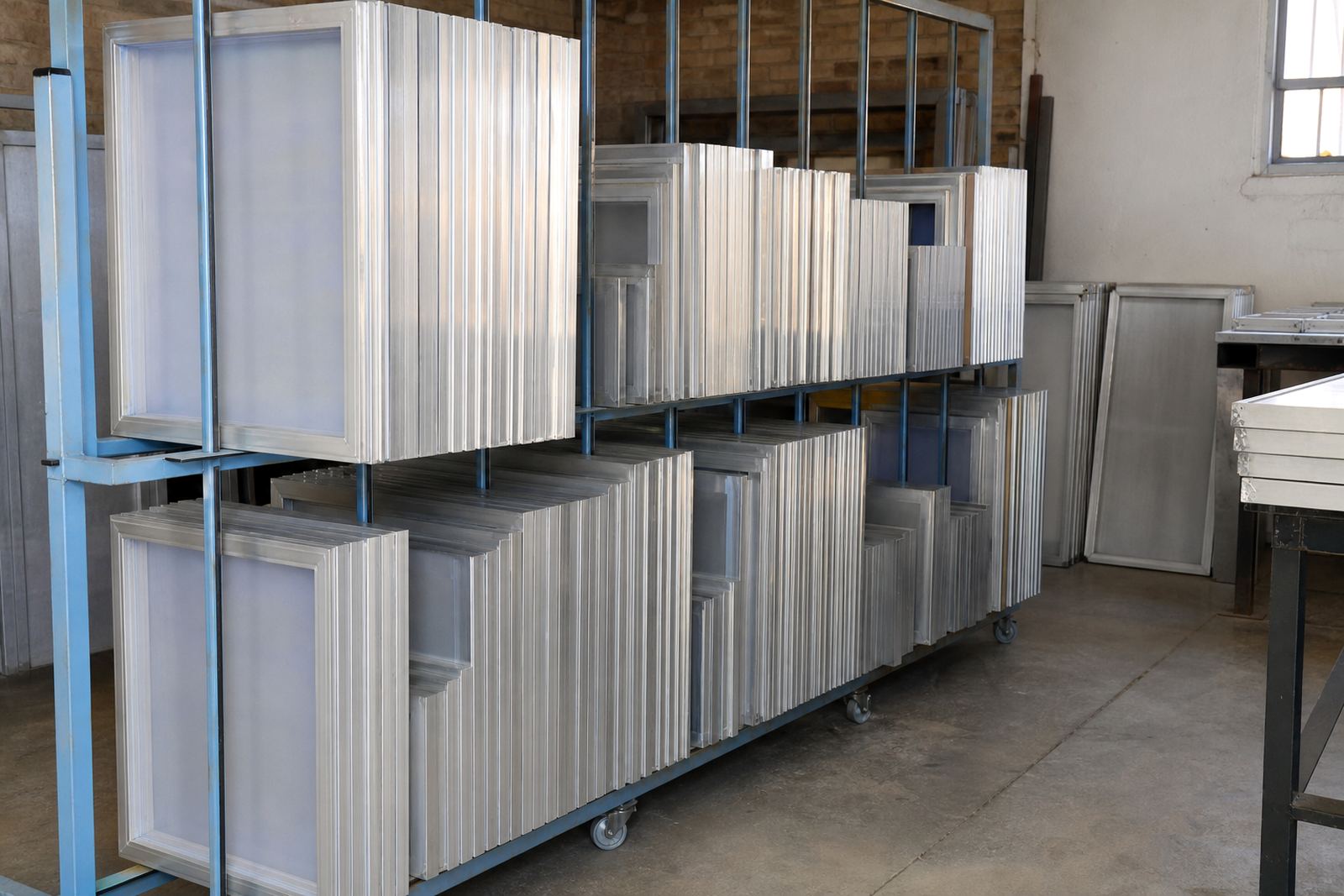
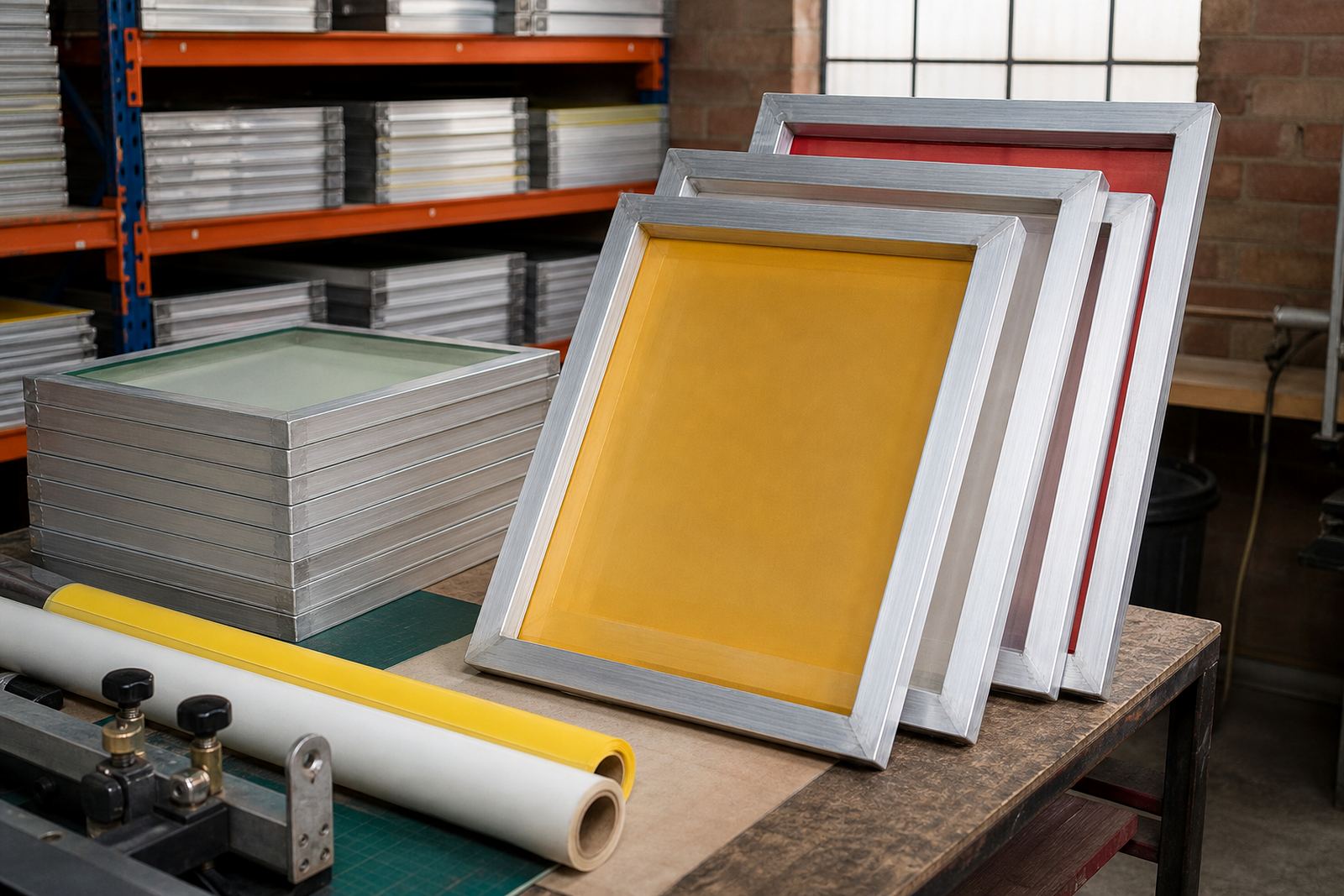
Rigid panels need stable screens. Aluminium frames are preferred for repeat work because they hold tension well and are easier to keep consistent from job to job. Good tension helps the screen snap back cleanly after the squeegee pass, which improves registration and reduces the chance of smudging on sharp edges. If the tension drops, the screen starts to feel soft and the print can lose definition, especially on longer runs.
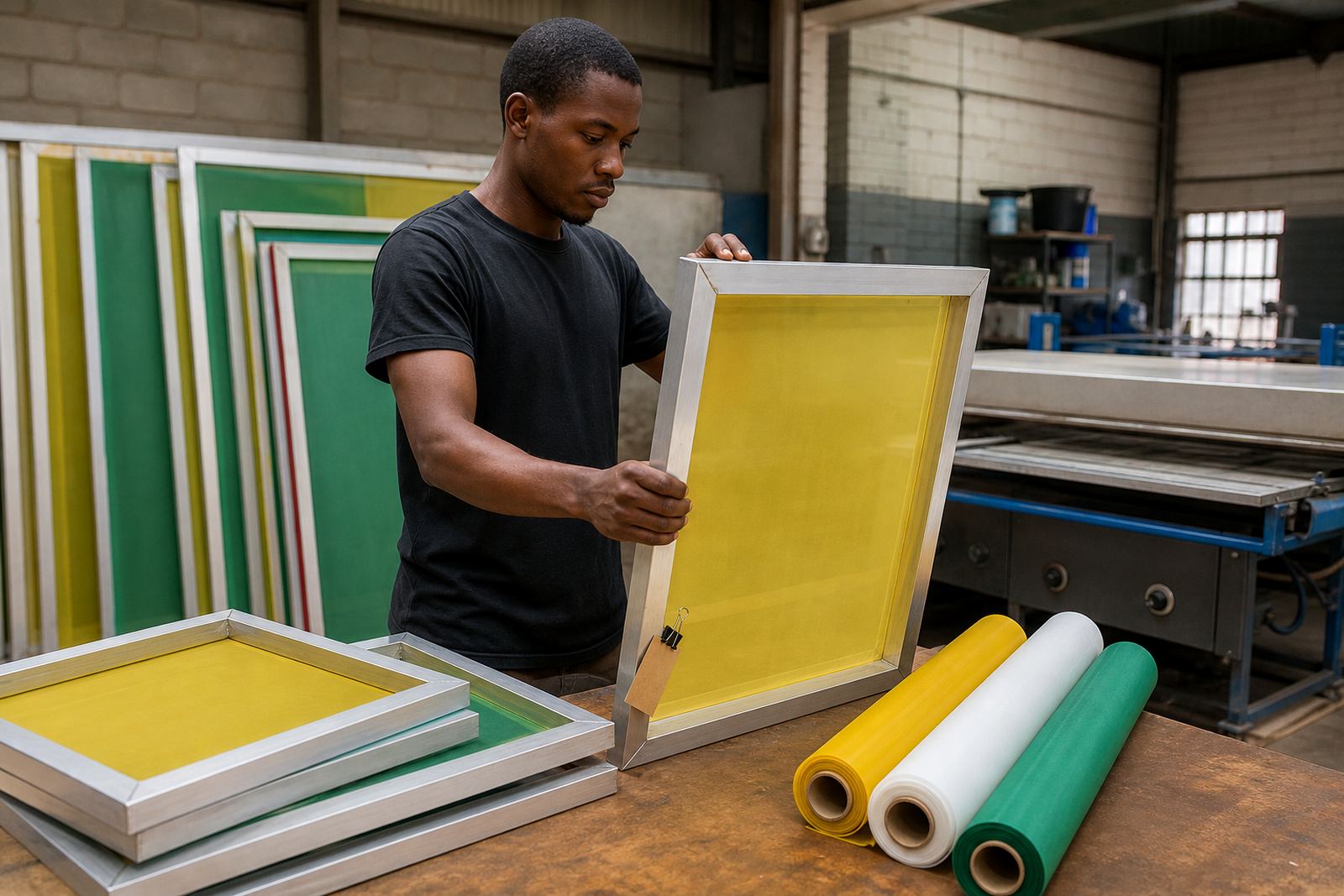
Pre-stretched frames are useful where the shop wants dependable starting tension and less time spent on setup. Re-stretching can also make sense when a frame is still sound but the mesh has tired out from repeated use, heat or solvent exposure. In South African conditions, that matters because hot shop floors, coastal humidity in places like Durban and salt air near Gqeberha can all affect how a screen behaves over time.
- Check that the frame is square before stretching or re-stretching.
- Look for even tension across the full mesh area, not only in the middle.
- Inspect corners and joints for movement before the screen goes into production.
Surface type changes the way the screen prints
Not every panel takes ink the same way. Some rigid substrates are smooth and coated, others have a slight texture that changes how the ink sits. A slick surface often needs tighter control over mesh choice, off-contact and pressure. A more textured board may need a screen that releases enough ink to cover the peaks and valleys without forcing the print to be too heavy.
It is also worth thinking about the final use of the sign. Indoor boards for point-of-sale displays are handled differently from outdoor wayfinding panels or safety signs fixed with municipal approvals. Outdoor jobs often need better coverage and durability, while indoor jobs may prioritise sharp detail and cleaner finishing.
Tension checking before the run saves time later
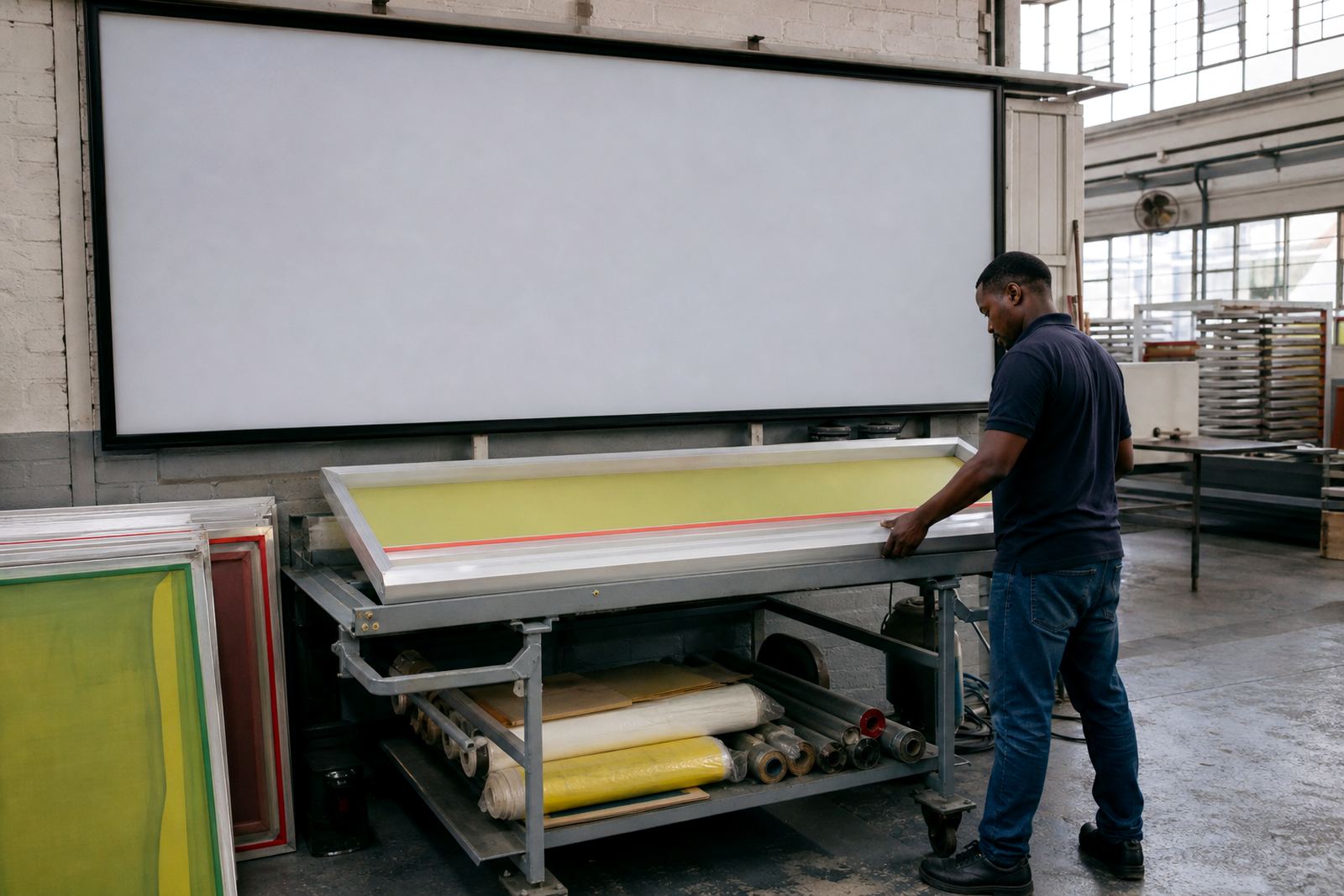
Before a signage batch goes onto the press, a proper tension check is worth the few extra minutes. A screen that looked fine last week may have shifted after cleaning, storage or transport between jobs. In practice, the operator should check the mesh feel, print edge sharpness and how the screen recovers after the stroke. If the screen bounces unevenly or the print starts to feather, the mesh may no longer be right for the job.
Many print shops in Gauteng work with a mix of urgent walk-in orders and planned repeat runs. In that environment, a quick screen inspection can prevent a whole stack of panels from being rejected after printing. It is easier to catch a weak screen before ink goes on than to strip and redo boards under time pressure.
- Feel for loose spots across the mesh surface.
- Check whether the ink deposit changes from one side of the frame to the other.
- Confirm that the artwork still registers cleanly with the jig or board stop.
A practical example from a Germiston to Cape Town run
A shop in Germiston preparing signage for a chain rollout may need the same artwork printed for Johannesburg, Pretoria and Cape Town branches. The board material may be the same, but handling and installation conditions can differ. A screen chosen for fine interior directional signs in Midrand might not be the best option for larger outdoor panels that will face sun, wind and frequent cleaning. The printer needs one screen setup that gives repeatable results across the whole batch, not a different answer on every sheet.
That is where mesh count matching and frame preparation matter. If the artwork includes small type and solid blocks, the shop may need different screens for different elements, or a balanced mesh that can handle both without compromising the finish. When the screens are stretched properly and the tension is even, the print room can keep the run moving and the installer gets panels that line up neatly on site.
What to ask before you place the order
If you are ordering mesh or pre-stretched frames for signage work, it helps to think through the job first. The more clearly you define the substrate, the artwork and the finish, the easier it is to choose the right screen. That saves time in setup and lowers the risk of reprints.
- What is the panel material and surface texture?
- Is the artwork heavy solids, fine text or mixed detail?
- Will the signs be indoor, outdoor, or exposed to coastal humidity?
- How many repeats are expected, and will the screen be stored for later use?
- Does the shop need new frame stretching, re-stretching or just repeat order support?
For print shops across South Africa, from East Rand supply runs to Durban delivery and Cape Town delivery, the best screen choice is the one that matches the real job on the floor. Get that right and the rest of the run becomes much easier to manage.