
Why seasonal orders fail when screens are left too late
In screen-printing, the rush usually starts before the work is even on the press. School wear jobs stack up in January and again mid-year, event orders come in waves, and festive production can fill the calendar faster than expected. If your screens are not prepared in advance, you end up losing time to cleaning, stretching, checking tension and sorting out mesh problems while the queue is growing.
A seasonal plan works best when the screens are treated like stock, not an afterthought. That means matching mesh count to the print, keeping repeat artwork on hand, and checking that each frame still holds tension after storage. A screen that looked fine last month can relax in heat, humidity or rough handling, so preperation matters more than most shops admit.
Match the mesh count to the job before the order lands
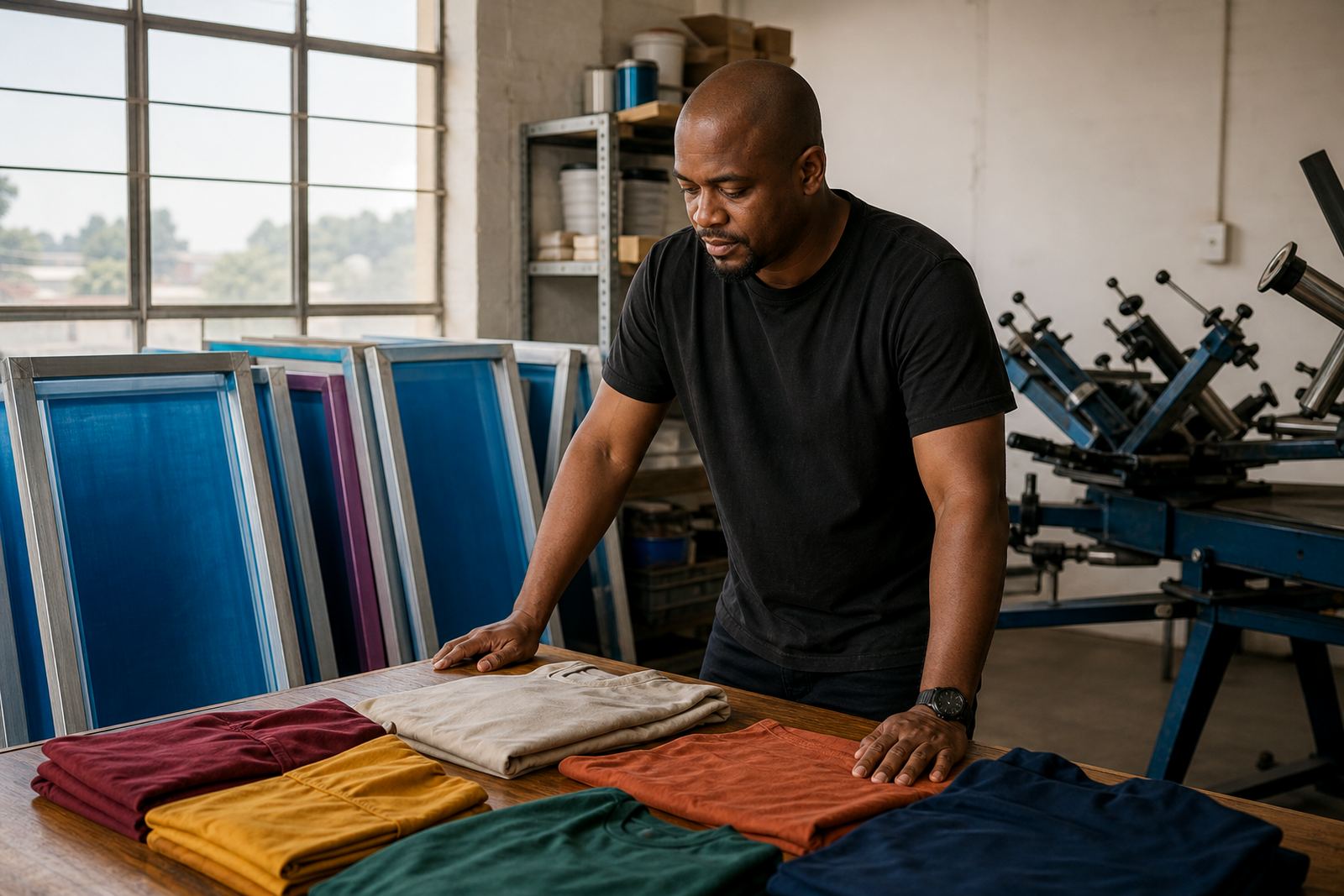
Different garments and inks need different mesh counts. Finer detail usually calls for a tighter mesh, while heavier ink deposit needs a more open one. If you are printing school logos on polycotton tees, or bold event graphics on cotton workwear, the right mesh count helps with clean detail, ink control and fewer reworks. There is no sense using one screen for every job and hoping for the best.
- Higher mesh counts help with finer detail and controlled ink deposit.
- Lower mesh counts suit heavier prints, special effects and stronger ink laydown.
- Consistent mesh count matching makes repeat orders faster to set up.
- Keeping separate screens for different fabric types reduces trial and error.
For print shops in Germiston, Johannesburg and Pretoria, where turnaround time is often tight, having the right mesh ready before the order lands can save a full day of sorting and test pulls.
Keep frames ready for heat, humidity and long shifts
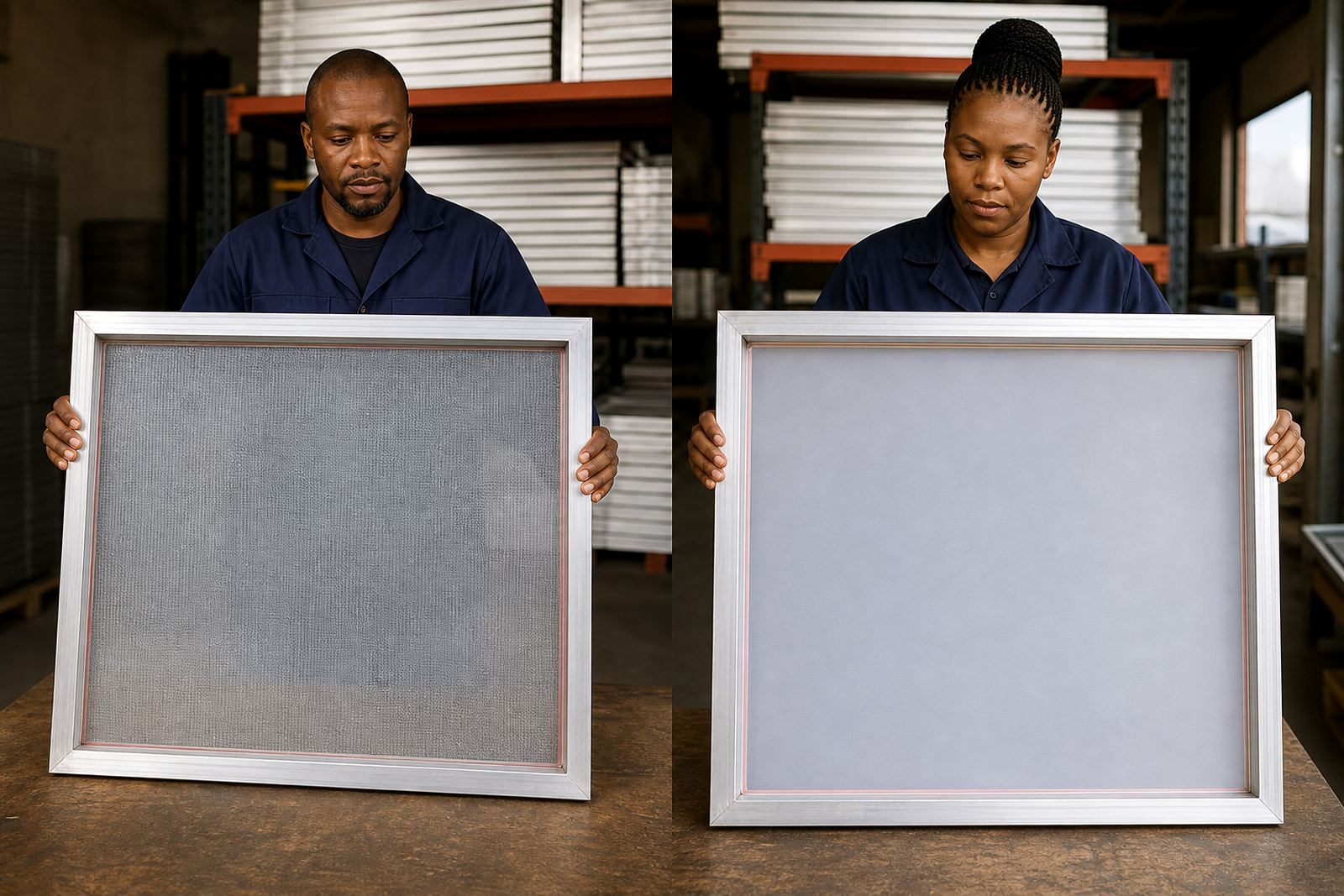
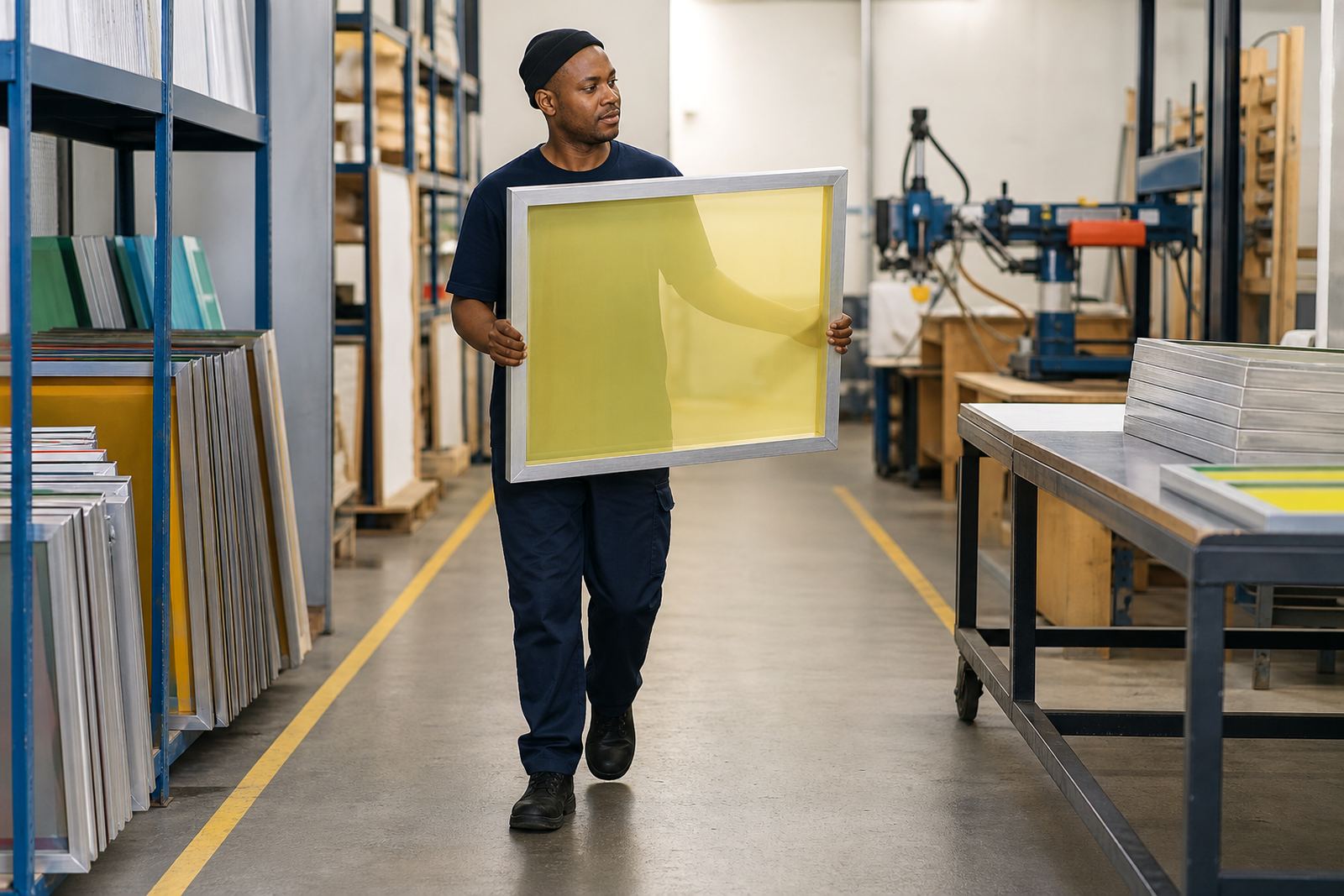
Pre-stretched aluminium frames are useful because they give a cleaner starting point and reduce the need for constant adjustments. But even a good frame needs proper tension checking, especially when it is stored in a warm workshop or moved between jobs. Coastal humidity in Durban and Gqeberha can affect how screens behave, while inland heat and load-shedding interruptions can disrupt normal production flow.
That is why seasonal planning should include frame inspection, mesh bonding and clean prep before the rush. A screen that is properly tensioned and well bonded is easier to register, simpler to reclaim and more dependable when your team is working late to meet delivery.
- Check frame corners and bonding before each production run.
- Store finished screens flat, dry and away from direct sun.
- Use clean prep so old ink residue does not affect adhesion.
- Keep a record of which screens are tied to repeat artwork.
Build a repeat order system for school wear and events
Many seasonal orders are not one-offs. School wear, sports days, cultural events and year-end functions often return with the same logos or only small artwork changes. A repeat order system makes those jobs easier to handle because the screen set-up advice, mesh count and frame size are already noted. You are not starting from scratch every time a customer calls again.
At MeshMaster, repeat planning is strongest when the screen itself is stored as part of the order record. If the frame size, tension level and mesh count are consistent, the next production run can move straight into inspection and dispatch packing. That is better for the customer and it keeps the press room calmer when the month gets busy.
A local example from Germiston to the coast
A print shop in Germiston handling school wear for Johannesburg and Pretoria may need a different plan from one serving Durban or Cape Town. Inland jobs often arrive in bigger batches, while coastal customers may need extra care with storage because of moisture and transport time. If the same shop also handles Gqeberha orders, it may need separate screen sets for each artwork group and delivery area.
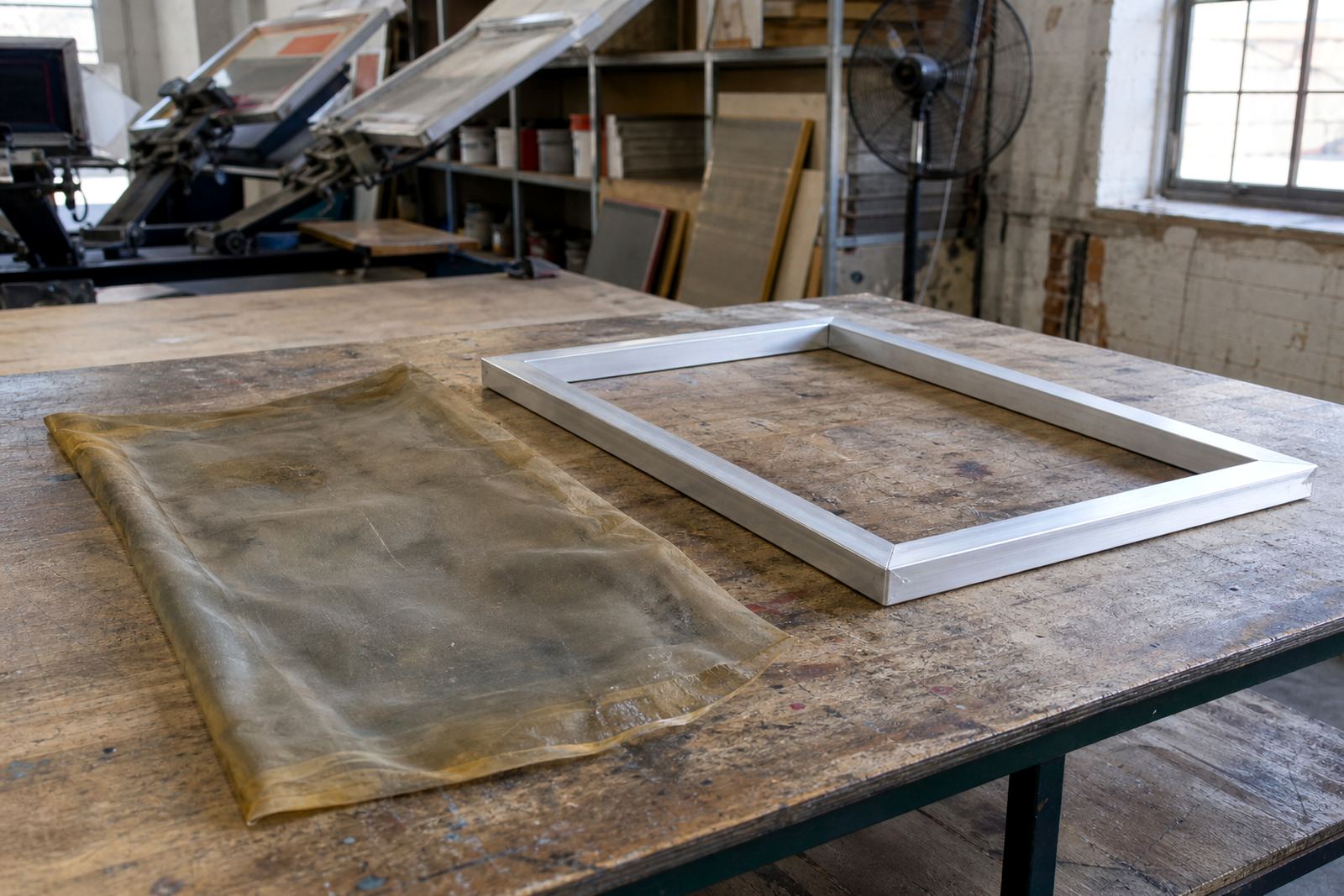
The practical answer is to prep screens in batches. Use new frame stretching for fresh artwork, re-stretching where older frames are still serviceable, and batch screen prep for the jobs most likely to repeat. When the season starts, the shop can move from screen inspection to dispatch packing without losing time on last-minute fixes.
What to prepare before the rush starts
Seasonal order planning works best when your screens are already sorted weeks ahead of the deadline. That gives you room for testing, customer changes and the unexpected delay that always seems to happen just when the order should be leaving the shop.
- List your likely seasonal jobs by school, event or festive period.
- Match each design to the correct mesh count and frame size.
- Check tension on stored screens and replace any weak frames.
- Set aside repeat artwork screens for faster turnaround.
- Arrange delivery plans early for Johannesburg, Pretoria, Durban, Cape Town and Gqeberha.
For shops across South Africa, this kind of preparation supports better printing and less pressure on the team. It also makes it easier to handle municipal delivery rules, loading access and after-hours collections where needed. The main goal is simple: when the order volume rises, your screens should already be ready to work.