Handle the frame, not the mesh
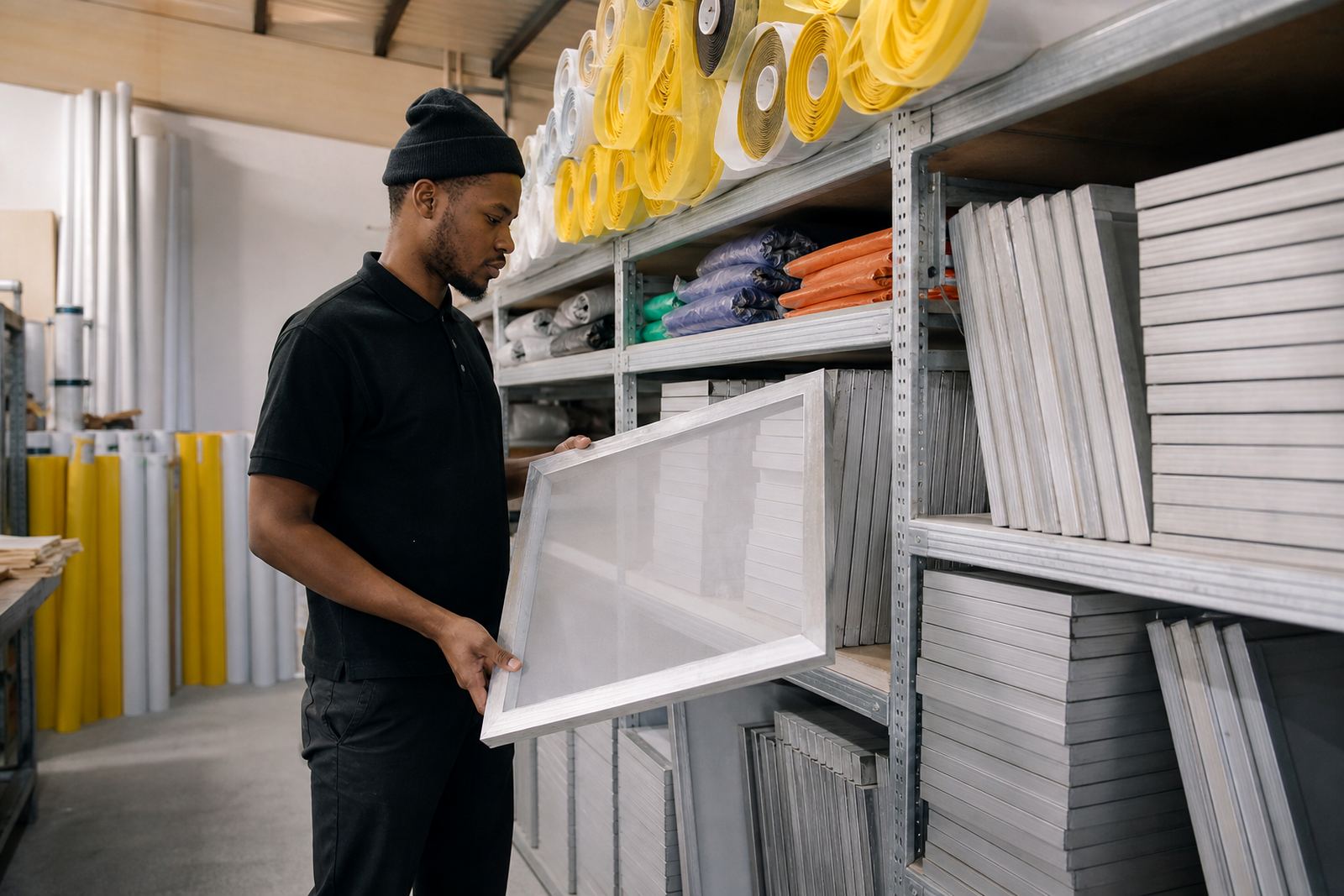
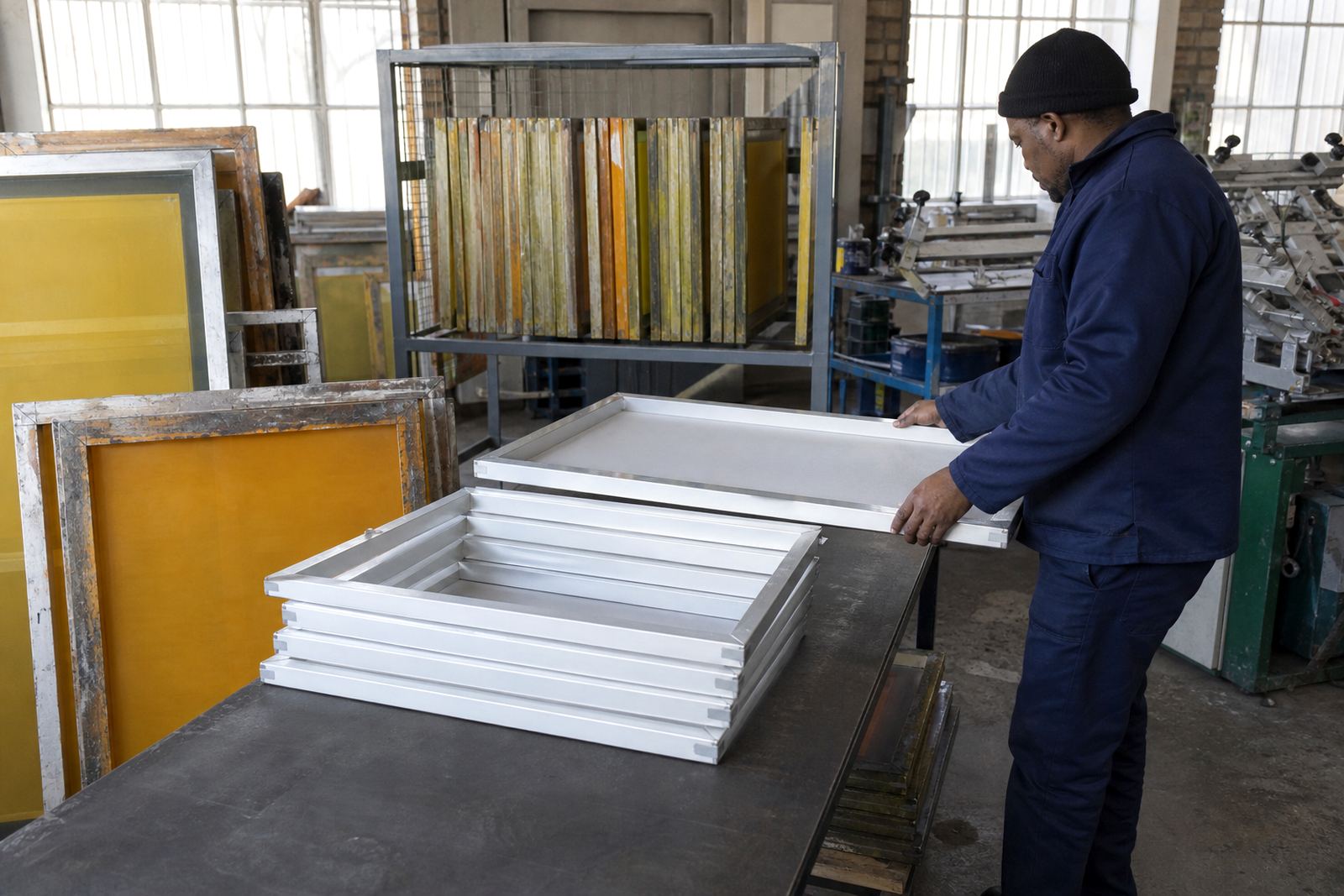
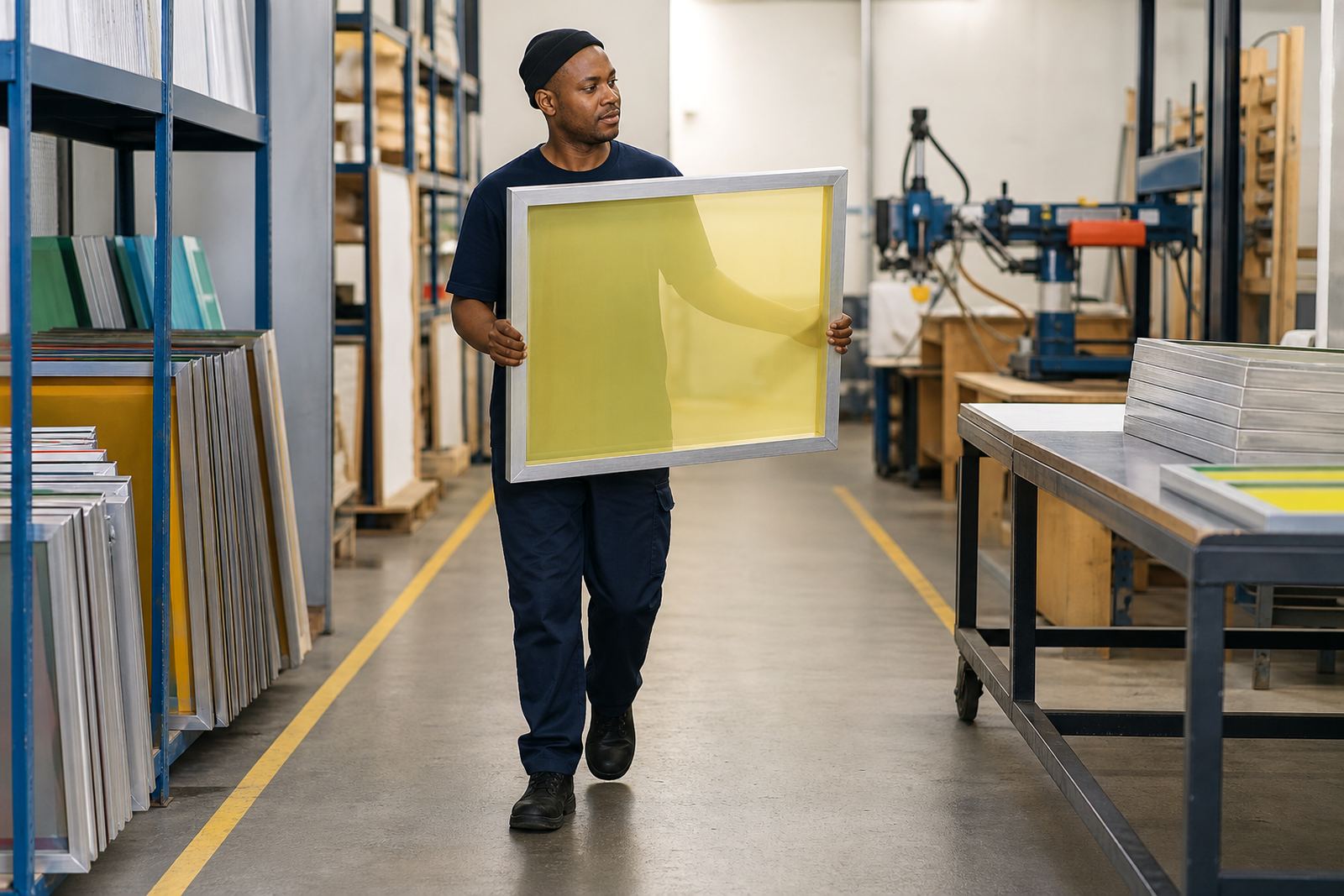
The easiest way to damage a screen is to lift it by the mesh or rest it on an uneven edge. Once a screen is stretched to the right tension, the mesh should be treated as the working surface, not a carry handle. Pick up aluminium frames by the outer bars and keep fingers away from the open area, especially when moving stacks in and out of the press room.
In busy print shops around Germiston, Johannesburg and Pretoria, screens often move from coating to drying to print and back again. That movement is where accidents happen. One knock against a pallet, a careless drop onto a corner, or a screen dragged across a rough bench can loosen the mesh or bruise the edge bond. The frame may still look fine but the tension will tell a different story when the print starts to shift.
Keep screens off the floor and away from traffic
Floor storage is hard on stretched screens. Dust, grit and offcuts get under the frame, and a person carrying substrates can catch the mesh by mistake. Even a short stop on the floor near a doorway can lead to dents or warped corners. Screens should be stored upright on proper racks or on clean flat supports with enough space between frames to avoid rubbing.
In South African workshops where space is tight, this discipline matters even more. A screen stored near a roller door in Midrand or close to a loading bay in Gqeberha is exposed to constant movement and forklift traffic. Keep a clear route for staff and make sure wet floors, oil spots and loose packaging are cleaned up quickly. A small slip can save a screen from a bigger one.
- Store screens upright on padded or smooth supports
- Leave enough space between frames so they do not rub
- Keep them away from doors, pallet movement and foot traffic
- Mark a safe stack area so screens are not left on the floor
Wash gently and avoid harsh contact points
Cleaning is necessary, but aggressive washing can shorten the life of a stretched screen. Use even pressure and avoid scrubbing the same spot too hard, especially near the bonded edge where the mesh meets the frame. A stiff brush or a sharp nozzle held too close can weaken the mesh and start small tears that only show up later under print pressure.
After reclaiming, rinse thoroughly so coating remover, ink residue and detergent are not left behind to dry in the mesh. In humid coastal areas like Durban and Cape Town, residue can stay tacky for longer and attract dirt. In dry inland conditions, residue can bake on quicker during the day and become harder to remove. Either way, give the screen time to dry properly before stacking, because trapped moisture can affect the mesh and make it easier to snag.
- Use a steady wash pattern rather than one hard blast
- Keep spray pressure controlled near the mesh edges
- Rinse out all chemicals before drying
- Dry screens fully before stacking or moving them into storage
Watch for snag points in the press room
Mesh damage often starts with tiny snag points that nobody notices at first. Sharp corners on tables, rough tape edges, dried ink on guides and loose fasteners can all catch the mesh when a screen is moved into position. Before each run, check the press area for anything that could scrape the screen during loading or print setup.
A practical example is a shop in Germiston doing repeat orders through the week. If the same screen goes back onto the press several times, the frame may rub against a clamp or a sheet pile each time it is set down. Over a few weeks that wear builds up. Keeping the press area tidy and the screen path clear is simpler than repairing a torn mesh after the fact.
It also helps to train everyone on the same handling method. When one person lifts carefully and another drags a frame across the bench, the screen gets mixed signals and the damage shows up sooner. A shared routine protects the mesh and keeps tension readings more consistent from one job to the next.
Match mesh count to the job before stretching starts
Damage is not only about handling after the screen is made. Choosing the wrong mesh count for the job can cause avoidable stress from the start. Finer mesh is better for detail and thinner ink deposits, while coarser mesh suits heavier deposits and simpler artwork. If the count does not match the ink, stencil and substrate, the screen is more likely to be pushed too hard during print.
Stretching also needs the right balance. If the mesh is pulled unevenly, or over-tightened on one side, it can weaken in use and become more vulnerable to punctures and distortion. That is why tension checking matters before the frame is sent out. A screen that is evenly stretched and properly bonded handles repeated squeegee passes with less risk of sudden failure.
- Choose the mesh count for the artwork and ink type
- Ask for tension checking before a screen goes into regular use
- Make sure the stretch is even across the full frame
- Replace damaged mesh before the weak area spreads
Protect screens during transport and dispatch
Transport can be rough on screens, especially when they are moved between print rooms, depots and delivery vehicles. Screens need to be packed so the mesh does not touch rough timber, exposed screws or loose tools. Even a short trip across town can leave a mark if the frame slides around in the back of a bakkie or van.
For deliveries going out to Johannesburg, Pretoria, Durban, Cape Town or Gqeberha, good packing matters just as much as good stretching. Keep the screens separated, stacked flat where possible and secured so they cannot tip. If the load shifts during transport, the edge of one frame can cut into another. That kind of damage is easy to miss until the first print run starts and the defect shows up across the image.
After delivery, inspect each screen before it goes into production. Look for corner dents, loose mesh lines, lifted bonding and any sign of scuffing near the stencil area. A quick check at receipt is easier than stopping a job half way through because a screen has failed under pressure.
Build a simple routine that saves screens
The best protection is a routine that everyone follows. Handle by the frame, store clean and upright, wash with care, inspect before use and keep the press area free of snag points. These habits are simple, but they stop most of the damage that shortens mesh life. They also help with repeat work because the screen behaves the same from one run to the next.
For shops that run regular jobs across South Africa, that consistency matters. Whether the screens are being used for garment printing, packaging work or general production, they should arrive in good condition and stay that way for as long as possible. Careful handling, proper tension and sensible storage do more for mesh life than rushed cleaning ever will.
If you want screens stretched, re-stretched or checked for the right mesh count before a job, it helps to work with a team that understands the day to day pressures of print rooms in Gauteng, the coast and beyond. Good handling starts with good prep, and that makes every print easier to control.