Why paper changes the screen choice
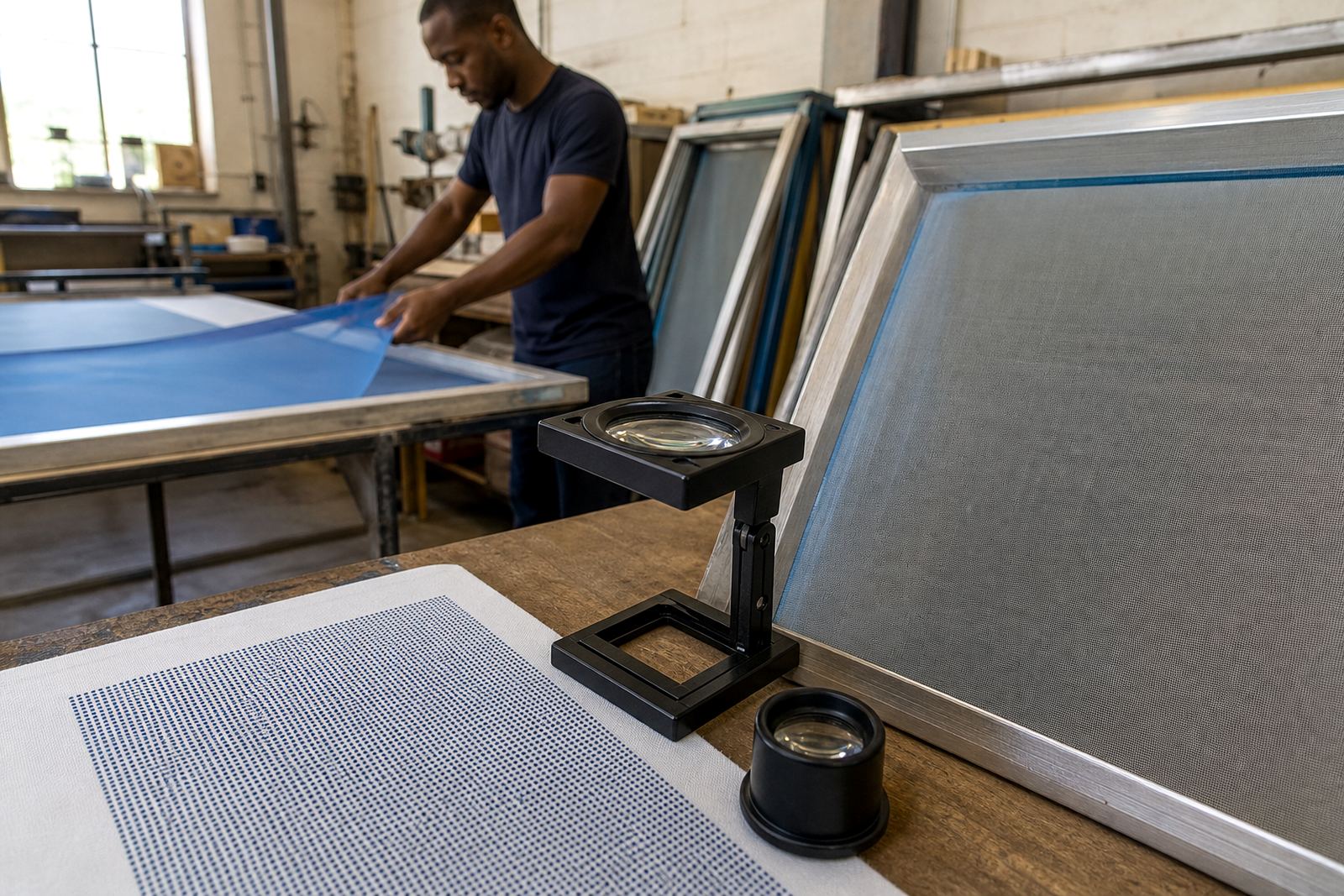
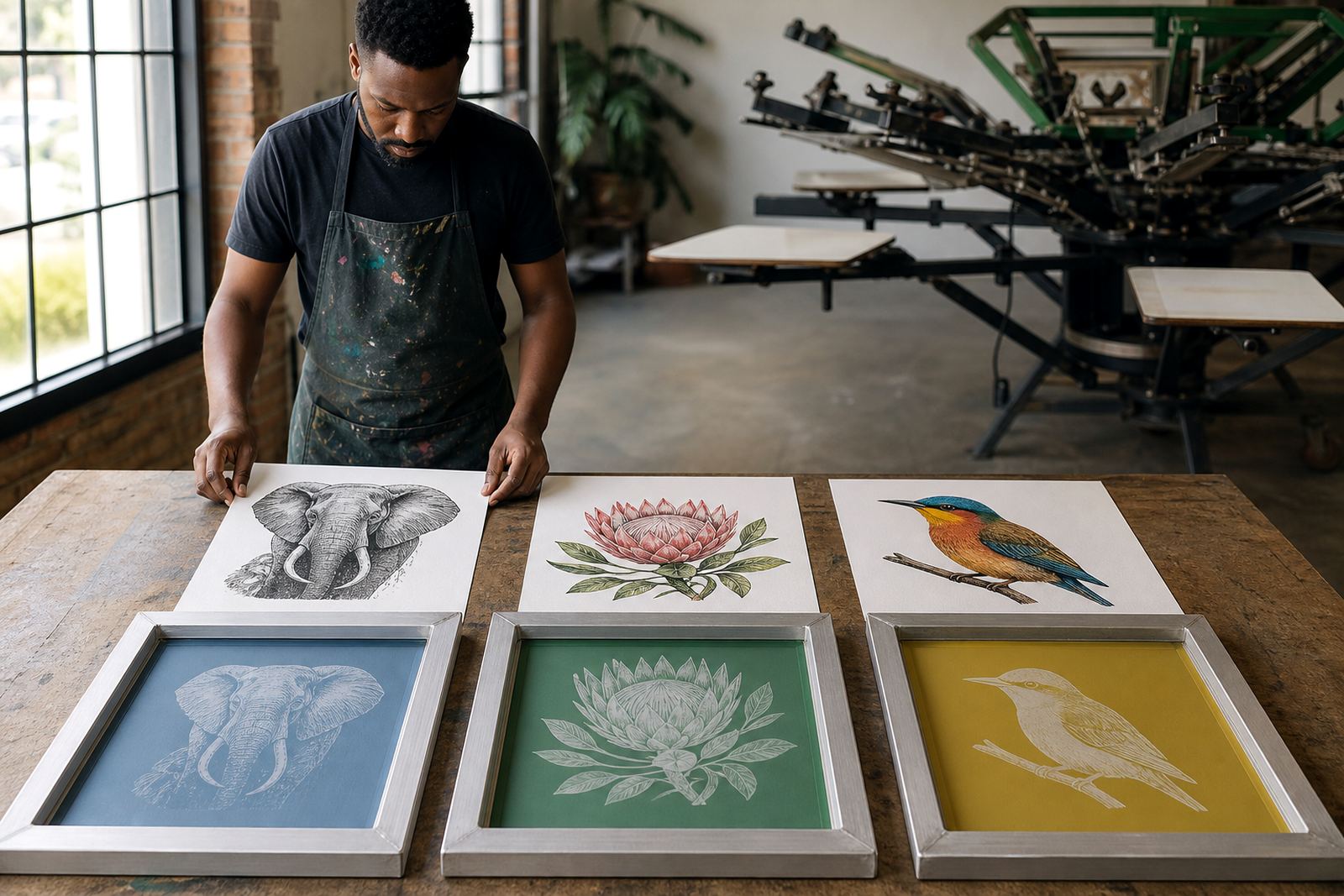
Paper is not a single material in practice. Coated sheets, uncoated bond, textured art paper and heavier board all behave differently under the squeegee. A screen that works well on one job can flood too much on another, or leave pinholes where the paper surface is rough and the mesh is not holding enough detail.
When shops in Germiston, Johannesburg or Pretoria talk about paper work, the first decision is usually about how much ink must pass through and how fine the image must stay. For bold solids, a lower mesh count may be useful. For halftones, small text or fine line work, a tighter mesh often gives cleaner edges and better control. The paper itself matters too: some sheets drink in ink quickly, while coated paper can hold the ink on top and needs a different release feel.
For many printers, the real question is not just which mesh count to use, but how that mesh will behave once it is stretched, cleaned and set up on the frame. That is where consistent frame work and proper tension come in.
Mesh count and paper coverage go hand in hand
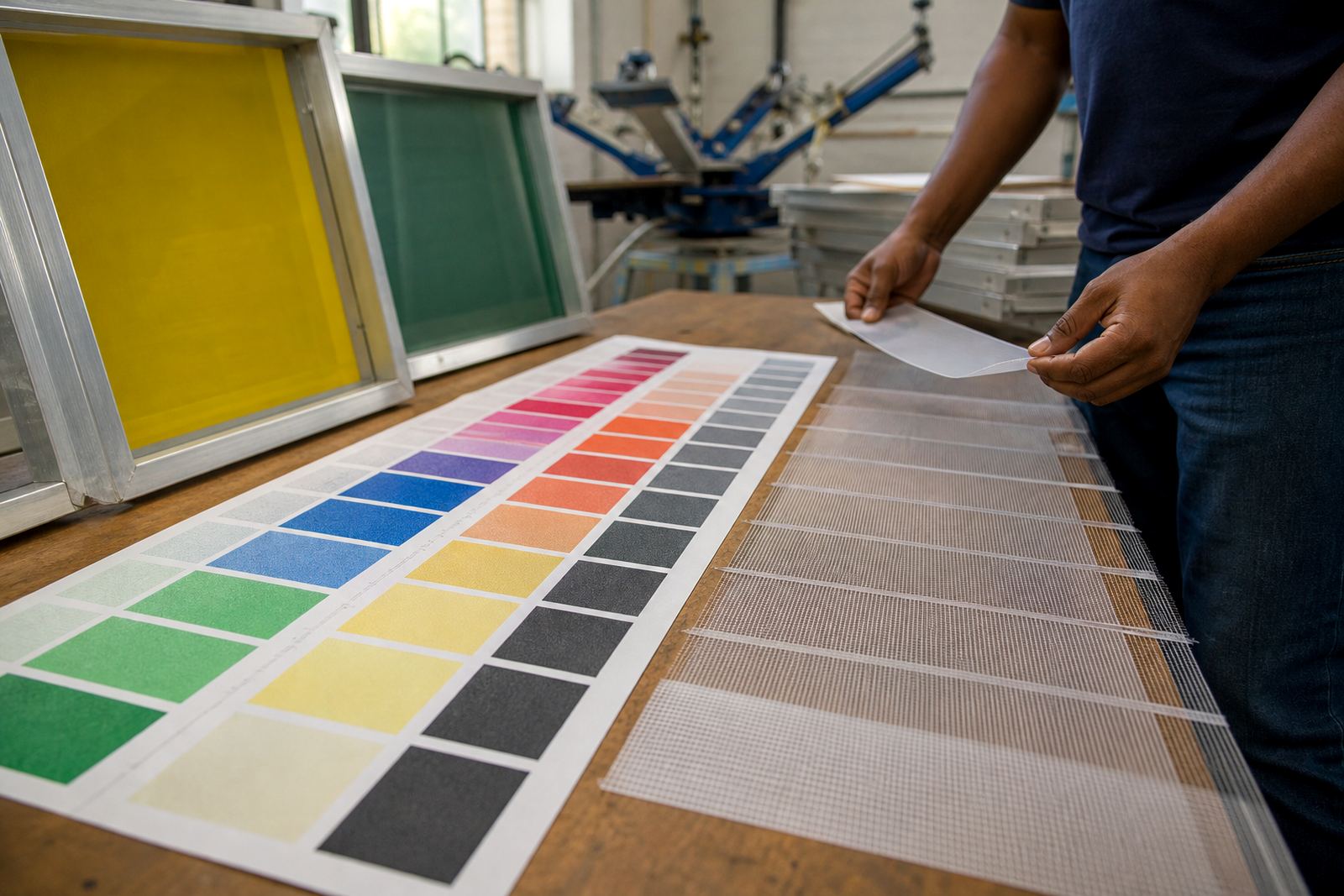
Mesh count affects how much ink gets through the screen and how sharp the image stays. Higher counts are commonly used for finer artwork because they carry less ink and keep detail cleaner. Lower counts allow heavier deposits and can suit block colour, spot white or jobs where the print needs more body on the sheet.
- Coarse mesh is often chosen for thicker ink layers and simple shapes.
- Mid-range mesh can suit general purpose paper work with a mix of text and solids.
- Fine mesh is better for detail, halftones and cleaner edges on smoother paper.
A useful approach is to match the mesh to both the artwork and the paper weight. Light paper can buckle if the ink deposit is too heavy. Heavier board can take more ink, but only if the stencil and frame are set up to hold steady through the run. A good mesh count match reduces waste and saves time at press, especially when a job needs repeat screens later in the week.
Frame tension is part of the print result
Paper printers often focus on mesh count first, but frame tension can change the result just as much. A properly stretched frame gives the screen a clean snap-back, which helps the stencil release cleanly and keeps the print consistent from sheet to sheet. If the tension is uneven, the image can drift, the off-contact feel can change, and small details may start to look fuzzy.
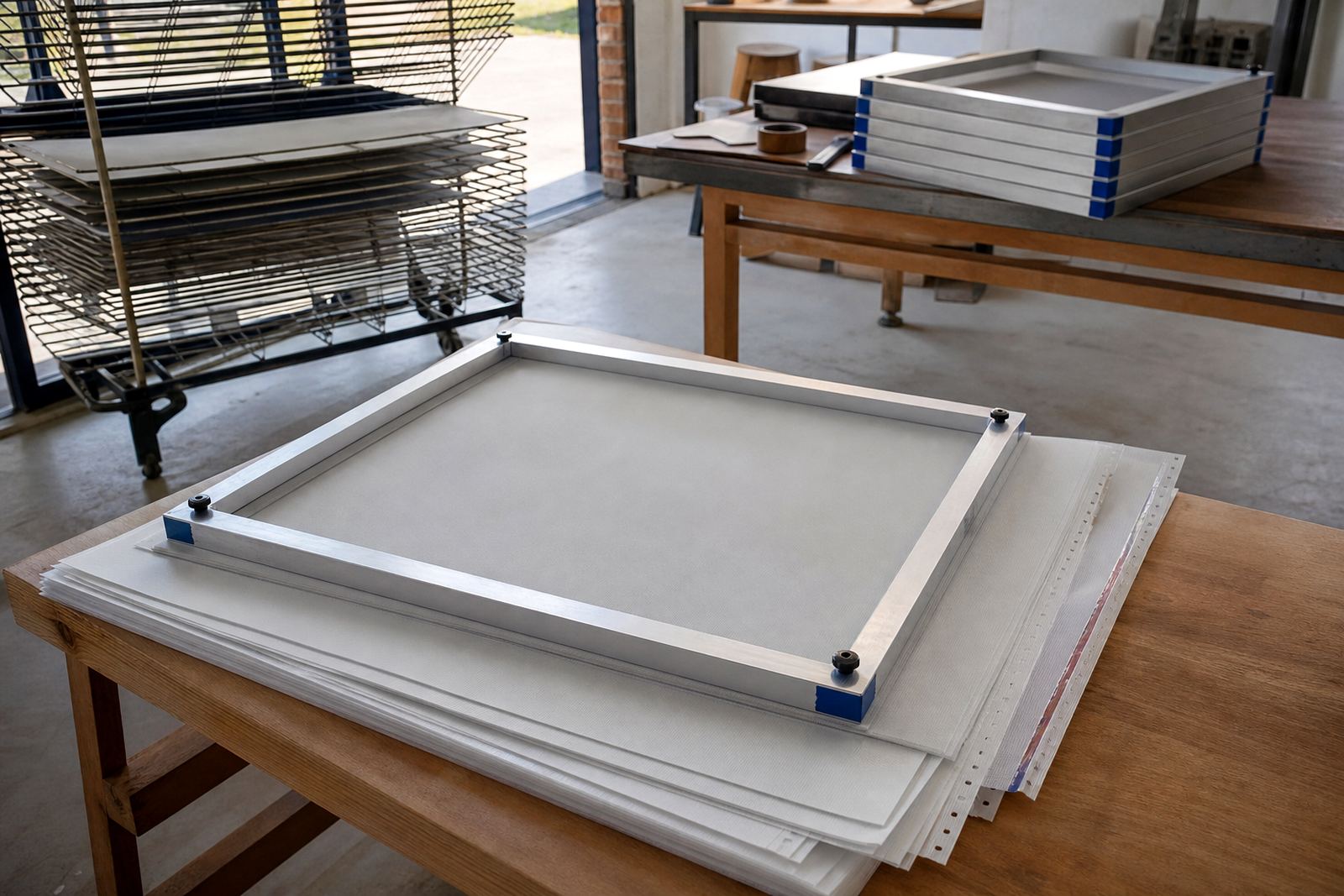
Pre-stretched aluminium frames are popular because they hold their shape well and are easier to keep consistent across repeat work. In South African print shops, that consistency matters when a run has to hold up through long shifts, power interruptions or a stop-start schedule. If a screen is stretched badly, you end up chasing problems at the press instead of printing.
- Even tension helps with sharper edges and better registration.
- Stable frames reduce warping during cleaning and reuse.
- Good frame prep helps screens last longer on paper jobs.
Paper stock, humidity and handling in local conditions
In South Africa, paper work has to cope with more than just the artwork. Humidity on the coast can change how paper sits on the bed and how fast ink settles. In Durban and Gqeberha, paper may pick up moisture from the air, which can affect registration and drying. In Gauteng, dry conditions can make some sheets cling or build static, which is another issue for feed and alignment.
That is why many shops do not treat mesh selection as a one-size choice. A screen used for a coated poster sheet in Cape Town may need a different setup from a packaging insert in Midrand or a promotional print in Pretoria. If the paper is prone to movement, tension checking and clean frame prep become even more important. The screen must release cleanly, and the mesh must not fight the sheet.
Dust, heat and load-shedding also play a part. A screen left too long between prep and print can pick up contamination, so batch screen prep and inspection matter when jobs are moving across the shop floor.
What paper printers should ask before placing an order
Before ordering mesh or frames, it helps to answer a few practical questions. What type of paper is being printed? Is the artwork fine detail, solid colour or a mix? How many screens will be used on the job? Will the screens need to be repeated later with the same settings? These answers guide the mesh count and frame size more reliably than guesswork.
- Ask whether the stock is coated, uncoated, textured or board.
- Check if the print needs a light ink deposit or fuller coverage.
- Match the frame size to the image area and press setup.
- Confirm whether re-stretched frames are suitable for repeat work.
Mesh count matching is especially useful for shops that run similar paper jobs each month. It keeps the setup familiar and helps the press team work faster. A screen setup that is clean and repeatable is easier to store, re-use and dispatch to other branches when needed.
A Germiston example from a busy paper run
A print shop in the East Rand may receive a mixed paper order for event flyers, small presentation cards and a few thicker inserts. The flyer needs sharper detail, the card needs a cleaner edge, and the insert needs enough ink to sit well on the sheet without causing curl. In a case like this, one mesh count would not suit every item.
The practical answer is to separate the screens by job type. A finer mesh can be used for the detailed flyer work, while a mid-range setup may suit the heavier insert. If the same run is repeated later, the screens can be checked again for tension and cleaned down for re-use. That saves time and helps keep the print stable across the batch.
From Germiston, many shops send through repeat requests for frame stretching, mesh bonding and screen inspection because they want screens that behave the same from one order to the next. That kind of consistency is useful whether the job is staying in Johannesburg or heading out to Durban, Cape Town or Gqeberha.
Choosing a screen setup that holds up on paper
Paper screen choice is really about control. The right mesh count gives the ink the right path. The right frame tension keeps the image steady. Good prep keeps the screen clean, and the right sizing makes sure the job sits properly on press. When those parts work together, the paper prints with less fuss and less waste.
For shops across South Africa, especially those handling repeat paper runs, it makes sense to choose screens that are built for the job rather than forced into it. MeshMaster supplies screen-printing mesh and pre-stretched aluminium frames from Germiston, with support for custom frame sizing, tension checking, restretching and repeat order service. That keeps the paper side of the shop moving, even when the day gets busy.