Why mesh count changes the amount of ink
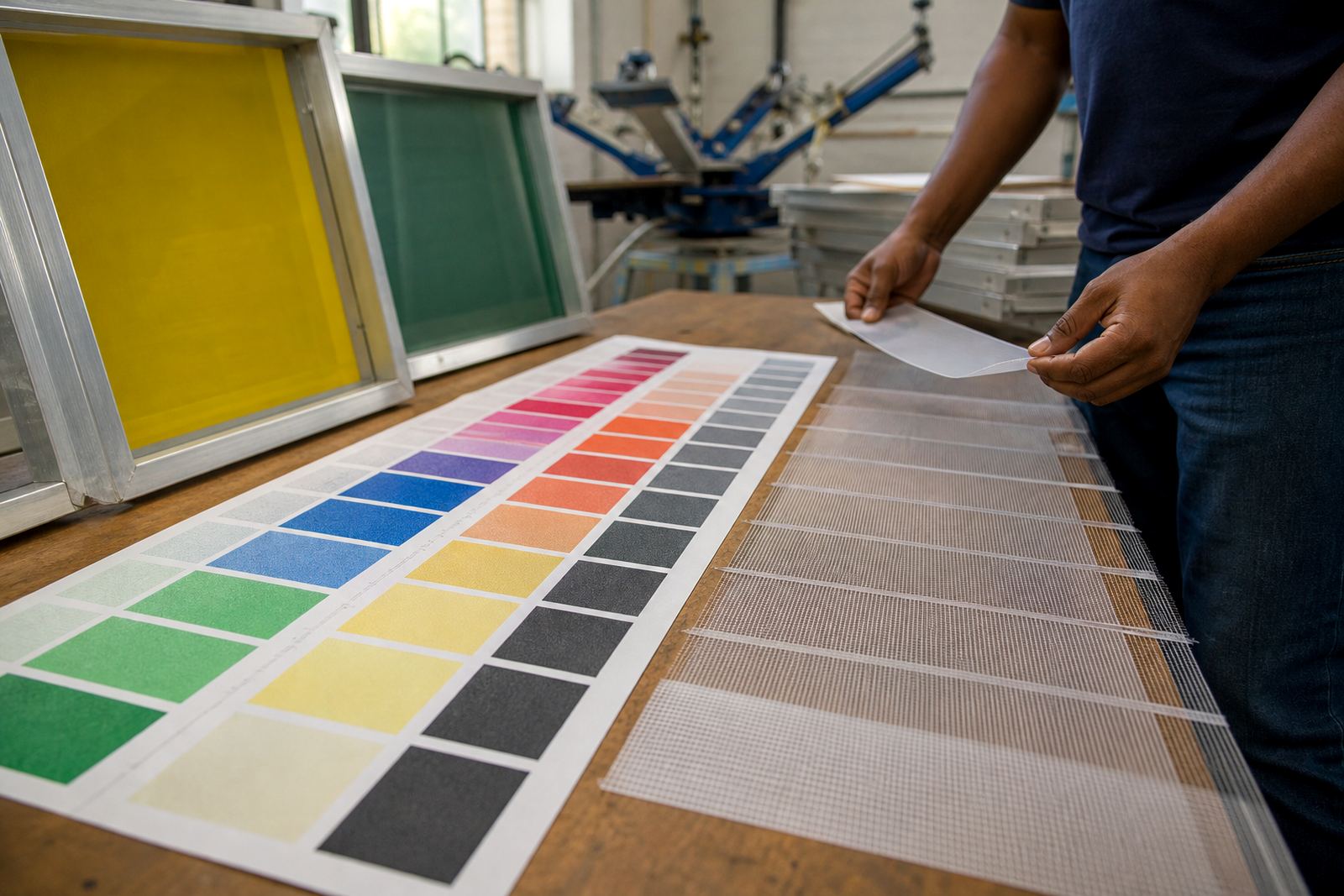
In screen printing, the mesh is not just a filter. It is the control point for ink deposit. A lower mesh count has larger openings, so more ink passes through the stencil. A higher mesh count holds back more ink and gives a finer, thinner deposit. That is why the same artwork can print very differently depending on the mesh chosen.
For bold spot colour work, a coarser mesh often gives the heavier laydown needed for opacity. For finer detail, halftones or a smoother finish on a hard surface, a tighter mesh helps keep the dots clean and the edges sharp. The right choice depends on the garment or substrate, the ink body and the look you want at press.
Matching mesh count to the job
Mesh selection should start with the print, not the frame. If you are printing large solids on cotton, a lower count such as 43T or 61T may suit the job because it allows a stronger ink film. For finer artwork, line work or process detail, higher counts such as 90T, 120T or 150T are often more suitable. That does not mean one count is better than another, only that each one behaves differently under the squeegee.
- Lower mesh counts suit heavier ink deposit and stronger coverage.
- Mid range counts give a balance between detail and deposit.
- Higher counts help with fine lines, small text and controlled halftones.
- Open weaves can suit thicker inks, while tighter weaves control thinner inks better.
A common mistake is trying to force one mesh to do every job. That can lead to flooding, poor definition, or a print that looks dull because the ink never sat correctly on the surface.
Tension matters as much as the mesh itself
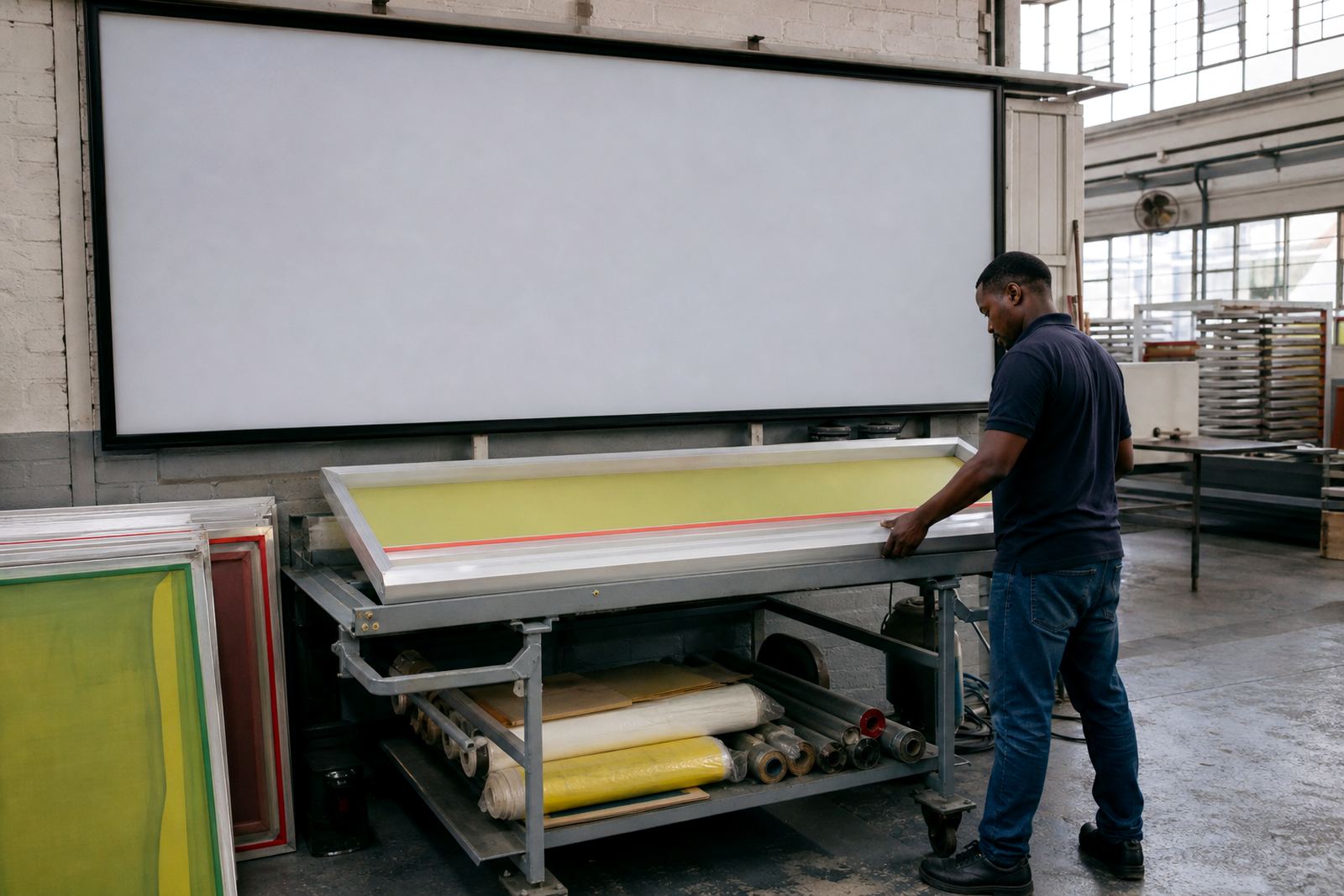
Two screens with the same mesh count can print differently if the tension is not right. A screen that is too loose lets the mesh sag, which changes the off-contact and can cause excess ink deposit at the edges. A properly tensioned frame releases the squeegee cleanly, so the print feels more even and controlled.
Good tension also helps the stencil hold detail and reduces the risk of smearing when you are working through long runs. In hot Johannesburg afternoons or in a Durban workshop with coastal humidity, tension can shift during the day. That is why checking the frame before print setup is worth the time. If you have ever seen a screen that prints well in the morning and starts dragging later, tension is often part of the problem.
- Check tension before the first print run of the day.
- Watch for uneven ink pull across the image area.
- Re-stretch frames that have softened or warped over time.
- Keep mesh clean and free from dried ink that can affect release.
Frame prep and stretching shape the final result
Mesh deposit is affected long before ink hits the screen. A clean frame, solid bond and even stretch all help the mesh sit correctly under pressure. If the frame corners are not square or the stretch is uneven, the print will show it. You may notice heavier ink in one section and a lighter pass in another, especially on large formats.
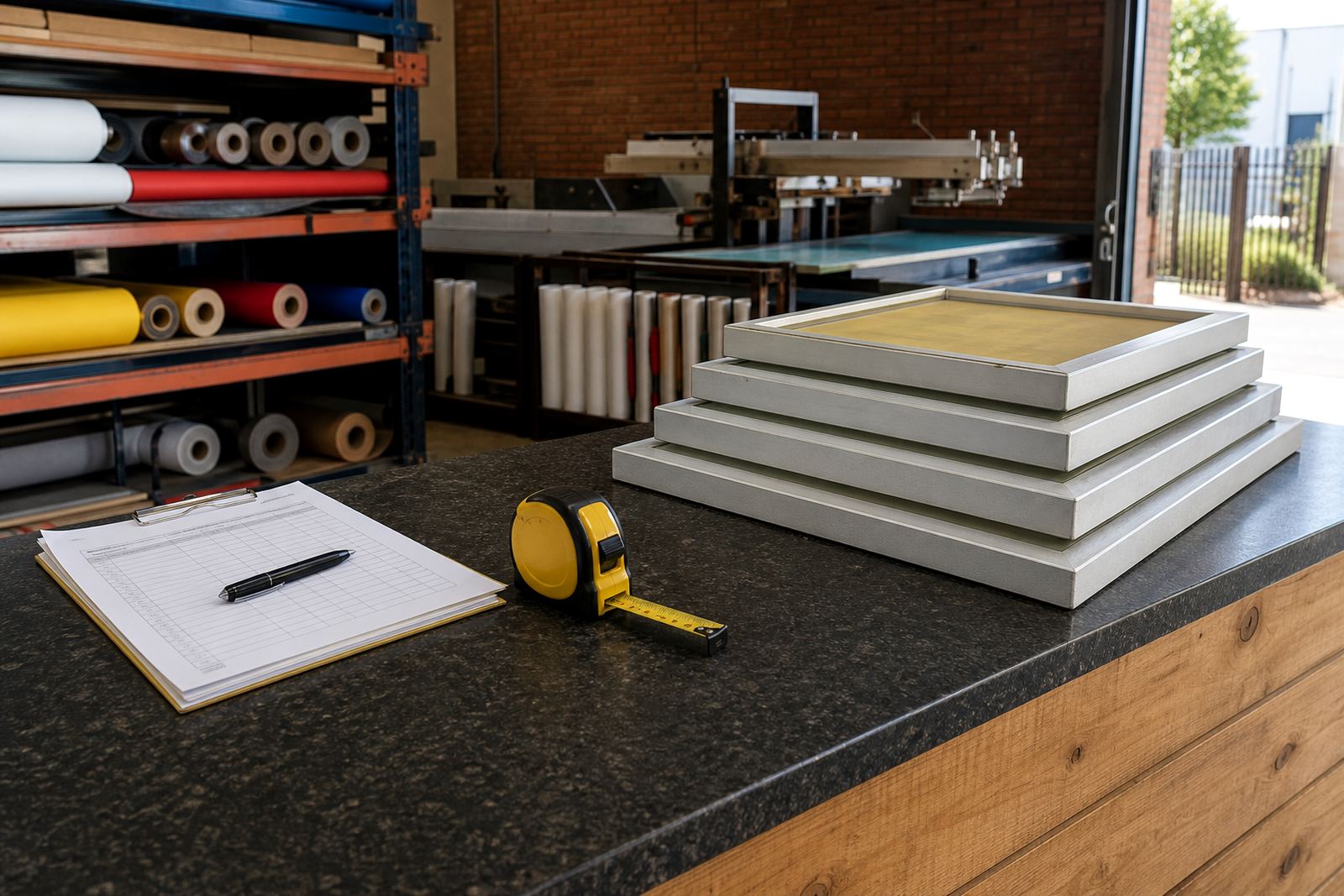
Pre-stretched aluminium frames are useful because they give a consistent base from the start. They are also practical for shops that need repeat jobs set up with the same feel each time. In a busy Germiston or East Rand production space, where screens may be moved between prep, exposure and dispatch in the same day, consistency saves time and keeps the print room organised.
When a frame is prepared properly, the mesh can do its job without unnecessary strain. That helps with repeatability, which matters when you need the same deposit across a batch of screens for one order or future reprints.
Ink, fabric and substrate all change the answer
The amount of ink transferred does not depend on mesh alone. A thick ink on dark cotton behaves differently from a thinner ink on coated board, plastic or glass. A porous surface may soak up more of the ink film, while a smooth surface leaves the deposit sitting on top. That changes how the print looks once it dries.
On garments, the weave of the fabric matters too. A coarse knit can absorb more ink and still look even, while a tight weave may show every small variation in deposit. If the substrate is heat sensitive or needs a smoother finish, choosing the right mesh can reduce overloading and help with cure times later.
When a print shop in Pretoria is testing a new artwork for a run in Cape Town, the mesh choice should be checked against the actual substrate, not just the artwork on screen. The same image can need a different setup when moving from light tee work to signage or packaging stock.
Practical ways to control ink deposit on press
Once the screen is made, the press operator still has a lot of control. Squeegee angle, pressure, flood speed and off-contact all influence how much ink passes through the mesh. A hard push is not a fix for the wrong screen setup. It can force ink through unevenly and blur the image.
Use these checks when the deposit looks off:
- Confirm the mesh count matches the artwork and substrate.
- Check that the screen tension is even from edge to edge.
- Adjust off-contact before increasing squeegee pressure.
- Make sure the stencil is fully exposed and cleanly opened.
- Test on offcuts before starting a full batch.
Screen setup advice is often the difference between a job that prints first time and one that keeps needing correction. In a production week with load-shedding interruptions, having screens that are already matched and tension checked helps the shop restart quicker and keeps waste down.
A Germiston example that shows the difference
A local print shop in Germiston may need one screen for bold white print on dark shirts and another for fine logo detail on the chest. If both jobs are forced onto the same mesh count, one of them will usually suffer. The bold print may look thin, or the detailed logo may lose its edges. By matching the mesh count to each task and checking tension before dispatch, the shop gets cleaner results and less rework.
That is why repeat order service matters. When a screen is set up the same way each time, the deposit stays predictable. For shops sending work between Johannesburg, Midrand and Pretoria, or dispatching to Durban, Cape Town and Gqeberha, predictability is what keeps production moving without last minute guesswork.
Ink deposit is not luck. It is the result of mesh choice, frame quality, tension and press handling working together.