Why water-based ink behaves differently on mesh
Water-based systems move differently from plastisol, so the mesh choice needs to suit that thinner ink body and the way it dries in the screen. If the count is too open, the print can flood the fibres and lose edge sharpness. If it is too tight, the ink may sit on top of the stencil and leave you chasing print pressure and off-contact settings all day.
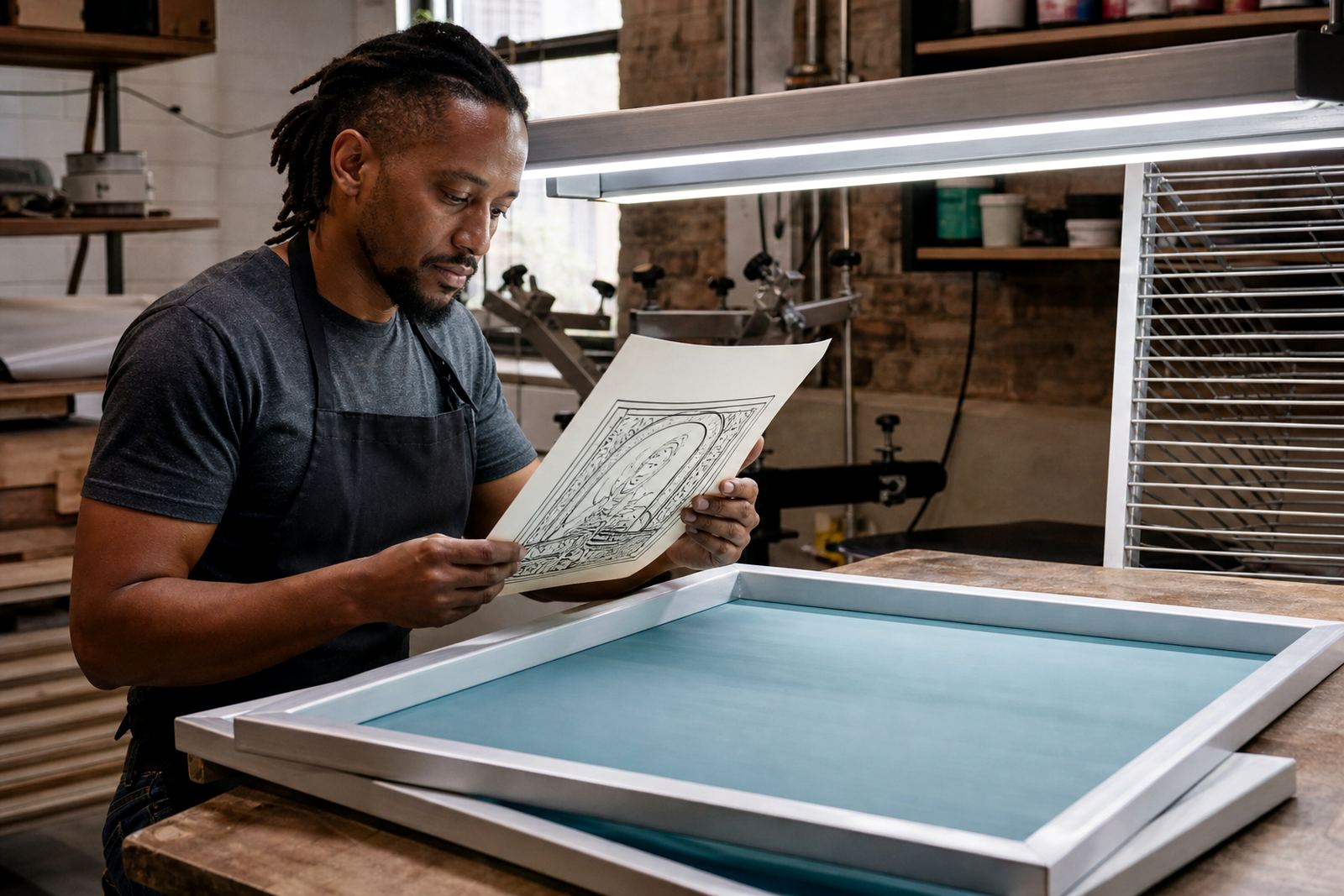
For many shops, the starting point is to match the mesh to the detail in the artwork and the absorbency of the garment. Cotton tees, light-coloured fashion blanks and finer line work usually call for a tighter mesh than heavier spot colour work. On busy shop floors in Germiston or Johannesburg, that difference becomes obvious fast when one job needs crisp halftones and the next needs a solid underbase with even ink transfer.
Water-based ink also dries quicker in the screen, especially when the weather is dry or the print room is warm. That means the mesh must help you print cleanly without holding too much ink in the weave. It is a balance, not a guess.
Choosing mesh counts for fine detail, solids and halftones
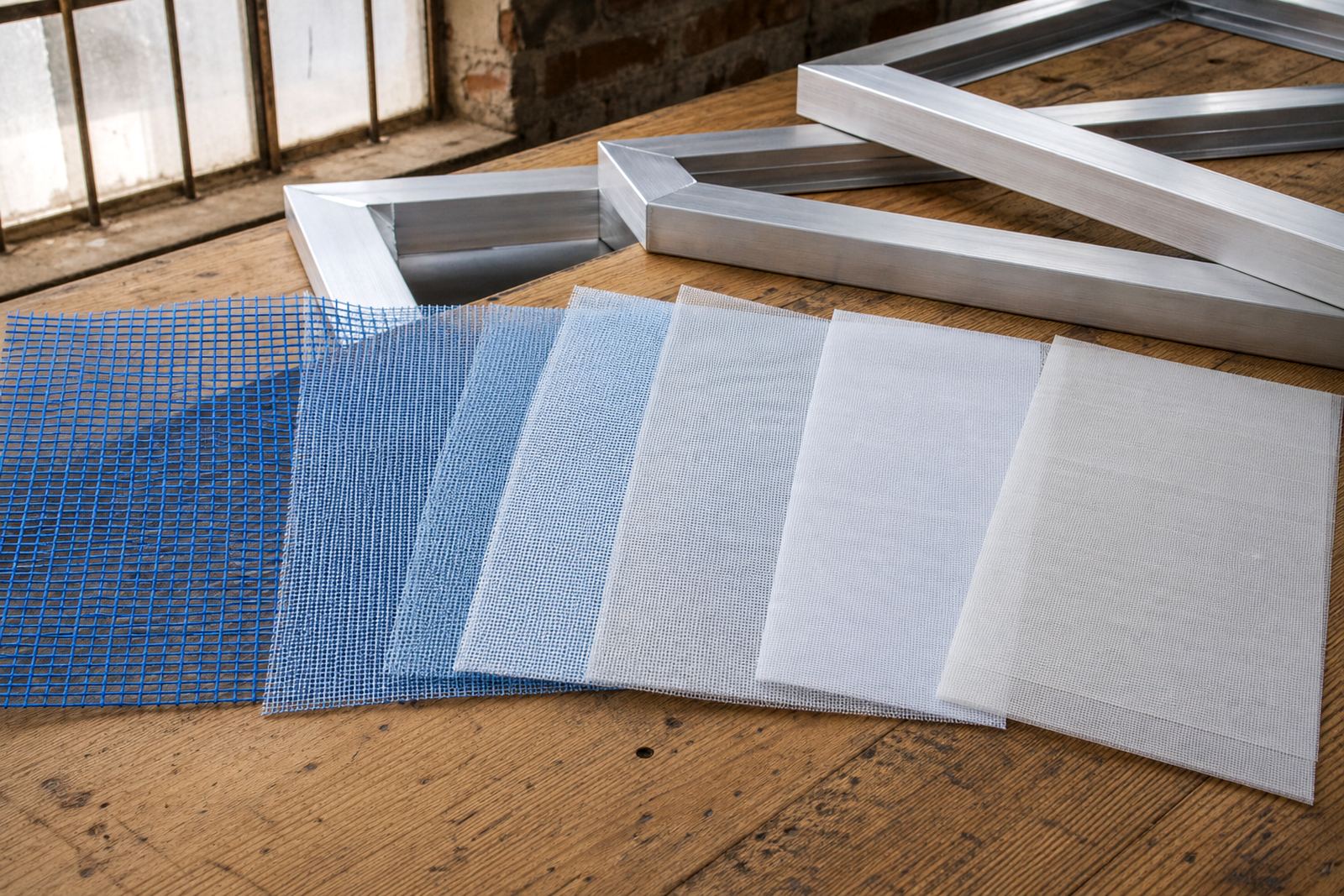
Mesh count choice comes down to what you are trying to print and how much ink you want to pass through. A finer mesh gives better detail control and helps with smaller text, thinner strokes and halftones. A more open mesh allows stronger ink deposit for bold spot colours, but it can blur fine edges if the stencil and squeegee setup are not right.
- Higher mesh counts suit fine artwork, small lettering and smoother halftone reproduction.
- Mid-range counts are useful for general garment work where detail and ink deposit both matter.
- Lower counts are better for heavier deposits, thicker ink films and certain underbase applications.
The practical question is not just what looks good on paper. It is what will print consistently on your press, with your squeegee angle, your stencil thickness and your drying setup. In South African shops that run mixed orders, keeping a few well chosen mesh counts on hand often saves time and rework.
How tension affects print sharpness and pull through
Good tension matters as much as mesh count. A properly stretched screen releases ink more evenly, holds registration better and gives you a cleaner snap back after the squeegee passes. If the tension is uneven, the print can look patchy on one side and over-inked on the other, especially on longer runs.
Water-based ink benefits from a screen that is firm and predictable. That helps reduce smearing and allows the stencil to release the ink where it should. It also means less effort on press, which matters when the room is warm or the team is working through a full day of production. In our Germiston supply and stretching work, we see that a screen with poor tension usually causes more trouble than a slightly wrong mesh count.
For repeat jobs, it is worth checking whether the screen still matches the original stretch. Over time, frames can lose tension or pick up damage from cleaning and handling. If a screen has gone slack, the same artwork may no longer print the way it did on the first run.
Picking the right frame setup for repeat garment jobs
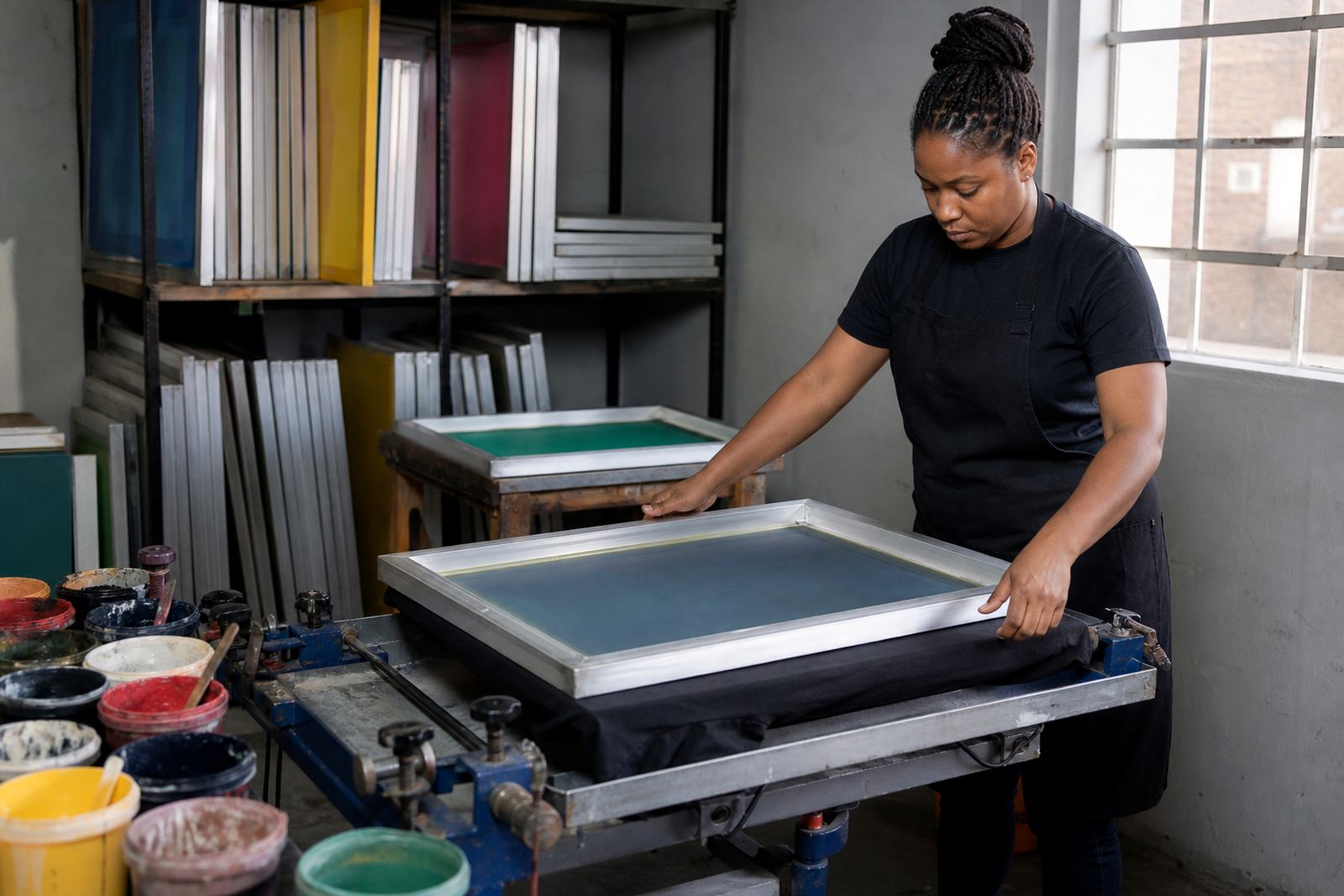
Pre-stretched aluminium frames are a practical choice when you need stable screens that can handle regular use. They are light enough for daily handling, but sturdy enough for repeated washing, reclaiming and press work. For water-based printing, that consistency helps because you can keep the screen stable through setup, printing and cleanup.
- Choose the frame size around the artwork and the press setup, not only the garment size.
- Allow enough margin for tape, clamp space and clean stencil edges.
- Check that the frame stays true after cleaning and drying cycles.
- Keep separate frames for fine detail work and general production where possible.
In places like Durban, where humidity can change how screens dry, and in Cape Town where conditions shift through the day, the frame and mesh combination becomes part of your process control. A screen that behaves well on Monday should behave the same on Thursday, provided the tension and prep stay consistent.
Mesh count matching for cotton, blends and different ink loads
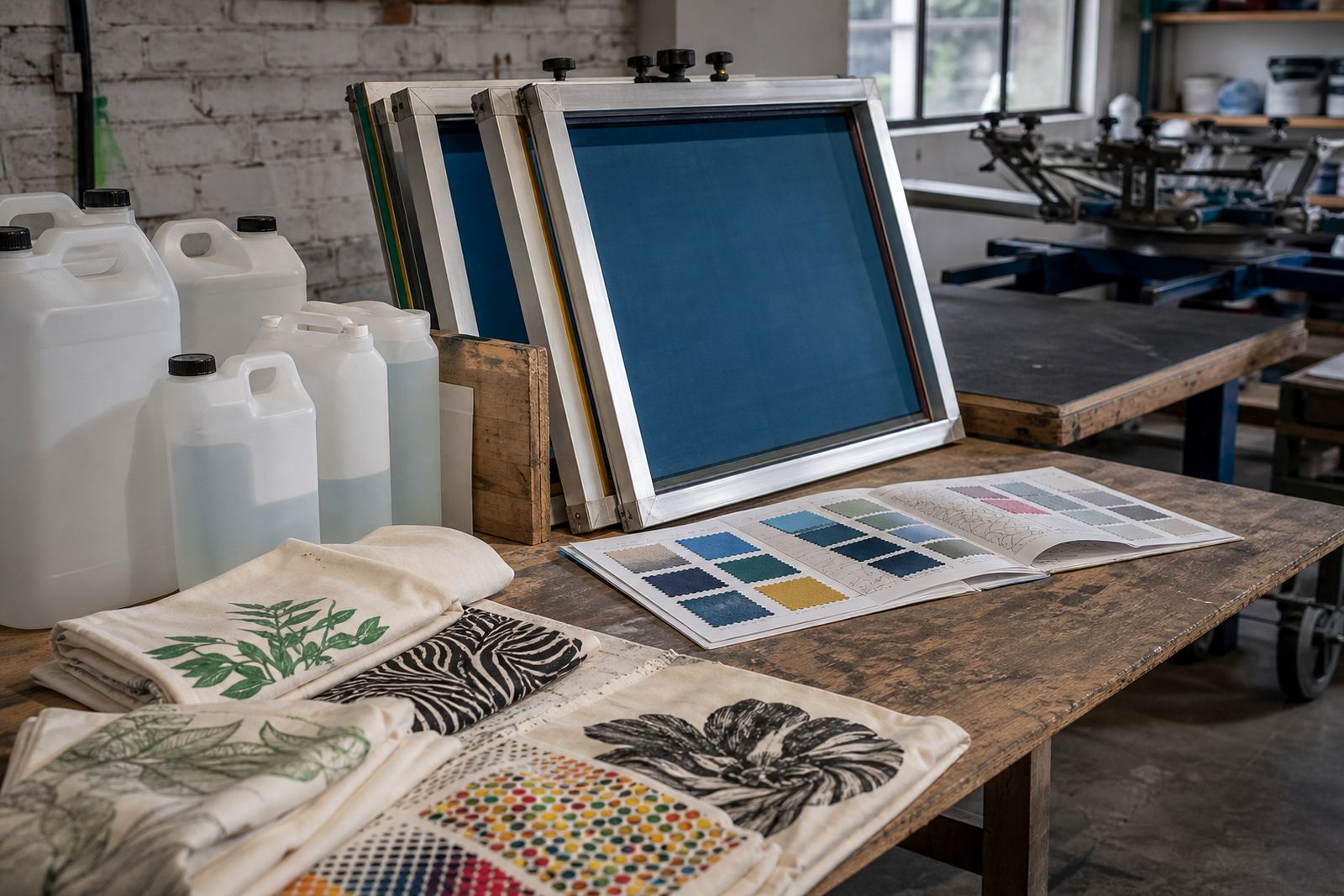
Not every fabric wants the same mesh. Cotton usually takes water-based ink well, but the absorbency can vary from one garment to the next. Blends can behave differently again, particularly when you need a soft hand feel without losing opacity. That is where mesh count matching helps keep the result steady.
When the ink load is too heavy, the print can feel stiff and may dry unevenly. When it is too light, you lose colour strength and the image can look thin. Matching the mesh to the garment, artwork and ink type helps balance those trade-offs without constant adjustment.
For printers sending work across Gauteng or into the coastal markets, it is useful to think about the full path from screen prep to curing. A screen that prints well but dries too fast in the frame room can slow production. A screen that holds moisture too long can create curing problems later. The mesh choice should support the whole process, not just the first pull.
A local example from Germiston to the coast
A print shop in Germiston doing mixed fashion tees for a client in Gqeberha may need one setup for fine artwork and another for bolder back prints. On the same week, they might also send repeat orders to Pretoria and Durban, where the garments, weather and turnaround times all differ. In that kind of workflow, the screen choice must be repeatable.
What works in practice is a small, well managed set of mesh options with proper stretching, tension checks and clear labelling. When the team knows which screen belongs to which kind of job, setup gets faster and errors drop. It also makes re-stretching easier when a frame needs to go back into service rather than being retired too soon.
That is why screen prep matters just as much as mesh supply. Clean frames, stable tension and careful packing all help protect the print outcome before the first garment even reaches the press. It is basic work, but it keeps the jobs moving.