Why coastal jobs need a different delivery plan
When screen-printing mesh leaves Germiston for Durban, Cape Town or Gqeberha, the journey is about more than getting a parcel from A to B. Transport time, stacking, vibration and weather all affect how pre-stretched aluminium frames arrive, especially when the job is set up for a specific ink deposit and detail level.
That matters most on repeat work. A frame that arrives with a clean mesh bond and the right tension saves time on press, and it reduces the risk of registration drift. If you are printing in a coastal area, you also have to think about humidity during storage and how soon the screen will be used after delivery.
For shops far from Gauteng, the safest approach is to plan around the print date first, then work backwards. Give yourself enough time for frame prep, packing, transit and a quick check on receipt. One missed day can throw off a full production run, and in my experience it is usually the small thing that causes the delay, like a missing reference on the order note or a frame size that was measured off the wrong screen bed.
Choosing the right mesh count before the screen is stretched
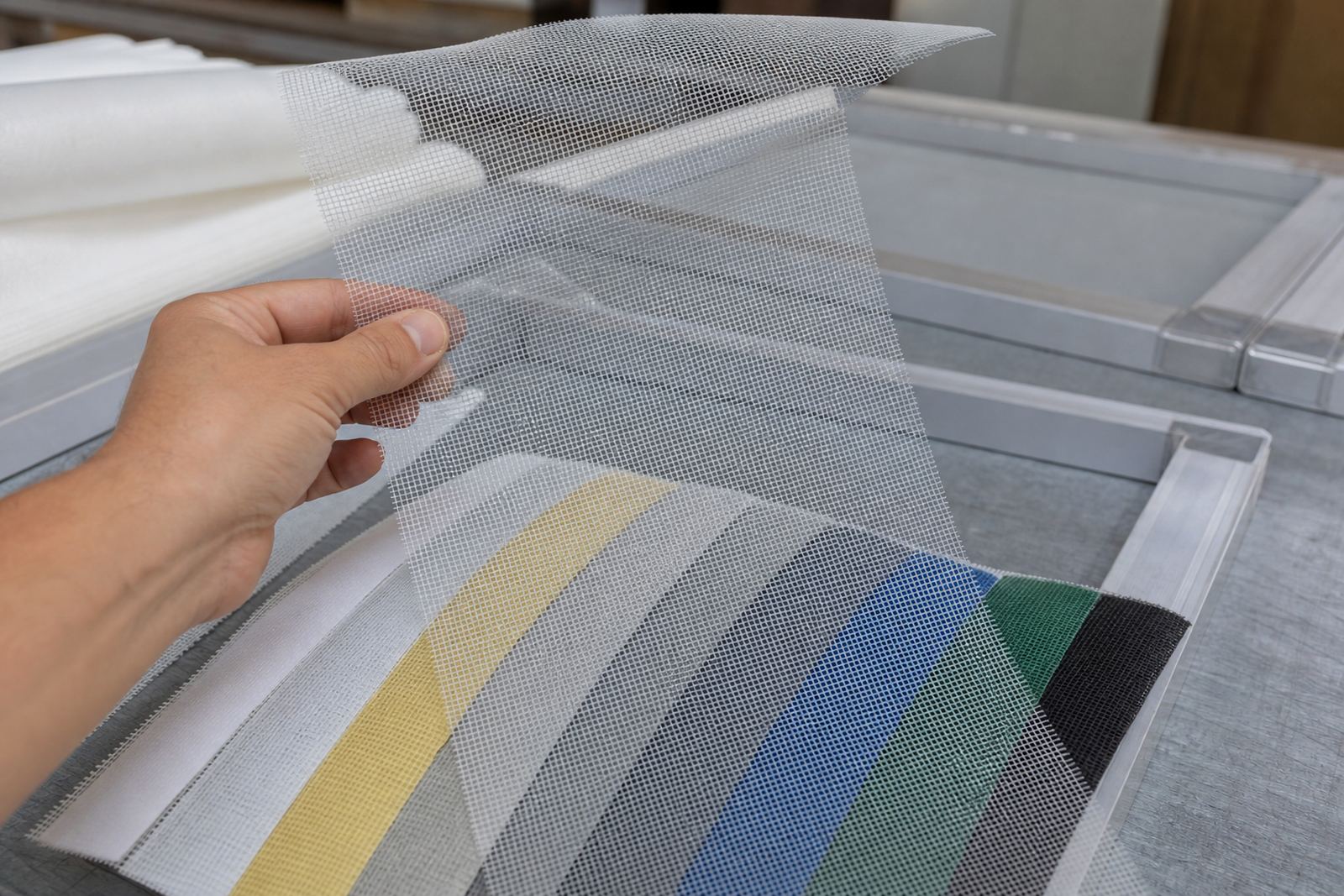
Mesh count affects ink flow, image sharpness and how much detail you can hold. Lower counts suit heavier ink deposits and bolder artwork, while higher counts are used when the job calls for finer detail or a thinner print. If the mesh count is wrong for the ink and substrate, the screen will fight you from the first pull.
Before we stretch a frame, it helps to match the mesh count to the type of job and the press setup. The same artwork can behave differently on fabric, board or other surfaces, so a sensible count choice should be made with the whole print process in mind. Good screen setup advice saves a lot of rework later on.
- Share the artwork type and substrate so the mesh count can be matched properly.
- Tell us whether the screen is for fine detail, solid areas or mixed coverage.
- Let us know if the job is a repeat order so we can match an existing setup.
- If you are unsure, ask for advice before the frame is stretched and packed.
MeshMaster handles mesh count matching and new frame stretching from Germiston, so the frame is prepared for the job rather than being treated as a one-size-fits-all item.
Stretching and tension checking for long-distance delivery
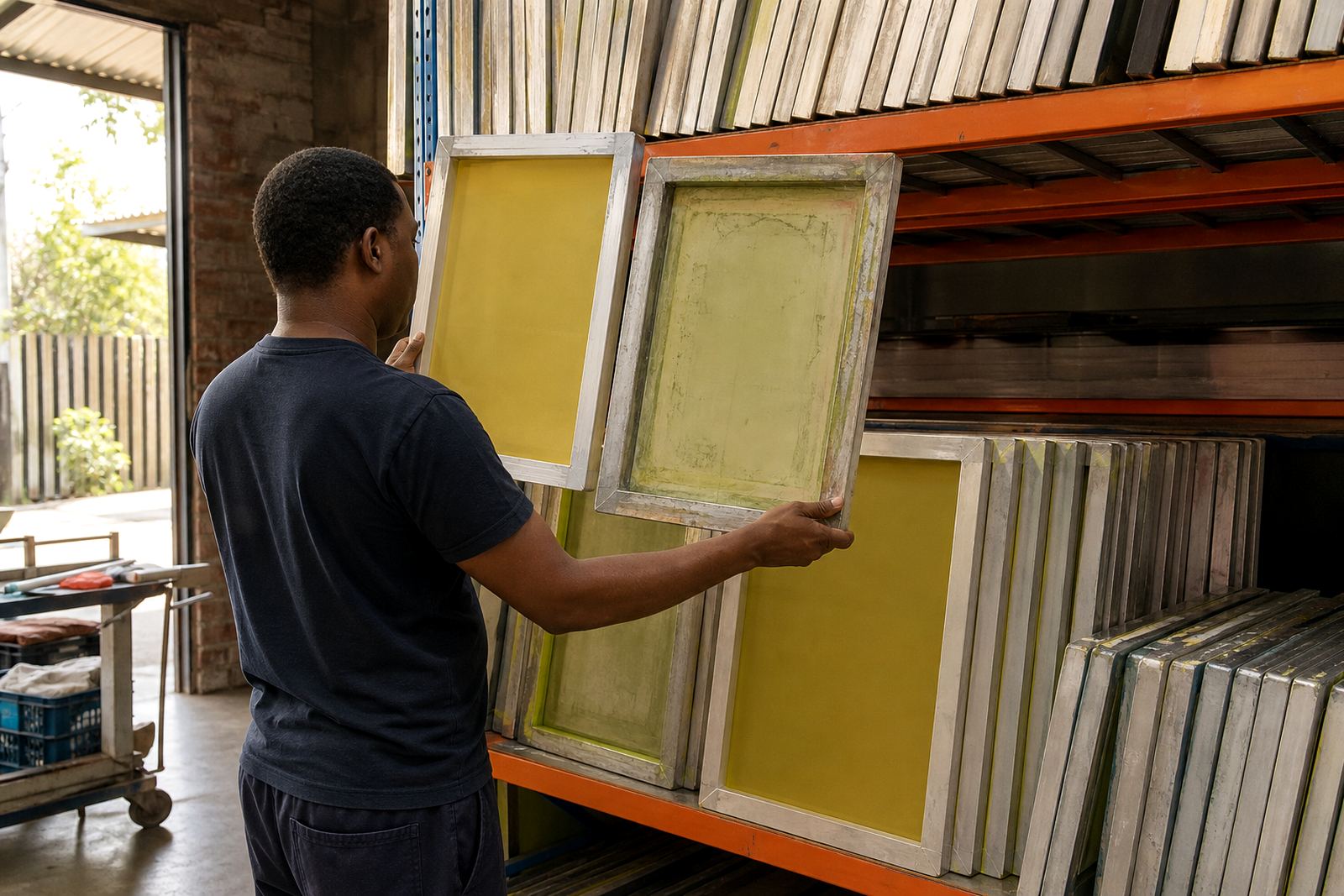
Pre-stretched aluminium frames are only as good as the tension and alignment they hold. A frame that looks fine from the outside can still cause trouble if the mesh has uneven tension or if the corners were not prepared properly before bonding. That is why tension checking should happen before the frame is packed, not after it arrives on the coast.
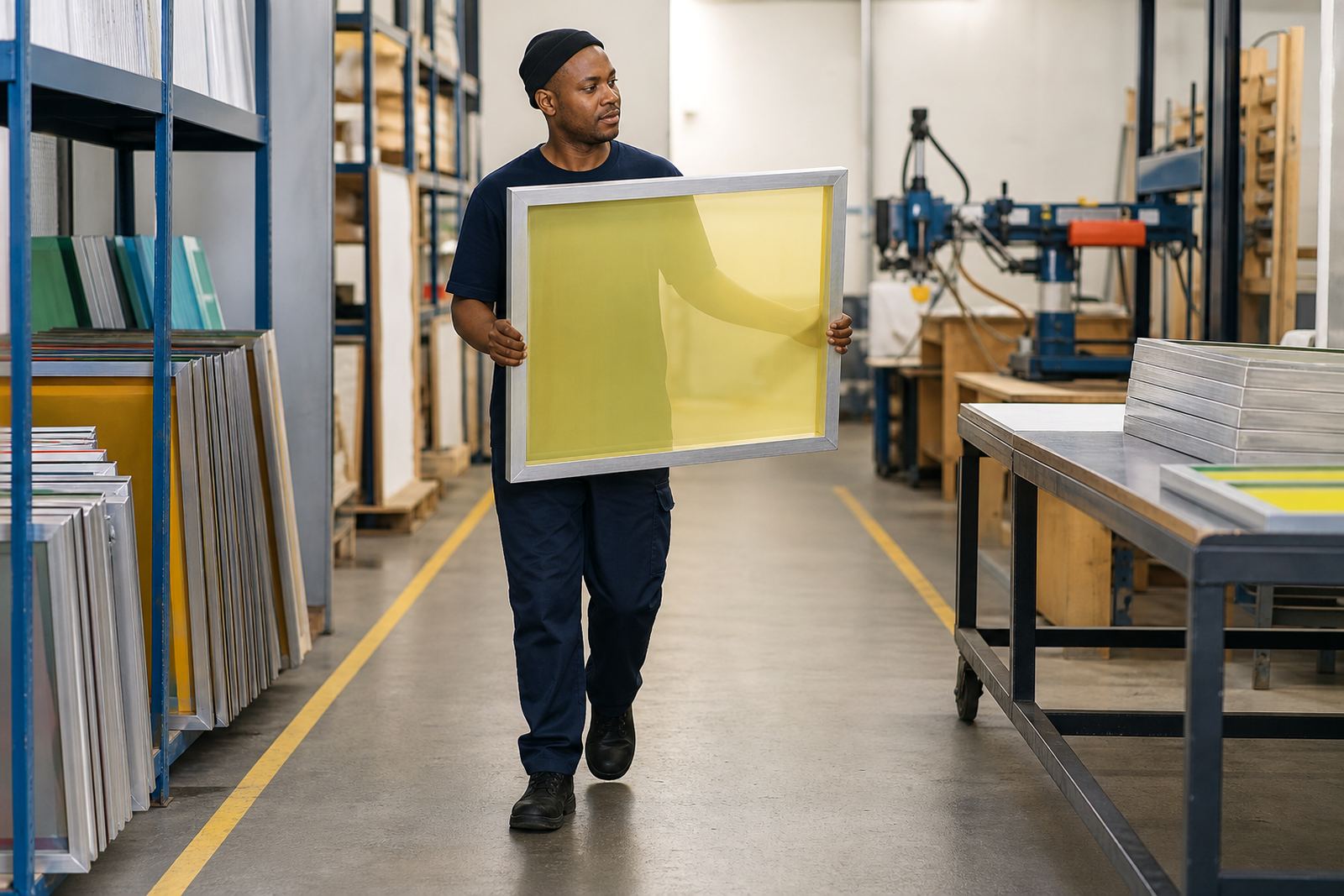
In practical terms, a well-prepared frame should sit square, hold its mesh evenly and stay stable during handling. If a frame needs re-stretching, the process should be handled before dispatch so the shop receives something ready for screen inspection and setup. That way your team can move from unpacking to coating or printing without extra stops.
Coastal moisture can also test a screen after delivery. Durban and Gqeberha in particular can be unforgiving when screens are stored in a hot prep room with poor air flow. Keep finished screens off damp floors, out of direct sun and away from sharp temperature changes. It sounds basic, but that one habit helps protect the tension you paid for.
Packing screens so they arrive ready for the press
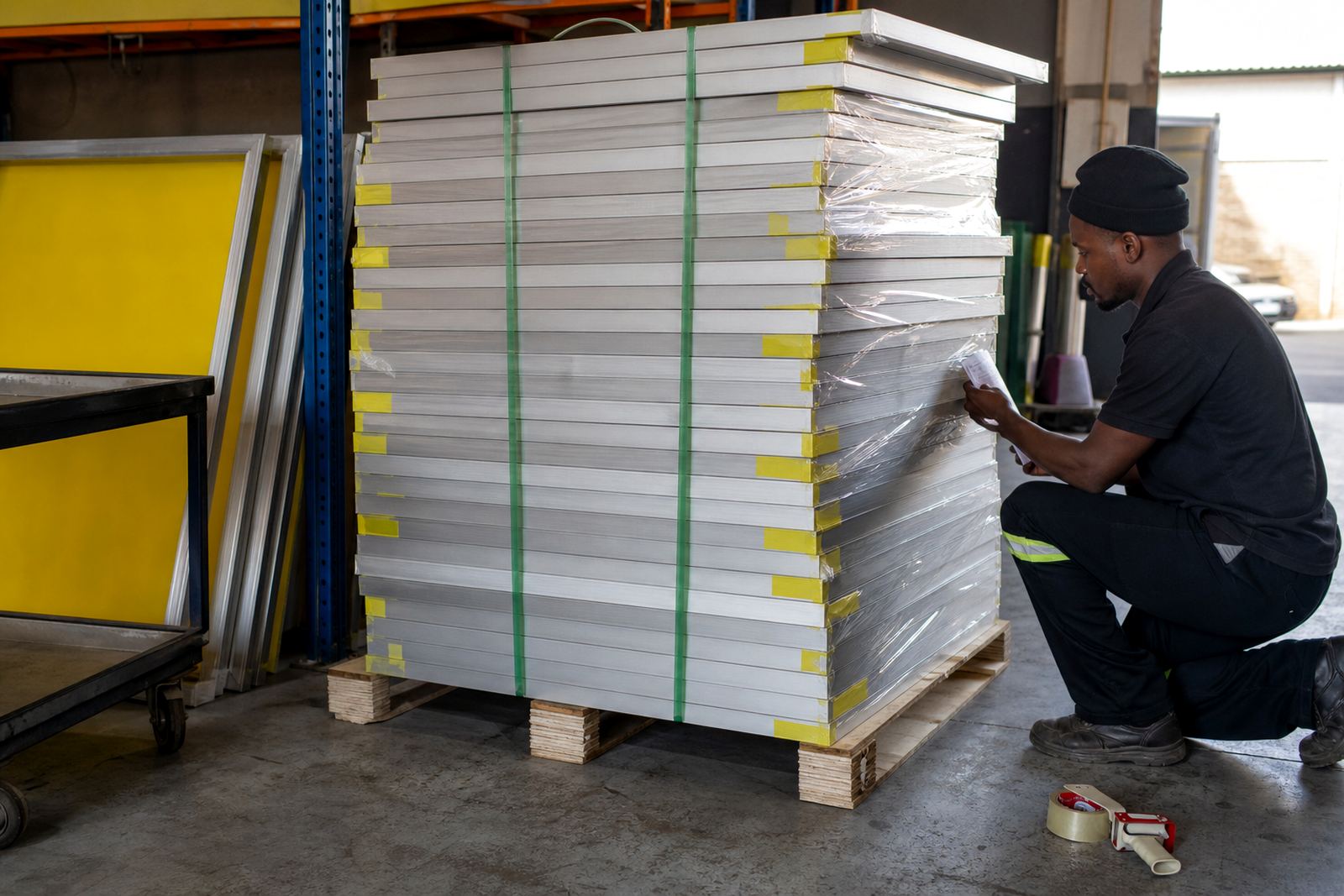
Good dispatch packing protects the corners, keeps mesh from rubbing and stops frames from shifting inside the load. That is especially important on long runs to Cape Town or the Eastern Cape, where a screen may spend more time in transit and handling than a local Gauteng delivery.
We use batch screen prep and careful packing so the frames leave in a sensible order for the receiving shop. If a customer is working on a schedule with multiple screens, it helps to label them clearly and group them by job. That makes intake faster and reduces the chance of putting the wrong screen on the press.
- Keep each frame clearly marked for size, mesh count and job reference.
- Ask for frame clean prep if the screens must arrive ready for immediate use.
- Separate urgent repeats from new work so dispatch can be planned sensibly.
- Check that the receiving address is correct, especially for business parks and industrial areas.
A clean handover is usually the difference between a calm start and a rushed one. If the driver arrives and the team can identify the screens straight away, the day tends to run better from there.
A local example from Germiston to Durban
Take a Durban print shop that needs replacement screens for a run already booked with a customer. The artwork has a mix of solid blocks and fine text, so the mesh count has to suit both coverage and detail. The shop sends the measurements, asks for custom frame sizing and needs the screens to arrive in good shape despite the coastal humidity.
In that case, the process is simple but it has to be orderly. First, the frame size is confirmed. Then the mesh count is matched to the job. After stretching, the screens are checked for tension, cleaned where needed and packed for dispatch. If the same job comes back every month, repeat order service keeps the setup consistent, which saves time and cuts out guesswork.
That is the advantage of planning from the print room backwards. You are not just buying a frame, you are timing a delivery around a press schedule, local climate and storage conditions. Once that is understood, moving screens from Germiston to the coast becomes routine instead of risky.
How to order from outside Gauteng without slowing production
If your shop is in Johannesburg, Pretoria, Durban, Cape Town, Gqeberha or anywhere in between, the best results come from giving full details up front. The enquiry form on our contact page is the simplest way to send the information through to the team, and it keeps the order trail clear for both sides.
To avoid delays, include the practical points that affect stretching and dispatch. These are the details that matter on the workshop floor, not marketing talk.
- Frame size and quantity needed.
- Mesh count or the type of print you are running.
- Whether you need new frame stretching or frame re-stretching.
- Any urgency, repeat order notes or special packing requirements.
- The delivery area, such as East Rand Supply, Midrand Delivery or a coastal destination.
MeshMaster is based in Germiston, Gauteng, and the team is set up to support print shops across South Africa with screen-printing mesh, pre-stretched aluminium frames and advice that fits real workshop conditions. When the order note is clear, the rest of the process becomes a lot easier.