
Brief From a Springs Print Studio
The client was a small art studio in Springs producing limited edition prints, test sheets and sample work for artists who wanted sharp linework and controlled halftone detail. Their main need was consistency. Each screen had to hold tension properly, sit square in the frame and release ink cleanly without soft edges or unwanted bounce in the mesh.
The brief called for screen-printing support that would suit short runs rather than high-volume production. That meant choosing mesh counts that could handle fine detail, while still allowing enough ink flow for opaque areas and mixed artwork. The studio also wanted screens that arrived ready for careful setup, because time spent adjusting loose mesh means time lost on the press and a lot of frustration.
What We Matched for Fine Detail Work
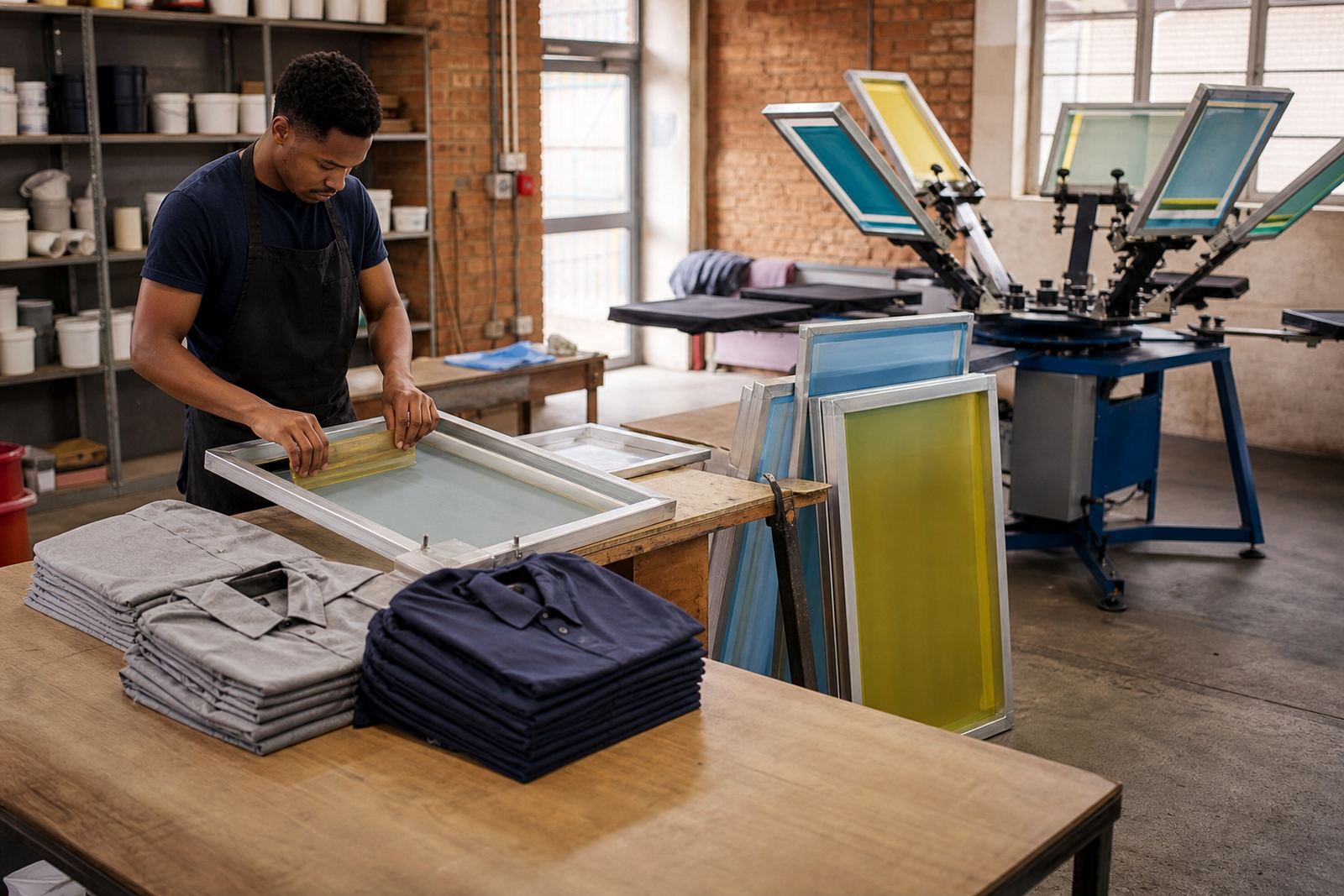
For this project we worked through the artwork requirements, the ink types in use, and the level of detail needed on the paper stock. From there we matched mesh counts to the job rather than pushing one general option for everything. Fine detail artwork usually benefits from a tighter mesh count, while broader solid areas may call for a different balance. That choice depends on the artwork, the stencil thickness and the finish expected on the final print.
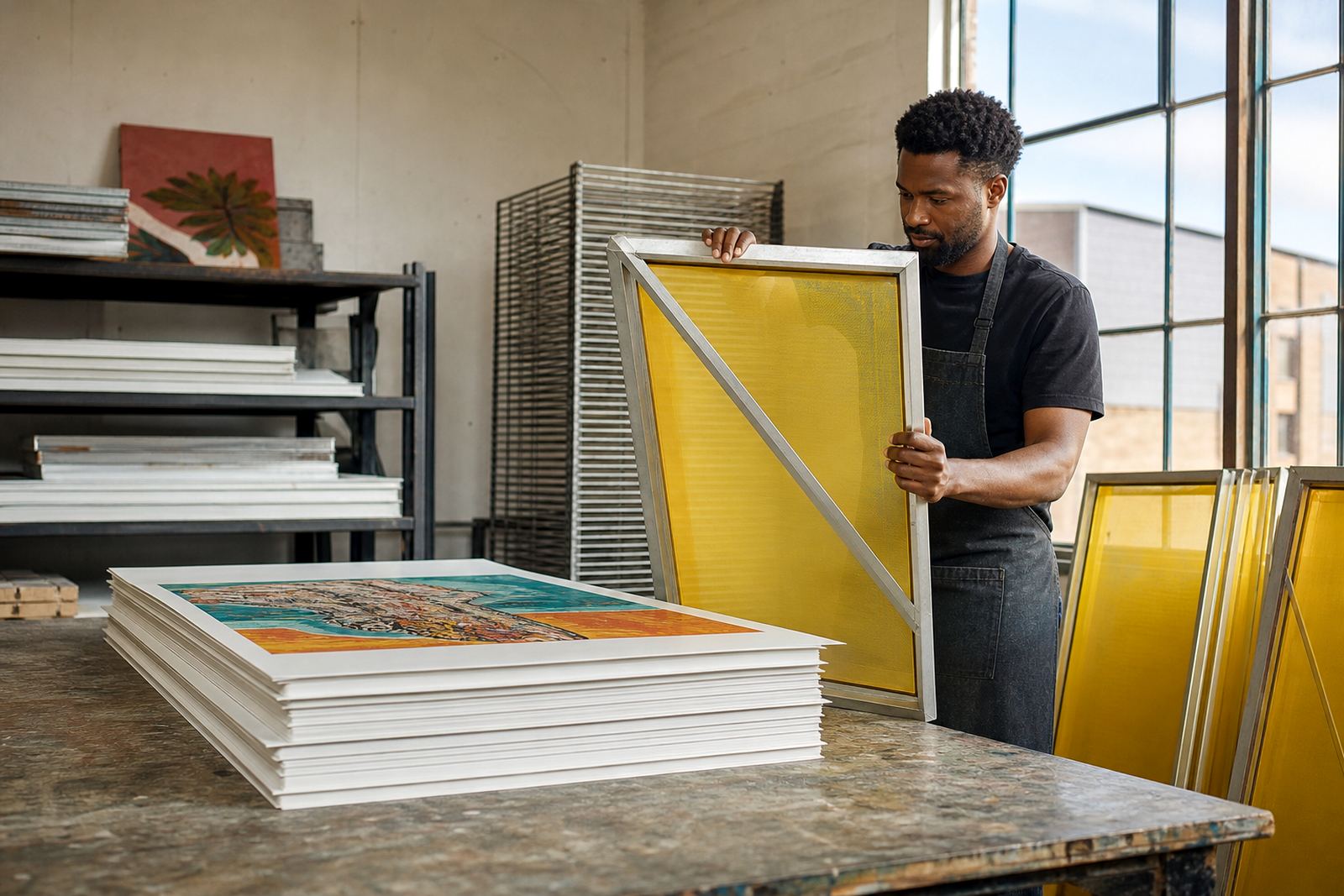
We supplied pre-stretched aluminium frames and confirmed even tension across the print area before dispatch. Clean frame prep and proper tension checking matter because screen edges, corners and mid-span movement can affect registration on small editions. For a studio doing sample work, a screen that sits evenly from the start saves time on alignment and reduces unnecessary rework.
- Mesh count matching for fine lines, type and detail work
- Pre-stretched aluminium frames for repeatable setup
- Tension checking across the full print area
- Frame clean prep before bonding and dispatch
Stretching, Bonding and Frame Prep
Our frame stretching work focused on getting the mesh seated evenly and bonded properly so the screen would stay stable through repeated short-run use. In art printing, a frame does not need to be oversized or complicated, it needs to be square, clean and predictable. We used custom frame sizing where needed so the studio could work with the dimensions that suited their screens and artwork layouts.
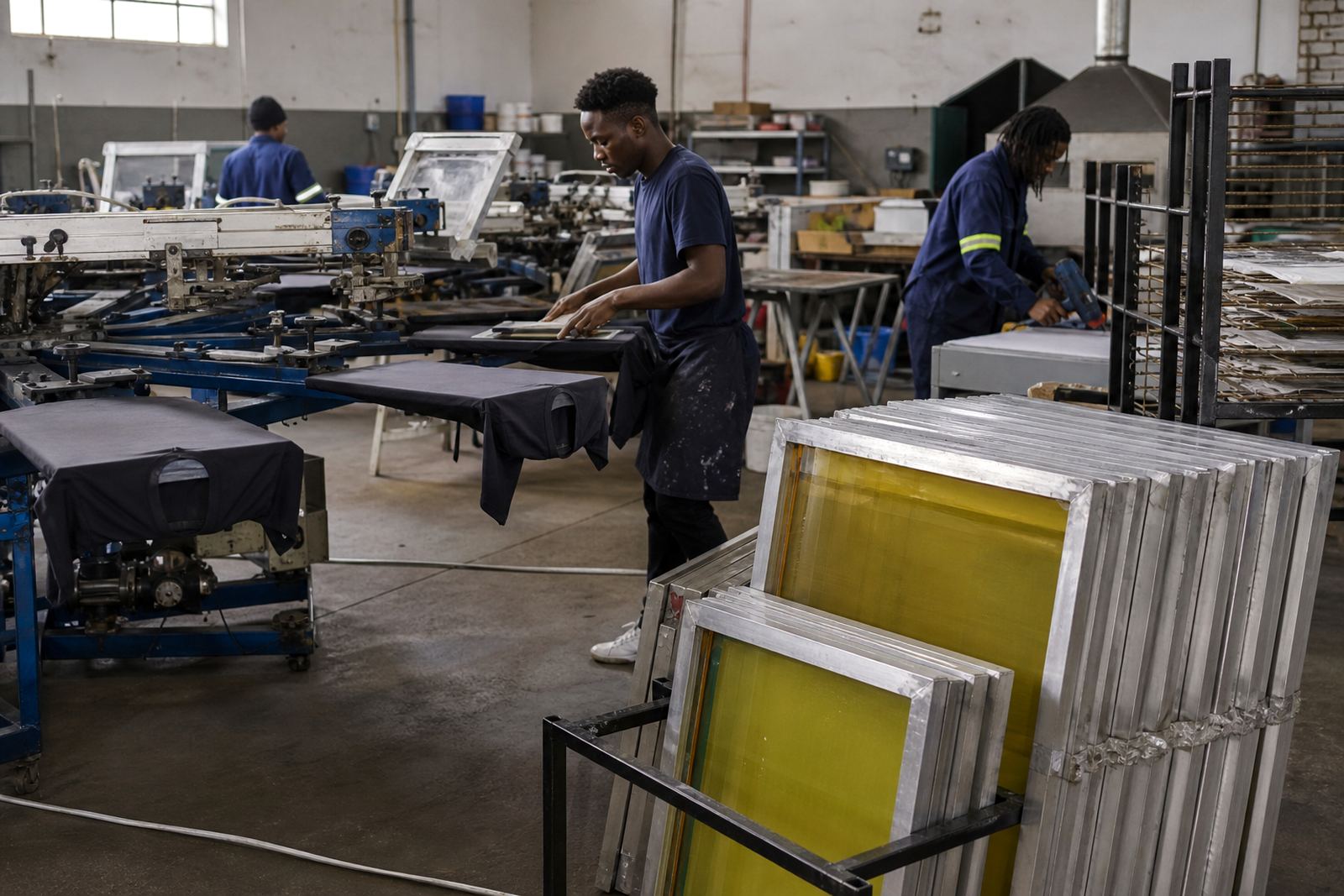
We also did frame clean prep before mesh bonding to help with adhesion and long-term handling. Aluminium frames are a good fit for this kind of work because they keep their shape well and handle regular use in a busy print room. In Durban or Gqeberha, where humidity can be a factor, a properly prepared frame and well-bonded mesh helps avoid unnecessary movement and keeps the screen easier to manage.
Because the studio works with samples as well as editions, we kept the finish practical: neat edges, consistent tension, and screens ready for careful stencilling. That way the team could move straight into test pulls and proofing without extra prep on arrival.
Timeline and Dispatch from Germiston
The full job moved through our Germiston workflow in two weeks. The first week covered brief confirmation, mesh count matching and frame sizing. The second week covered stretching, inspection, packing and dispatch. This gave us enough time to check the screens properly rather than rush the process, which is important when a studio is expecting dependable results on short runs.
Our logistics team packed the order for safe transport to Springs and set it up for a straightforward handover. For clients across Johannesburg, Pretoria, Midrand and the East Rand, we keep the same approach: check the screen condition, pack it cleanly, and send it out ready for use. That matters for print shops handling load-shedding schedules, because delays in setup can throw off a whole day’s work.
- Week 1: brief, artwork review and mesh count selection
- Week 1 to 2: frame sizing and stretching
- Week 2: tension checking, inspection and dispatch packing
- Delivery arranged for Springs with careful handling in transit
Why the Screens Worked for the Edition Runs
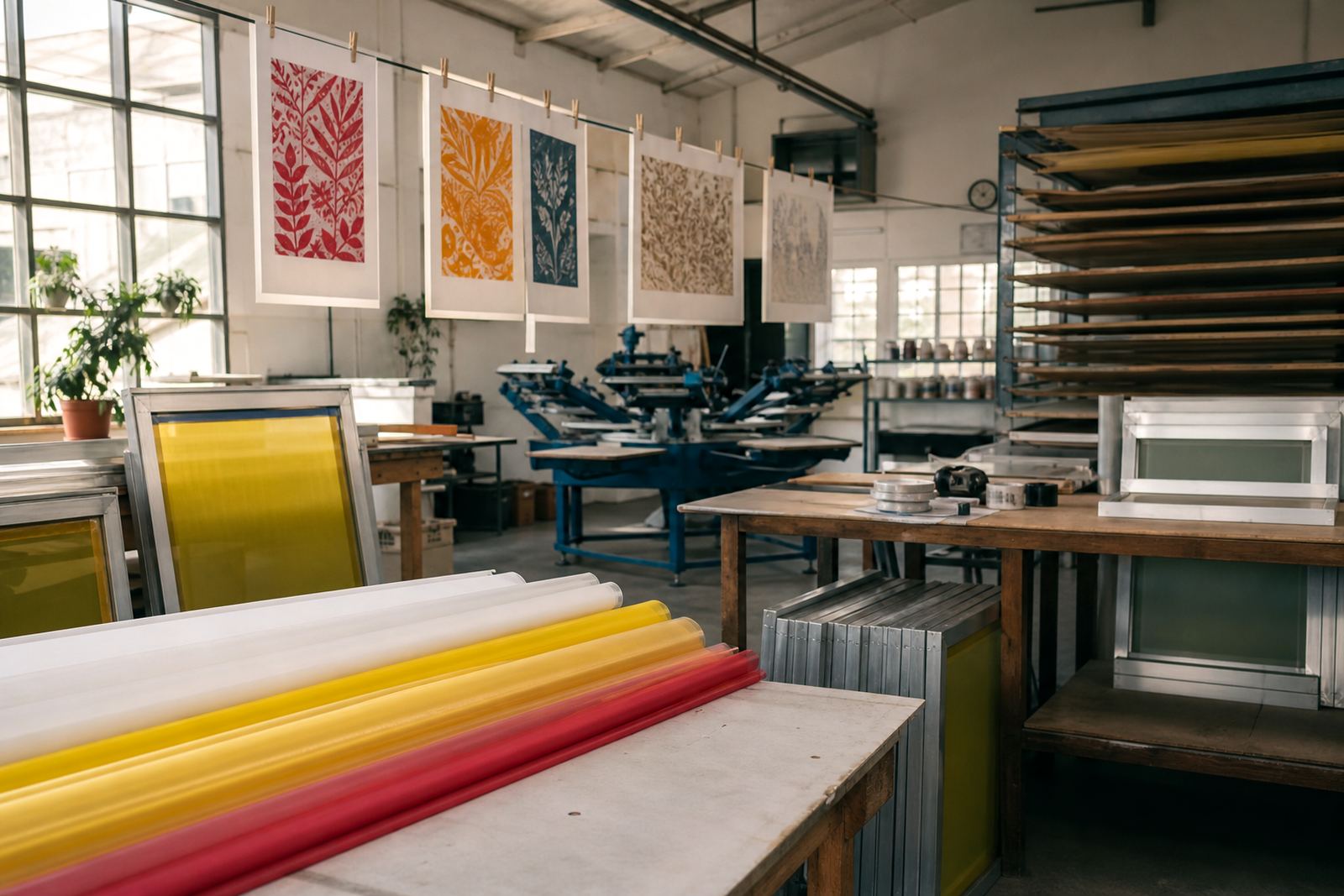
The result was a set of screens suited to short-run art printing and sample production. The studio needed clean detail, controlled ink release and enough repeatability to keep proofs matching across small batches. With the right mesh counts and properly tensioned frames, they were able to move between fine lines, small type and compact graphic areas without fighting the screen every time.
For art editions, consistency is often more valuable than speed. A screen that behaves the same from the first pull to the last is what helps a studio keep print quality steady across a run. The client could also use the same support for repeat work later, which is useful when an artist returns with a revised image or a second edition that must match the first one closely.
- Sharper handling of fine detail and linework
- Better control during proofing and short editions
- More stable screen behaviour across repeat pulls
- Less adjustment time at the press
What We Would Do Again for Similar Studios
If we were repeating this type of job, we would follow the same process: review the artwork, match the mesh count to the print requirement, stretch the frame evenly and inspect the finished screen before it leaves Germiston. That approach works well for art studios because it keeps the setup simple and the results predictable.
We would also keep advising on screen setup, especially where small editions need fine detail and clean registration. Our team has handled screen work since 2008, and the same basics still matter: the right mesh, the right tension, clean frames and careful packing. Mandla Ndlovu oversees the operation with support from Ayesha Patel, Thabo Mokoena, Lerato Maseko, Johan van der Merwe and Nokuthula Khumalo, so each order gets attention from enquiry through dispatch.
For Springs and nearby print rooms, this kind of supply is most effective when the screens arrive ready to use, not needing a long sort-out before the first print.
Key facts
| Project type | Fine-detail screen supply for short-run art print editions and sample work |
|---|---|
| Town served | Springs, Gauteng |
| Base of supply | Germiston, Gauteng |
| Core items supplied | Screen-printing mesh and pre-stretched aluminium frames |
| Services used | Mesh Count Matching, New Frame Stretching, Tension Checking, Frame Clean Prep, Dispatch Packing |
| Timeline | 2 weeks from brief confirmation to dispatch |