Cape Town poster work needed cleaner mesh control
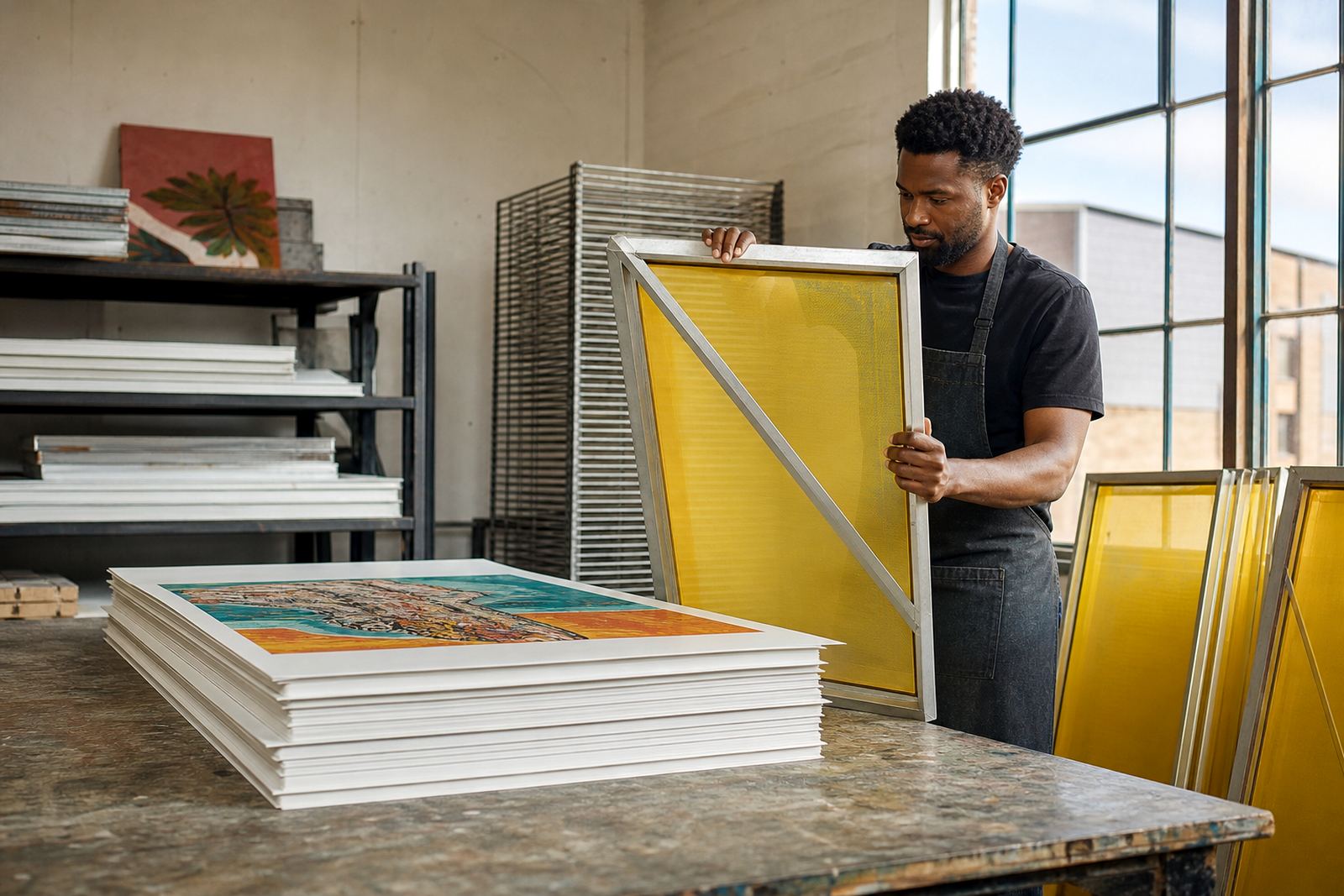
The brief came from a Cape Town paper print studio producing graphic posters with tight linework, flat areas of colour and small type that had to stay sharp on press. The team needed screen-printing mesh and ready stretched frames that would suit finer poster work rather than general garment printing, with a setup that could hold detail and keep registration more reliable across repeat runs.
Because the studio was working on paper stock, the mesh needed to support crisp deposit control, not flood the sheet. The team also wanted frames that arrived square, stable and ready for use without extra stretching work on their side. In practical terms, that meant choosing the right mesh count for the image type, matching it to the ink system and checking the frame tension before dispatch.
- Client type: paper print studio producing graphic posters
- Location: Cape Town, Western Cape
- Need: finer mesh options for detailed poster imagery
- Constraint: consistent release and clean edges on paper
Mesh count choice for fine poster detail
For this project we worked through mesh count matching first. Poster work often benefits from finer mesh than broad spot colour work, especially where the artwork includes halftones, thin rules or small typography. We supplied mesh options in the finer range and guided the team on what each count would do on press, so they could choose based on artwork rather than guesswork.
The point was not to overcomplicate it. A finer mesh helps control ink laydown and preserves detail, while a lower mesh count may suit thicker inks or heavier deposits. For paper posters, balance matters. Too much ink can soften edges or make the surface look heavy, while too fine a mesh can restrict deposit if the ink or stencil setup is not suited to it.
- Fine mesh for crisp detail and cleaner halftone work
- Mesh count selection based on image detail and ink body
- Advice supplied for poster stock, not textile printing
Pre-stretched aluminium frames for steady registration
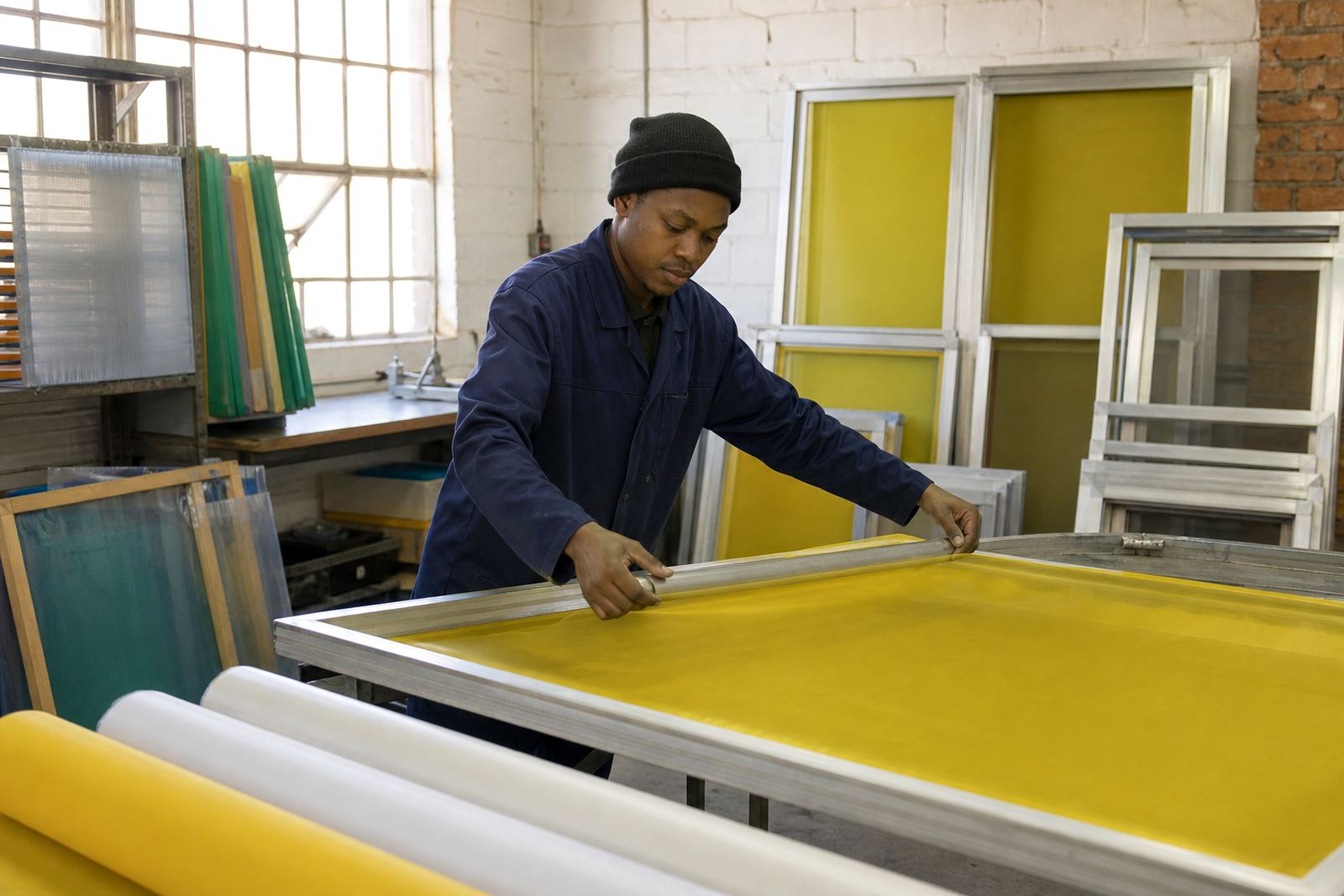
The studio also needed pre-stretched aluminium frames that could stay square under regular use. Aluminium frames are a solid choice for poster production because they resist movement better than soft timber, especially in busy shops where screens are handled often and need to return to the same position on press. We supplied new frame stretching for the fresh screens and checked the tension before packing.
Where screens are used repeatedly, tension consistency matters. If the mesh relaxes unevenly, registration can drift and image edges may show minor distortion. We therefore worked on tension checking, frame clean prep and mesh bonding so the screens would be stable and ready for production. For Cape Town conditions, this also helps when humidity changes during the day, which can affect how a screen behaves once it reaches the print floor.
- Pre-stretched aluminium frames for better stability
- Tension checked before dispatch
- Clean frame prep and mesh bonding included
Turnaround from Germiston to the Western Cape
The work ran over two weeks from first enquiry to final dispatch packing. In the first week we confirmed the artwork requirements, reviewed likely mesh counts and set out the frame sizes needed for the studio’s poster line. In the second week we completed stretching, tension checks and packing for delivery to Cape Town.
Our logistics team handled the packing so the frames and mesh stayed protected in transit. Screens that travel across provinces need careful wrapping and stacking, especially where the load may move around during delivery. The packing also had to suit local conditions at both ends. Germiston can be dry, while coastal areas like Cape Town can be more humid, so we keep storage and dispatch handling practical and orderly.
- Week 1: brief, sizing and mesh count selection
- Week 2: stretching, checking and dispatch packing
- Delivery arranged for Cape Town production use
What changed on press after setup
Once the studio had the mesh and frames in hand, the main difference was control. The finer screens gave the printers better definition on line art and cleaner type edges, while the framed screens helped keep setup repeatable from one job to the next. That matters on poster runs where consistency across a batch is just as important as the first proof.
The team also reported easier screen handling during setup and fewer small adjustments before print runs. That saved time at the press end, which is where screen work usually becomes expensive if the preparation is poor. For a studio producing posters in volume, even small improvements in screen behaviour can make the day run more smoothly.
- Cleaner line detail and sharper type reproduction
- More repeatable screen setup across multiple jobs
- Less time spent correcting screen movement before printing
What we would do again for similar poster shops
If we were repeating this job for another poster shop, we would start with the artwork first and the mesh second. That keeps the choice practical. Poster printing on paper often needs a different approach from textile work, and the best result comes from matching mesh count, stencil needs and ink behaviour before the frame is stretched.
We would also keep the same approach on frame prep, tension checking and packing. For shops in Johannesburg, Pretoria, Durban, Cape Town or Gqeberha, good screens should arrive ready to use, with no surprise movement and no unnecessary rework. That is the value of a measured setup. It keeps production moving and helps the printers focus on the job in front of them, not the screen behind it.
- Start with artwork detail, then select mesh count
- Check frame tension before every dispatch
- Pack for travel so screens arrive square and ready
Key facts
| Project type | Paper print studio support for poster production |
|---|---|
| Town | Cape Town, Western Cape |
| Supplied items | Fine screen mesh and pre-stretched aluminium frames |
| Key process | Mesh count matching, tension checking and frame clean prep |
| Turnaround | 2 weeks from brief to dispatch |
| Service areas | Cape Town, Johannesburg, Pretoria, Durban and Gqeberha |