What the Brakpan printer needed for repeat uniform work
The brief came from a uniform printer in Brakpan that handles branded workwear for schools, factories, security teams, and promotional clothing runs. Their main need was simple to state but hard to keep steady in practice: screens that were ready to use, held consistent tension, and could cope with repeat orders without slowing down production.
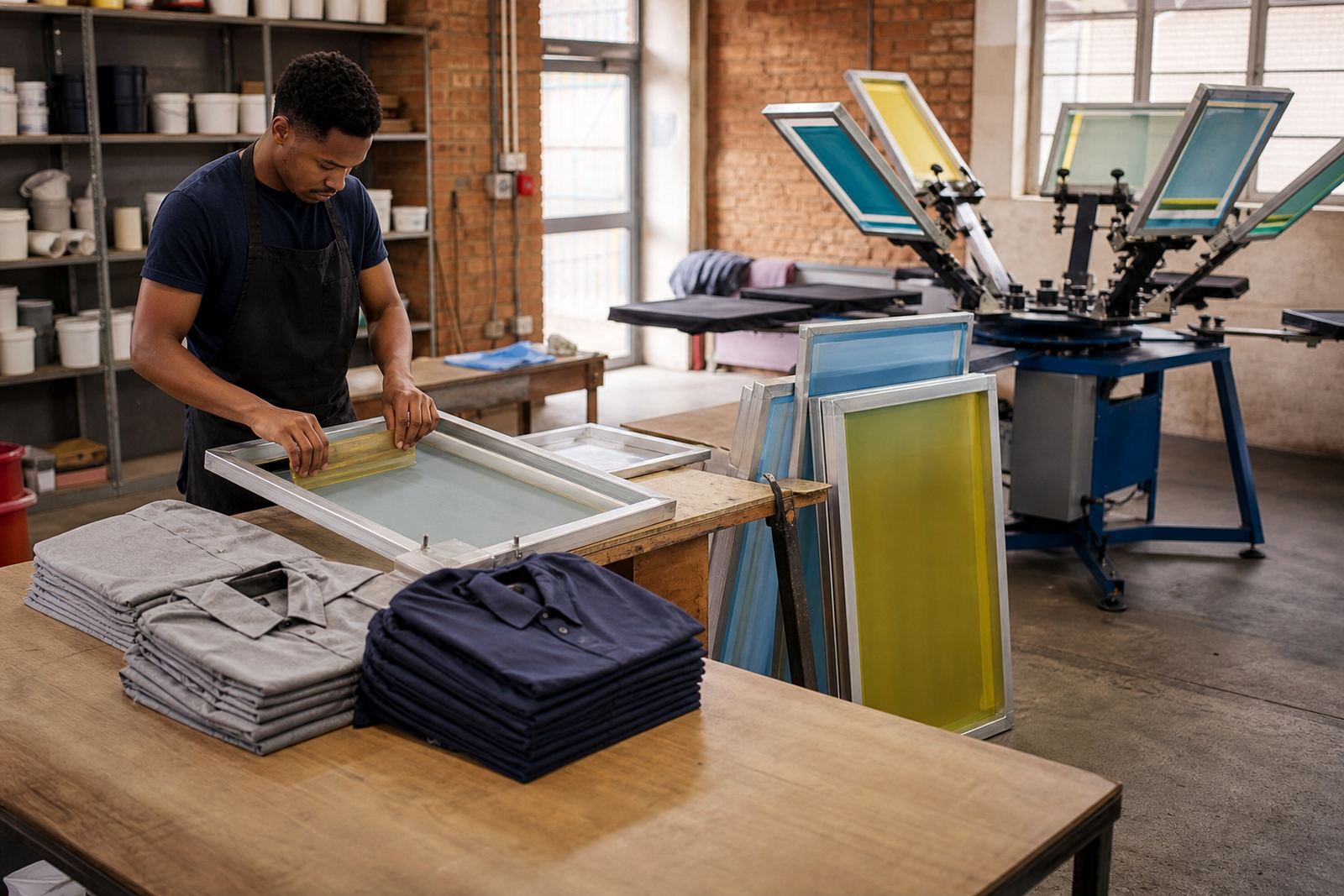
Because uniform printing often means the same logo coming back in different sizes, on different garment colours, the screens had to be matched properly to the artwork and ink system. The client also needed a supplier who understood how screen condition affects print clarity on cotton, polycotton, and darker fabrics where fine detail can close up fast if the mesh choice is off.
We kept the approach practical. Rather than pushing one mesh count for every job, we looked at the line work, solids, and halftone needs across their order mix. That meant choosing mesh counts that would hold ink where it needed to sit, while still giving clean detail for text and crests.
Screen specifications chosen for the job
For this project we worked with common screen-printing mesh logic used in South African shops: lower mesh counts for heavier ink deposit, mid-range counts for general textile work, and finer counts where detail and sharper edges matter more. The client was handling branded clothing in regular batches, so the screens needed to support both bold spot colours and cleaner detail work.
- Mesh counts matched to artwork detail and ink deposit needs
- Pre-stretched aluminium frames selected for repeat use
- Consistent tension checked before dispatch
- Frames cleaned and prepared for bonding
- Mesh bonded for durability under production use
We also paid attention to frame size consistency so the shop could move screens through exposure and printing with less adjustment between jobs. When a printer is running multiple uniform orders in a week, even small differences in frame feel can cause setup delays. A screen that sits true on press saves time from the first pull.
What we supplied from Germiston
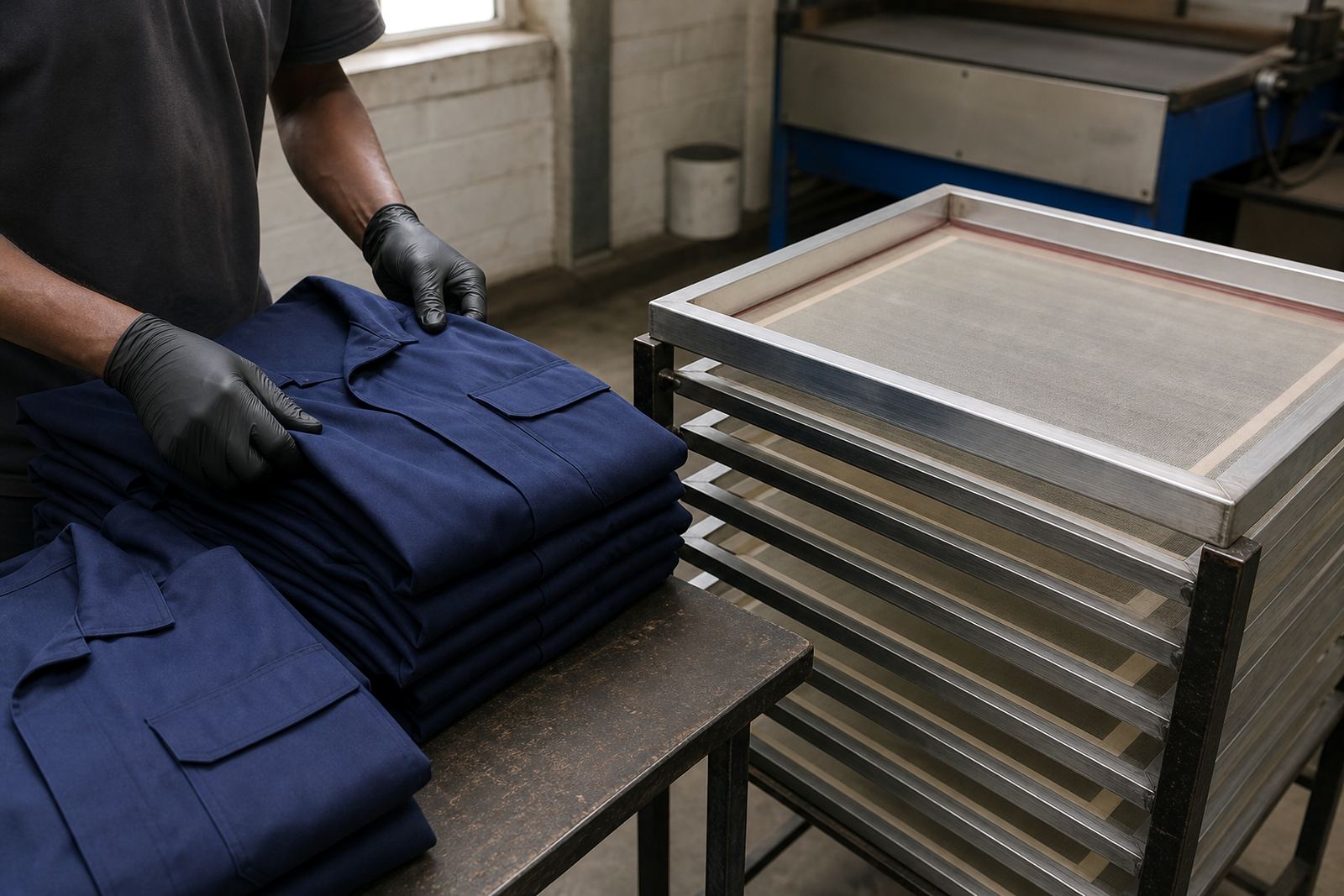
From our Germiston base in Gauteng, we supplied pre-stretched aluminium frames and mesh suited to the client’s regular screen-printing workflow. The order included new frame stretching, mesh count matching, tension checking, and clean prep so the screens could go straight into use after delivery. We also handled batch screen prep and dispatch packing to keep the screens protected in transit.
For a uniform printer, ready-to-use screens are only useful if they arrive in good shape and hold their tension through the first few production runs. That is why the prep stage matters as much as the mesh itself. If the frame arrives twisted, dirty, or uneven, the printer loses time at the press and the print result suffers.
- New frame stretching for fresh screens
- Frame re-stretching where a re-use was practical
- Mesh count matching for different artwork types
- Screen inspection before packing
- Repeat order support for ongoing branded clothing work
Working around production pressure and local conditions
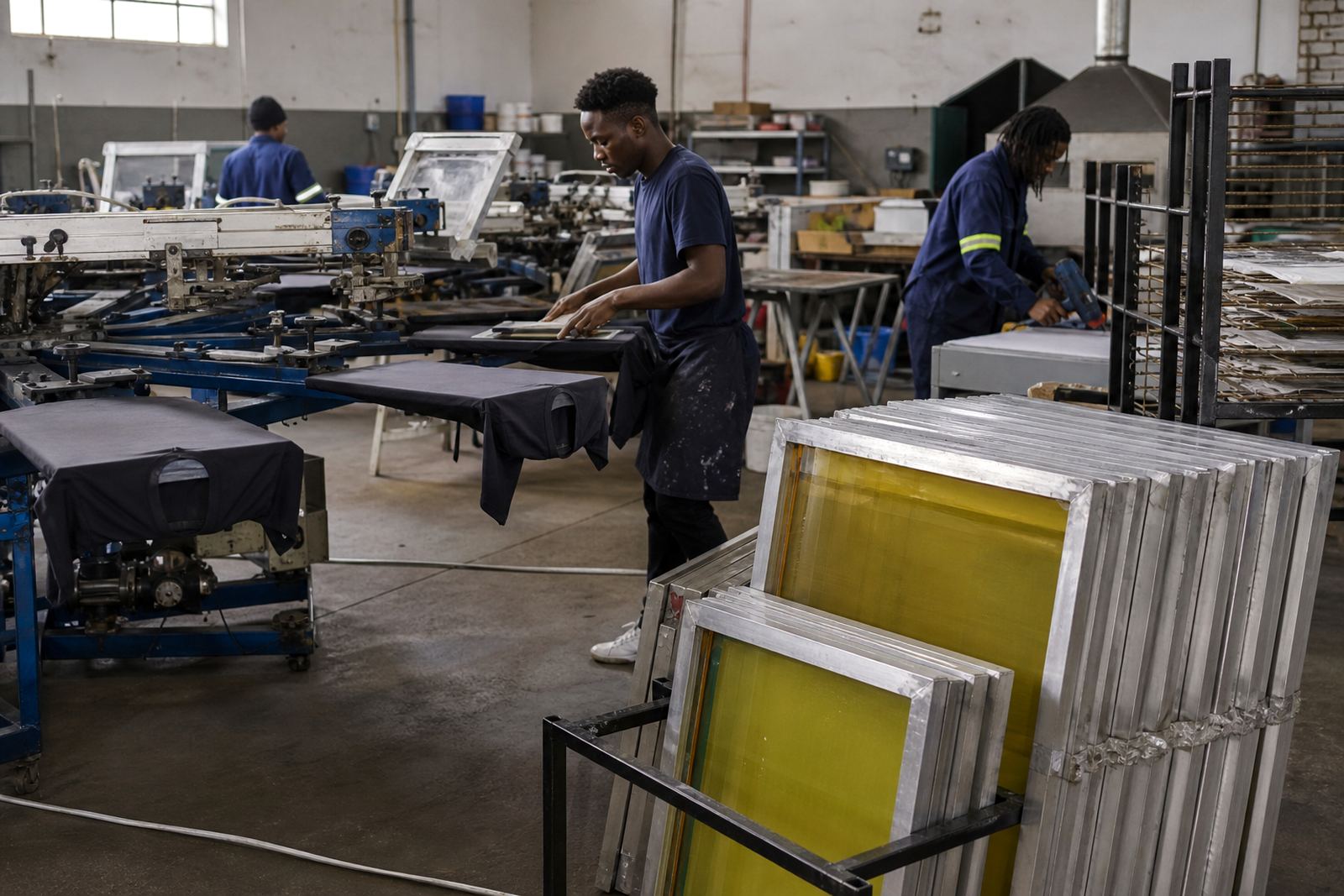
The client’s setup had the usual pressure points common in Gauteng print shops: deadline-driven orders, short lead times, and the need to keep screens stable through load-shedding interruptions. When power cuts split the day into blocks, there is less room for trial and error. Screens need to be right the first time because rework eats into already tight production windows.
We also considered the practical side of screen storage and handling. In a busy shop, screens can be exposed to dust, heat, and repeated movement. On the coast, humidity can be a bigger issue, but even inland shops still need clean storage and careful drying after washout. That is why we kept the prep and packing straightforward, with a focus on consistency rather than fancy extras.
The client wanted a supplier who could understand both the technical side and the day-to-day reality of uniform orders. That meant clear advice on mesh choice, tension, and how to keep screens in service for longer without making the printer fight the frame every shift.
Timeline from brief to delivery
The job moved from brief to supply over a short working timeline of three weeks. The first week was spent confirming the screen mix and matching the mesh counts to the order profile. The second week focused on stretching, tension checking, and frame clean prep. The final week covered inspection, packing, and delivery coordination for the Brakpan site.
That timeline suited the client because they had ongoing branded clothing orders rather than a one-off campaign. The screens were set up to support repeat production, so the goal was not just to ship something quickly, but to supply screens that would stay useful across the next rounds of work.
- Week 1: brief, artwork review, mesh selection
- Week 2: frame stretching and tension checks
- Week 3: inspection, packing, and delivery handover
What changed for the print shop afterwards
Once the screens were in use, the client had a smoother setup for repeat uniform orders. The main gain was consistency: fewer adjustments at the press, cleaner image edges, and less time spent correcting screens that had drifted out of spec. For a uniform printer, that kind of control matters because every saved minute helps when the next order is already on the bench.
The result was not about flashy claims, just better day-to-day handling of branded clothing work. The screens were ready for production, the mesh choices suited the artwork mix, and the aluminium frames gave the shop a dependable base for repeat use. The team could keep moving through orders without having to stop and fight weak tension or poorly matched mesh.
If we were doing the same project again, we would handle it the same way: review the artwork types, match the mesh counts properly, check tension before dispatch, and keep the packing neat so the screens arrive ready for press. That approach works for uniform printers because it reduces surprises, and in this trade surprises usually cost time.
Key facts
| Client type | Uniform printer handling branded clothing orders |
|---|---|
| Town | Brakpan, Gauteng |
| Supplied from | Germiston, Gauteng |
| Core supply | Screen-printing mesh and pre-stretched aluminium frames |
| Services used | New Frame Stretching, Mesh Count Matching, Tension Checking, Frame Clean Prep, Dispatch Packing |
| Timeline | 3 weeks from brief to delivery |