What the printer needed from us
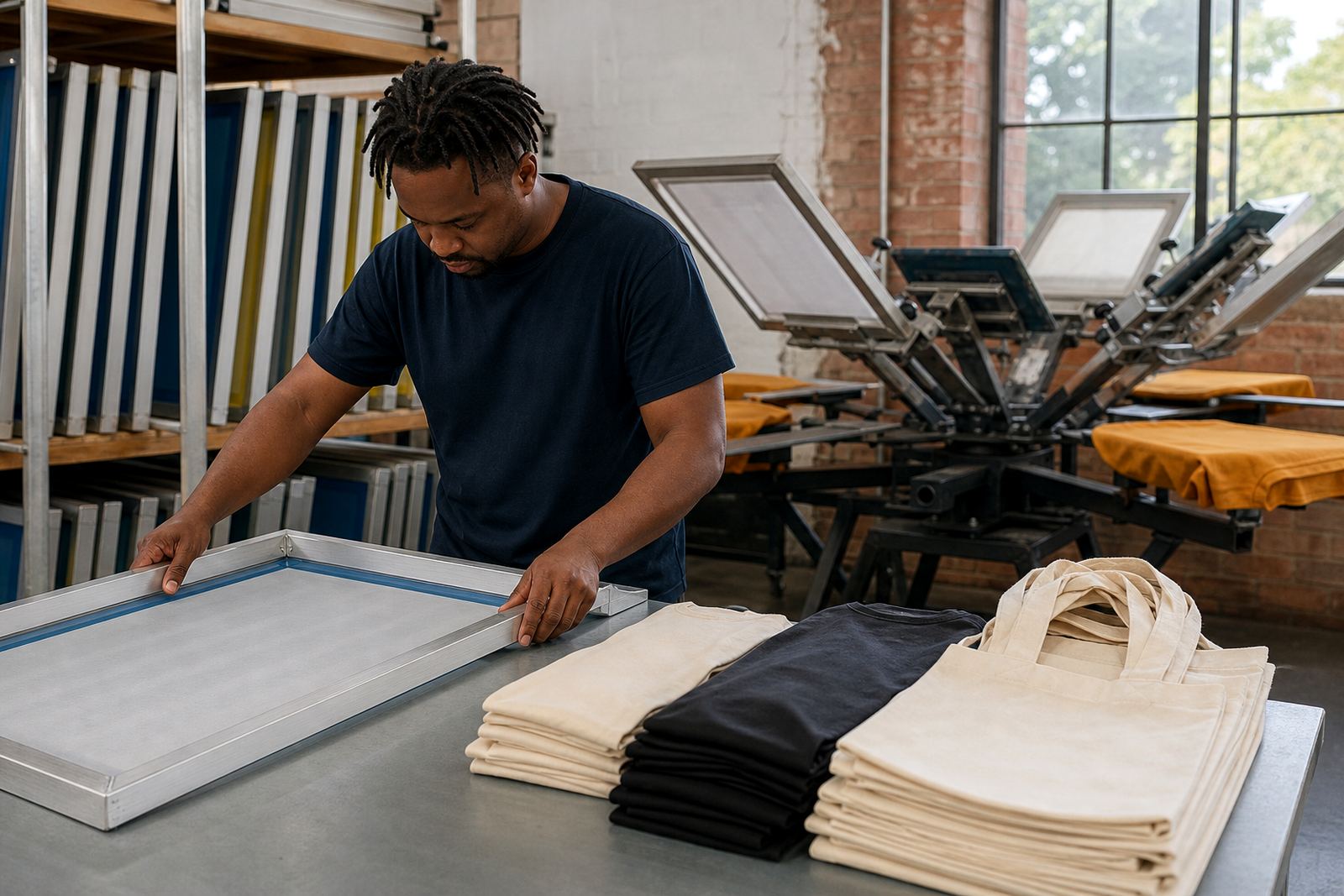
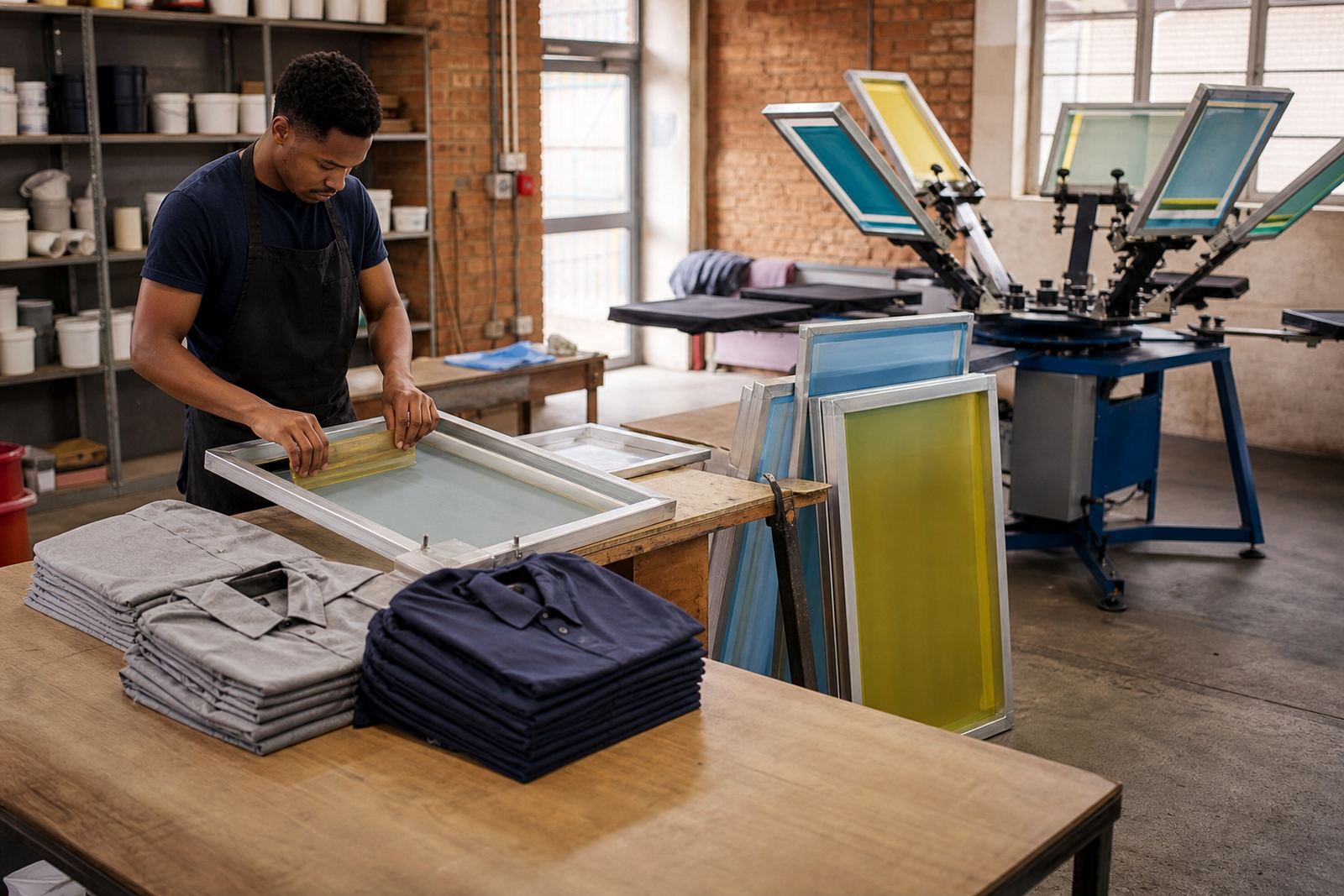
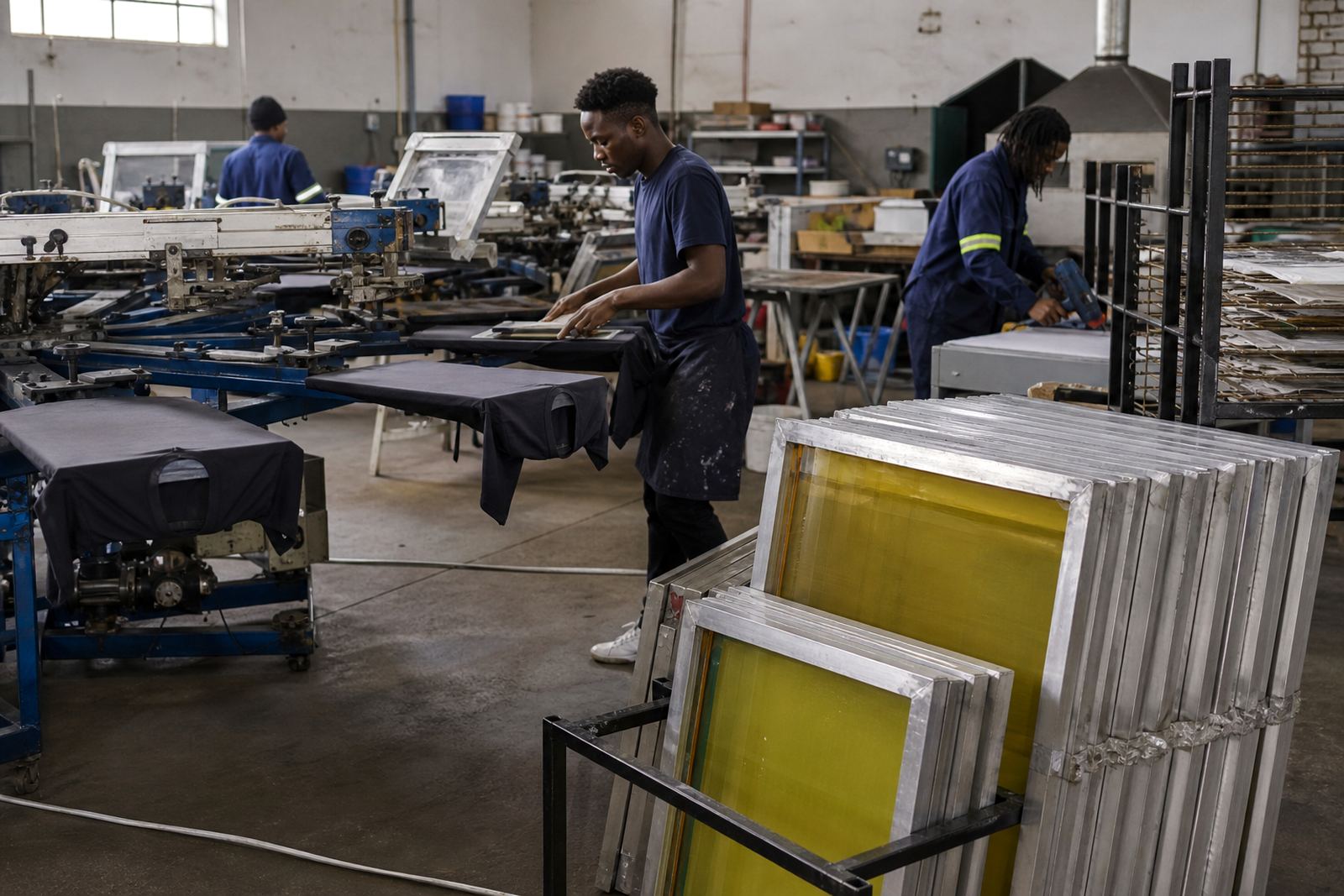
This was a local textile production operation in Germiston handling a steady mix of garment runs, with screens being changed often to keep pace with different artwork and fabric types. Their main problem was not printing skill, but screen consistency. Some jobs needed finer detail, while others called for heavier ink deposit and quicker throughput. That meant the screen room had to stay ready, not caught up in rework.
The brief was clear. Supply screen-printing mesh suited to different stencil and ink needs, provide pre-stretched aluminium frames that held tension properly, and reduce the time spent on manual stretching and correction. They also needed practical advice on mesh counts, frame sizes and how to store prepared screens in Gauteng heat, dust and the occasional power interruption during load-shedding.
- Town: Germiston, Gauteng
- Use case: frequent screen replacement for textile production
- Need: consistent mesh count matching across repeat jobs
- Constraint: limited room for screen-room delays during busy weeks
Screen counts and frame choices for textile work
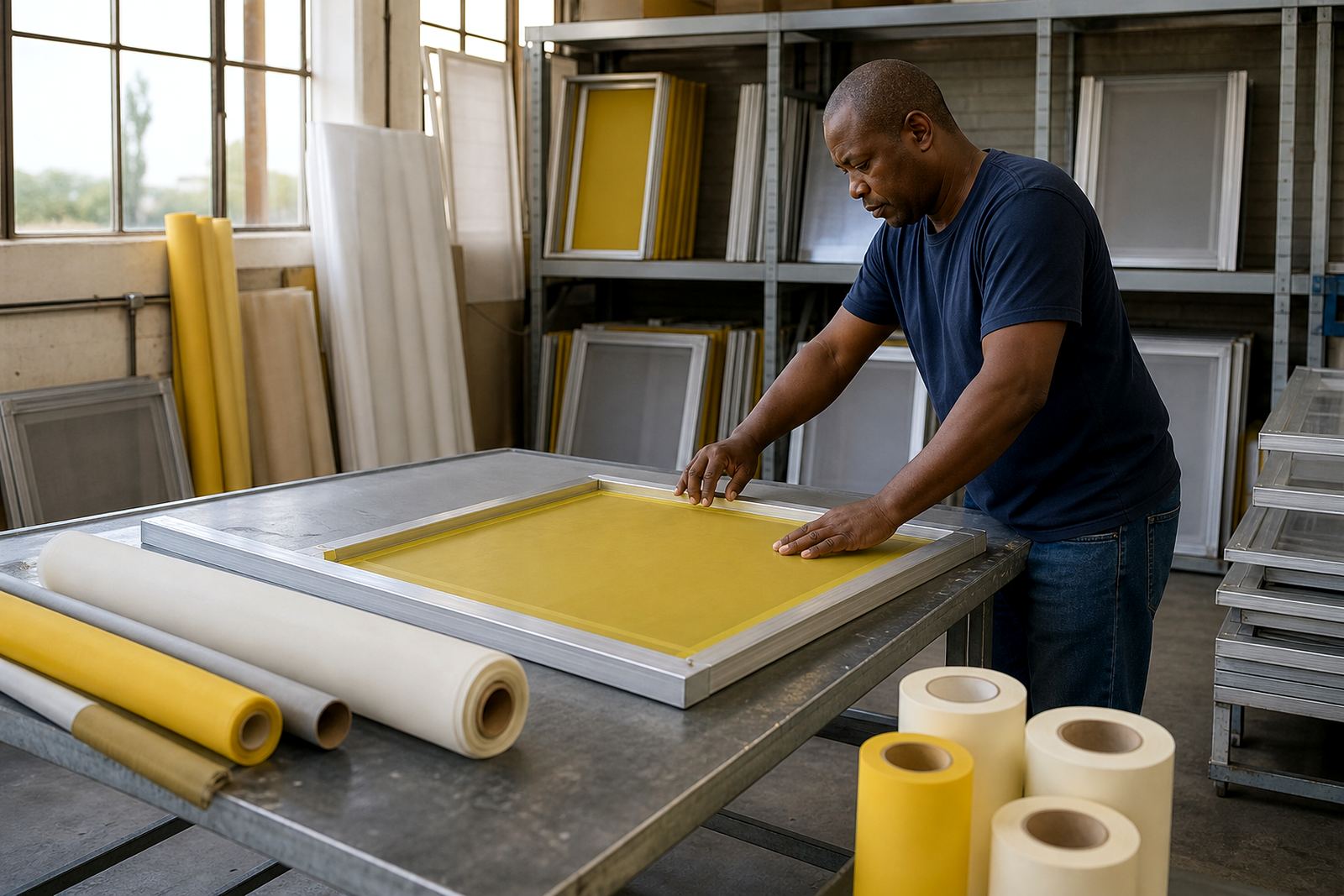
For textile printing, the mesh count has to suit the ink, detail and fabric. Finer artwork usually calls for a tighter mesh, while bold solids and special inks often work better on a more open mesh. We supplied a mix of mesh counts so the printer could match screens to the job instead of forcing one screen type to do everything. That helps with clarity, ink release and repeatability.
We also supplied pre-stretched aluminium frames for everyday production use. Aluminium is a practical choice in a busy screen room because it stays straighter than timber in humid or dusty conditions and it handles repeated cleaning better. The frames were prepared for normal textile production screen sizes, with tension checked before dispatch so the team could move straight into coating and setting up. There was less faffing about with loose mesh and uneven pull.
- Mesh count matching for fine detail, solids and general textile printing
- Pre-stretched aluminium frames for repeat use
- Tension checked before supply
- Frame options sized for regular textile production screens
How we handled the supply plan
The job ran over three weeks in practical stages. In week one we reviewed the print mix, the current screen failures and the sizes that were being replaced most often. In week two we prepared the first batch of frames, matching mesh counts to the likely job types and checking each frame for clean prep before stretch work. In week three we handled dispatch packing, delivery planning and repeat order setup so the printer could call for the same screens again without starting from scratch.
Johan managed logistics for the different delivery points, while Thabo handled the stretching side and Noluthando, actually Nokuthula, supported on the technical questions around mesh choice and tension behaviour. The aim was to get screens to the printer in a condition that supported fast turnaround, not more sorting at the receiving end.
- Week 1: screen-room review and job pattern assessment
- Week 2: frame preparation and mesh stretching
- Week 3: packing, dispatch and repeat order arrangement
Why tension mattered on this site
On textile work, tension is not a small detail. If the mesh is too slack, detail can blur and the screen may need more frequent retensioning. If it is too tight for the frame or the job, the screen can become harder to print with and less forgiving on press. We checked tension on the pre-stretched frames and matched the mesh selection to the level of detail the printer needed for each job type.
That made a real difference to their screen life and their setup time. The team could inspect, coat and move screens into production with more confidence, and they spent less time dealing with sagging mesh or inconsistent ink behaviour. For a busy shop, that saves hours over a month, especially when orders stack up and the power goes off at the wrong time.
- Better mesh stability for repeated textile runs
- Less time spent correcting screen issues
- Cleaner setup for inspection and coating
- More predictable ink release on press
Dispatch and delivery across Gauteng and beyond
Because the customer was based in Germiston, we worked with local supply timing first and then arranged delivery support for their wider reach. Their operation sent work across Johannesburg and Pretoria, with some production handover tied to Durban, Cape Town and Gqeberha orders. The logistics had to respect practical realities: traffic around the East Rand, municipal access times, and the need to keep screens wrapped and protected from dust and moisture during transport.
We packed the prepared screens so the mesh stayed protected from scuffing and the frames arrived ready for batch screen prep, inspection and use. For a textile printer, a screen that arrives clean and square saves time at every step after receiving. That is especially important when orders are rolling through the week and there is no room for avoidable delays.
- Local supply from Germiston, Gauteng
- Delivery support into Johannesburg, Pretoria, Durban, Cape Town and Gqeberha
- Protection against dust and moisture during transit
- Screen-ready packing for quicker intake at the print shop
What changed after the first repeat cycle
After the first repeat order cycle, the printer had a clearer stock pattern and fewer interruptions in screen preparation. They knew which mesh counts worked for which garment runs, which frames were being used most, and when to request fresh supply before the screen room became a bottleneck. That gave them a steadier production rhythm and less last-minute scrambling.
If we were doing the same job again, we would keep the same approach: review the job mix, match the mesh counts carefully, prepare frames with proper tension and keep repeat orders simple. For textile printers, that practical method usually works best. It is not about overcomplicating the screen room, its about keeping good screens ready when the press needs them.
Key facts
| Client type | Textile printer |
|---|---|
| Town | Germiston, Gauteng |
| Primary supply | Screen-printing mesh and pre-stretched aluminium frames |
| Project duration | 3 weeks |
| Core services used | Mesh Count Matching, New Frame Stretching, Tension Checking, Dispatch Packing |
| Delivery coverage | Germiston, Johannesburg, Pretoria, Durban, Cape Town, Gqeberha |