The brief from a Sandton event print shop
The client was a busy event printer in Sandton handling promotional apparel for product launches, exhibitions, corporate functions and roadshows. Their work pattern changed week by week. One day it was a small rush order for crew shirts, the next it was a bulk run for branded tees with different ink laydowns and tight colour registration. They needed screen-printing mesh and aluminium frames that could hold tension properly and stay consistent across repeat jobs.
The main brief was simple enough to say, but not easy to achieve in a busy shop. They wanted fewer frame issues, cleaner stencil support and mesh counts that suited both fine detail and heavier ink deposits. They also needed a supplier who could assist with new frame stretching, re-stretching and advice on mesh count matching without making the process complicated. The team works under pressure, so the setup had to support quick turnaround and fewer stops during a run.
Because the work was event led, they could not afford slow prep or loose screen tension. The shop also had to manage loading changes during power cuts, so any frame prep needed to be dependable when the workflow was interrupted and restarted later in the day. That meant the mesh had to remain stable, and the frames had to be ready to pick up and use again without fuss.
Mesh counts, tension and frame choices that fit the jobs
We looked at the type of garments they print, the artwork detail and the inks they use, then matched mesh counts to the task rather than pushing one count for everything. For finer logos and smaller text, a higher mesh count helps keep detail sharper. For heavier deposits on dark apparel, a lower count can allow better ink release. That is standard screen-printing practice, but it makes a big difference when a shop is moving between jobs fast.
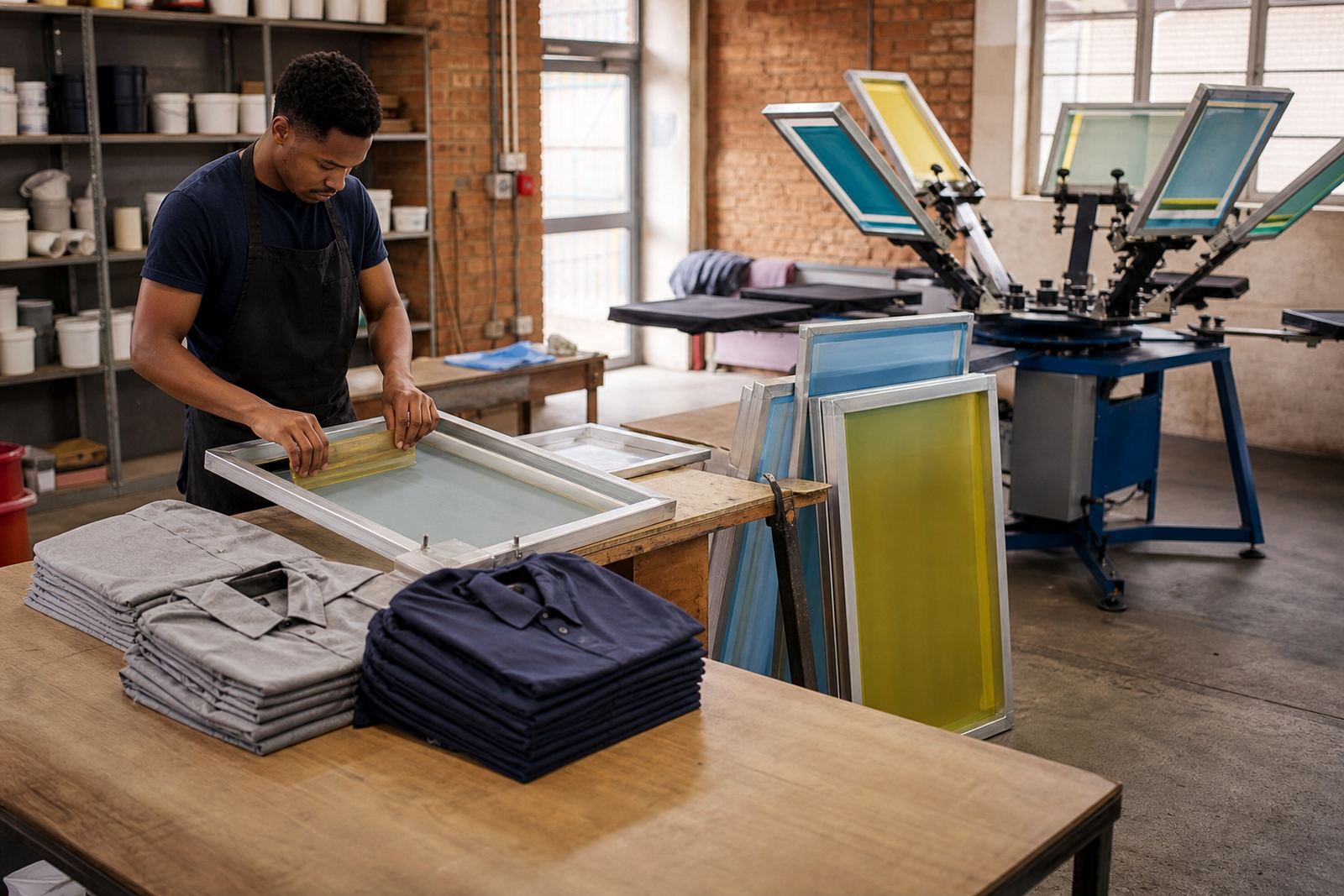
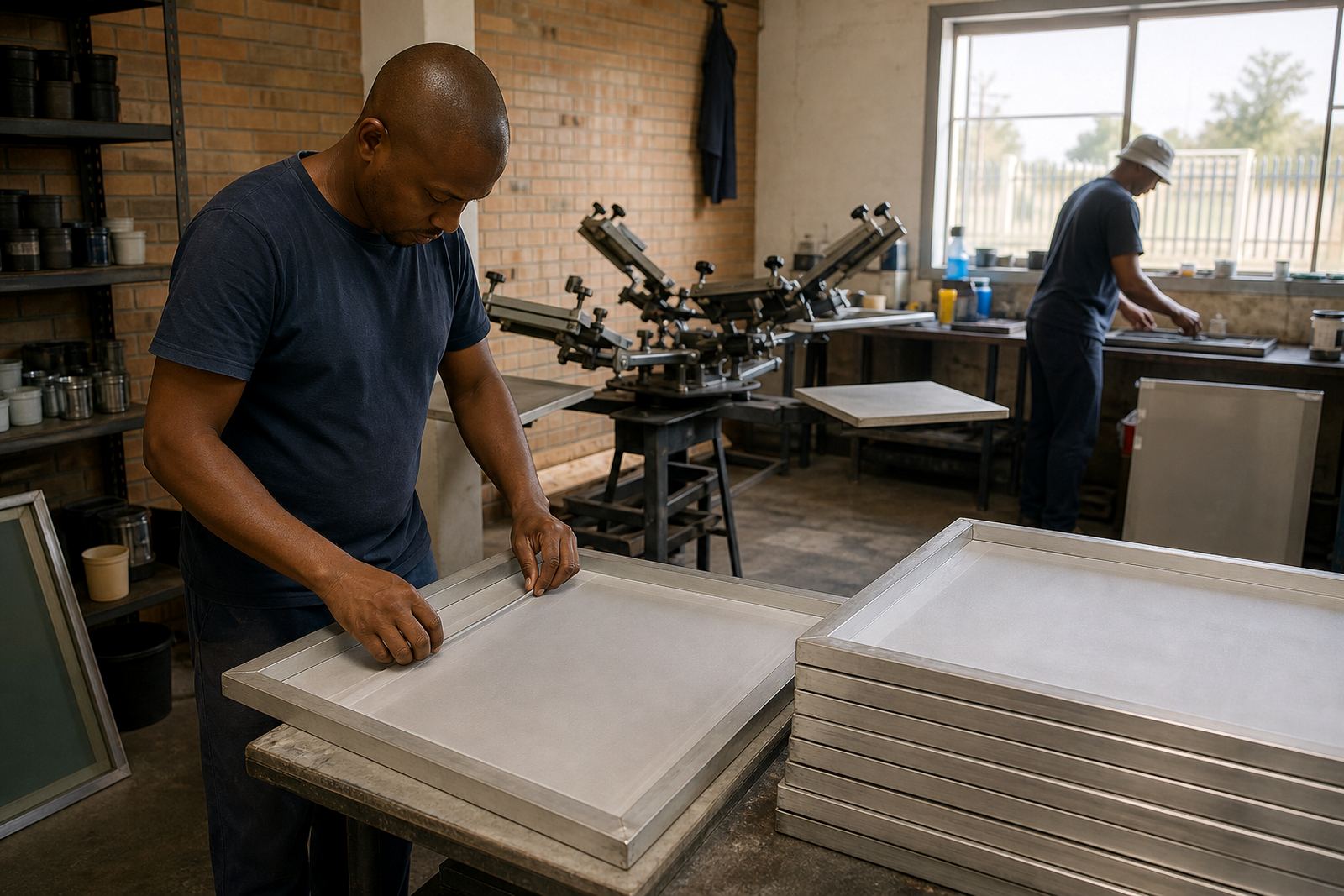
For this project we supplied pre-stretched aluminium frames in a mix of practical sizes that could be used across standard apparel work. The focus was on even tension, straight corners and frames that sit flat on the press. When a frame is stretched properly, it reduces image distortion and helps the squeegee move with less resistance. That gives the printer more control and a better chance of repeatable results.
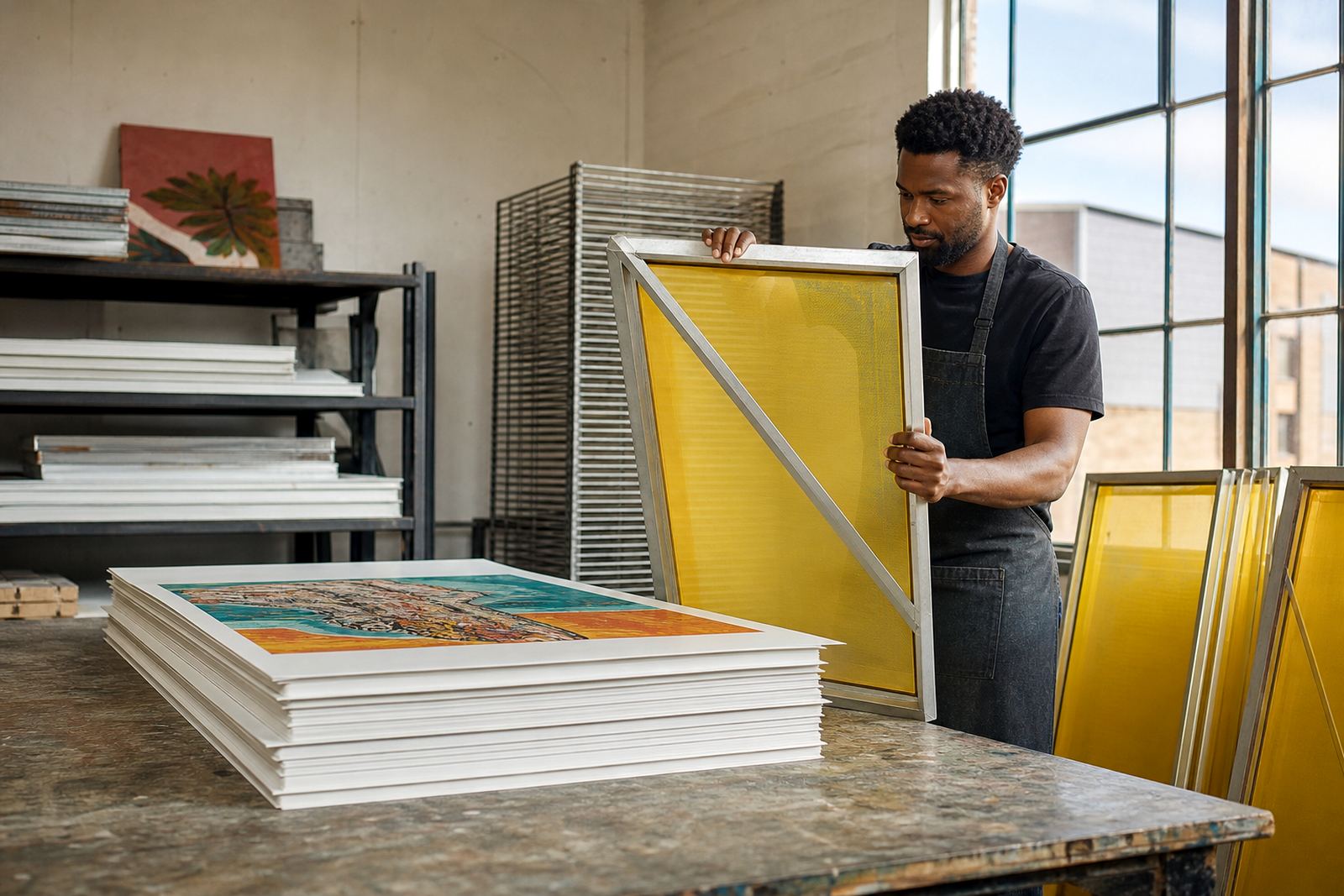
We also checked which screens were worth re-stretching and which needed full replacement. In a live print shop, not every frame needs to be new. Some can be recovered if the aluminium is sound and the old mesh has just lost tension. That approach helped the client keep useful stock in circulation rather than discarding frames that still had value.
- Mesh counts were matched to both detail work and heavier ink deposit work.
- Frames were supplied and stretched for flat lay, even tension and steady registration.
- Older frames were assessed for re-stretching where the base structure was still usable.
- Advice was given on choosing the right screen for each print run, not just each garment type.
What we supplied and how it was set up
We handled new frame stretching, frame re-stretching, mesh count matching, tension checking and frame clean prep. The client sent through their artwork and print needs, then we helped map those jobs to the screen setup they already used. That included selecting mesh counts that would suit their mix of plastisol and water-based work, plus a setup that could handle both spot colours and more detailed graphics.
Before stretching, each frame was cleaned and checked for straightness so the final screen would not carry old adhesive or warp from previous use. After stretching, tension was checked across the full mesh area, not just at the edges. That step matters because a screen can look fine on one side and still give trouble on press if the centre drops or the corners pull unevenly. We also prepared the frames for batch screen prep and dispatch packing, so the client could store and rotate them cleanly.
For a shop like this, order flow matters. The better the screens are packed and labelled, the faster the team can pull the right frame for the next event job. We kept the process practical and straightforward, with enough detail for the printers to know which screen is which without slowing them down. That saved time on the floor and helped reduce mix ups during peak periods.
Timeline and turnaround in weeks
The project ran over a short, practical timeline of three weeks. Week one was consultation and screen assessment. Week two covered stretching, re-stretching and tension checks. Week three was packing, handover and screen setup advice for the team. The work was planned around their production calendar so they could keep taking orders while the new screens were being prepared.
That sort of timing suits event work because the urgency is always there. A shop in Sandton may have a corporate deadline on Monday and a promotion release by Friday, with little room in between. By planning the screen work in stages, we could keep the supply process moving without creating downtime in the print room. It also gave us enough time to catch any problems before the screens went into regular use, which is always better than finding out mid-run.
- Week 1: brief, artwork review and screen assessment.
- Week 2: stretching, re-stretching and tension checking.
- Week 3: packing, handover and setup guidance.
Results on the print floor
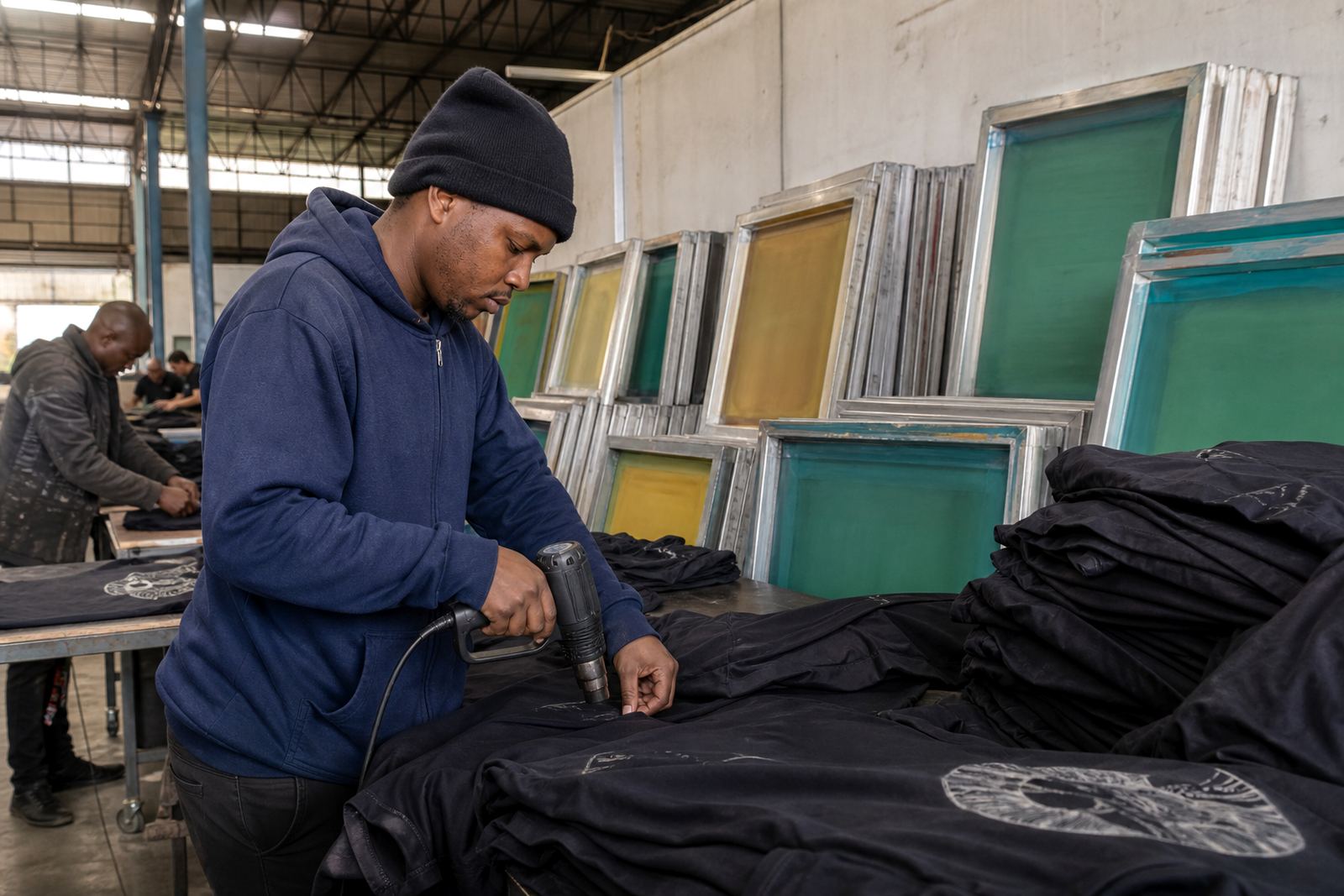
Once the screens were in use, the client had a cleaner starting point for fast-turnaround apparel work. The print team could move through repeat jobs with less screen drag and fewer surprises at registration. The new and re-stretched frames gave them more consistency from one run to the next, which is essential when the same artwork comes back for another event or a reprint with small changes.
The biggest improvement was practical rather than flashy. The printers had screens that were ready to work, mesh counts that suited the job and frames that stayed true under normal shop conditions. They spent less time adjusting screens and more time printing. That helped with planning, especially when a delayed delivery or load-shedding interruption could have thrown off the day. With decent screen prep, the shop could pick up again without starting from scratch.
We also noticed that the team became more confident about matching mesh to artwork. That matters because once a print shop understands which count to use for fine detail, which to use for bold solids and which to keep for general production, their whole workflow gets tighter. It is a small change that pays off on busy weeks.
What we would do again for a similar shop
If we were doing the same project again, we would follow the same approach: assess the actual jobs first, then match mesh counts and frame sizes to the print mix. A fast event printer does not need vague advice. They need screens that make sense for the garments, the ink and the turnaround time. That is especially true in Gauteng, where schedules can shift quickly and shops need to keep production moving.
We would also repeat the same staging process for new frame stretching and re-stretching. It keeps costs sensible, avoids unnecessary replacement and helps the shop use the aluminium frames they already have where possible. For a business printing across Johannesburg, Pretoria and the wider Eastrand, that kind of setup is practical and easy to repeat.
Our advice would be the same as it was here: keep an eye on tension, do proper frame clean prep and do not treat every job as though it needs the same mesh. A screen room works best when each frame has a clear purpose, and the crew knows where it fits in the day’s run.
Key facts
| Project type | Screen-printing supply and frame prep for an event-focused apparel printer |
|---|---|
| Town | Sandton, Gauteng |
| Timeline | 3 weeks |
| Supplied items | Pre-stretched aluminium frames and matched screen mesh |
| Services used | New Frame Stretching, Frame Re-Stretching, Mesh Count Matching, Tension Checking, Frame Clean Prep, Dispatch Packing |
| Typical output | Fast-turnaround promotional apparel screens for repeat event jobs |