What the Pretoria East workshop needed for recurring panel runs
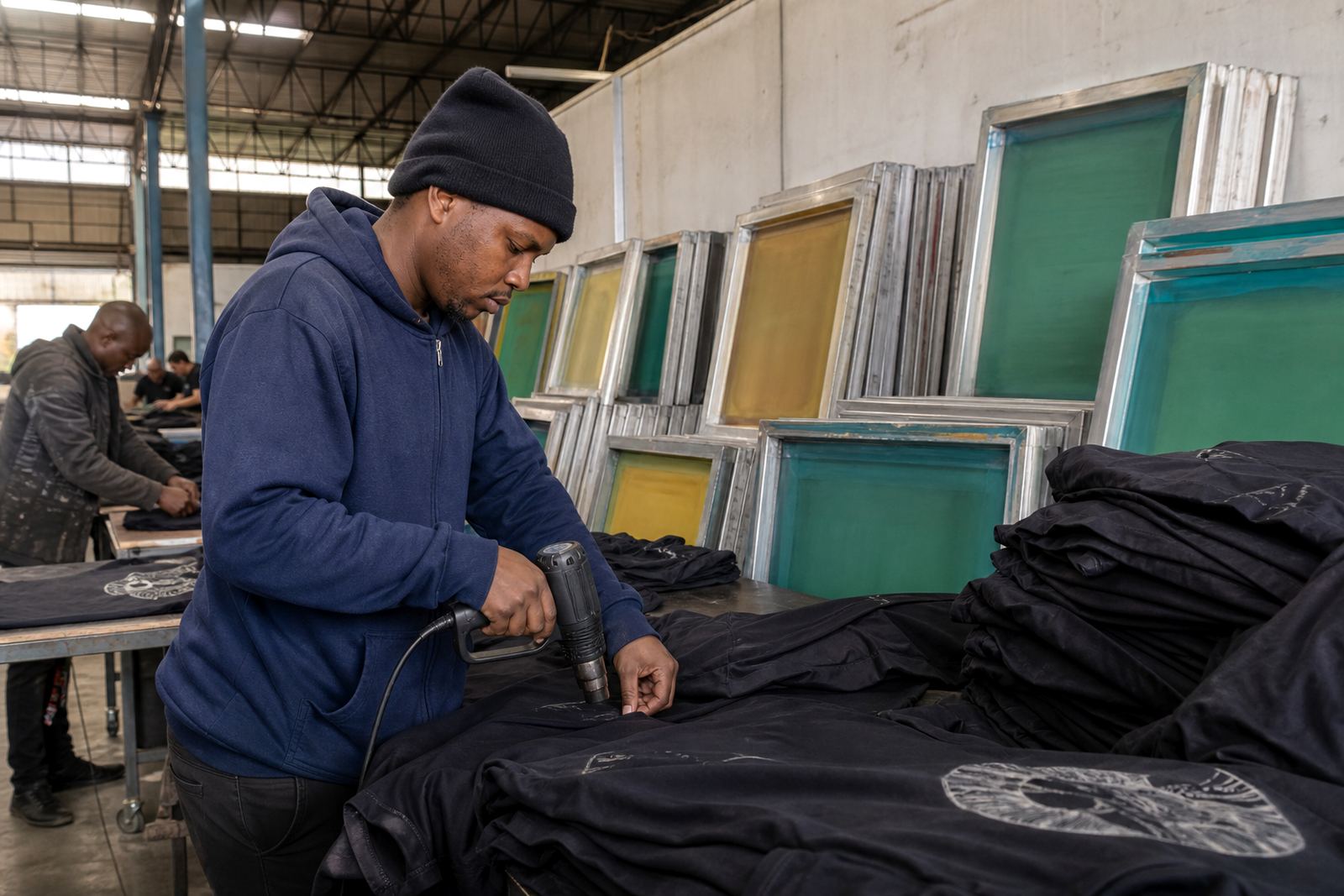
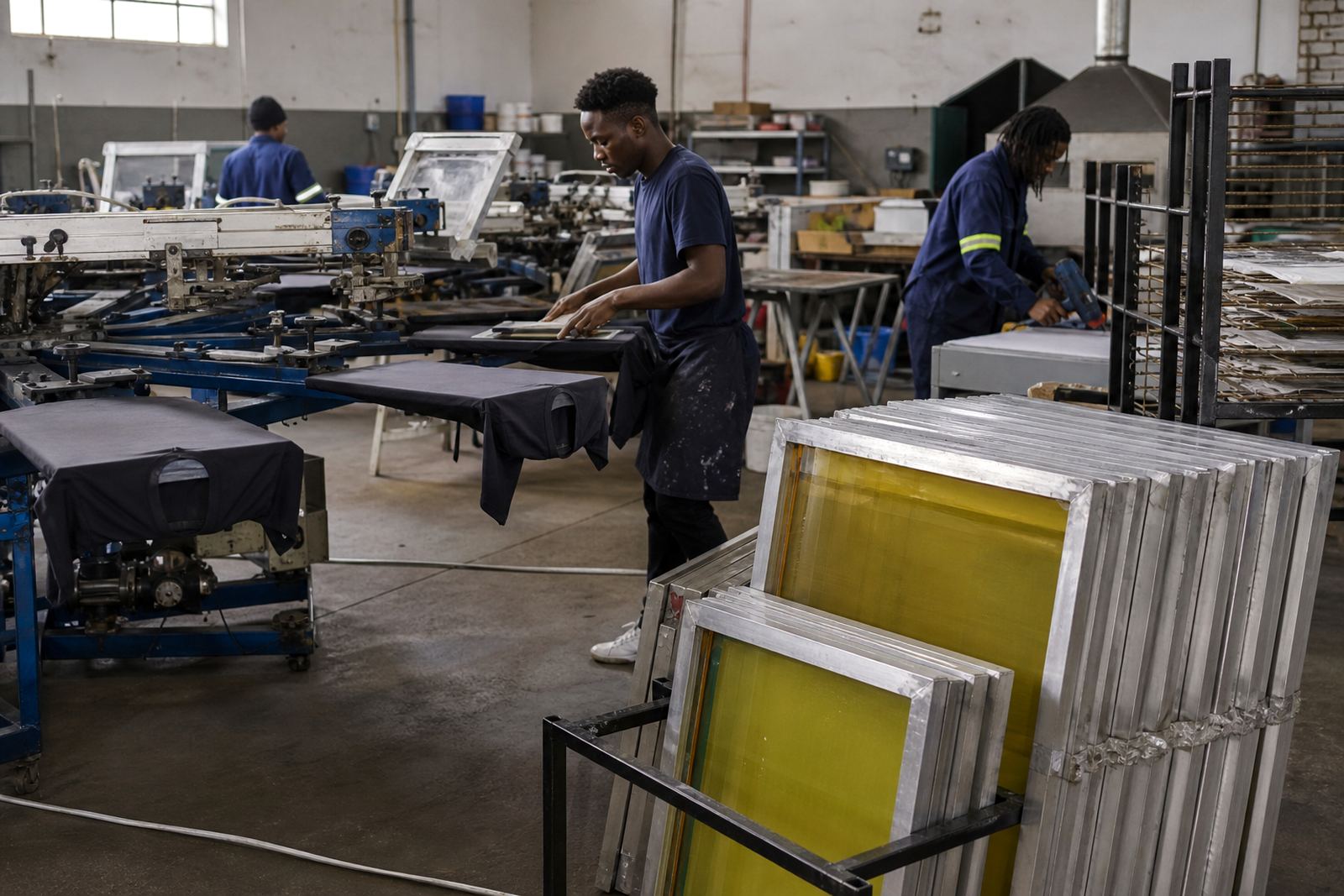
The job came from a signage workshop in Pretoria East that handles repeat panel runs for indoor and outdoor signs, stencils and branded components. Their main need was consistency from one run to the next, because once a screen starts drifting in tension or the mesh count changes without planning, fine text and edge definition can suffer. They wanted a supply partner who could keep their screens predictable across repeat jobs, not just for one-off prints.
The brief was straightforward on paper but specific in practice. They needed mesh counts matched to the artwork and ink type, aluminium frames stretched evenly, and screens that would hold up through repeated cleaning and re-use. With regular production runs, the workshop also wanted less time spent reworking screens and more time moving material through print, cure and dispatch. In other words, they needed screens that behaved the same from Monday to Friday, not just when first fitted.
- Client type: signage workshop in Pretoria East
- Workload: recurring panel and signage runs
- Key need: repeatable print quality across batches
Mesh counts, tension and frame choices we set up
We supplied screen-printing mesh and pre-stretched aluminium frames selected around the type of work they were producing. For finer detail and cleaner edges on smaller lettering, a higher mesh count is often the better choice. For heavier ink deposits or more open artwork, a lower mesh count can suit better. The point is not to use one mesh for everything, but to match the mesh count to the job so the workshop can keep control over deposit, detail and release.
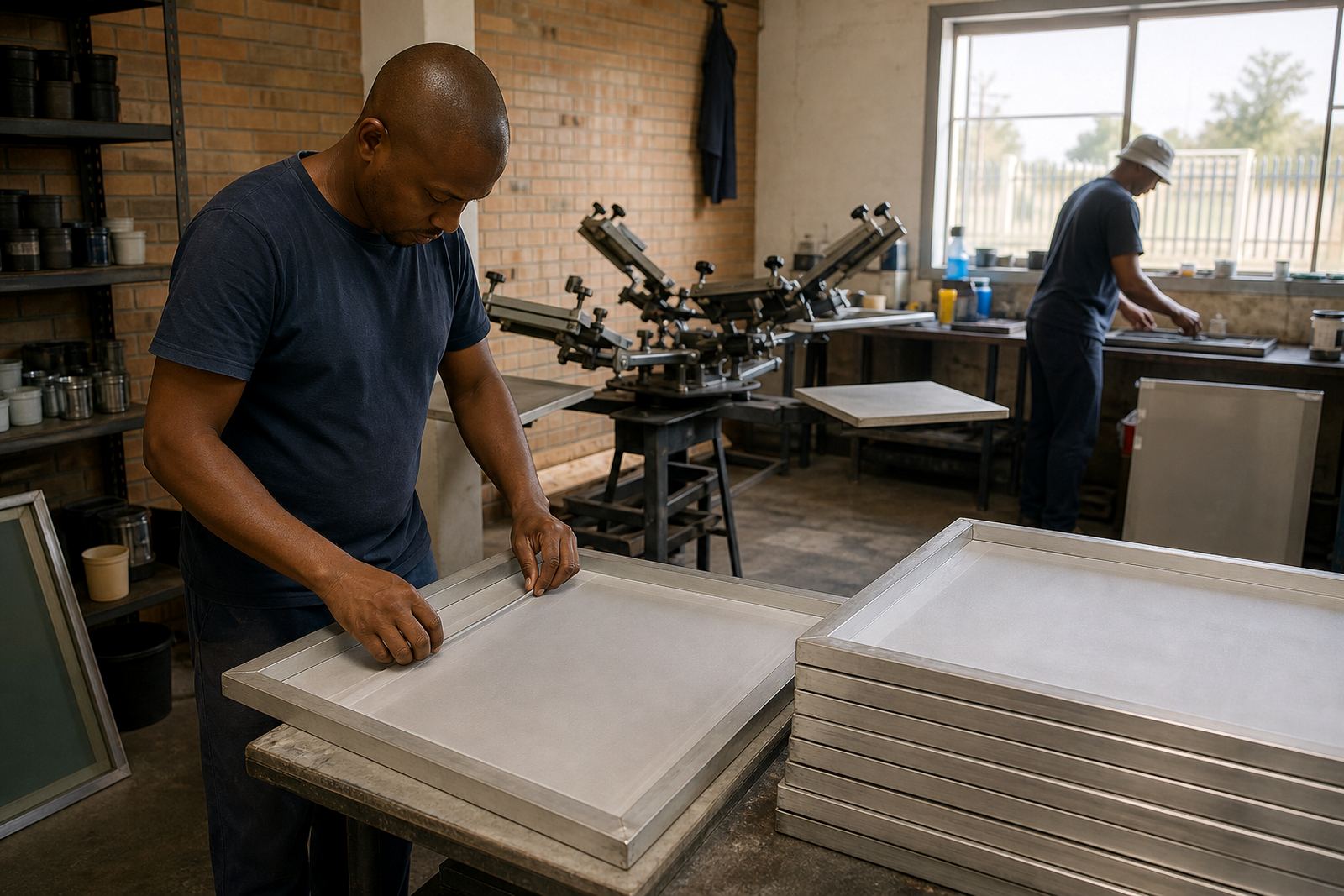
We also focused on tension. A screen that is stretched evenly across the frame gives a steadier print stroke and helps reduce image distortion. If the mesh is loose or uneven, a workshop can end up chasing off-contact issues and inconsistent registration. That is time lost on the press. The aluminium frames were prepared to stay straight and practical for daily handling, which matters when screens are being reused week after week in a busy shop.
- Mesh count matched to artwork detail and ink coverage
- Even tension to support cleaner stroke control
- Aluminium frames suited to repeat use and workshop handling
Constraints from the shop floor and how we handled them
The workshop had a few real-world constraints. They were working to repeat orders, so their screens had to stay consistent from batch to batch. They also needed a supply that would not slow production when a run was booked in for the same week. Pretoria weather can swing from dry heat to a sudden storm, and in a signage space that can affect storage, handling and drying more than people expect. Load-shedding was also part of the picture, so any screen prep process had to be practical and not depend on overcomplicated steps.
Another constraint was the mix of artwork. Some jobs needed clean fine detail, while others needed broader coverage for panels and directional signage. That meant the screens could not be treated as a one-size-fits-all order. We worked through mesh count matching, tension checking and frame sizing so the workshop could separate screens by use case and avoid confusion during busy periods.
- Repeat-order environment with mixed artwork types
- Practical prep for local weather and load-shedding conditions
- Separate screen setups for fine detail and broader coverage
What we supplied from Germiston to Pretoria East
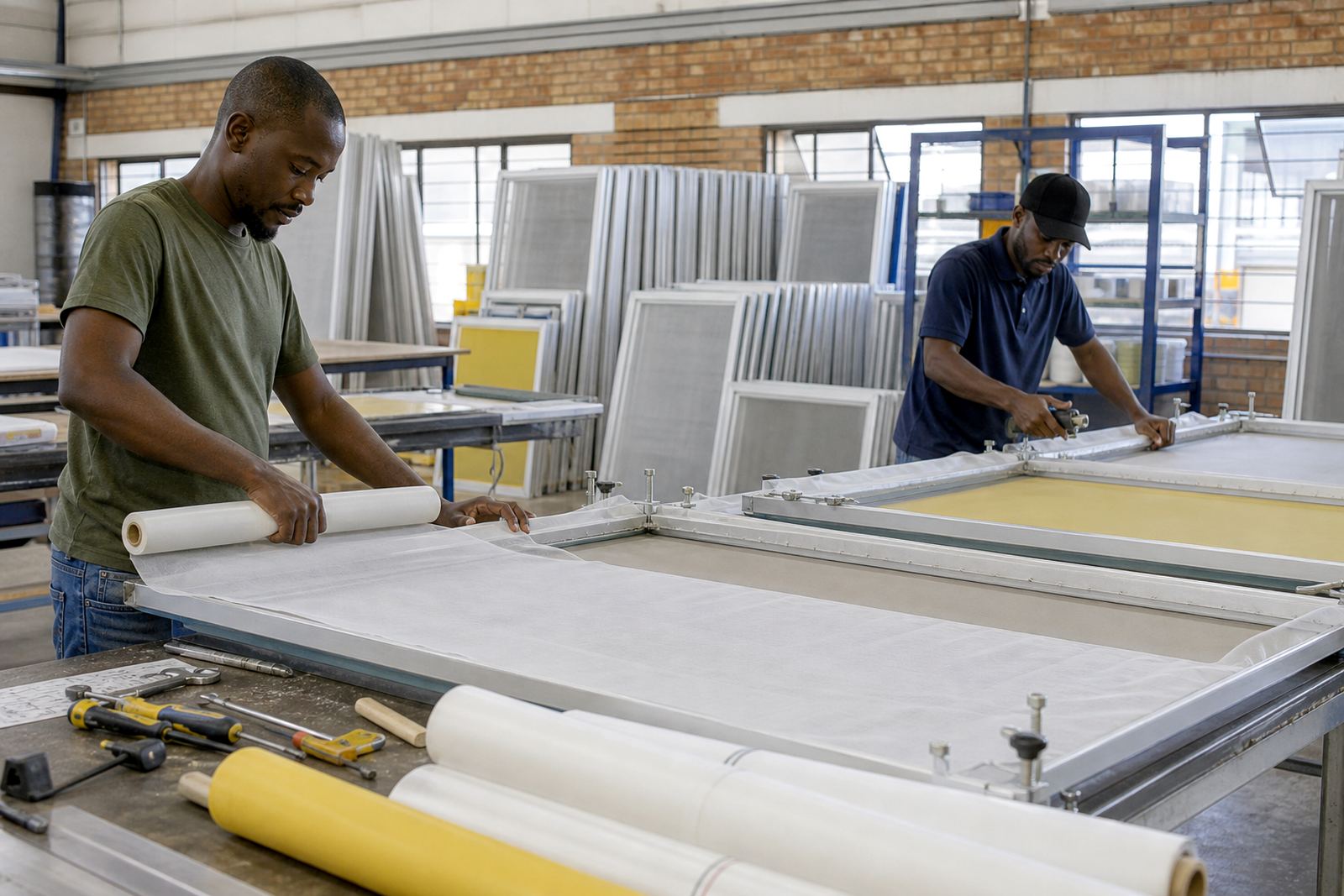
From our Germiston base, we prepared and dispatched the mesh and pre-stretched frames for the project with the relevant screen prep already done. The order included new frame stretching where needed, plus mesh count matching so the workshop received screens suited to the intended print work. We also completed frame clean prep before stretching, which helps with bonding and long-term hold. When a frame is properly prepared, the mesh sits better and stays more stable through use.
Where the workshop asked for it, we handled tension checking and batch screen prep so the screens could move straight into setup rather than sitting around for correction. That is especially useful on recurring jobs, because the more repeatable the screen pack is, the easier it is for the print team to keep production moving. We also kept an eye on dispatch packing so the screens would arrive ready for the next stage, not needing extra handling on arrival.
- New frame stretching and mesh bonding
- Tension checking before dispatch
- Batch screen prep for repeat production runs
Timeline and delivery rhythm over three weeks
The project ran over three weeks from first enquiry to completed supply. In week one, we worked through the brief, the artwork needs and the likely mesh counts for the different panel runs. Week two covered frame preparation, stretching and checking. Week three was about packing and delivery coordination to Pretoria East so the workshop could slot the screens into their run plan without losing time.
That staging mattered because the client was not asking for a single screen in isolation. They wanted a set-up that could be repeated. By keeping the process measured and clear, we could give them screens that were ready for the next order as well as the current one. For a signage workshop, that kind of rhythm matters more than a rush job that solves only today’s problem.
- Week 1: brief, artwork review and mesh count matching
- Week 2: frame stretching and tension checking
- Week 3: packing, dispatch and delivery coordination
Results for the repeat signage work
The result was a cleaner, more repeatable screen set for the workshop’s recurring panel runs. They had screens matched to the type of print work they were doing, with tension and frame prep handled in a way that supported consistent output. That gave them a better base for registration, cleaner edges and less time spent sorting out screen issues between runs.
What the workshop valued most was predictability. When the same screen format performs the same way across multiple runs, the print team can plan ink use, setup and curing with fewer surprises. That kind of reliability is what keeps signage work moving. It also helps reduce waste from re-prints, which is important when a shop is balancing production with municipal delivery windows and tight client deadlines.
- Better repeatability across recurring panel runs
- Cleaner screen behaviour for setup and registration
- Less rework between batches
What we would do again for similar signage work
For a project like this, we would follow the same approach again: match the mesh count to the artwork, prepare the frame properly, check tension before dispatch and keep the order packed for direct use. That process suits signage workshops that need dependable repeat production, especially when they are handling regular panel runs and do not have time to nurse a screen through avoidable problems.
If another Pretoria, Johannesburg or East Rand workshop came with the same kind of brief, we would want the same clear details up front: artwork type, ink behaviour, screen size, and how often the job repeats. With that information, we can set up mesh and frames in a way that suits daily production, not just the first pull on press. It keeps the job practical, which is what matters in a working print shop.
- Best approach: brief first, then match mesh and frame setup
- Useful for repeat signage, panel and stencil work
- Practical for shops managing daily production and load-shedding interruptions
Key facts
| Location | Pretoria East, Gauteng |
|---|---|
| Project type | Signage workshop supply for recurring panel runs |
| Supplied items | Screen-printing mesh and pre-stretched aluminium frames |
| Services used | New Frame Stretching, Mesh Count Matching, Tension Checking, Frame Clean Prep, Batch Screen Prep, Dispatch Packing |
| Timeline | 3 weeks from brief to dispatch |
| Base and supply route | Prepared in Germiston and delivered to Pretoria East |