
The Kempton Park brief and what had to fit
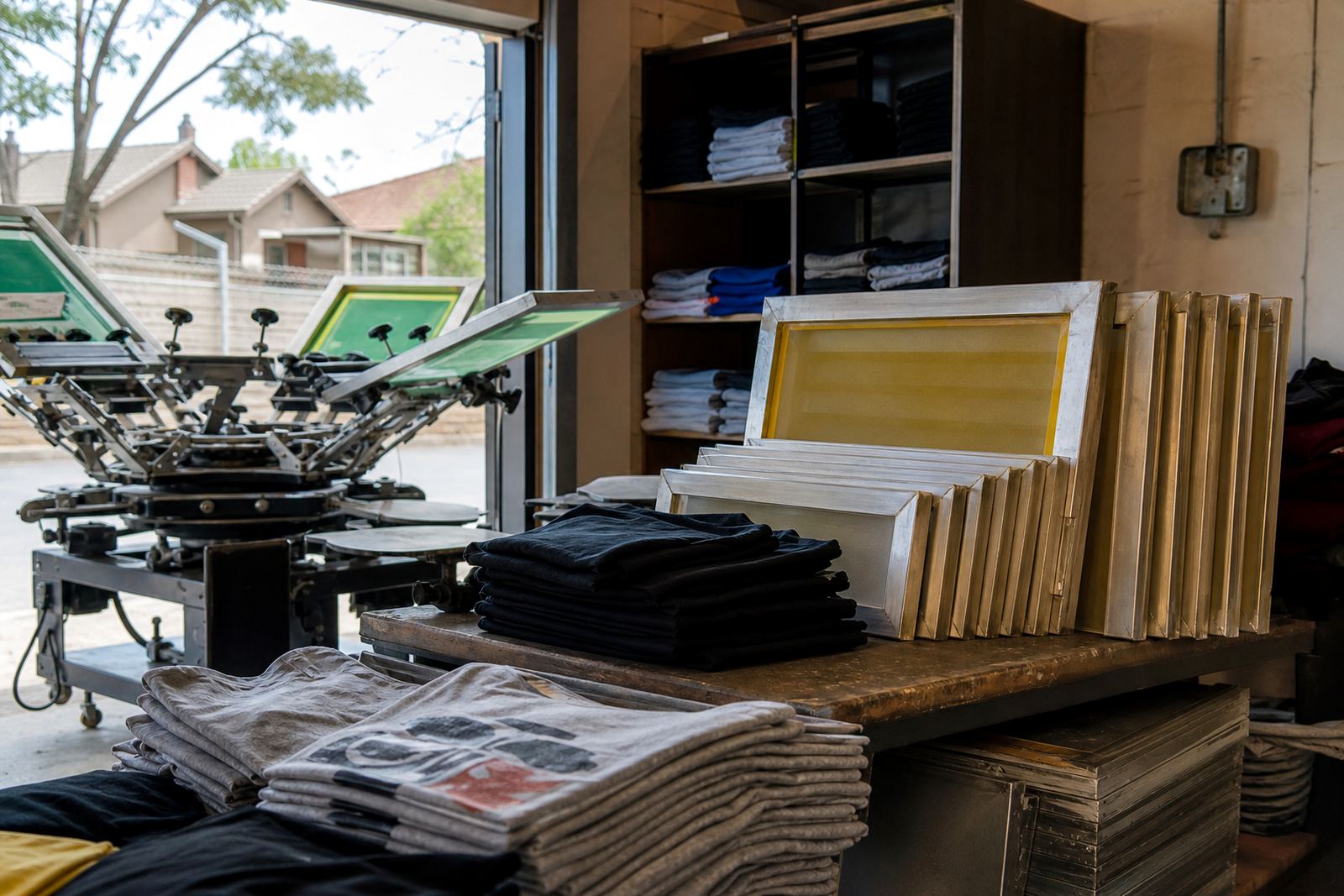
The shop wanted to tighten up its screen room with a smaller, more useful set of frames that could cover most promotional garment jobs without constant swapping and rework. Their work leans toward shirts, golf tees, hoodies and event wear for local corporate customers, so the screens needed to suit bold logos, finer text and the occasional halftone area.
The brief was simple enough on paper but fussy in practice. They needed screen sizes that would sit comfortably on a manual press, give good off-contact, and stay stable through repeated cleaning and reclaiming. The frame set also had to be practical for a busy shop in Kempton Park, where turnarounds are tight and power cuts can interrupt drying and prep time, so every screen had to hold tension properly from the start.
What we sized for in the screen room
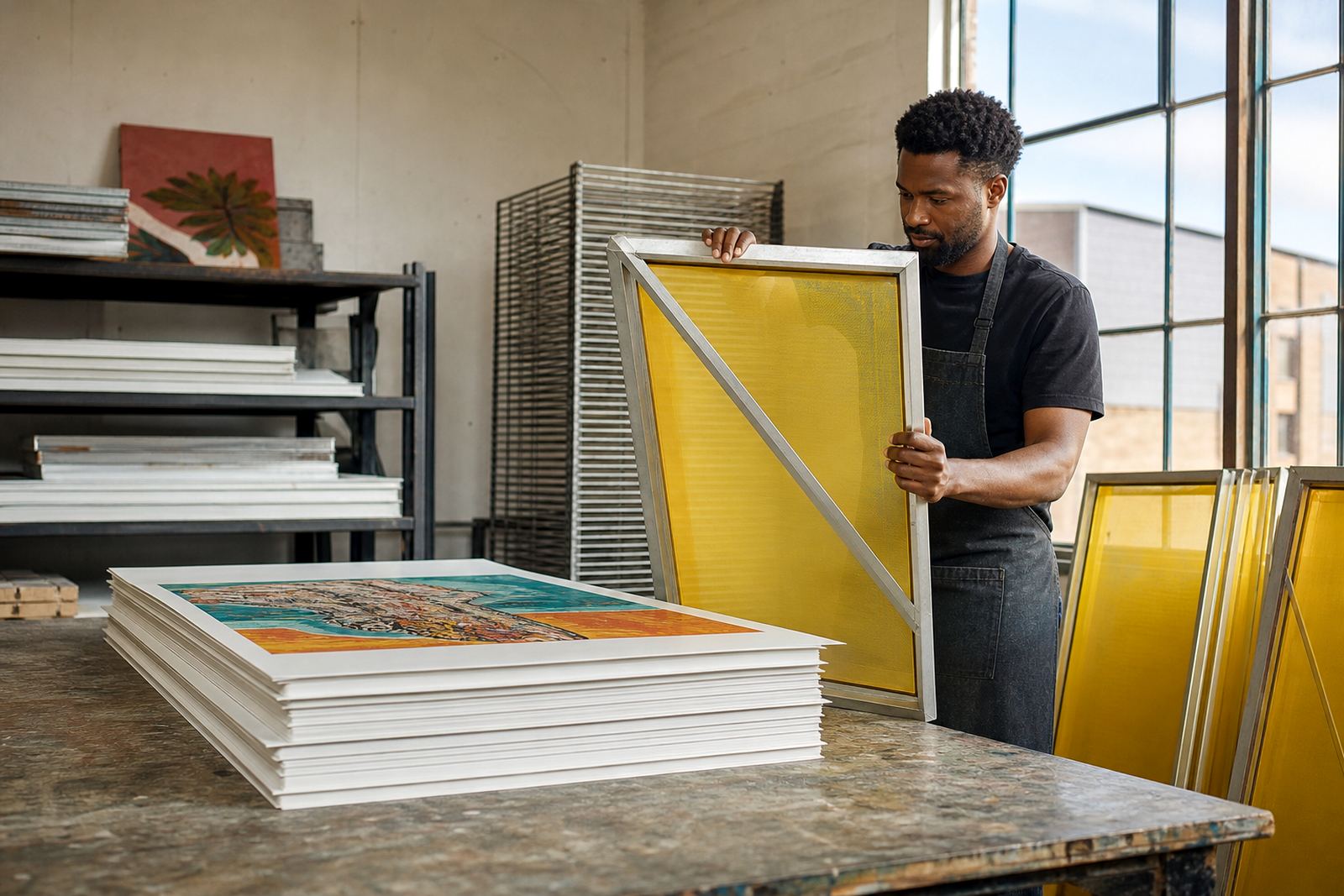
We worked around a core mix of mesh counts that make sense for garment printing in South Africa. For solid spot colour work and heavier deposit inks, lower mesh counts were used so the print could lay down well on cotton and blends. For finer type, small marks and cleaner edge detail, we shifted to higher mesh counts to keep the stencil sharp.
- 43T to 48T mesh for bold spot colour logos and thicker ink deposits
- 62T to 68T mesh for general garment work with cleaner detail
- 90T to 110T mesh for finer lines, small text and tighter artwork
- 24 x 32 inch and 20 x 24 inch frames for the most common press jobs
- Selected larger screens for oversized garment layouts and back prints
The aim was not to overload the shop with every possible option. It was to give them a core set they could pull from daily, with the right mesh count for the job instead of forcing one screen to do everything.
Frame build, tension and stretching choices
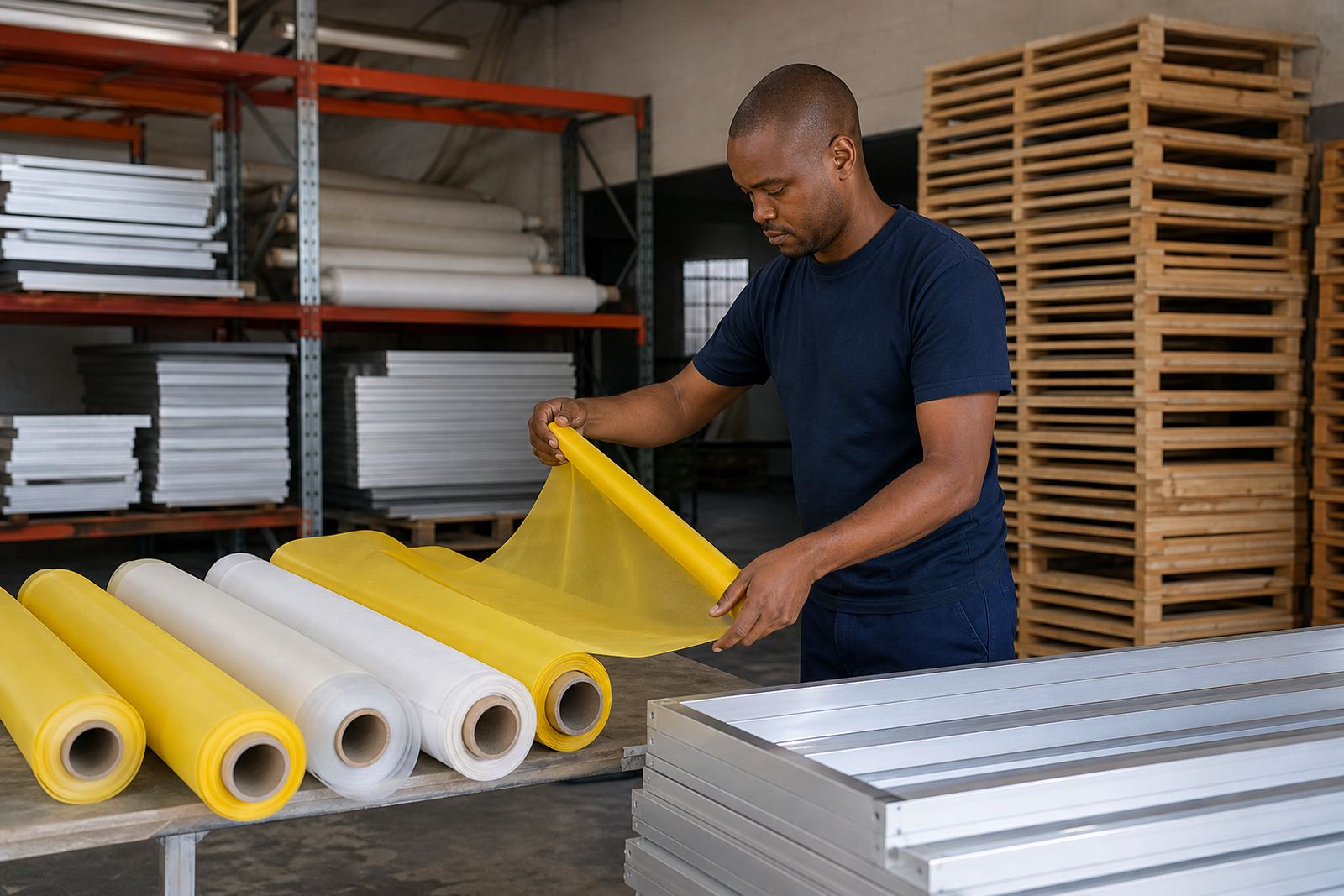
The team asked for pre-stretched aluminium frames because they wanted consistency and less time spent on manual stretching. That helps a great deal when a shop is running multiple designs in a week and needs screens that settle properly after exposure. Aluminium also stands up well in a humid Gauteng summer and handles wash-up better than tired timber frames that have started to twist.
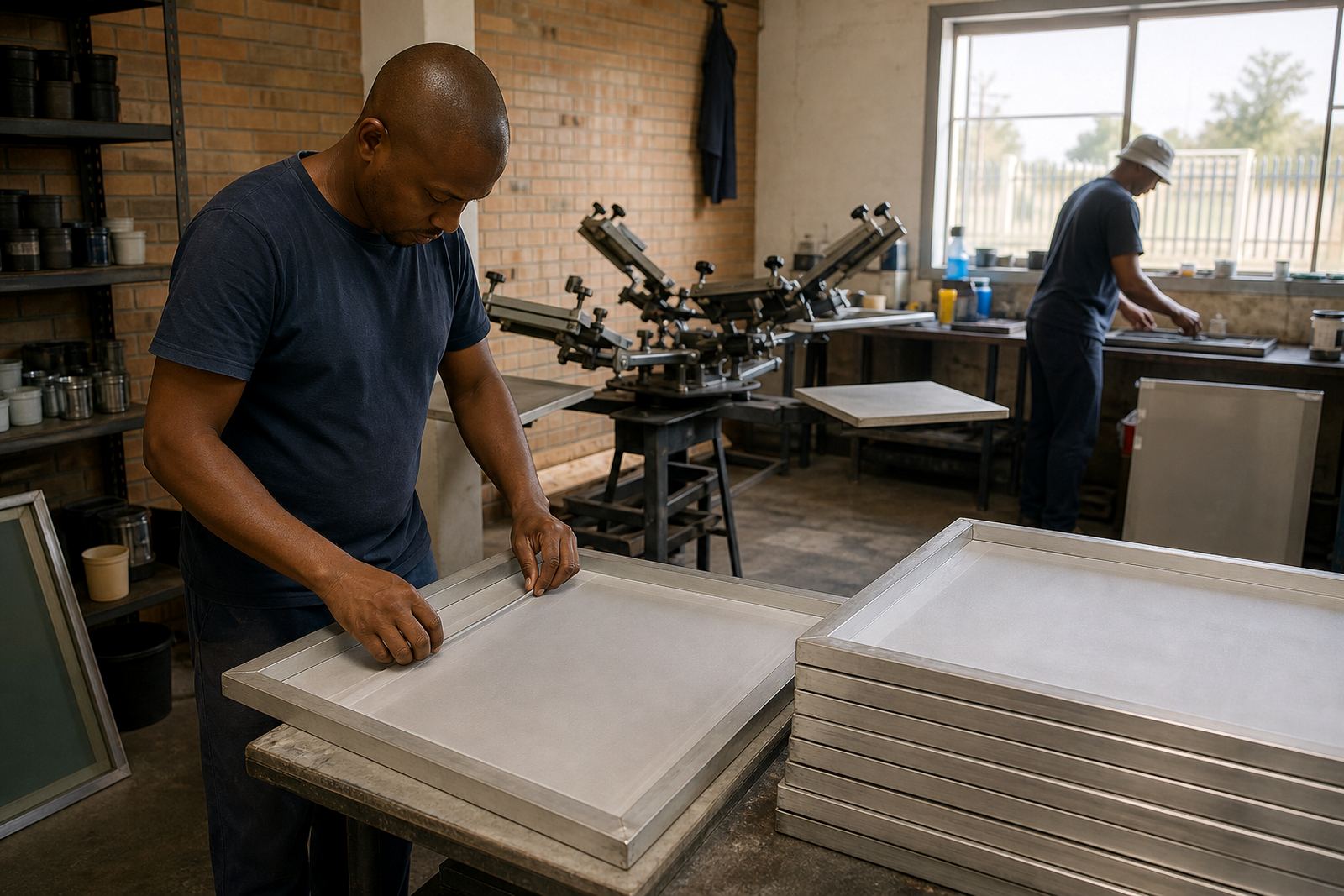
We stretched the mesh to suitable working tension for garment printing, then checked each frame for even pull across the full area. Good tension matters because it gives cleaner snaps off the shirt, better detail on fine text and less chasing of print issues later. If one side is slack, the image can distort and registration becomes a nuisance. That is the sort of thing that slows a shop down fast.
We also prepared the frames with clean surfaces for bonding and a tidy edge finish so the mesh could seat properly before the screens went into regular use. In practical terms, that means fewer surprises once the screens are in washout and press rotation.
Prep work for a busy promo garment shop
This kind of customer usually needs screens that can move quickly from artwork approval to production. We handled frame clean prep, mesh bonding and tension checking before dispatch, then grouped the screens by intended use so the shop could keep its setup logical. That reduces mix-ups when a rush order comes in and two or three jobs need to run the same afternoon.
- New frame stretching for the main workhorse screens
- Frame re-stretching where a size already suited their press
- Mesh count matching for artwork detail and ink coverage
- Screen setup advice for garment print order and press layout
- Dispatch packing so frames arrived protected and ready to use
We also advised on keeping a small reserve of the most-used mesh counts in case a screen needs to be remade later. That helps with repeat work, especially when the same customer logo comes back with only a colour change or sizing tweak.
Timeline from first request to dispatch
The project moved through planning, stretching, checking and packing over a short practical timeline of three weeks. The first week was spent confirming the common print sizes, the artwork types they handle most often and the number of screens needed for their core set. The second week was used for stretching and tension checking, with the final week set aside for inspection and dispatch packing.
Because the shop is in Kempton Park, the delivery plan had to be straightforward and reliable. We kept the packing protected for transport and made sure the screens were labelled in a way that matched how a production team would actually use them on the floor. No fancy system, just clear order and enough detail to keep the process moving.
What changed once the screens were in use
The main result was a more practical screen room. The shop could cover the bulk of its garment work with a smaller set of well chosen meshes and frame sizes instead of juggling too many odd screens. That meant less setup time, cleaner repeatability and a better fit between artwork and screen choice.
They also had better control over print quality on small text and fine logo detail, especially where lower mesh counts were not giving enough definition before. With the screens stretched evenly and checked before use, they had fewer issues with uneven print pressure and less time spent adjusting the press for each job. It made the day smoother, simple as that.
For a promotional garment shop, that sort of change matters because the work is often deadline driven and batch sizes can change without much warning. A screen set that behaves consistently is worth more than a bigger pile of unused frames.
Key facts
| Client type | Promotional garment shop |
|---|---|
| Town | Kempton Park, Gauteng |
| Primary supply | Screen-printing mesh and pre-stretched aluminium frames |
| Core mesh counts used | 43T to 48T, 62T to 68T, 90T to 110T |
| Common frame sizes | 24 x 32 inch and 20 x 24 inch |
| Project timeline | 3 weeks |