What the Alberton shop needed from the screens
The brief was simple but demanding. A garment printer in Alberton needed replacement screens for repeat production on fabric work, with no drift in registration and no guesswork when a screen came back into circulation after cleaning. The shop was running steady orders for tees, workwear and promotional garments, so the screens had to stay true through day to day use and be easy to pull back into service after wash down.
The team asked for screens that would suit both finer detail and heavier spot colour work. That meant matching mesh count to the artwork and ink deposit, while keeping enough tension in the frame for clean print edges. For textile work, that balance matters because a loose screen will slow the run and a tired frame can start giving soft edges or uneven pressure across the image.
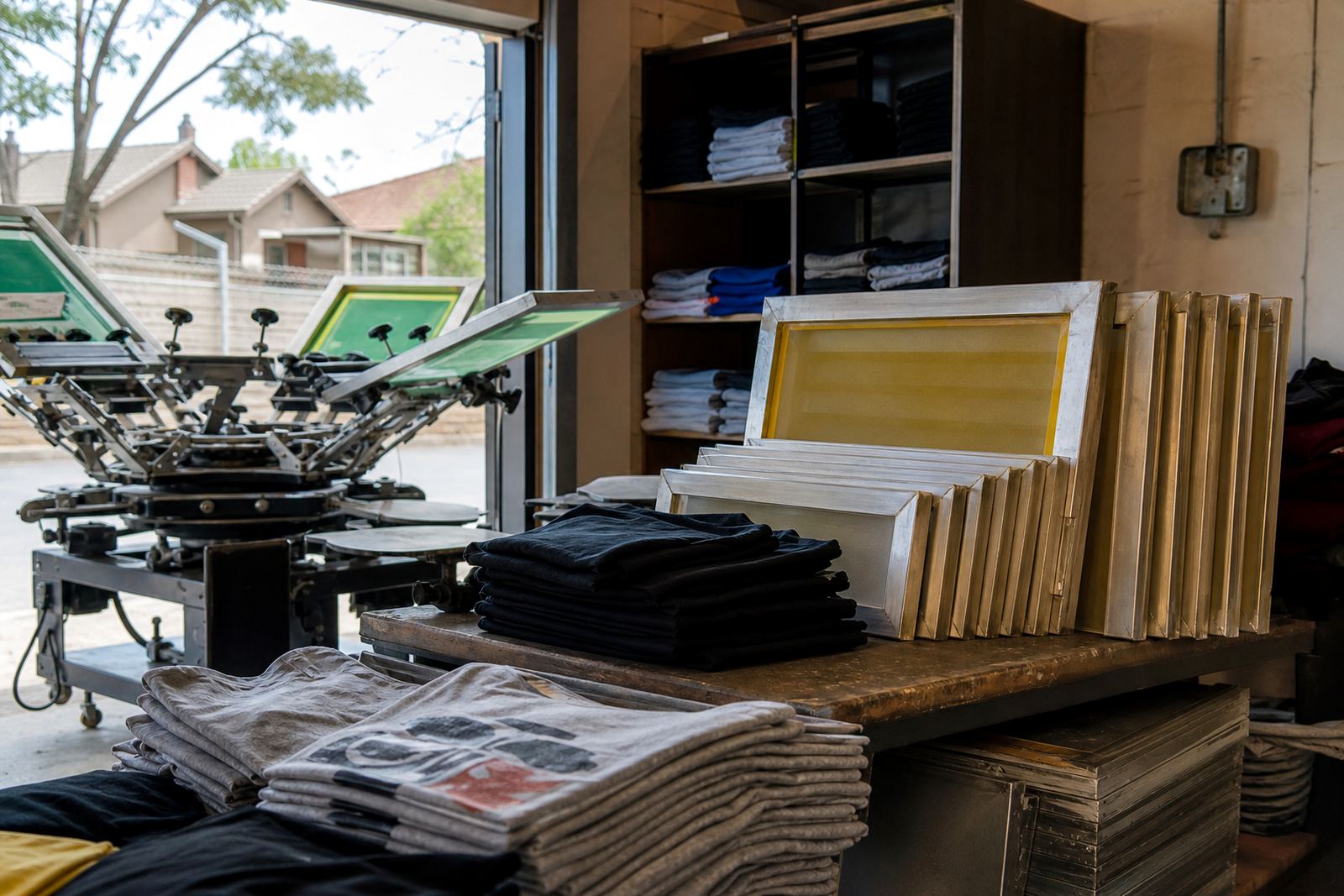
We also had to keep the setup practical for a busy shop. The screens needed to store well, travel safely between print area and wash area, and fit into a repeat order system where the same jobs come back months later. In other words, the screens had to make production easier, not add another layer of admin.
Constraints we worked around on site and in production
Like many garment shops in Gauteng, the client works around power interruptions, warm afternoons and a print room that has to stay organised even when the day gets hectic. Load-shedding can interrupt prep and wash routines, so we made sure the screens were supplied in a way that supported quick turnarounds and straightforward handling. The shop also needed frames that would cope with regular cleaning and storage without warping or losing tension too quickly.
- Repeat production on the same garments and placements
- Mixed artwork: fine text, solid blocks and line detail
- Reliable tension for manual and semi-automatic printing
- Screen storage in a busy garment print room
- Durability for local conditions, including dust and heat
We also kept in mind that garment printing often involves several screen counts on one job. A print shop might need a tighter mesh for finer detail and a more open mesh for heavier ink deposit, then have those screens ready to return to the same job later. Matching that system properly saves time and helps keep print quality steady across re-orders.
Mesh counts and frame build supplied for the job
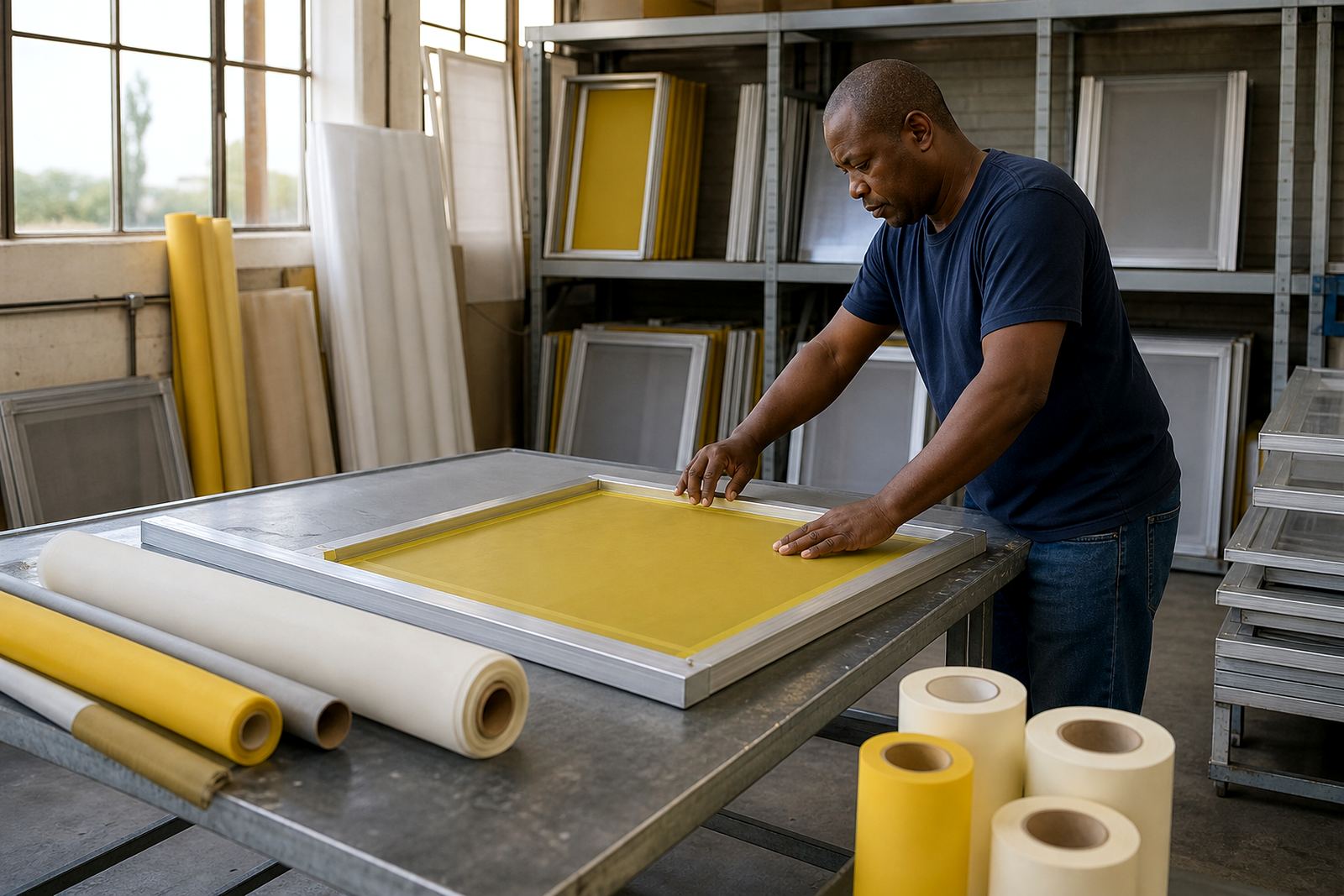
For this project we supplied pre-stretched aluminium frames and replacement screens matched to the kinds of jobs the shop was running. The mesh selection was based on established screen-printing practice for garment work, where the count is chosen according to detail, ink type and the required deposit. Finer work generally calls for a tighter mesh count, while bolder textile prints may use a more open count to carry enough ink through the stencil.
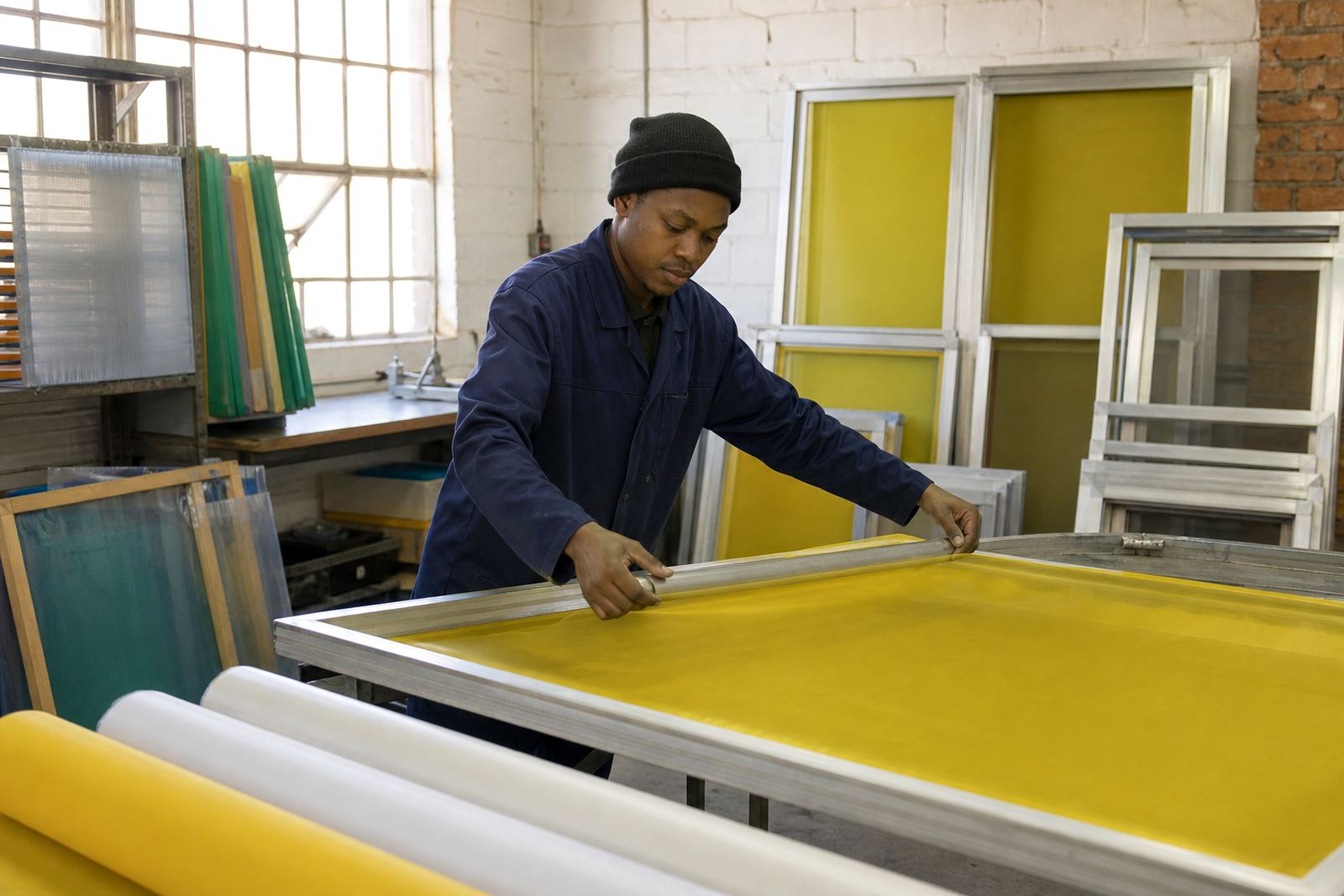
We prepared the frames with proper tension checking before dispatch, because tension is what gives a screen its consistency. A frame that is evenly stretched helps reduce moire, keeps registration cleaner and gives the operator a more predictable snap-off. That matters when a printer is doing batches of shirts and needs the same result on the first print and the last one.
The frame build was handled for practical use in a production environment. Aluminium frames are a good fit for this type of work because they are lighter to move than heavier alternatives and they stand up well to repeated handling, provided they are cleaned and stored properly. They also help when screens need to be changed quickly during a run, especially on busy shift days.
How the screens were prepared and checked
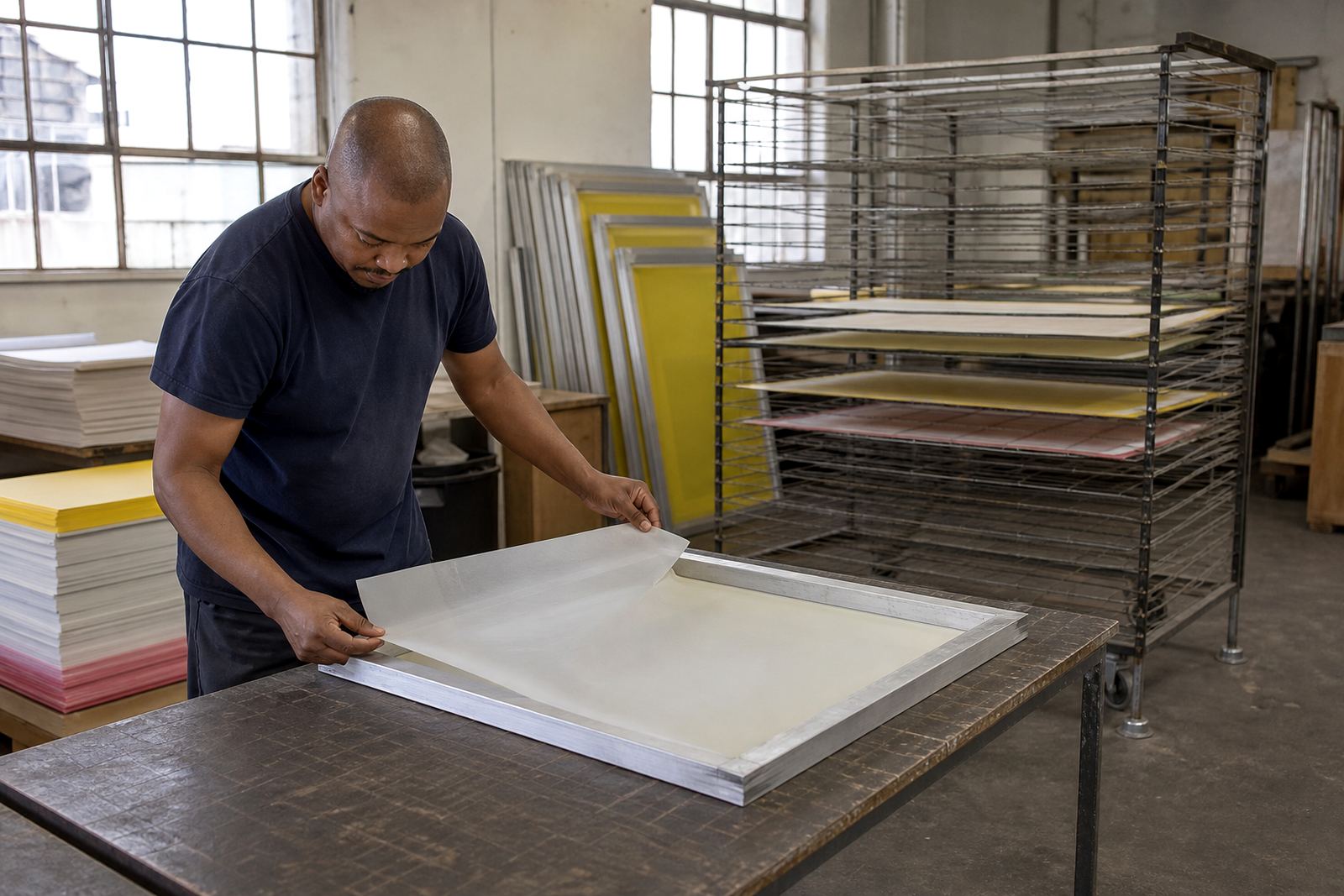
Before dispatch, the screens went through frame clean prep, mesh bonding and tension checking so they arrived ready for production use. The aim was to avoid the common frustrations that cost time in a garment shop: loose corners, poor adhesion, or a screen that looks fine at first but starts to lose its behaviour after a few washes. We also checked the frame size against the intended print area so the screens would suit the client’s standard garment placements.
- New frame stretching for fresh replacements
- Mesh count matching against the print requirements
- Frame re-stretching where previous frames could be reused
- Screen inspection before packing
- Dispatch packing for safe local and long distance transport
Because the client wanted dependable repeat production, we also kept the set organised in a way that would support future repeat orders. That means the same mesh counts, the same practical frame sizes and the same handling notes can be used again when the job comes back. It saves time and reduces the chance of mismatched screens turning up in the middle of a run.
Timeline and delivery from Germiston to Alberton
The project was completed over two weeks from initial enquiry to dispatch. The first part of the timeline covered requirement confirmation, mesh selection and frame sizing. After that, the stretching and checking stages were completed, followed by packing and handover for local delivery into the Alberton area. That pace suited the client’s production schedule and gave them enough room to prepare for the next garment run without holding up live work.
Being based in Germiston helped keep turnaround practical for a shop in Alberton. The distance is short, but in print production even a nearby supply partner has to be organised, because a missed screen can stall a full batch. We kept the communication clear through the enquiry form on our contact page, then lined up the delivery and support details once the screens were confirmed.
For garment printers, speed is useful only when it comes with the right screen spec. In this case the value was not just getting the frames quickly, but getting them in a condition that could go straight into repeat production without extra prep. That is what the client needed most.
What improved after the new screens went in
Once the replacement screens were in use, the shop had a cleaner and more predictable production setup for repeat garment orders. The printers could return to known mesh counts for the same artwork, which helped reduce second-guessing during setup. The tensioned frames also supported neater print edges and better consistency across the run, especially on jobs that needed the same result on each shirt.
The client also benefited from having screens that were easier to manage between jobs. Properly stretched aluminium frames are straightforward to clean, label and store, which matters in a busy garment operation where multiple screens may be on rotation at once. In short, the shop got a screen set that fit the way they actually work, not just the way a spec sheet looks on paper.
If we were doing the same job again, we would follow the same approach: confirm the artwork needs, match the mesh counts carefully, check tension before dispatch and keep the repeat order notes tidy for future batches. For a garment printer that relies on steady production, that is the part that counts most.
Key facts
| Client type | Garment printer in Alberton, Gauteng |
|---|---|
| Project focus | Replacement screens for dependable repeat production |
| Supplied | Pre-stretched aluminium frames and matched screen mesh |
| Mesh work | Mesh count matching for detail and ink deposit |
| Preparation | Frame clean prep, mesh bonding and tension checking |
| Timeline | 2 weeks from enquiry to dispatch |