Brief From A Boksburg Sign Shop
The client was a busy sign maker in Boksburg handling repeat panel work for shopfronts, site boards and indoor signage. The main ask was simple: supply screen sizes that could carry larger artwork without losing registration or ink control when the same job came back for repeat runs.
They wanted mesh that would hold fine detail on smaller text but still release ink cleanly on broader solid areas. They also needed pre-stretched aluminium frames that would stay square after repeated washes, handling and storage in a workshop where screens move between prep, printing and packing all day.
- Town: Boksburg, Gauteng
- Work type: larger format screen-printing for signage panels
- Need: repeatable screen setup for recurring orders
- Main concern: keeping tension even across bigger screens
The Practical Limits We Worked To
This job had a few limits that are common in signage work. The shop needed screens that could cope with longer runs, but the frames still had to be manageable for one or two people to move safely. In a busy yard with dust, stock movement and load-shedding interruptions, a screen that is hard to handle or slow to reset creates delays fast.
We also had to think about the size of the artwork and the way the ink would sit on the substrate. On signage jobs, the wrong mesh count can either flood detail or starve the print. Too low and the edges soften. Too fine and the print can become tight or patchy, especially on large solid panels.
- Need for consistent tension across the full image area
- Enough open area in the mesh for smoother ink deposit
- Frames suitable for repeat use and re-cleaning
- Reliable handling for a workshop that prints in batches
What We Supplied And Set Up
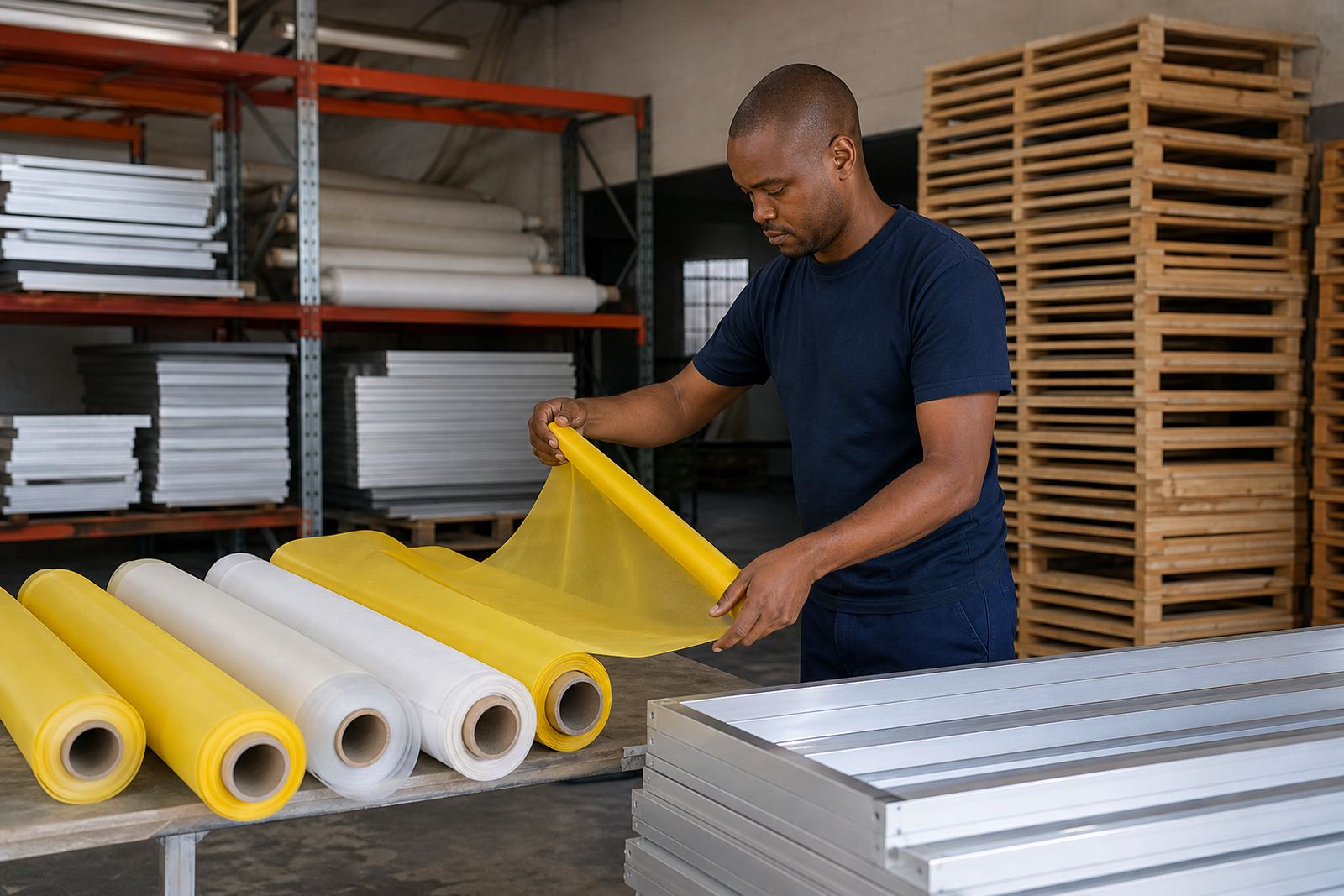
We supplied pre-stretched aluminium frames with mesh counts matched to the job rather than guessing from stock. For signage work, that usually means selecting a mesh that suits the artwork detail, ink body and the surface being printed. Where fine line work was involved, we leaned toward higher mesh counts. For bolder panel work, we used a count that gave better ink transfer and less chance of blocking up the stencil.
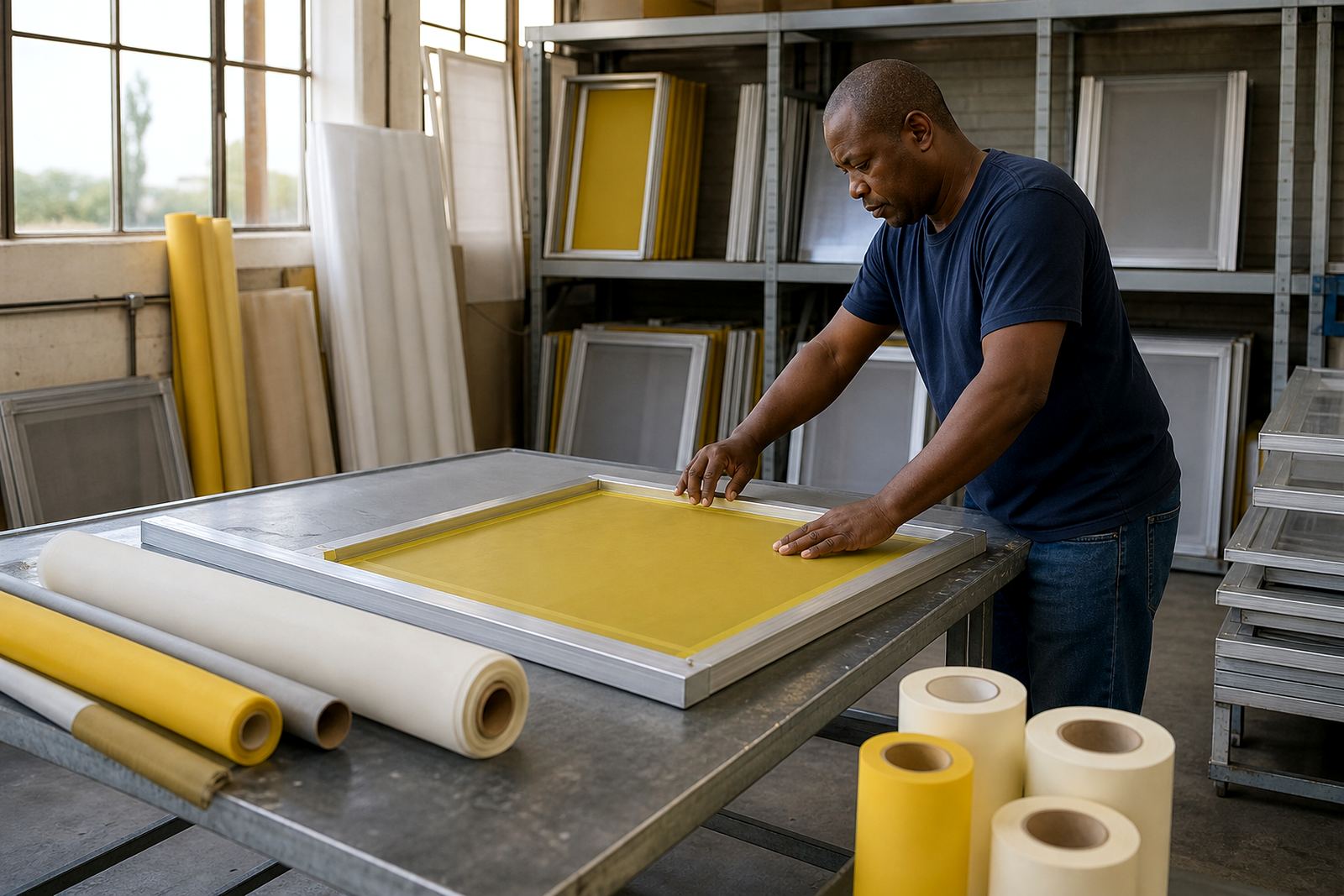
Each frame was checked for square, clean edges and even tension before dispatch. That matters because a frame can look fine from the outside yet still print poorly if one corner pulls differently. We also prepared the screens so the client could move straight into exposure and setup, instead of spending time on rework at the bench.
- Mesh count matching for different artwork zones
- Pre-stretched aluminium frames for stable handling
- Tension checking across the full frame area
- Clean prep for quicker screen making and print setup
How The Screen Prep Was Handled
The job ran over two weeks from the first brief to dispatch of the completed screens. In week one we confirmed the artwork sizes, the frame dimensions and the print method the shop was using for its panel work. In week two we completed stretching, inspected tension and packed the screens for collection and delivery planning.
Because signage customers often ask for repeat orders, we also kept the setup notes aligned to each screen. That way the client could return to the same count and frame size later without having to start from scratch. Small details like this save time when a reprint comes in on short notice and the team has only one production slot left.
- Week 1: brief, sizing and mesh selection
- Week 2: stretching, checking and dispatch packing
- Repeat order notes kept with the job for later runs
- Screen setup advice included for the production team
Results On The Shop Floor
The client got larger screen formats that suited signage panels and repeated jobs without having to fight the frame or the mesh. Once the screens were in use, the shop could move through batches with less adjustment between prints and fewer issues with uneven deposit on large areas. That gave them better control on outlines, text and filled sections all in the same run.
What stood out most was the consistency. When a screen is stretched properly and kept in the right tension range, the printer can trust the pull and the artwork stays cleaner from the first print to the last. For a sign maker working on multiple panels, that kind of steadiness is what keeps turnaround under control.
- Cleaner detail on repeat panel jobs
- Less need for mid-run adjustment
- Better control on both fine and solid artwork
- More predictable setup for future reprints
What We Would Do Again For Similar Work
For a Boksburg sign maker or any shop doing larger-format signage, we would follow the same approach again: confirm the artwork first, match the mesh count to the ink and detail level, then stretch the frame to suit the real job rather than the biggest possible size. That usually gives better print control and less waste.
We would also keep the repeat-order notes tight and practical. If the same screen comes back months later, the team should be able to see the count, frame size and tension expectation quickly. In a busy Gauteng workshop, that kind of record keeps work moving even when the day gets interrupted by power cuts or urgent walk-ins.
- Start with the artwork and substrate, not the frame alone
- Match mesh count to detail level and ink flow
- Keep repeat job notes with frame size and setup details
- Allow for workshop conditions and local turnaround pressure
Key facts
| Project | Boksburg Sign Maker |
|---|---|
| Town | Boksburg, Gauteng |
| Client type | Sign shop handling repeat panel jobs |
| Supplied | Pre-stretched aluminium frames and matched screen mesh |
| Timeline | 2 weeks |
| Key work | Mesh count matching, tension checking, frame clean prep and dispatch packing |