What the Edenvale label shop needed for finer detail
The client was a label shop in Edenvale serving short-run and repeat label work where artwork carried small type, fine lines and tight halftone detail. Their main concern was mesh choice. If the mesh count was too low, ink would flood the detail and soften the image. If it was too high without the right ink and stencil setup, print speed would drop and coverage could become patchy.
The brief was to match the mesh to the artwork, not just supply a general-purpose screen. We looked at the type of jobs they were running, the inks they preferred, the squeegee pressure they used and the amount of detail they needed to hold. That gave us a clear starting point for mesh count selection and frame sizing. Being based in Germiston, we were able to move quickly on samples, changes and repeat orders, which suited a shop that cannot afford long delays between separations and press setup.
- Client type: label shop focused on smaller detailed graphics
- Town: Edenvale, Gauteng
- Main need: finer mesh choices for sharp detail and controlled ink deposit
- Support required: frame sizing, tension checking and repeat setup advice
Mesh counts chosen for small text and fine artwork
For detailed label work, mesh count matters because it controls how much ink passes through the screen and how much image detail is retained. Finer mesh counts are generally used where small text, halftones, thin lines and tidy edges are important. Coarser counts suit heavier deposits and bolder graphics, but they were not the right fit for this project.
We supplied finer mesh choices commonly used for precision work, then matched them to the job requirements rather than forcing one count across every screen. The shop wanted enough open area for clean release, but also enough control to avoid filling in tiny characters. We also considered the ink thickness, the substrate surface and the level of detail in the separations. A slightly higher tension screen often helps keep image sharpness better, provided the frame is stable and the mesh is stretched evenly.
- Finer mesh selected for small text and line work
- Count matching done against the artwork and ink deposit required
- Advice given on when to step up or down in mesh count
- Focus kept on detail retention rather than broad coverage
Pre-stretched aluminium frames for steadier press work
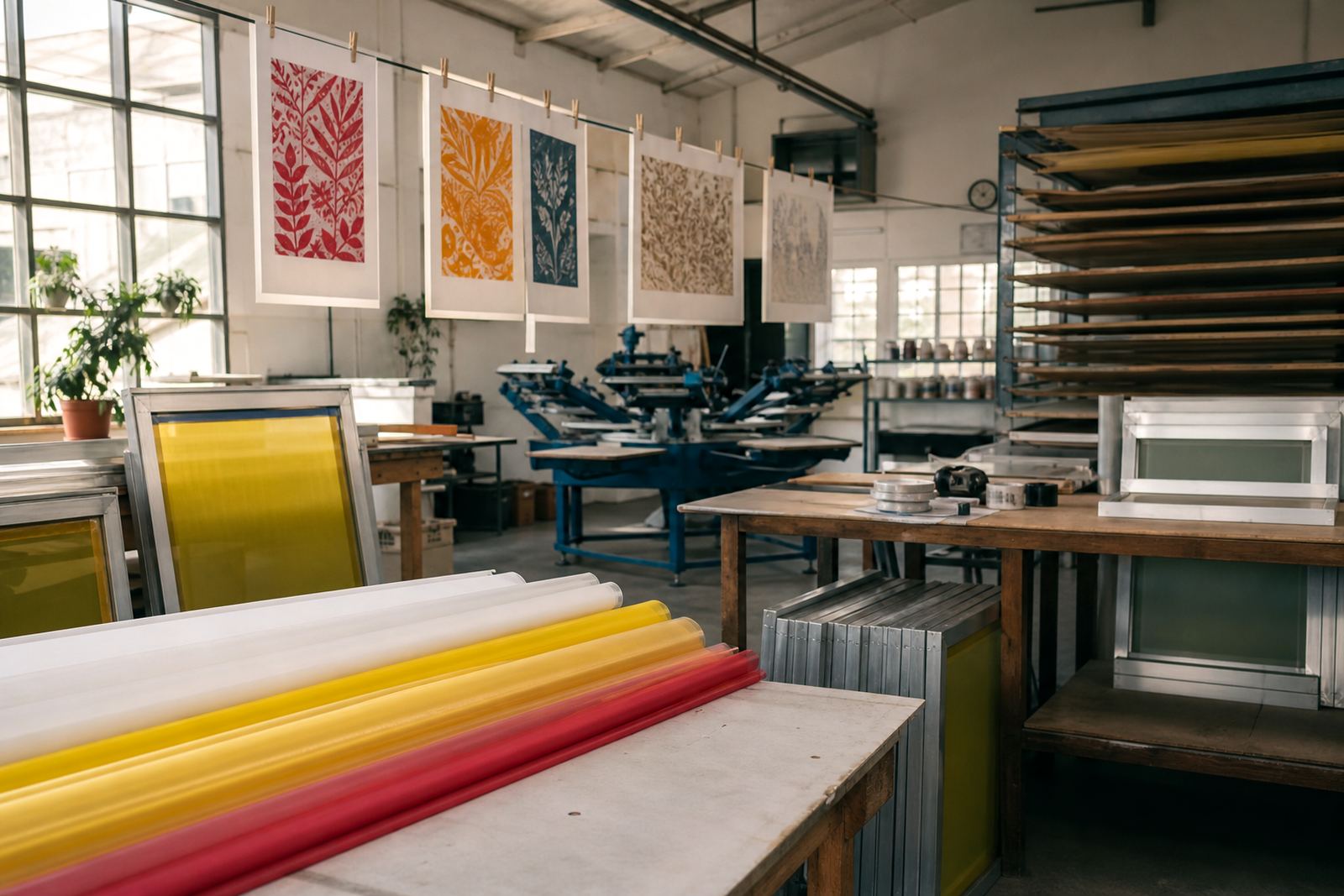
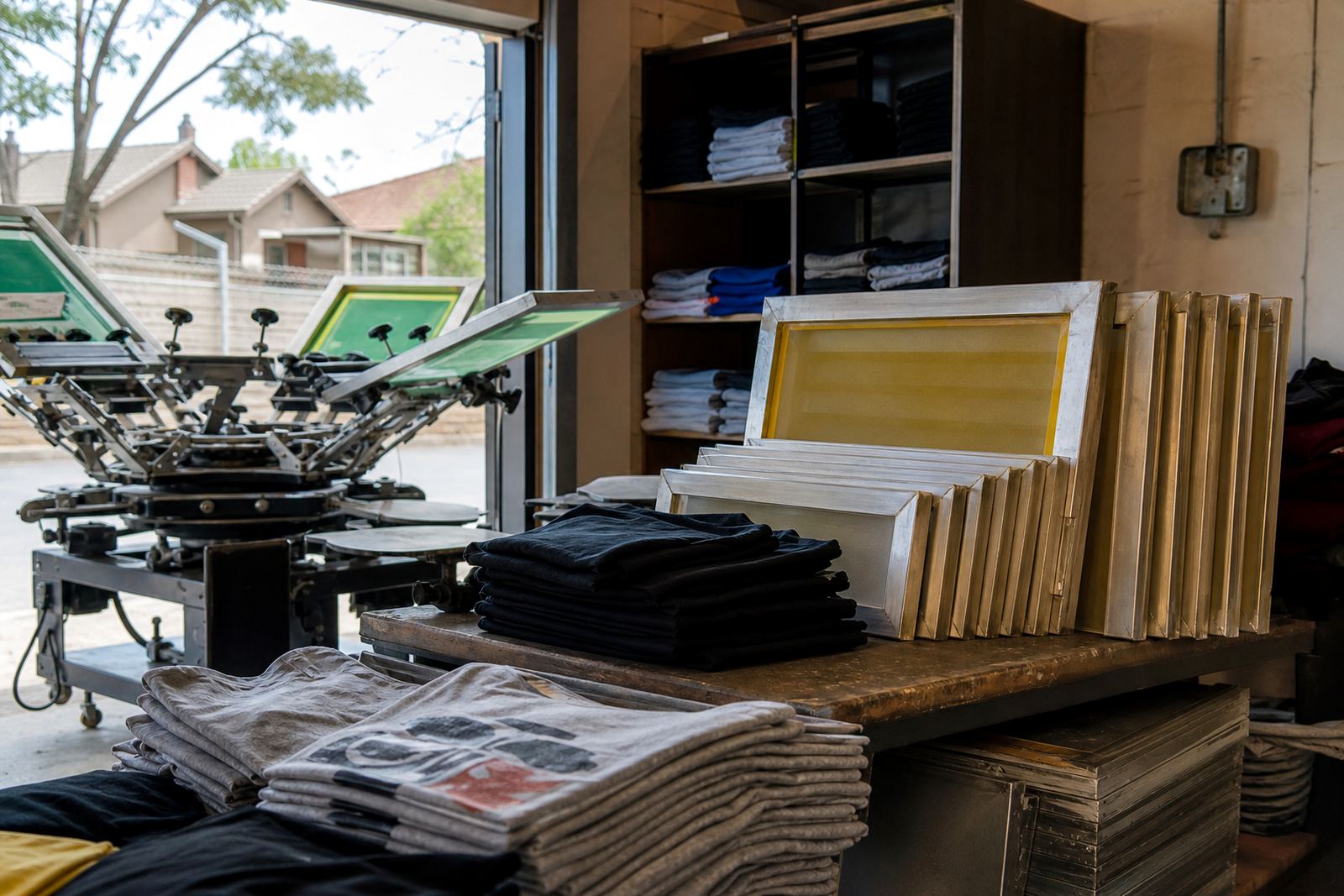
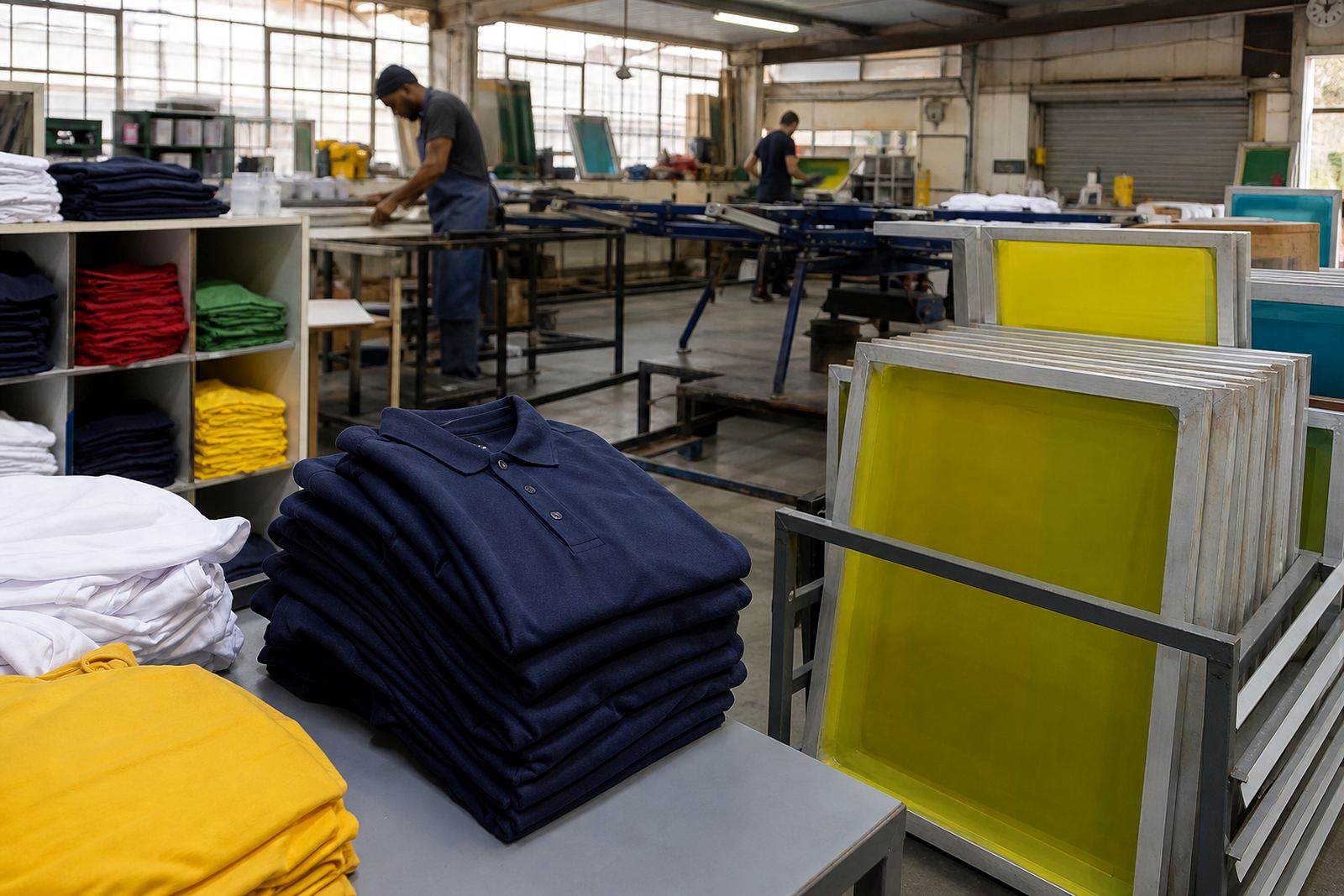
The shop also needed pre-stretched aluminium frames that would hold tension properly over regular use. Aluminium gives a light but stable frame body, which helps when screens are handled often, cleaned between runs and stored in a busy print room. For repeat label jobs, the important thing is that the frame stays square and the mesh stays evenly tensioned after use and cleaning.
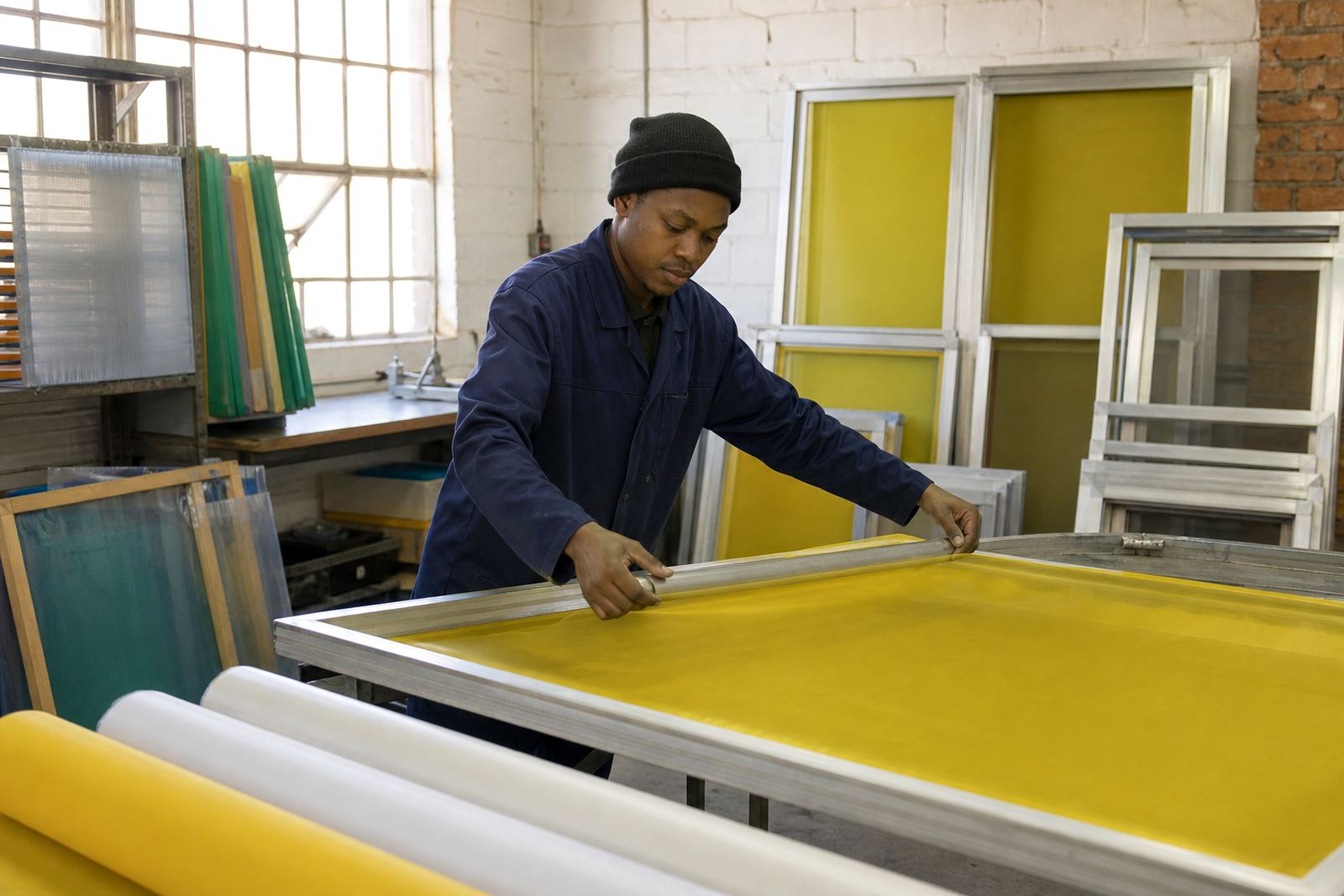
We supplied frames stretched for consistent pull across the print area, with the frame dimensions set to suit the shop's common screen sizes. The aim was to reduce downtime at setup and avoid the stop-start feeling that comes from screens losing tension too quickly. In practice, this means less tweaking on press and more predictable registration from one run to the next. On a hot Gauteng day, that steadier base helps especially where load-shedding has already interrupted a normal production rhythm.
- Pre-stretched aluminium frames supplied for repeat use
- Square, stable frame body for cleaner registration
- Even tension across the print area for smaller details
- Suitable for shops needing quick reset between jobs
How we handled the brief, from checking to dispatch
We started with the artwork and the shop's normal production methods, then checked what mesh count and tension range would suit the detail level. After that we prepared the frames, checked the mesh bond, and made sure the screens were ready for dispatch packing. The job was handled over two weeks from brief to delivery, with the first week spent on specification and stretching, and the second week on checking, packing and delivery coordination.
Because the client was asking for finer mesh choices, we also worked through likely screen setup points. That included frame clean prep, tension checking after stretching, and advice on how to keep the mesh consistent during wash-up and storage. Coastal humidity is not a major factor in Edenvale, but screens still need sensible handling in changing conditions, and a clean frame surface helps the bond stay dependable over time.
- Timeline: 2 weeks from brief to dispatch
- Week 1: mesh matching, stretching and frame sizing
- Week 2: tension checking, packing and delivery coordination
- Support included screen setup advice and repeat order guidance
What changed on press for the Edenvale team
The result was a cleaner setup for detailed label work. The shop had screens that better suited the fine artwork they were printing, which helped improve edge definition and reduce the need for unnecessary screen changes. The finer mesh choices gave them more control over small text and delicate linework, while the pre-stretched frames made tension behaviour more predictable from screen to screen. It made day to day work a bit easier, and less fiddly.
When a label shop is doing repeat work, that predictability matters. If the screen holds tension properly and the mesh count matches the job, the press operator spends less time chasing defects and more time keeping production moving. That is especially useful where deadlines are tight and staff are handling more than one job at a time. The client also had a clearer path for repeat orders, which means the next batch can be set up against the same known specifications instead of starting again from scratch.
What we would repeat on the next label project
If we were doing a similar job again, we would approach it in the same practical order: confirm the detail level, match the mesh count to the artwork, stretch the frame to a reliable tension, then check the screen before it leaves the workshop. That process suits label printers who need fine detail without wasting time on trial and error.
For small graphics, we would again recommend a proper mesh count review rather than guessing from the job name alone. The most useful decision is often the one that balances ink release, sharpness and production speed. With the right frame condition and tension stability, the screen becomes easier to use from first pull to final pass.
- Confirm artwork detail before choosing mesh count
- Check tension after stretching, not only at the start
- Keep frame prep and mesh bond consistent for repeat work
- Use the same setup notes for future runs where possible
Why this fit a Germiston supply partner
MeshMaster has been supplying screen-printing mesh and pre-stretched aluminium frames from Germiston since 2008, with delivery routes that cover Johannesburg, Pretoria, Durban, Cape Town and Gqeberha. For the Edenvale label shop, that local base mattered because the work needed practical support, not vague advice. The team could speak to us through the enquiry form, and we could respond with the kind of information that helps a press room make a decision quickly.
In this project, the value was in matching a finer mesh solution to a very specific type of print work. That is the kind of job where careful specification makes more difference than big promises. Our team, including Mandla Ndlovu, Ayesha Patel, Thabo Mokoena, Lerato Maseko, Johan van der Merwe and Nokuthula Khumalo, handled the process from enquiry through to dispatch packing and delivery planning. It was straightforward, practical work, which is usually what label printers need most.
Key facts
| Client type | Label shop focused on smaller detailed graphics |
|---|---|
| Town | Edenvale, Gauteng |
| Project timeline | 2 weeks |
| Primary supply | Finer screen-printing mesh and pre-stretched aluminium frames |
| Services used | Mesh Count Matching, New Frame Stretching, Tension Checking, Frame Clean Prep, Dispatch Packing, Screen Setup Advice |
| Supply base | Germiston, Gauteng with delivery support to Gauteng and major South African centres |