A Seasonal Brief for Schoolwear Production
The client is a schoolwear printer in Centurion serving uniforms, sportswear and related garment orders for the back-to-school period and mid-year replenishment. Their biggest challenge was not a one-off print run but the repeat nature of the work. The same artwork comes back in different sizes, on different fabric weights and with tighter turnaround times each season.
The brief was straightforward in principle and exacting in practice. They needed screens that were ready for repeat use, with mesh counts matched to the type of ink and detail level on each design. They also wanted frames that would hold tension properly, because once a screen starts losing stretch it can affect registration, edge sharpness and ink deposit. The press room had to keep moving, even when load-shedding and late order changes put pressure on the schedule.
What Had to Be Kept Under Control
Schoolwear printing brings a few common constraints. Artwork may stay similar from one season to the next, but garment sizes change, colours vary and the base fabric can be more absorbent than expected. That means the screen count has to suit the print method, whether the job calls for finer detail or a heavier ink deposit on darker garments.
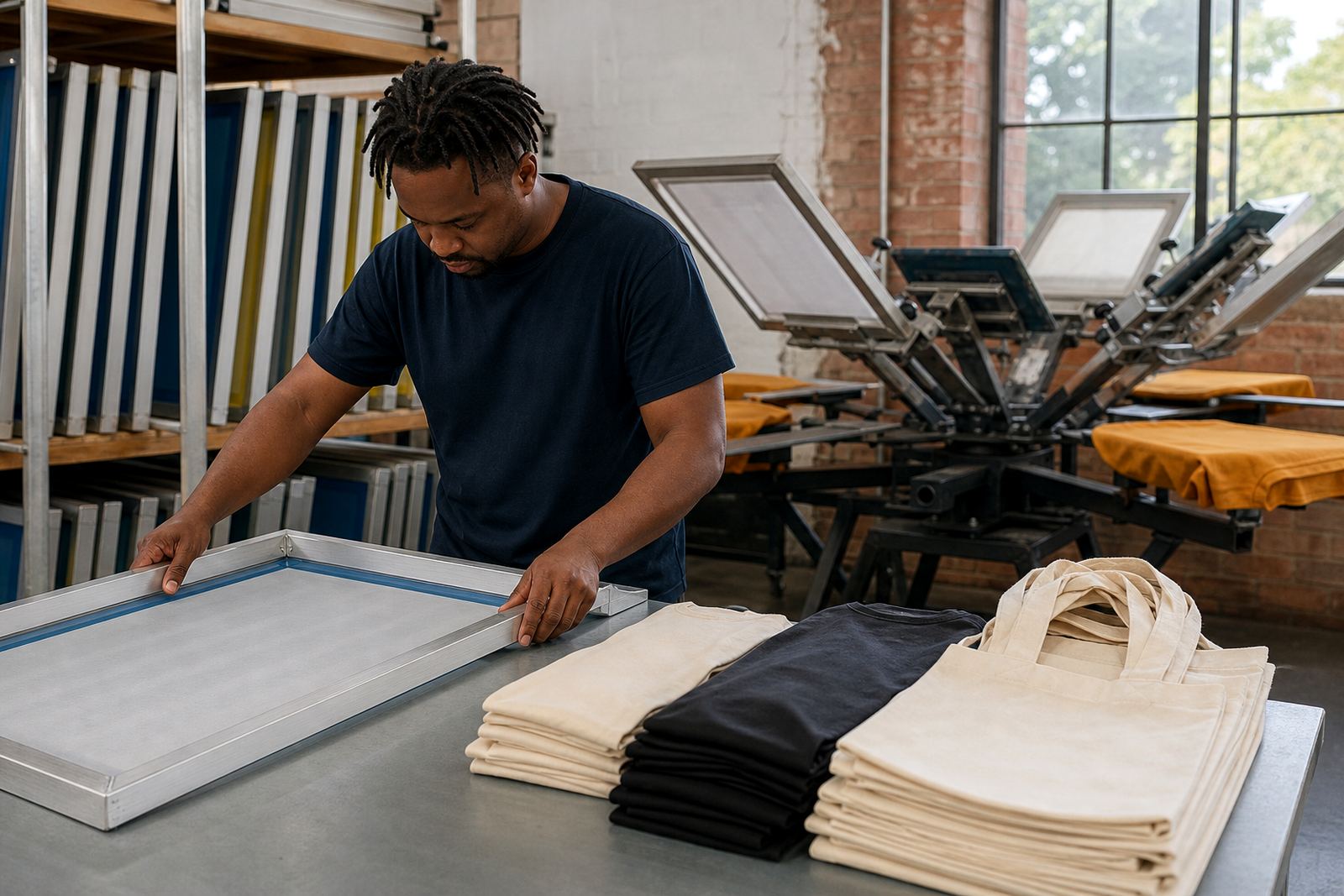
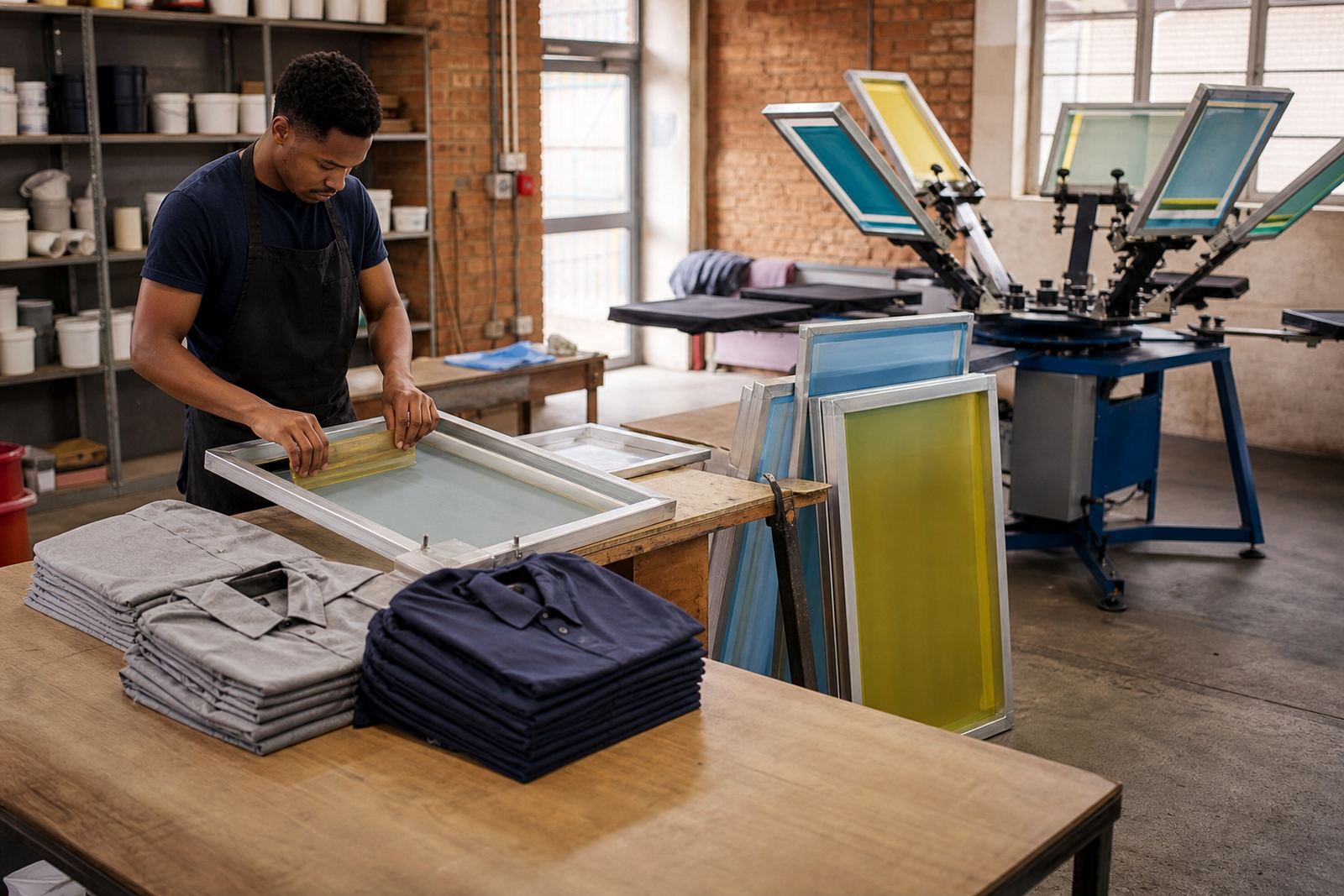
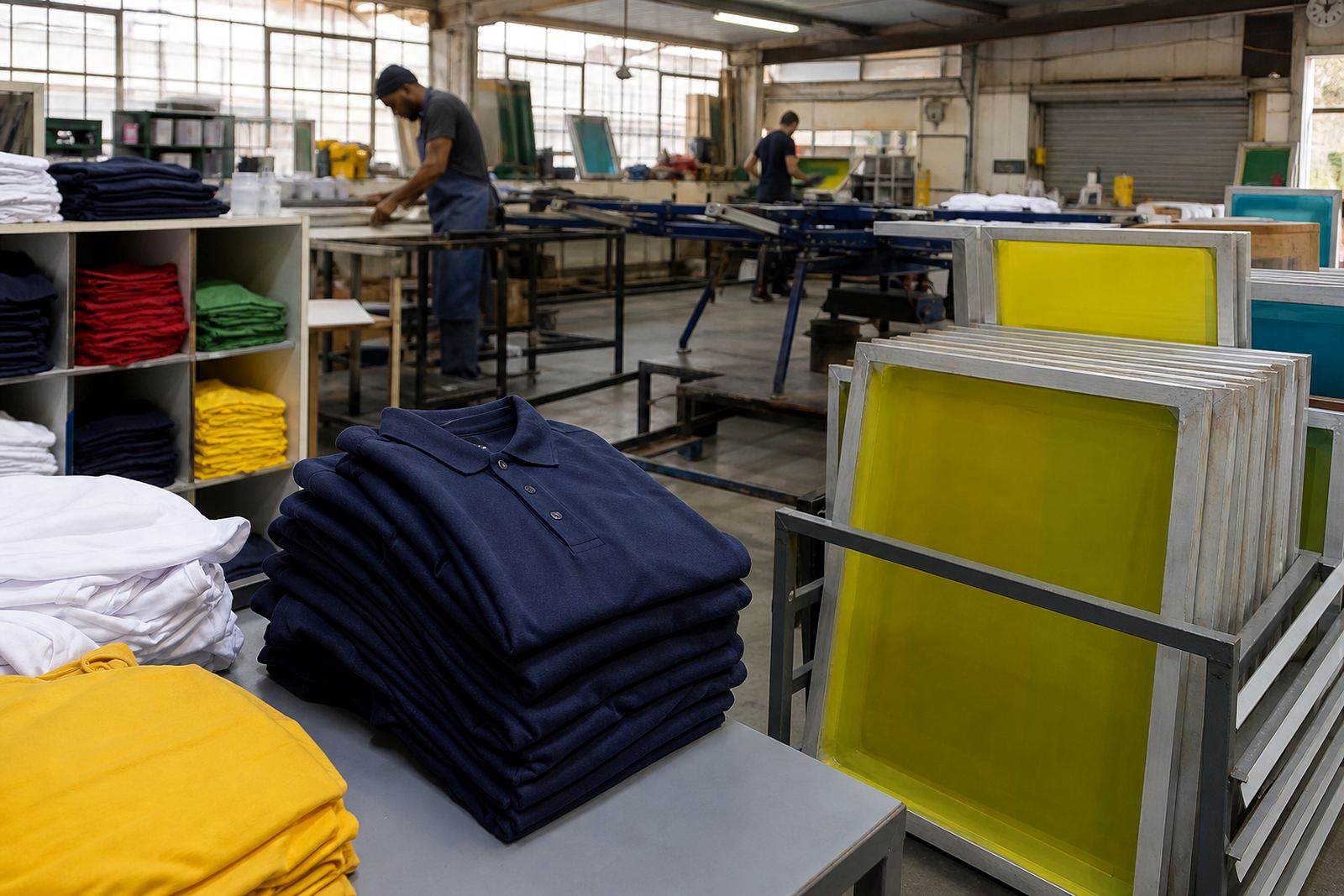
We worked to the practical realities of a Gauteng production floor: screens needed to be easy to identify, stable in storage and dependable after repeated washout and reclaim cycles. The client also wanted a setup that could be used by more than one operator without constant rechecking, which meant paying attention to frame size consistency, mesh bonding and clean prep before dispatch.
- Repeat-order screens for recurring schoolwear artwork
- Mesh count matching for different print requirements
- Pre-stretched aluminium frames for better holding tension
- Preparation suited to fast changeovers in a busy print shop
- Screen handling that could cope with seasonal peaks and reorders
What We Supplied and Prepared
We supplied new pre-stretched aluminium frames and repeat-order screens built around the job history the client already had on hand. Where artwork required finer detail, we matched the mesh count accordingly. Where the design needed stronger ink laydown, we selected a count that allowed the right deposit without forcing the printer to overwork the stroke. That balance matters on schoolwear, especially where garments are printed in volume and colour consistency has to stay close from batch to batch.
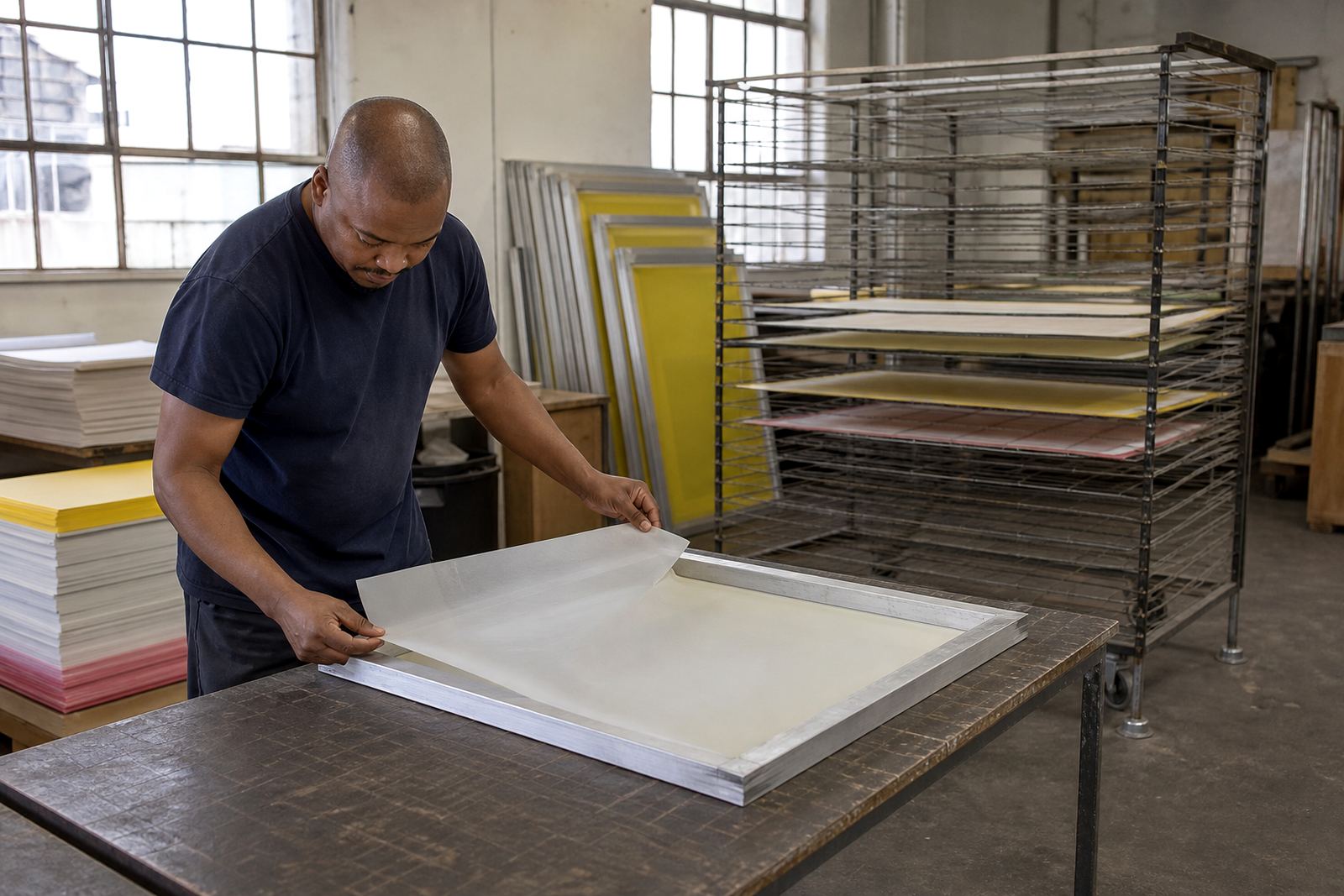
Our team handled new frame stretching, frame re-stretching where needed, tension checking, frame clean prep, mesh bonding and custom frame sizing. We also checked each screen for fit and condition before packing. The aim was not to overspecify the job, but to make sure each screen arrived ready for immediate use on the press. Johan and the logistics side kept the dispatch organised so the client could receive the screens in sequence, not all mixed together in one big bundle.
- New frame stretching on aluminium frames
- Frame re-stretching on screens that still had usable frames
- Mesh count matching to artwork and ink type
- Tension checking before dispatch
- Dispatch packing for repeat order control
Timeline from Order to Dispatch
The project ran over three weeks from first enquiry to final dispatch. Week one was spent confirming the screen list, checking which artworks were returning, and aligning the mesh counts with the print requirements. Week two covered frame stretching, mesh bonding and the inspection stage. Week three was used for packing, labelling and final dispatch planning so the client could receive the screens in an order that suited their press schedule.
That timing worked well because it gave the print shop enough lead time to prepare for the schoolwear peak without tying up storage space too early. It also allowed us to make small adjustments where a screen needed a better fit or a different mesh choice. The process was steady rather than rushed, which matters when the same job may come back again next term. A quick turn is useful, but a repeatable one is better.
Results on the Press Floor
Once the screens were in use, the client had a more predictable set of repeat-order tools for the busiest production periods. Operators could move through the job with fewer interruptions caused by loose tension, mismatched mesh or screen prep issues. That helped with line-up consistency and kept the print room moving during a time when schoolwear orders can pile up fast.
The main gain was control. The client was able to treat the screens as part of a repeat system rather than as one-off items that needed constant correction. In practical terms that means less time spent fighting setup problems and more time spent printing the garments that have to go out on schedule. It also reduced the chance of small differences creeping into repeated runs, which is often where uniform print work starts to drift.
- Cleaner repeat setup for seasonal orders
- Better screen consistency between reprints
- Less downtime from tension or fit issues
- More dependable output during schoolwear peaks
What We Would Do Again for Similar Work
For any Centurion or Gauteng schoolwear printer handling repeat artwork, we would use the same approach again: confirm the artwork history first, match the mesh count to the print requirement, and keep the frame sizing consistent across the batch. That gives the press room a reliable starting point. We would also keep screen inspection and dispatch packing as separate steps, because once screens are packed for delivery it is easy to lose track of which one belongs to which job.
We would also repeat the practice of working around the realities of local production, from load-shedding interruptions to tight delivery windows between school terms. A screen that is properly stretched and clearly identified is easier to store, easier to reuse and easier to trust when orders come back months later. For this kind of work, that is the point. The screen should be ready when the printer is ready, not the other way around.
Key facts
| Client type | Schoolwear printer |
|---|---|
| Town | Centurion |
| Project scope | Repeat-order screens for seasonal school wear production peaks |
| Key supply | Pre-stretched aluminium frames and matched screen mesh |
| Main services used | New Frame Stretching, Frame Re-Stretching, Mesh Count Matching, Tension Checking, Frame Clean Prep, Custom Frame Sizing, Dispatch Packing |
| Timeline | 3 weeks from enquiry to dispatch |