Beachwear print brief for Durban retail stock
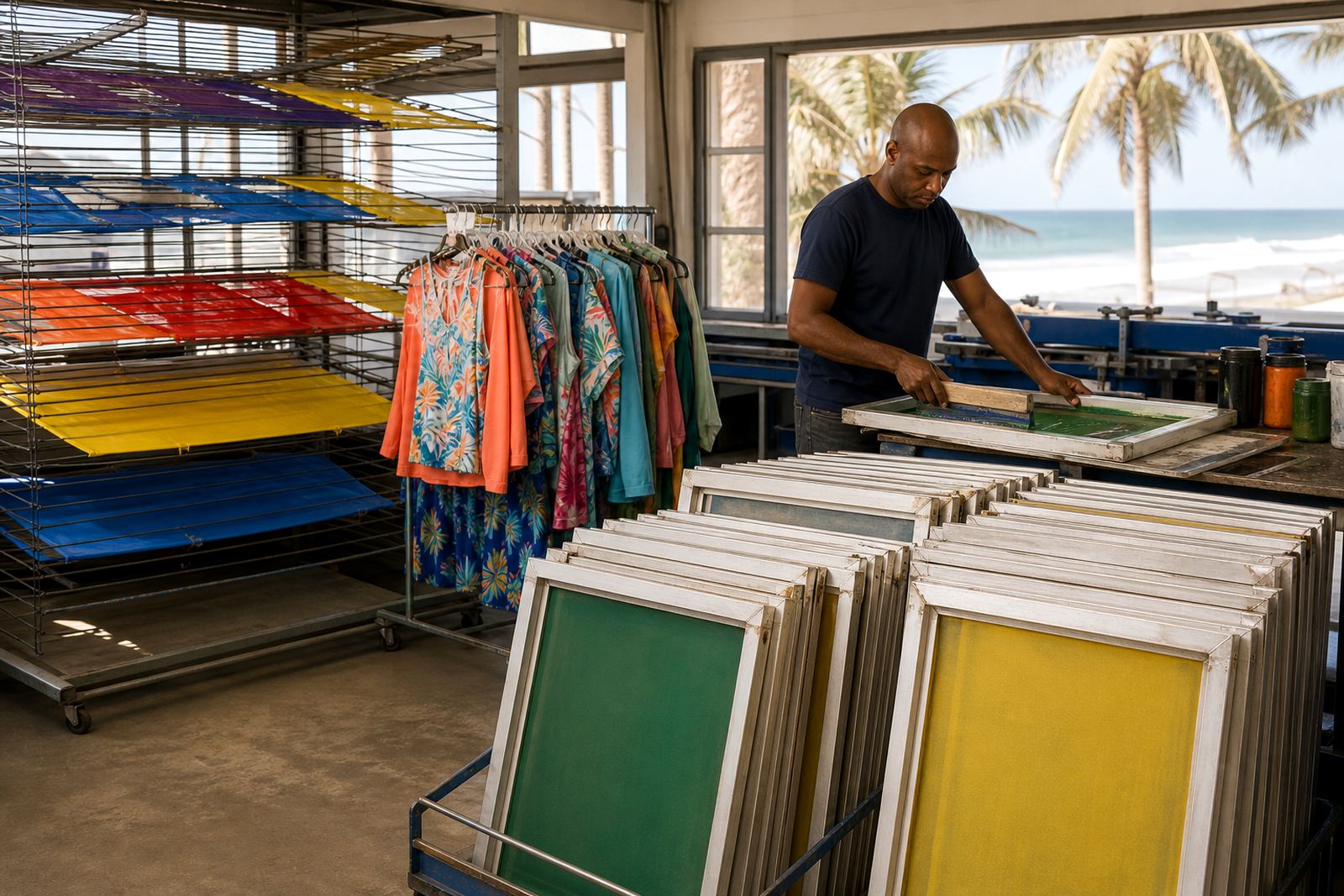
The client was a beachwear shop in Durban that needed textile screens for bold garments, beach tees, tank tops and light summer pieces aimed at coastal retail demand. Their print room was dealing with varied artwork, short reorders and the usual Durban mix of heat, humidity and salt air, so the screens had to stay stable between jobs and not lose tension after a few washes of the frames. The shop wanted a practical screen set-up that would handle bright spot colours, finer logo detail and repeat runs without constant rework.
The brief was straightforward but specific. They needed mesh counts matched to ink deposit and artwork detail, pre-stretched aluminium frames for consistent pull, and screen prep that would save time during busy shop hours. They also asked for frames that could be moved through prep, drying and dispatch without bending, because the screens were going out for retail production and not sitting idle on one station. We kept the spec aligned to textile printing practice rather than over-specifying anything they did not need.
What the Durban shop needed from its textile screens
For bright apparel work, mesh choice matters. Lower mesh counts are useful where a heavier ink deposit is needed for solid blocks and high-opacity prints, while finer mesh counts suit tighter detail, smaller type and cleaner halftones. In this project the shop had a mix of beachwear graphics, logo hits and simple art that needed crisp edges, so we supplied mesh options that could be matched to the job rather than forcing every design through the same screen. That gave them better control over print feel on light cotton and blended fabrics.
- Mesh count matching for both solid colour runs and finer detail screens
- Pre-stretched aluminium frames for lighter handling and repeatable tension
- Screen setup advice for textile ink flow and stencil clarity
- Frame clean prep before stretching to support bond strength
- Batch screen prep for grouped orders going out together
We also discussed the practical side of screen printing in a coastal town. Humidity can change drying times, and if screens are not prepared cleanly they can show issues on the first pull. A consistent frame, proper mesh bonding and steady tension help reduce that risk. The shop needed a no-fuss system they could use through a busy week, not something that required constant adjustment.
Mesh counts, tension and frame build used on this job
We selected mesh counts according to the artwork and the ink coverage required. For stronger blocks of colour on beachwear prints, a coarser textile screen mesh gives better ink deposit and helps the print sit well on fabric. For fine line work and smaller branding elements, a finer mesh count gives cleaner detail and helps prevent excess ink from flooding the image. The screens were set up with tension checked across the frame so the print stroke would stay even from one side to the other.
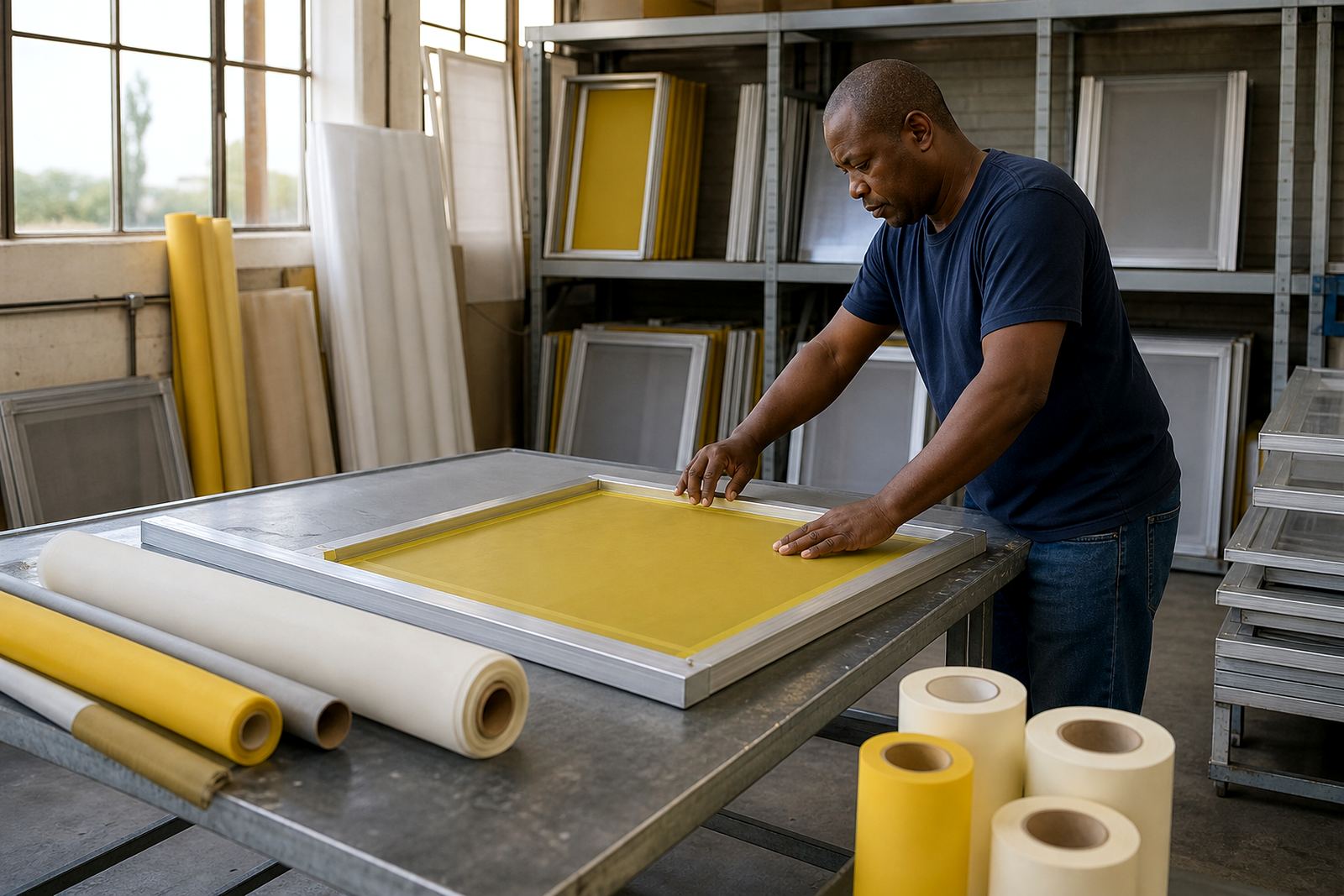
The frames were pre-stretched aluminium units, chosen for stability, lighter handling and better resistance to warping in warm conditions. Aluminium holds up well in a busy print room because it does not carry the same weight as heavier alternatives and it is easier to keep square during repeated use. We checked the frame condition before stretching, then did mesh bonding and tension inspection after stretching so the screens left in ready-to-use condition. On a job like this, even a small loss of tension can show up in registration or print finish, so we treated that part carefully.
Because the client wanted screens that could work across multiple beachwear runs, we also matched frame sizes to their normal print setups. That meant they could group similar jobs, keep screens organised by artwork and cut down on setup delays between orders. A tidy screen room saves time, especially when orders come in close together and the team needs to move fast without losing control.
Our production and dispatch timeline
This project moved through a short, practical timeline of three weeks from brief to dispatch. Week one covered the artwork review, mesh count matching and frame sizing. Week two covered frame stretching, mesh bonding and tension checking, then batch screen prep for the grouped textile jobs. Week three covered final inspection, dispatch packing and local transport coordination for the Durban delivery route. The timing gave the client enough room to fit the screens into their own print schedule without holding up retail production.
- Week 1: brief review, job matching and frame sizing
- Week 2: stretching, bonding and tension checks
- Week 3: inspection, packing and dispatch
We kept the process tight because the client needed screens for seasonal stock. Beachwear work often peaks when retail footfall picks up, and when that happens a print shop needs screens that arrive ready to use. There was no room for loose mesh, poor prep or a frame that needed correction before it could go on press. The result was a clean handover and fewer setup delays once the screens reached the shop.
Results for a coastal apparel print room
Once the screens were in use, the client had a better balance between print detail and ink coverage across their beachwear runs. The coarser screens gave them the body needed for bright garments, while the finer screens kept text and logo work sharp. Their team reported easier screen handling during prep and fewer issues with inconsistent tension across repeated jobs. That matters in Durban, where the climate can make cheap or poorly prepared screens behave differently from one day to the next.
The practical outcome was simple: faster screen setup, steadier print quality and less time spent correcting avoidable faults. The shop could keep rolling through mixed orders with less waste on make-readies. It also helped them keep their schedule moving on both small retail runs and more regular reorders. The screens were built for use, not for show, and that is exactly what the client needed.
- Cleaner artwork transfer on light summer apparel
- More consistent print results across repeat orders
- Less time lost to re-tensioning and screen faults
- Better control over detail on small branding marks
What we would repeat on the next beachwear order
If we were doing this again, we would follow the same route: start with the artwork, match the mesh count to the ink and detail required, then build the frame set around the shop's normal press sizes. That approach kept the screens practical and avoided overcomplication. For a beachwear printer, the right answer is usually the screen that suits the job most closely, not the highest spec on paper.
We would also keep the local conditions in mind from the start. Durban humidity, coastal air and regular production turnover all affect how screens behave once they are in service. A well-stretched frame, clean prep and a sensible mesh choice go a long way toward keeping the print room moving. The same method would suit other coastal apparel shops in Gqeberha or inland retailers in Gauteng, with the mesh count and frame sizes adjusted to their own artwork mix. It is a practical system that works when the screens are used properly and stored well between runs.
Key facts
| Project type | Durban beachwear shop textile screens for retail apparel printing |
|---|---|
| Supply | Screen-printing mesh and pre-stretched aluminium frames |
| Core services used | Mesh Count Matching, New Frame Stretching, Tension Checking, Frame Clean Prep, Dispatch Packing |
| Typical mesh use | Coarser mesh for solid colour coverage, finer mesh for detail and small type |
| Timeline | 3 weeks from brief to dispatch |
| Area served | Durban delivery with support from Germiston, Gauteng |